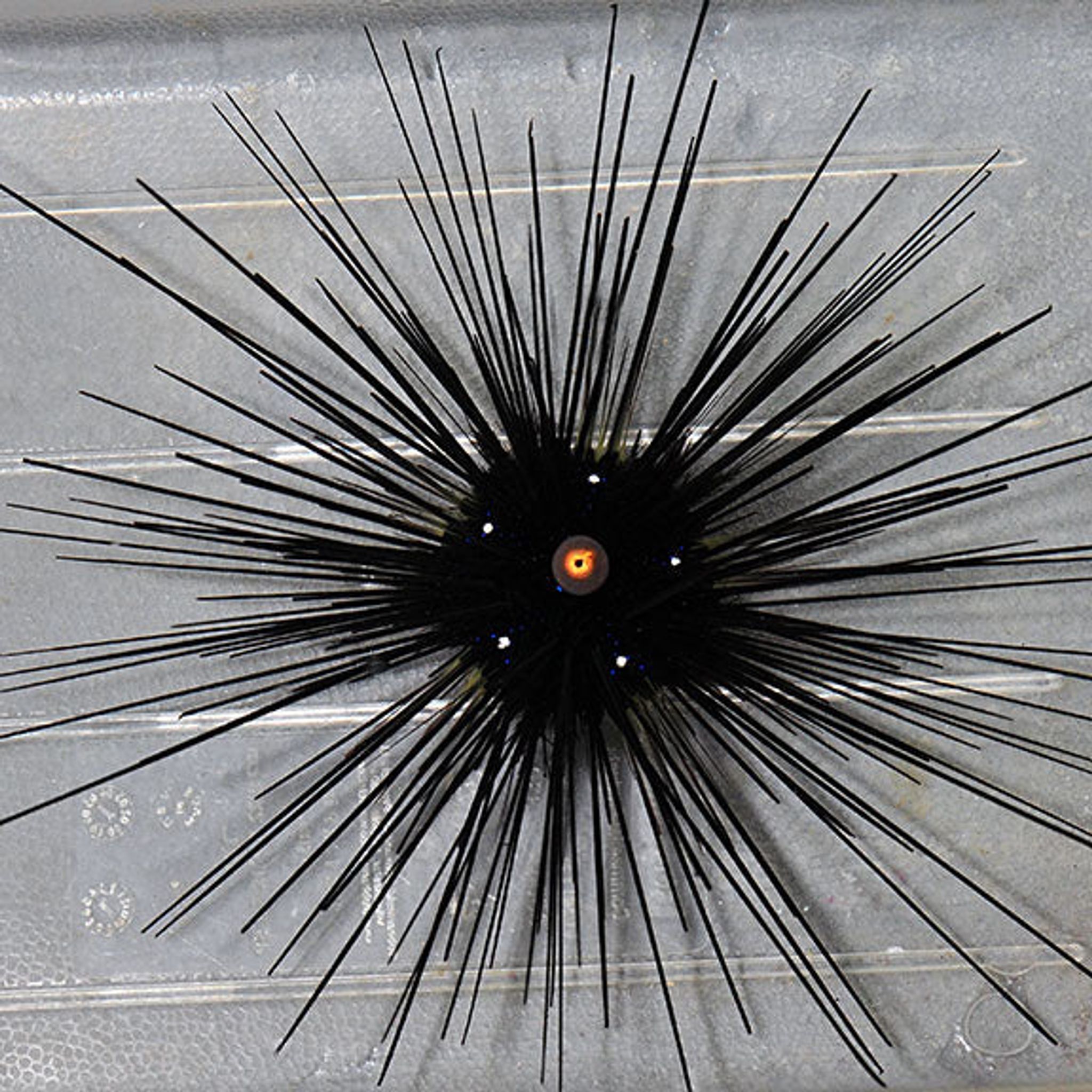
Is Long-Spine Urchin Reef Safe? Compatibility With Fish, Coral and Invertebrates
A long-spine urchin is reef safe with caution: it will not eat healthy coral flesh, but its size, weight, and constant nighttime movement make it a genuine physical hazard to loose frags and delicate branching coral. The risk isn't predation — it's clumsiness and, in rare cases, hunger. Understanding that distinction is the key to keeping one successfully.
The Short Answer: Reef Safe, But Not Risk-Free
"Long-spine urchin" typically refers to one of three closely related species — Diadema setosum, Diadema antillarum, or Diadema savignyi. They differ mainly in banding pattern, color, and native region (Indo-Pacific versus Caribbean), but their care needs and reef behavior are essentially identical.
These urchins are omnivorous grazers, not predators. Their natural diet is algae — macroalgae, coralline algae, microalgae, diatoms, and biofilm — and coral tissue is not something they're built to hunt or digest as a primary food source. That's the biological answer to "reef safe."
The practical answer is more nuanced. A long-spine urchin can span 12 inches or more across its spines as a full-grown adult, and it roams the tank almost every night searching for grazing surfaces. That combination of size, weight, and blind nocturnal movement means it can topple an unglued frag, knock a plug off a rock ledge, or crush polyps simply by walking over or into them. The coral isn't being eaten — it's being physically disturbed.
Why the "Coral Predator" Reputation Exists
Most compatibility guides state the caution without explaining the mechanism, so it's worth separating the two distinct ways an urchin can damage a reef tank:
Mechanism 1 — Clumsiness. These urchins have no real awareness of what's beneath their spines or tube feet. A loose frag plug, an unsecured rock formation, or a delicate SPS branch tip sitting in a well-traveled path is at risk simply because the urchin passes through, not because it targets coral.
Mechanism 2 — Starvation grazing. In an ultra-clean, low-algae display with no supplemental feeding, a hungry urchin has to eat something. It will strip coralline algae directly off live rock, and in more extreme, prolonged food shortages, it may sample soft coral tissue or clam mantle out of desperation. This is a cause-and-effect chain, not a random behavior: low algae supply plus no supplemental feeding leads to increased grazing pressure, which can eventually extend to tissue sampling if the shortage continues.
Both mechanisms are preventable, which is why the verdict is "reef safe with caution" rather than a flat yes or no.
Preventing Coral Damage
- Epoxy or reef-glue every frag and rock formation before adding the urchin — this is the single biggest fix for "my urchin destroyed my coral" complaints, which are almost always a knocked-over frag rather than an eaten one.
- Avoid loose frag racks and unsecured plugs. If a piece isn't cemented down, treat it as at-risk.
- Feed dried nori or seaweed 2–3 times per week clipped to a rock or veggie clip if the tank doesn't have a visible standing algae film. This removes the starvation-grazing trigger entirely.
- Position delicate colonies away from main traffic paths — ledges, crevices, and tank corners see less nightly foot traffic than open rockwork.
Coral Compatibility by Type
| Coral type | Risk level | Why |
|---|---|---|
| Large, encrusted colonies fused to rock | Low | Nothing to knock over; base is part of the rock structure |
| LPS on a solid, glued base | Low–moderate | Stable if cemented, but fleshy tissue can be brushed against |
| Soft corals / mushrooms / zoas on loose plugs | Moderate–high | Frequently knocked loose; also the first tissue sampled if the urchin is underfed |
| Delicate branching SPS tips | High | Brittle branches snap easily on contact, whether the urchin means to or not |
The safest reef setups for a long-spine urchin are mature systems where most coral is well-established and directly attached to rock, not a frag-heavy tank still being aquascaped.
Tank Requirements
Size and Setup
A minimum of 75+ gallons (284+ liters) is the safer, more common consensus for a full-grown long-spine urchin. Some sources cite 55 gallons (208 liters) as workable, but that's really only appropriate for smaller or juvenile specimens on a temporary basis — adults need room to roam and tall, stable rock structure with caves to hide in during the day, since they're nocturnal.
The tank must also be established — several months old at minimum, with a visible standing algae film on the rock and glass. Adding an urchin during cycling or immediately after setup is one of the most common mistakes, since there's no food source yet and water parameters are still unstable.
Water Parameters
Long-spine urchins need stable, reef-standard conditions. Their test (shell) and spines are made of calcium carbonate, so calcium levels matter as much as they do for coral.
| Parameter | Target range |
|---|---|
| Temperature | 72–80°F (22–27°C) |
| pH | 8.1–8.4 |
| Specific gravity | 1.023–1.026 |
| Alkalinity | 8–12 dKH |
| Calcium | ~380–450 ppm |
| Ammonia / nitrite | 0 |
| Nitrate | Under ~20 ppm |
Some older references list a wider pH range of 7.7–8.5, but the tighter 8.1–8.4 band matches standard reef-keeping practice and is the safer target to hold to.
Urchins are also highly intolerant of copper-based medications — never treat a display tank containing one, even for a fish problem, since copper is lethal to invertebrates. Treat sick fish in a separate quarantine tank instead. Sudden salinity or pH swings and generally poor water quality are equally dangerous; spine loss or shedding is usually the first visible symptom of stress or declining water conditions, not a normal molting process.
Acclimation and Handling
Slow drip acclimation over 60–90 minutes or longer is essentially mandatory. "Plop and drop" or float-and-dump methods frequently kill long-spine urchins outright, since they're highly sensitive to sudden parameter shifts. Minimize air exposure during the transfer — they don't tolerate being out of water for long.
Never handle one bare-handed. The spines are sharp, brittle, and mildly venomous — a sting feels like multiple bee stings at once, can cause swelling, and broken-off spine tips embedded in skin are painful and slow to remove. Use thick gloves, tongs, or a container to move or reposition an urchin, never fingers.
Fish Compatibility
Long-spine urchins are peaceful toward nearly every fish and are not predatory. The compatibility risk actually runs in the opposite direction: certain fish prey on urchins, not the other way around.
In the wild, triggerfish, large wrasses, and a handful of other predators flip an urchin over or attack it to reach the underside, where the spines are shorter and less protective. In a home aquarium, that translates to a clear avoid list:
- Large triggerfish
- Puffers/pufferfish
- Some larger wrasses known to crush or pick apart urchins
Keeping any of these species alongside a long-spine urchin typically ends with an injured or dead urchin, not damaged coral. If you're stocking a mixed reef community, it's worth browsing marine fish options with this predator list in mind before adding an urchin to an established tank.
Invertebrate Compatibility
Long-spine urchins are generally compatible with the rest of a typical cleanup crew — shrimp, crabs, and snails coexist with them without issue in most tanks. As a novelty note, wild Diadema populations sometimes host a small symbiotic shrimp species living among their spines, though this is rarely relevant to a captive mixed-reef setup.
The one caution: avoid housing them with aggressive or territorial crab species, which may harass a molting or otherwise weakened urchin. If you're building out a cleanup crew, marine invertebrates that are peaceful grazers or scavengers make better tankmates than anything territorial.
Diet and Feeding
Primary diet in the wild and in captivity is algae — macroalgae, coralline algae, diatoms, and biofilm growing on rock and glass. Urchins will also opportunistically scavenge sinking pellets or uneaten food from other tankmates.
When natural algae growth is low — common in a heavily skimmed, well-maintained reef tank — supplement with dried nori or seaweed clipped to a rock or a veggie clip, offered 2–3 times per week. This single habit does more to prevent starvation-driven coral sampling than any other single change.
An urchin is a valuable cleanup crew member for hair algae, diatoms, and film algae, especially in larger systems, but it is not a substitute for proper nutrient export — protein skimming, regular water changes, and a refugium still do the heavy lifting on nutrient control.
Why These Urchins Matter: A Cautionary Tale From the Wild
The value long-spine urchins bring to a reef isn't hypothetical. In 1983, a disease-driven mass die-off wiped out an estimated 90–98% of the Caribbean Diadema antillarum population. With the primary algae grazer gone, algae overgrew huge stretches of reef that had previously been kept in check, and coral cover declined as a result. A second, similar die-off event was documented in 2022, and wild populations in the Caribbean still haven't fully recovered decades later.
That history is a useful frame for hobbyists: the same grazing pressure that makes these urchins valuable in a display tank is the same ecological function that, when lost at scale, let algae take over entire reef systems.
Common Mistakes to Avoid
- Adding an urchin too early to a new or uncycled tank — leads to starvation or water-quality-related death. Wait for an established algae film.
- Skipping drip acclimation — causes sudden death or severe stress from parameter shock.
- Not gluing down frags or rock before introduction — the single most common cause of coral "damage," which is usually toppling, not eating.
- Underfeeding in an algae-free, very clean tank — leads to spine loss and increases the odds of coral-tissue sampling. Add nori feedings to fix it.
- Housing with known predators like triggerfish, puffers, or large wrasses — results in an injured or dead urchin.
- Handling bare-handed to reposition — causes painful stings and embedded spine fragments. Always use gloves or tongs.
- Mistaking spine shedding for normal molting — it's usually a stress or water-quality red flag. Test parameters immediately if you see it.
- Using copper-based medication in a display tank with the urchin present — lethal. Treat fish separately in quarantine.
Rehoming an Unwanted Urchin
Long-spine urchins can outgrow a tank or simply outpace a hobbyist's algae supply. If that happens, the safest options are trading it to a local fish store or offering it through a local reef-keeping club or online hobbyist group, rather than releasing it or letting a tank go without enough food to support it. Transport it the same way you'd acclimate it in — minimal air exposure, careful handling, and a quick transfer.
A Regional Note Before You Buy
Some Diadema species are regulated or restricted in specific US states, particularly given ongoing wild-population recovery efforts in parts of the Caribbean and Atlantic. Check your local and state regulations before purchasing, especially if you're sourcing wild-collected specimens.
Frequently Asked Questions
Will a long-spine urchin eat my coral?
No. Long-spine urchins don't eat healthy coral tissue. Damage is almost always physical — toppling a frag or knocking loose rock — or, in underfed tanks, starvation-driven nibbling on coralline algae and occasional tissue sampling.
What size tank does a long-spine urchin need?
A minimum of 75+ gallons (284+ liters) is recommended for a full-grown specimen. Smaller tanks restrict movement and tend to increase the odds of frags getting knocked over.
Are long-spine urchins reef safe with SPS/LPS coral?
Yes, as long as colonies are securely attached to rock. The real risk is concentrated in loose frags or delicate branching tips that can snap on contact, not in the urchin targeting the coral itself.
What fish should I avoid keeping with a long-spine urchin?
Avoid large triggerfish, puffers, and some larger wrasse species — all of which prey on urchins in the wild by flipping them to reach the shorter spines underneath.
How do I acclimate a long-spine urchin safely?
Use slow drip acclimation over roughly 60–90 minutes or longer, and minimize air exposure during the transfer. Avoid "plop and drop" methods, which frequently kill them from sudden temperature or salinity shock.
What do long-spine urchins eat, and do I need to feed them?
Their main diet is algae — macroalgae, coralline algae, diatoms, and biofilm. If your tank is very clean or algae growth is low, supplement with dried seaweed or nori 2–3 times a week.
What happens if I get stung by a long-spine urchin?
Expect a painful, mildly venomous sting comparable to multiple bee stings, sometimes with swelling. Soak the area in hot water as tolerated, and seek medical care if spine fragments break off under the skin or symptoms worsen.
Why is my urchin losing spines?
Spine loss is usually a sign of poor water quality, stress, starvation, or old age rather than routine molting. Test your parameters and review your feeding schedule as soon as you notice it.
If you're planning a mixed reef stocking list around a long-spine urchin, browse marine livestock on FishyHub to compare compatible fish, coral, and invertebrate options before you buy.


