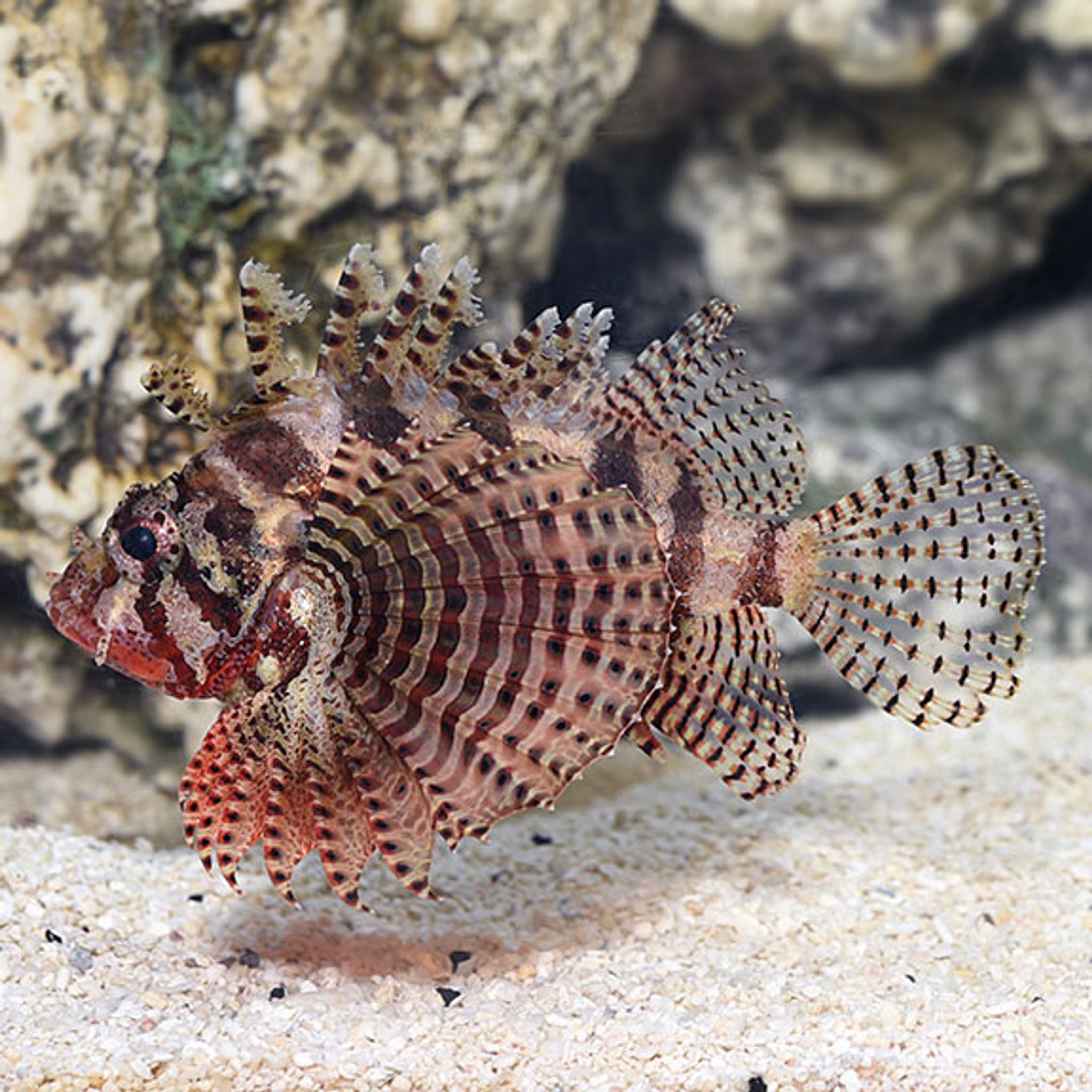

Is Lionfish Reef Safe? Coral and Invertebrate Compatibility Explained
A lionfish will never nip, sting, or otherwise harm a single coral polyp in your tank — physically, they are completely reef safe. But "reef safe" is doing a lot of work in that sentence, because a lionfish will happily eat almost any small fish or mobile invertebrate that shares the aquarium with it. This guide splits the question into two parts — safety for the rock and coral versus safety for everything living on it — so you know exactly what you're signing up for.
The Short Answer: Reef Safe With Caution
Lionfish (genus Pterois, which includes common species like the volitans and radiata, and genus Dendrochirus, the dwarf species such as fuzzy dwarf and zebra lionfish) are venomous, slow-moving ambush predators. They are not corallivores — they have no interest in coral tissue, LPS or SPS skeletons, zoanthids, or soft coral polyps. They won't disturb live rock, sift or disrupt sand, or damage frags during normal swimming.
The catch is predation. Lionfish eat anything small enough to fit in their mouth, and that includes:
- Small or juvenile fish
- Ornamental shrimp (cleaner shrimp, peppermint shrimp, fire shrimp)
- Small crabs
- Snails, in some cases, if the animal is moving
So the honest label most experienced reefkeepers use is reef safe with caution — or more precisely, "reef safe except invertebrates and small fish." The coral and rockwork are never at risk; the tankmates are.
What's Actually Safe From a Lionfish
Sessile and slow, low-profile invertebrates are essentially ignored, since a lionfish hunts by ambushing movement rather than grazing:
- Corals of all types — LPS, SPS, soft corals, zoanthids, polyps, mushrooms
- Larger clams, which can't be swallowed and don't trigger a strike response
- Feather dusters, as long as they aren't repeatedly disturbed
On the fish side, anything too large to be swallowed whole is generally safe, provided it isn't aggressive enough to nip at the lionfish's fins or spines:
- Tangs and larger surgeonfish
- Larger angelfish
- Larger wrasses
- Appropriately sized groupers
What's at Risk
Mobile invertebrates and small fish are the real compatibility concern. This includes ornamental and pistol shrimp, small crabs, some sea stars, small gobies and blennies, small clownfish and damsels below a safe size threshold, and small fairy or flasher wrasses.
Whether snails and hermit crabs are truly at risk is a point where advice diverges. Some keepers report their lionfish completely ignoring slow crawling snails and hermits; others have lost them outright. The safest assumption: risk is size- and species-dependent, and any invertebrate small enough to be swallowed whole should be considered at risk. Watch closely for the first few weeks after introducing anything new.
A related myth worth retiring: some hobbyists claim a cleaner shrimp can cohabit safely with a lionfish if the shrimp is introduced as an adult while the lionfish is still small, on the idea that an early bond prevents predation later. In practice this is unreliable long-term — as the lionfish grows, its gape and appetite grow with it, and a relationship that held at six months may not hold at two years. Plan for eventual predation risk rather than betting on an exception.
A Practical Size Rule
Most coverage of lionfish stops at "avoid small fish," which isn't precise enough to plan a stocking list. A useful working rule: any fish or invertebrate whose body is smaller than roughly half the lionfish's head length is at risk of being eaten. Since a lionfish's mouth gape scales with head size, this gives you a rough, testable benchmark rather than a vague warning — measure the lionfish's head, and anything under about half that length should be assumed prey-sized.
Growth Trajectory and Tankmate Planning
Lionfish grow steadily, which means the "safe" tankmate list shrinks over time even if you never add anything new. A dwarf lionfish purchased at 1–2 inches can reach its adult size of around 4 inches within its first year, while a volitans purchased small can reach 12–15 inches as an adult within 12–18 months under good feeding. Fish and shrimp that were too large to swallow at purchase can become perfectly bite-sized a year later.
The practical implication is to plan tankmates around the lionfish's adult size, not its current size, and to revisit your stocking list periodically rather than assuming an established peaceful coexistence will hold indefinitely.
Tank Size and Bioload
| Lionfish type | Minimum reef tank size | Adult size | Key consideration |
|---|---|---|---|
| Dwarf (Dendrochirus) | 50+ gallons (190+ L) | Up to ~4 in (10 cm) | Comfortable swimming room and stability |
| Common/volitans (Pterois) | 125+ gallons (475+ L) | Up to 12–15 in (30–38 cm) | Adult size and heavy bioload |
Some sources cite 30 gallons as a workable minimum for dwarf species, but 50+ gallons gives more stable water parameters and swimming space for the long term. Full-size volitans-type lionfish genuinely need 125+ gallons; undersized tanks lead to stunted growth, poor water quality, and stress-related illness.
Lionfish are messy, efficient eaters and heavy waste producers relative to their size. For a coral-focused reef running a lionfish, prioritize stronger filtration and protein skimming sized above what the coral alone would require, and factor the lionfish's bioload into water volume planning — this matters more for water quality than any coral-specific risk. A capable skimmer and adequate flow through your filtration setup will do more for long-term stability than any lionfish-specific product.
Water Parameters and Feeding
Lionfish need no special coral-related water parameters. Standard reef targets apply:
- Specific gravity: 1.020–1.025
- Temperature: 74–80°F (23–27°C)
- pH: stable around 8.1–8.4
Feeding is where lionfish differ most from typical reef fish. They're generally fed meaty foods — silversides, shrimp, and mysis — offered via feeding tongs or a dedicated feeding station rather than left to compete in a community feeding. Wild-caught specimens can be stubborn about frozen food at first and may need live feeder shrimp or feeder fish to trigger a feeding response before being weaned onto frozen. This is a normal transition period, not a sign of illness.
Because lionfish are ambush predators fed on a schedule rather than hunters that expend energy continuously, overfeeding is a real risk — it leads to obesity and fatty liver in captive animals. Target feeding two to three times per week rather than daily is a more realistic match for their natural energy expenditure.
Common Mistakes to Avoid
- Stocking before adding the lionfish, not after. Adding a lionfish to an already-established reef with small fish and shrimp usually ends with those animals disappearing one by one. Plan the full tankmate list before the lionfish goes in.
- Undersized housing for adult volitans-type lionfish, leading to stunted growth and chronic water quality problems.
- Getting stung during maintenance. A lionfish that has learned the tank and isn't easily spooked can be in the way when you reach in to trim frags or rearrange rock. Always locate the fish before putting your hands in the water.
- Mistaking normal weaning for illness when a newly imported, wild-caught lionfish refuses frozen food.
- Assuming a "reef safe" label covers invertebrates. It almost always means safe for the coral and rock structure only — not a guarantee for shrimp, crabs, or small fish.
- Overfeeding on a routine schedule, which leads to obesity over time.
Introducing New Coral or Invertebrates to an Established Lionfish Tank
Rather than releasing a new coral frag or invertebrate directly into a tank with a resident lionfish, use a temporary acclimation box or a clip-in divider to let the new addition settle and let the lionfish register its presence without an immediate strike opportunity. This is especially useful for anything mobile — shrimp, crabs, or small fish — since a slow introduction lets you observe behavior before committing to full release. Sessile corals don't need this precaution, since they present no strike trigger, but it's cheap insurance for anything that moves.
A Note on Responsible Ownership
Lionfish are an invasive species across the Atlantic, Gulf of Mexico, and Caribbean, where they have no natural predators and have caused significant damage to native reef fish populations. This is a reason U.S. retailers and hobbyists increasingly emphasize responsible ownership: never release a lionfish, or any aquarium animal, into local waterways or coastal waters under any circumstances. If you can no longer keep one, look into local aquarium clubs, retailers, or public aquariums that accept surrenders rather than releasing it.
Lionfish Among Other Reef "Oddballs"
Lionfish are often grouped with other unusual, predatory marine fish kept for personality and appearance rather than reef-building utility — frogfish, anglerfish, and groupers among them. These oddball predators generally share the same compatibility profile as lionfish: safe for coral and rock structure, but not safe for small tankmates. Stocking any of them means planning target feeding and tankmate size in advance, rather than treating them like a typical community reef fish.
Frequently Asked Questions
Will a lionfish eat my coral?
No. Lionfish don't eat coral polyps or tissue — they're strict predators of other animals, not corallivores, so LPS, SPS, soft corals, and zoanthids are all physically safe around them.
Can I keep cleaner shrimp with a lionfish?
Generally not reliably. Even if a cleaner shrimp coexists peacefully with a small juvenile lionfish, shrimp small enough to fit in its mouth remain at ongoing risk as the fish grows toward adult size.
What size tank does a lionfish need for a reef setup?
Dwarf species do well starting at 50+ gallons (190+ L), while full-size species like volitans need 125+ gallons (475+ L) once they reach their adult size of up to 12–15 inches.
Are lionfish reef safe?
Yes for corals and live rock, no for small fish and most ornamental invertebrates. The accurate label is "reef safe with caution," meaning the coral structure is never the issue — tankmate size is.
What can I feed a lionfish?
Frozen silversides, shrimp, and mysis offered via feeding tongs or a feeding station work well for most captive lionfish. Some wild-caught individuals need live feeder shrimp or fish initially before they'll accept frozen food.
Is a lionfish sting dangerous?
A lionfish sting from its venomous dorsal, pelvic, and anal spines is painful and can cause swelling or nausea, but it's rarely dangerous to healthy adults. Medical attention is still advised, particularly for anyone with an allergic reaction or for stings to sensitive areas.
Can lionfish live with other fish?
Yes, as long as those fish are too large to be swallowed and aren't aggressive enough to stress the lionfish or nip at its fins and spines. Tangs, larger angelfish, larger wrasses, and appropriately sized groupers are common choices.
Do lionfish need special reef water parameters?
No. Standard reef parameters apply — specific gravity 1.020–1.025, temperature 74–80°F (23–27°C), and stable pH around 8.1–8.4 — with no coral-specific requirement tied to keeping a lionfish.
If you're planning a lionfish reef build, start by browsing marine fish sized appropriately as tankmates and corals for the structure itself on FishyHub, and keep any marine shrimp additions strictly optional rather than a permanent fixture of the stocking plan.


