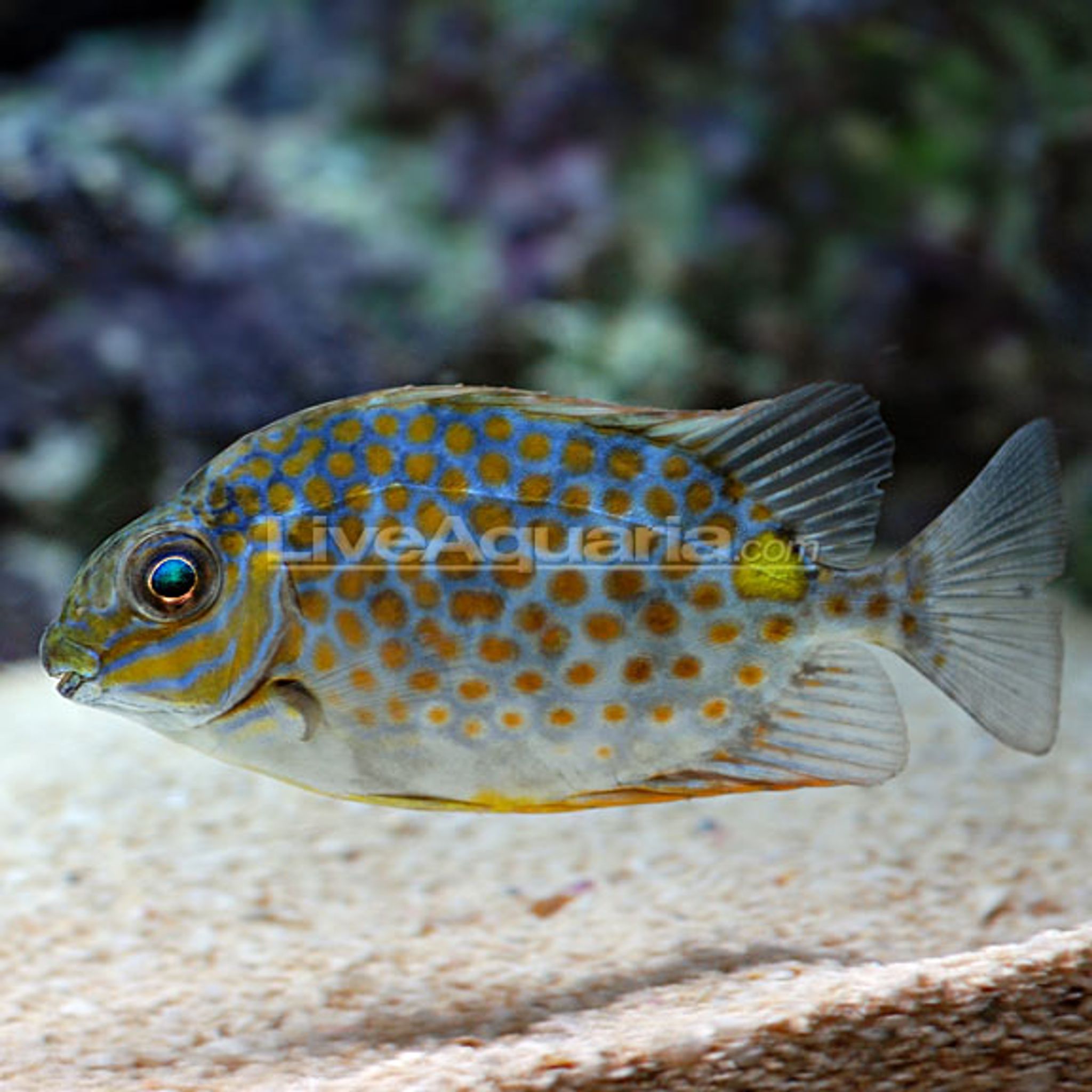
Is Foxface Rabbitfish Reef Safe? Coral and Invertebrate Compatibility Explained
Foxface Rabbitfish (Siganus vulpinus) is best described as reef safe with caution, not a guaranteed hands-off tankmate for every coral in your system. It's an herbivore by nature, not a coral predator, but a hungry or bored individual can pick at soft-bodied corals and clam mantles. Here's the mechanism behind that behavior and a practical framework for keeping it from becoming a problem in your tank.
The Short Answer: Reef Safe With Caution
Marketing copy and casual retailer lists often call the Foxface Rabbitfish flatly "reef safe," while experienced reef keepers push back with stories of nipped zoanthids or a chewed leather coral. Both are partly right. The honest verdict:
- Reef safe for the large majority of keepers who feed generously and stock thoughtfully.
- Not a 100% guarantee — individual behavior varies, and some fish never touch coral while others become chronic nippers.
- Risk is concentrated in a few coral types, not spread evenly across your whole reef.
Treat "reef safe" as a probability, not a certificate. The rest of this guide is about tilting that probability in your favor.
Why Nipping Happens: It's Hunger, Not Predation
In the wild, Foxface Rabbitfish graze almost constantly on marine algae and the film algae covering rock and reef structure. They have no evolutionary interest in fish, shrimp, snails, or other motile prey — their mouths and grazing behavior are built for scraping algae, not hunting.
Coral nipping is an opportunistic, hunger-driven behavior, not predation. When a foxface isn't getting enough to eat, or is understimulated in a tank with little algae to graze, it starts sampling anything that resembles a food source — including the fleshy tissue of certain corals. This is a key distinction: you're not managing a predator, you're managing an underfed grazer.
Corals Most at Risk
| Coral type | Nipping risk | Notes |
|---|---|---|
| Soft corals (leathers, etc.) | Moderate | Fleshy tissue can attract test-nips, especially in underfed fish |
| Zoanthids/palythoa | Moderate | Occasionally picked at; risk drops sharply with good feeding |
| Fleshy LPS (brain-type, Acan-type) | Moderate | Soft, exposed tissue is more tempting than a hard skeleton |
| Clam mantles | Low to moderate | Occasional test-nips reported; watch behavior after introducing a clam |
| SPS/stony corals | Low | Thin tissue over hard skeleton is rarely bothered |
Invertebrates Are Generally Not at Risk
This is where the Foxface Rabbitfish's reputation is often oversold in the negative direction. It is not a predator of motile invertebrates. Crustaceans, snails, hermit crabs, shrimp, and starfish are essentially never on the menu — the risk profile is limited to sessile coral flesh, not anything that crawls. If your main concern is your cleanup crew or a shrimp colony, a Foxface is one of the lower-risk fish you can add.
The Feeding Rule That Prevents Most Problems
Underfeeding is the single biggest driver of coral nipping, and it usually comes from a well-meaning mistake: assuming the fish "should just eat algae" and skipping supplemental feeding. Even a tank with visible algae growth may not produce enough volume to satisfy an active grazer.
Feed 2–3 times per day with a varied herbivore diet:
- Nori or seaweed sheets clipped to the glass daily
- Herbivore pellets formulated for tangs and rabbitfish
- Spirulina-based foods
- Occasional mysis for variety
- In-tank algae growth and pod grazing as a constant supplement, not a replacement
A foxface with constant grazing options — macroalgae, live rock film algae, pods — is far less likely to test coral tissue out of hunger or boredom. If you're stocking corals FishyHub lists as more sensitive to nipping, like soft corals or LPS hard corals, this feeding discipline matters even more.
The Target-Feeding Trick
A simple, underused technique: place a feeding clip or veggie clip on the opposite side of the tank from your most prized corals. This redirects the fish's attention and grazing habit toward a consistent feeding zone, away from anything you don't want tested. It's a small habit that meaningfully lowers risk in tanks with valuable soft corals or zoanthid colonies.
Tank Size and Growth: Plan for the Adult, Not the Juvenile
A Foxface Rabbitfish needs a minimum of 125 gallons (about 473 liters), with a long, wide footprint prioritized over height. This isn't just a comfort recommendation — undersized tanks increase stress, and stressed fish are more prone to nipping and aggression.
Growth is fast: a 2-inch (5 cm) juvenile can reach 5–6 inches (13–15 cm) within about a year with good care, eventually maturing to 7–9 inches (18–23 cm). Buying small and planning to "upgrade later" is a common mistake — plan tank size for the adult fish from day one.
Handling: Mild Venom, Real Caution
Foxface Rabbitfish carry mildly venomous spines on the dorsal, anal, and pelvic fins. A sting is comparable to a bee sting — painful, with localized swelling — and not lethal, but genuinely unpleasant and worth avoiding entirely.
- Never handle a Foxface Rabbitfish with bare hands.
- Use a net or a container to move the fish during tank maintenance, bagging, or acclimation.
- Never squeeze or grip the fish, even through a net.
Algae Control: Where It Excels and Where It Doesn't
Foxface Rabbitfish are among the best reef-safe options for bubble algae (Valonia) control — few other fish reliably eat it. They're also strong performers against hair algae and film-type turf algae.
Where sources disagree is on two specific problems:
- Bryopsis: hit or miss by individual fish. Some foxface eat it readily, others ignore it entirely. Don't buy one specifically to solve a Bryopsis outbreak.
- Cyanobacteria: not touched at all, because cyanobacteria is a bacteria, not an algae. This needs separate treatment — manual removal, nutrient export, flow improvements, or a targeted additive — not an algae-eating fish.
Temperament and Tankmates
Foxface Rabbitfish are generally peaceful toward most reef tankmates, but they can become aggressive or territorial toward other rabbitfish or similarly shaped and colored tangs, particularly in smaller systems. As a rule:
- Keep one Foxface Rabbitfish per tank unless the system is very large.
- If keeping two rabbitfish, introduce similarly sized juveniles simultaneously to reduce established-territory aggression.
- Avoid pairing with tangs of similar body shape or coloring in anything under a very large system.
Acclimation and Individual Variation
New or recently shipped Foxface Rabbitfish are more likely to pick at coral before settling into a normal grazing routine. Give a new fish several weeks before judging its long-term coral behavior — early nipping in the first days doesn't necessarily predict permanent habits.
It's also worth remembering that "reef safe" is a generalization across the species, not a guarantee for every individual. Some foxface never touch a coral in their life; others, especially if hungry, bored, or recently stressed, become persistent nippers. Watch behavior after purchase rather than assuming safety by reputation alone.
Species-Level Nuance
Not all rabbitfish behave identically. The Foxface (Siganus vulpinus, sometimes labeled S. uspi) has a notably milder reputation for coral nipping than some larger rabbitfish species in the same family. If you're comparing rabbitfish species for a reef tank, this distinction matters — don't extend a caution rating for a larger, more herbivore-aggressive species onto the Foxface, or vice versa.
Quarantine Note
Like other tangs and rabbitfish, Foxface can be prone to marine ich and velvet. A standard quarantine period before introduction to the display tank is good practice alongside all the reef-safety guidance above — a stressed, disease-fighting fish is also more likely to have an inconsistent appetite, which circles back to the hunger-driven nipping risk.
A Practical Decision Checklist
Before adding a Foxface Rabbitfish to a reef tank, run through this:
- Tank size — is it at least 125 gallons, long and wide rather than tall?
- Feeding plan — do you have nori, herbivore pellets, and a daily feeding schedule ready, not just reliance on in-tank algae?
- Coral stocking — are your most valuable soft corals, zoanthids, or LPS pieces established and healthy, ideally added before or well after the fish rather than simultaneously with a new, unproven specimen?
- Specimen health — has the fish been observed eating at the point of purchase, rather than buying a thin or stressed-looking individual?
- Early monitoring plan — will you watch behavior for the first few weeks and respond quickly (more feeding, target-feeding away from a coral, or rehoming) if a specific coral keeps getting inspected or nipped?
If you can check all five, the odds favor a long-term reef-safe outcome.
Cost and Sourcing Notes
Foxface Rabbitfish are widely available in the US marine trade, with both wild-caught and, less commonly, captive-bred specimens showing up depending on supplier. Pricing varies by size and source, so compare listings when browsing Foxface & Rabbitfish options rather than assuming a single fixed price point. A visibly active, well-fed specimen at the time of purchase is a better predictor of reef-safe behavior than price alone.
Macroalgae: A Natural Ally for Reef-Safe Grazing
Keeping a Foxface well-fed isn't only about clipped nori — macroalgae in the display tank or an attached refugium gives it constant, low-effort grazing material while also benefiting the whole system. A few common options for US reef keepers:
- Chaetomorpha: a tangled, non-invasive macroalgae that exports nitrate and phosphate efficiently and won't go sexual or melt down. It's the safer default for most refugiums.
- Caulerpa: fast-growing and useful for nutrient export, but it can go sexual and melt suddenly, dumping stored nutrients back into the water column. Use with awareness of this risk rather than as a set-and-forget choice.
- Gracilaria (ogo): a good grazing food source that also exports nutrients, often more palatable to herbivorous fish than chaeto.
- Red mangrove-adjacent macroalgae options: less common but useful additions for pod habitat and additional filtration in larger refugium setups.
Beyond nutrient export, macroalgae provides pod and copepod habitat, which benefits mandarins and other pod-feeding fish sharing the tank, along with modest oxygen production during lit hours. For a Foxface specifically, macroalgae in a connected refugium or even a dedicated grazing patch reduces reliance on coral tissue as a fallback food source.
Common Mistakes to Avoid
- Undersized tanks: buying a Foxface for anything under 100–125 gallons leads to stunted growth, elevated stress, and a higher chance of nipping or aggression.
- Underfeeding: assuming the fish will subsist on in-tank algae alone is the top driver of coral nipping — always supplement.
- Bare-hand handling: risks a painful venomous spine sting; always use a net or container.
- Rushed multi-rabbitfish stocking: adding two rabbitfish, or a rabbitfish and a similarly shaped tang, to a smaller tank without simultaneous introduction invites territorial aggression.
- Ignoring early warning signs: repeated inspection or nipping of one specific coral should be addressed immediately with more feeding or target-feeding, not dismissed because the species is "reef safe."
- Buying without observation: a thin or stressed specimen that isn't seen eating at the store is a higher risk than a visibly active, well-fed one.
Frequently Asked Questions
Will a Foxface Rabbitfish eat my coral?
Rarely, and mostly only if underfed. It's an herbivore that strongly prefers algae, but hunger or boredom can lead to occasional nipping of soft corals, zoanthids, or clam mantles.
Is Foxface Rabbitfish reef safe with clams?
Generally yes, but there are occasional reports of mantle nipping. Keep the fish well-fed and observe its behavior closely after introducing a clam to the tank.
How big of a tank does a Foxface Rabbitfish need?
At least 125 gallons (about 473 liters), ideally longer and wider than it is tall, to suit the fish's adult size of 7–9 inches (18–23 cm) and active swimming behavior.
Can I keep two rabbitfish together?
Only in a large tank with similarly sized juveniles introduced simultaneously. Otherwise, expect territorial aggression, especially between two of the same species or similarly shaped tangs.
Are Foxface Rabbitfish venomous or dangerous to handle?
Yes. The dorsal, anal, and pelvic spines carry mild venom that causes a painful sting similar to a bee sting. Always use a net or container during handling, never bare hands.
What should I feed a Foxface Rabbitfish to keep it reef safe?
Daily nori or seaweed sheets, herbivore pellets, spirulina-based foods, and consistent in-tank algae grazing. Feeding 2–3 times a day substantially reduces the risk of coral nipping.
Does Foxface Rabbitfish eat bubble algae?
Yes. It's one of the most reliable fish choices for controlling bubble algae (Valonia), along with hair algae and film-type turf algae, though it's inconsistent on Bryopsis and won't touch cyanobacteria.
How fast does a Foxface Rabbitfish grow?
Quickly. A small juvenile around 2 inches (5 cm) can reach 5–6 inches (13–15 cm) within about a year with good care, so plan for its full adult tank size from the start rather than upgrading later.
If you're ready to stock one, browse available Foxface & Rabbitfish on FishyHub and pair your choice with a feeding routine and tank size that keep it reef safe for the long term.

