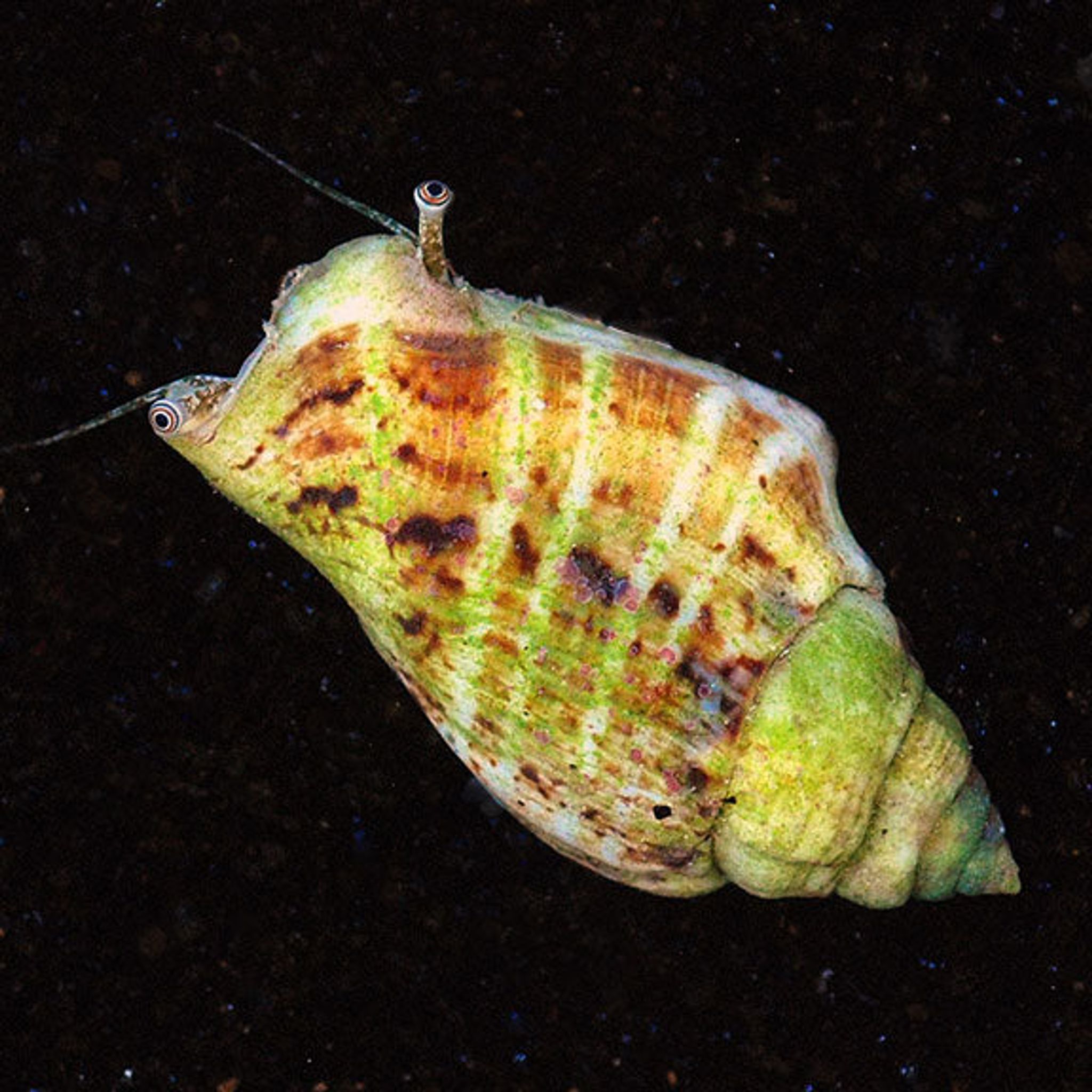

Is Fighting Conch Reef Safe? Compatibility With Fish, Coral and Invertebrates
Yes — fighting conch are reef safe with virtually every coral, clam, and anemone you'll keep, because they physically cannot eat coral tissue. The real compatibility question isn't what a fighting conch might do to your reef, it's what your reef's tankmates and hardscape might do to the conch, and that's what this guide breaks down.
Why Fighting Conch Are Reef Safe
A fighting conch is a herbivore and detritivore, not a predator. It uses a radula, a rasping tongue-like organ, to scrape algae film, diatoms, and organic debris off individual grains of sand. It has no jaws capable of biting coral polyps, no venom, and no interest in coral tissue as a food source.
That makes them compatible with:
- SPS corals (Acropora, Montipora, and similar fast-growing species)
- LPS corals (hammers, torches, frogspawn, and other large-polyp types)
- Soft corals (leathers, toadstools, xenia)
- Zoanthids and mushroom corals
- Gorgonians
- Clams and anemones
If you're building out a coral collection, browsing coral livestock alongside a cleanup crew plan is a reasonable next step once your sand bed and parameters are dialed in.
The Real Risk: Physical Contact, Not Predation
Fighting conch shells grow 3-4 inches (7.5-10 cm) long and get heavy as the animal matures. They plow across the sand in surges rather than gliding smoothly, and that bulk is the actual hazard in a reef tank — not the animal's diet.
A conch moving through the sand bed can:
- Bump or tip over small, unglued coral frags
- Partially bury low-placed frags as it plows past
- Dislodge loosely stacked rockwork
How to prevent it:
- Mount and frag-glue all corals to rock rather than resting them loose on the sand
- Keep small frags elevated on a frag rack or upper rockwork, out of the conch's ground-level path
- Leave a buffer zone of open sand between the substrate and your lowest coral placements
- Secure all rockwork before adding the conch, since a shifting rock can crush what's underneath it
Stocking: Sand Footprint Matters More Than Gallons
Because a fighting conch's whole life happens on the sand bed, the surface area of that sand — not total water volume or tank height — is what determines how many you can keep.
| Guideline | Rough ratio | Notes |
|---|---|---|
| Minimum tank size | ~20 gallons (76 L) for one | Smaller footprints risk food shortage |
| Rule of thumb | 1 conch per 20-30 gallons of sand footprint | Sources vary; treat as a starting range |
| Larger systems | ~2 per 100 gallons (380 L) | Still footprint-dependent, not volume-dependent |
Different sources land on slightly different ratios — some say one per 20 gallons, others one per 30, others two per 100. Rather than chasing an exact number, base stocking on your actual sand-bed surface area and how much diatom and algae film it's producing. If you're keeping more than one conch per 30-40 gallons, plan on supplemental feeding to make up the gap.
Sand Bed Depth: The Single Biggest Care Factor
More than parameters, more than tankmates, sand depth determines whether a fighting conch thrives or slowly starves. They need to plow through and partially burrow in the substrate to feed and to feel secure.
- Target depth: at least 2-3 inches (5-7.5 cm) of fine sand, ideally deeper
- Substrate type: fine or sugar-sized aragonite, not coarse crushed coral
- Bare-bottom or shallow (<2 in) tanks: not appropriate — the conch has nowhere to plow and no food base
A conch in a shallow or bare-bottom setup will start climbing rockwork and glass — often called "glass surfing." It's easy to mistake this for curiosity, but it's almost always a hunger or substrate signal, not normal behavior.
Water Parameters
Fighting conch build and maintain a shell out of calcium carbonate, so they need the same stable, reef-standard water chemistry that SPS corals require:
| Parameter | Target range |
|---|---|
| Temperature | 72-84°F (22-29°C) |
| Salinity (specific gravity) | 1.023-1.026 |
| pH | 8.1-8.4 |
| Calcium | ~380-450 ppm |
| Alkalinity | 8-12 dKH |
| Magnesium | Stable, reef-standard range |
Unstable calcium, alkalinity, or pH shows up first as shell problems: pitting, thinning, or a dull, chalky appearance near the shell's growing edge. Catching this early — before the shell visibly weakens — usually just means tightening up dosing consistency and retesting.
Feeding
In a mature tank with an established diatom and algae film on the sand, a fighting conch can mostly forage for itself. In newer, very clean, or heavily skimmed systems, there often isn't enough film to sustain them, and they need supplemental food:
- Sinking algae wafers or pellets
- Nori (dried seaweed) sheets
- Occasional meaty frozen foods, a few times a week
Repeated glass surfing or persistent rock climbing is the clearest sign a conch isn't finding enough food in the sand and needs supplemental feeding added.
Fish Compatibility
Fighting conch are peaceful and essentially invisible to fish, and fish return the favor. They're considered safe alongside common reef community fish, including:
- Clownfish
- Gobies and blennies
- Tangs
- Dottybacks
One tankmate group worth a specific mention: sand-sifting fish such as jawfish, sand-sifting gobies, and burrowing wrasses share the same sand bed. In practice they don't compete meaningfully — the fish sift for small fauna and the conch grazes surface film — but a very shallow or heavily disturbed sand bed can leave both underfed, so the depth and feeding guidance above applies double if you're combining them.
Invertebrate Compatibility
Fighting conch generally coexist well with other peaceful reef invertebrates:
- Reef-safe shrimp: cleaner, fire, peppermint, and skunk shrimp
- Other snails: nassarius, cerith, astrea, nerite, and turbo
- Most non-predatory crustaceans
Cleanup crew balance
Adding a fighting conch changes what your sand-focused cleanup crew needs. Since it covers a lot of the diatom and film-grazing work on open sand, you may need fewer sand-dwelling snails per gallon than a tank relying purely on nassarius or cerith snails — but you'll still want algae-grazing snails or a herbivore for glass and rockwork, since the conch stays on the substrate.
Predators and Tankmates to Avoid
Not every invertebrate or fish is safe to combine with a conch. The specific risks are narrower than "avoid all crabs" or "avoid all shrimp":
- Aggressive hermit crab species — Halloween hermits, electric blue hermits, and some larger hermit species are known to evict a conch from its shell to steal it, sometimes killing the conch in the process. This is a species-specific risk, not a hermit-crab-wide one: peaceful species like blue-leg, scarlet, or dwarf hermits are generally fine, and skipping hermits entirely removes the risk altogether.
- Large predatory fish — aggressive wrasses, triggerfish, and puffers can crack or pick at a shell's aperture.
- Certain crabs — arrow crabs and, in rare cases, emerald crabs have been reported picking at conchs.
- Coral banded and harlequin shrimp — these have been observed opportunistically probing shell openings, though this is less consistent than the hermit crab risk.
Multiple Conchs and Male Aggression
Fighting conch aren't aggressive toward fish or unrelated invertebrates, but males can be territorial toward other males. This ranges from pushing and proboscis-biting to, in worse cases, fatal fights.
The severity depends heavily on context:
- Small or under-fed tanks: aggression is more likely to escalate, since there's less space to avoid a rival and more competition over limited food
- Larger tanks with ample food and hiding space: pushing is more likely to stay minor
Practical recommendation: keep one conch per tank unless you can verify you're mixing sexes, or you have generous sand footprint and food supply to spare. Females and unrelated species aren't targeted by this behavior.
Tank Setup Checklist
Before adding a fighting conch to a display:
- Sand bed is at least 2-3 inches deep, ideally more, of fine or sugar-sized aragonite
- All rockwork is secured and all coral frags are glued down — nothing loose on the sand
- The tank is mature (several months established) with a visible diatom or algae film on the sand, rather than freshly cycled
- Drip-acclimate slowly — fighting conch are notably sensitive to sudden salinity or temperature swings during acclimation, more so than many reef fish
- No copper-based medication has been used, or is planned, in this display
Lifespan and Size
Given stable parameters and adequate food, fighting conch typically live several years, with some reports of individuals reaching 5+ years in ideal conditions. They reach roughly 3-4 inches (7.5-10 cm) in shell length, and a flared, thickened outer lip on the shell is the visual signal that an individual has reached maturity.
Breeding Overview
Captive breeding is rare outside dedicated aquaculture settings, but the natural process is worth understanding:
- Sexes are separate; males use a proboscis to mate with females
- Females lay long, gelatinous egg strings containing tens of thousands of eggs
- Eggs hatch into a planktonic larval stage with very high natural mortality
- Home reef tanks essentially never see larvae survive to settlement — this is a wild or facility-scale activity, not something to plan around in a display tank
Species Identification Note
"Fighting conch" in the aquarium trade generally refers to Strombidae species sold under names like fighting conch or tiger conch. These are distinct from juvenile queen conch, which are sometimes confused with fighting conch at a small size but grow much larger and are a different animal entirely. Before buying, confirm you're getting a recognized reef-safe fighting/tiger conch species rather than a juvenile of a larger, more demanding species mislabeled the same way.
Common Mistakes to Avoid
- Adding a conch to a bare-bottom or shallow-sand tank, then blaming the animal when it starves. Confirm 3+ inches of fine sand before purchase.
- Treating glass surfing as normal behavior instead of a hunger signal. Add supplemental sinking food when you see it.
- Placing unglued or top-heavy frags directly on the sand in a conch's path. Elevate frags on rock or a frag rack.
- Overstocking multiple males in a small tank, expecting no conflict. Limit to one per tank unless sexes are verified or space is generous.
- Using copper-based medication in a display containing conchs. Copper is lethal to conchs and other invertebrates — always treat fish in a separate quarantine tank.
- Buying a mislabeled species. Verify you're getting an actual reef-safe fighting/tiger conch, not a similar-looking but different Strombidae species.
Frequently Asked Questions
Will a fighting conch eat my coral?
No. Fighting conch lack the jaws and feeding mechanism needed to consume coral tissue. They graze algae, diatoms, and detritus off sand grains, not coral.
Can fighting conchs live with hermit crabs?
Generally yes with peaceful species like blue-leg, scarlet, or dwarf hermits. Avoid known aggressive, shell-stealing species such as Halloween or electric blue hermits, which can kill a conch to take its shell.
How many fighting conchs can I keep together?
A reasonable starting point is one conch per 20-30 gallons of sand footprint. Multiple males in a small or under-fed tank increase the risk of territorial fighting.
What do fighting conchs eat if I don't have much algae?
Supplement with sinking algae wafers or pellets, nori, or occasional meaty frozen foods a few times a week, especially in newer or very clean tanks.
How deep does my sand bed need to be for a fighting conch?
At least 2-3 inches of fine sand, ideally deeper, so the conch can plow through the substrate and graze effectively.
Are fighting conchs safe with fish?
Yes. They're peaceful, pose no threat to fish, and most reef fish ignore them entirely, including common community species like clownfish and gobies.
Why does my conch keep climbing the glass or rocks?
This behavior, often called glass surfing, usually signals insufficient food in the sand bed. Add supplemental algae-based feeding to address it.
How long do fighting conchs live and how big do they get?
In good conditions they typically live several years, with some reaching 5 or more. They grow to about 3-4 inches, with a flared, thickened shell lip marking maturity.
Bottom Line
A fighting conch is one of the lowest-risk additions you can make to a reef tank from a coral-safety standpoint — the compatibility work is really about protecting the conch, not your corals. Get the sand bed deep enough, glue down your frags and rock, skip the aggressive hermit species, and keep an eye on male-to-male dynamics if you're adding more than one. If you're ready to stock, you can explore fighting conch and other cleanup crew options in marine invertebrates on FishyHub.


