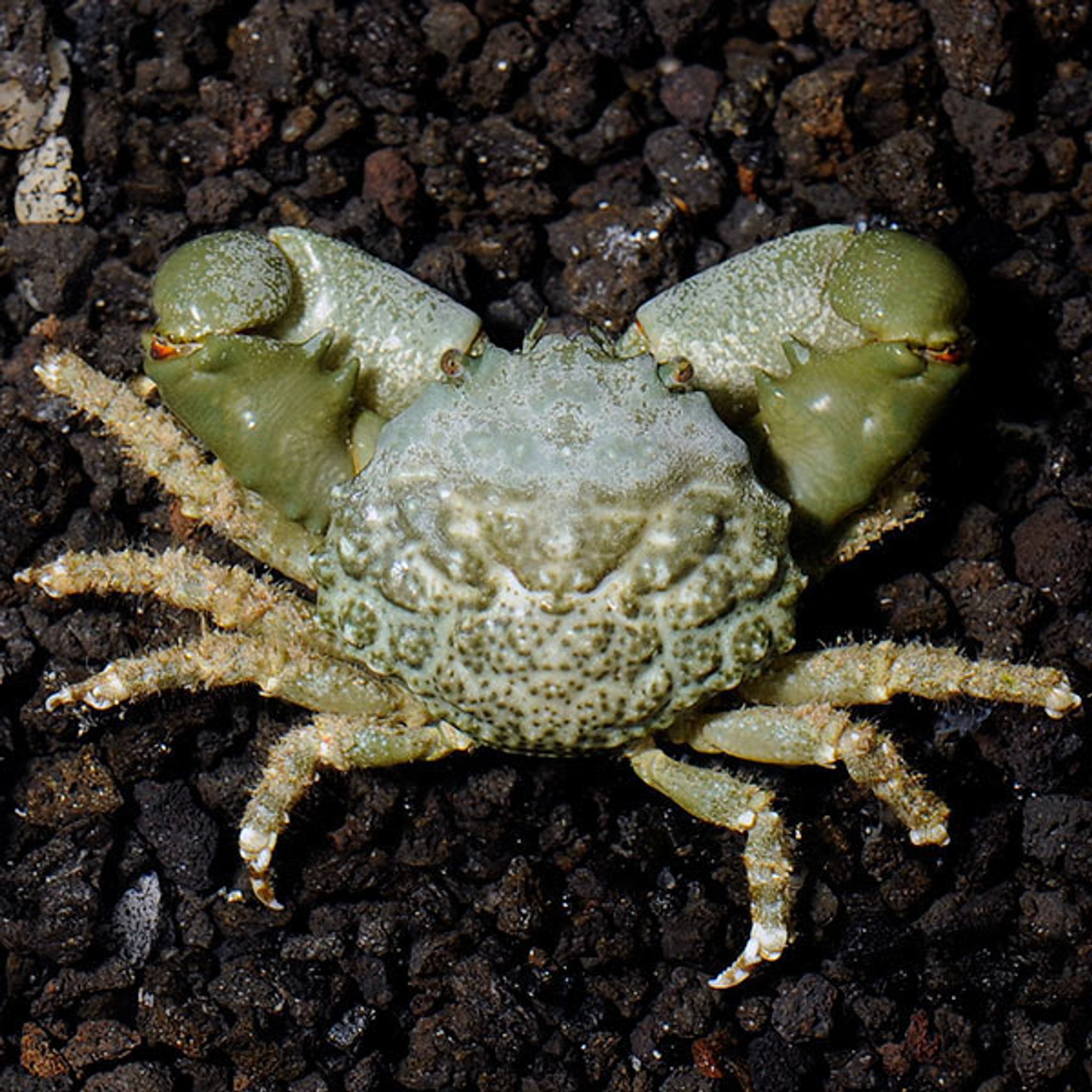

Is Emerald Crab Reef Safe? Compatibility With Fish, Coral and Invertebrates
The emerald crab is best described as reef safe with caution, not unconditionally reef safe. Well-fed individuals mostly graze on algae and detritus and leave coral alone, but a hungry or aging crab can turn opportunistic and nip soft coral polyps or clam mantles. The real story is about feeding and species identification, not a fixed label.
What Is an Emerald Crab, Exactly?
The true emerald crab is Mithraculus sculptus, sometimes sold as the emerald mithrax crab or green clinging crab. It's frequently confused with two other animals:
- Mithraculus forceps ("emerald clinging crab") — a close relative that looks similar but is considered slightly more prone to opportunistic predation on coral.
- Green porcelain or green shore crabs — unrelated species, some of which are invasive in coastal waters, that are occasionally mislabeled as "emerald" crabs at retail.
The most reliable way to identify a true M. sculptus is its claws: they're smooth, broad, and spoon-shaped, without hair or spines. If a crab's pincers look hairy, thin, or spiky, it's likely a different species, and its reef-safety and algae-eating habits may not match what's described here. This identification step matters more than most buying guides admit — it's the single biggest reason two hobbyists can have completely different experiences with a crab sold under the same common name.
Is an Emerald Crab Reef Safe? The Honest Verdict
Retail care sheets often market emerald crabs as unconditionally reef safe cleanup-crew members. Long-term reef keepers report a more nuanced pattern: crabs that behave perfectly for months, then start nipping at zoanthids, mushroom corals, or clam mantles once their algae supply dries up.
The most sensible framing is this: reef safety in this species is tied directly to feeding and food availability, not a fixed personality trait. A crab with steady access to algae, meaty scraps, or dried supplements has little reason to bother coral. A starving crab, especially an older or larger individual, will take the easiest opportunistic meal it can find.
Coral Compatibility Breakdown
| Coral type | Typical risk | Notes |
|---|---|---|
| SPS (small polyp stony) | Low | Less exposed flesh, generally ignored |
| LPS with fleshy polyps (hammer, frogspawn) | Moderate | Reported nipping when crab is underfed |
| Zoanthids and mushroom corals | Highest | Most commonly cited casualties in hungry-crab incidents |
| Giant clam mantles | Occasional | Nipped opportunistically, not a primary target |
If you're stocking a mixed reef, it helps to browse soft corals with this risk profile in mind and plan supplemental feeding before adding a crab to a tank that already houses fleshy-polyp species.
Primary Diet and Role in the Tank
Emerald crabs are prized above almost any other reef-safe cleanup crew member for one specific job: eating bubble algae (Valonia and Ventricaria species). Beyond that, they graze hair algae and film algae, and scavenge detritus and leftover meaty food from the substrate and rockwork.
Bubble Algae Control: Maintenance, Not a Cure
Bubble algae spreads by rupturing, releasing spores that colonize new surfaces. Manually popping bubbles by hand risks spreading that infestation further. An emerald crab handles bubbles in place, popping and eating them before rupture — which is exactly why it's one of the few reliable biological controls for this specific algae problem.
That said, a crab is maintenance, not eradication. A single crab won't clear a severe, established bubble-algae outbreak quickly. For heavy infestations, plan on manual removal to knock down the bulk of it, then let the crab manage regrowth and prevent it from returning.
Size, Lifespan, and Tank Requirements
- Size: shell width around 2 inches (5 cm) at maturity.
- Lifespan: typically 2 to 4 years in captivity with good care.
- Tank size: a minimum of 20–30 gallons (76–114 liters) per crab, in an established reef with mature live rock.
- Stocking density: one crab per 20–30 gallons is the standard guideline. Larger tanks or multiple crabs need proportionally more space and hiding structure.
Water Parameters
| Parameter | Target range |
|---|---|
| Temperature | 72–78°F (22–26°C) |
| pH | 8.1–8.4 |
| Salinity | 1.023–1.025 SG |
| Alkalinity | 8–12 dKH |
Emerald crabs, like most reef invertebrates, are sensitive to sudden swings in salinity or pH. Drip acclimate new arrivals over 30–60+ minutes rather than a quick float-and-dump. They're also sensitive to copper-based medications, which are lethal to them — never treat a display tank or shared sump with copper if a crab is present.
Fish Compatibility
Emerald crabs are generally peaceful toward, and largely ignored by, typical community reef fish such as clownfish, gobies, blennies, tangs, and wrasses. Compatibility risk runs the other direction: large or aggressive predatory fish will treat a crab as a snack rather than a tankmate.
Fish to avoid keeping with emerald crabs:
- Triggerfish
- Large or aggressive wrasses
- Puffers
- Lionfish
If your stocking list leans toward peaceful community species, an emerald crab is a low-risk addition. If you're planning a tank around larger predatory fish, skip the crab or accept that it's likely to become food.
Invertebrate Compatibility
Emerald crabs generally coexist well with snails, most shrimp species (including cleaner and peppermint shrimp), and hermit crabs. The main friction point with hermits is competition over shells and hiding spots, not predation. Use caution with small, slow-moving ornamental invertebrates in a tank where the crab is underfed, since a starving crab will treat almost anything easy to catch as an opportunistic meal.
Can Emerald Crabs Live With Other Crabs?
This is where sources disagree most. Some describe emerald crabs as peaceful enough to keep in pairs or small groups; others report fatal fights between two males, or between crabs in an understocked tank without enough hiding structure.
A workable rule:
- One crab per tank is the safest default for anything under 75 gallons.
- In larger tanks (75+ gallons) with ample rockwork and multiple hiding spots, a male-female pair tends to work better than two crabs of the same sex.
- Watch for early aggression signs — chasing, claw-flaring, or one crab consistently displaced from favored hiding spots — before it escalates into lost limbs or death.
- Mixing multiple aggressive crab species in a small footprint compounds the risk; it isn't just about emerald crabs fighting each other.
Feeding Schedule to Keep Them Reef Safe
Since hunger is the single biggest driver of coral-nipping behavior, a proactive feeding routine matters more than any other compatibility factor. Once natural algae growth slows (a sign your crab is doing its job), supplement with:
- Algae wafers or dried seaweed/nori, offered 2–3 times per week
- Small amounts of meaty frozen food, alternated with the algae-based feedings
Clip a piece of nori to the rockwork or drop a wafer near the crab's known hiding spot in the evening, when these crabs are most active. Consistent supplemental feeding is the difference between a crab that ignores your zoanthids indefinitely and one that eventually samples them out of necessity.
Molting: What's Normal and What's Not
Like all crustaceans, emerald crabs molt periodically to grow, shedding their old exoskeleton. Two things to know:
- Leave the old shell in the tank. The crab typically eats it afterward to recover calcium.
- Expect several days of hiding after a molt, while the new shell hardens. A crab that disappears for a few days has very likely just molted, not died.
Before assuming predation or death, check thoroughly under rockwork and look for an intact molted shell. Finding one confirms a normal molt rather than a loss — and it means you shouldn't rush to add a replacement crab, which risks a territorial conflict if the original resurfaces.
Common Mistakes to Avoid
- Expecting one crab to fix a severe bubble-algae outbreak overnight. It controls regrowth; it doesn't clear an entrenched infestation fast.
- Buying a look-alike species by mistake. Check the claw shape at purchase to confirm you're getting Mithraculus sculptus.
- Letting algae run out with no supplemental feeding. This is the top cause of coral-nipping incidents.
- Overstocking multiple crabs in a small footprint, leading to fighting and lost limbs.
- Assuming a missing crab is dead after a molt, instead of checking rockwork for a live crab or an intact shed shell.
- Using copper-based medication anywhere in the system, including a shared sump.
- Skimping on live rock and hiding structure, which increases hermit crab conflicts and general crab stress.
- Housing a crab with large predatory fish, turning your cleanup crew member into a meal.
If you're building out your cleanup crew, the marine invertebrates selection on FishyHub includes crabs, shrimp, and snails that can be paired thoughtfully once you know these compatibility rules.
Frequently Asked Questions
Will an emerald crab eat my coral?
Rarely, if the crab is well-fed. Risk rises with hunger, and targets tend to be soft, fleshy coral polyps (zoanthids, mushrooms) and clam mantles rather than SPS corals.
How many emerald crabs can I keep together?
Generally one crab per 20–30 gallons. Pairs can work in larger tanks with ample hiding space, but keeping multiples increases fighting risk once the available food supply runs low.
What do emerald crabs eat besides algae?
Detritus and leftover meaty foods from the substrate, plus algae wafers or dried nori as supplements when natural algae growth slows down.
Are emerald crabs reef safe with clownfish, shrimp, and snails?
Yes, typically. They're peaceful with most community reef fish and coexist well with snails and shrimp. The main thing to watch is shell competition with hermit crabs, not predation.
Why is my emerald crab hiding and not moving?
It's most likely molting, which is completely normal. Leave it alone, don't remove the old shell, and expect it to reappear within a few days once its new exoskeleton hardens.
Do emerald crabs really eat bubble algae?
Yes — they're among the most reliable biological controls for Valonia and Ventricaria bubble algae, popping and eating bubbles before they rupture and spread. They manage regrowth well but aren't a guaranteed cure for a heavy existing outbreak.
Ready to add a cleanup crew member to your reef? Browse marine livestock on FishyHub to compare crabs, shrimp, and snails suited to your tank size and coral mix.


