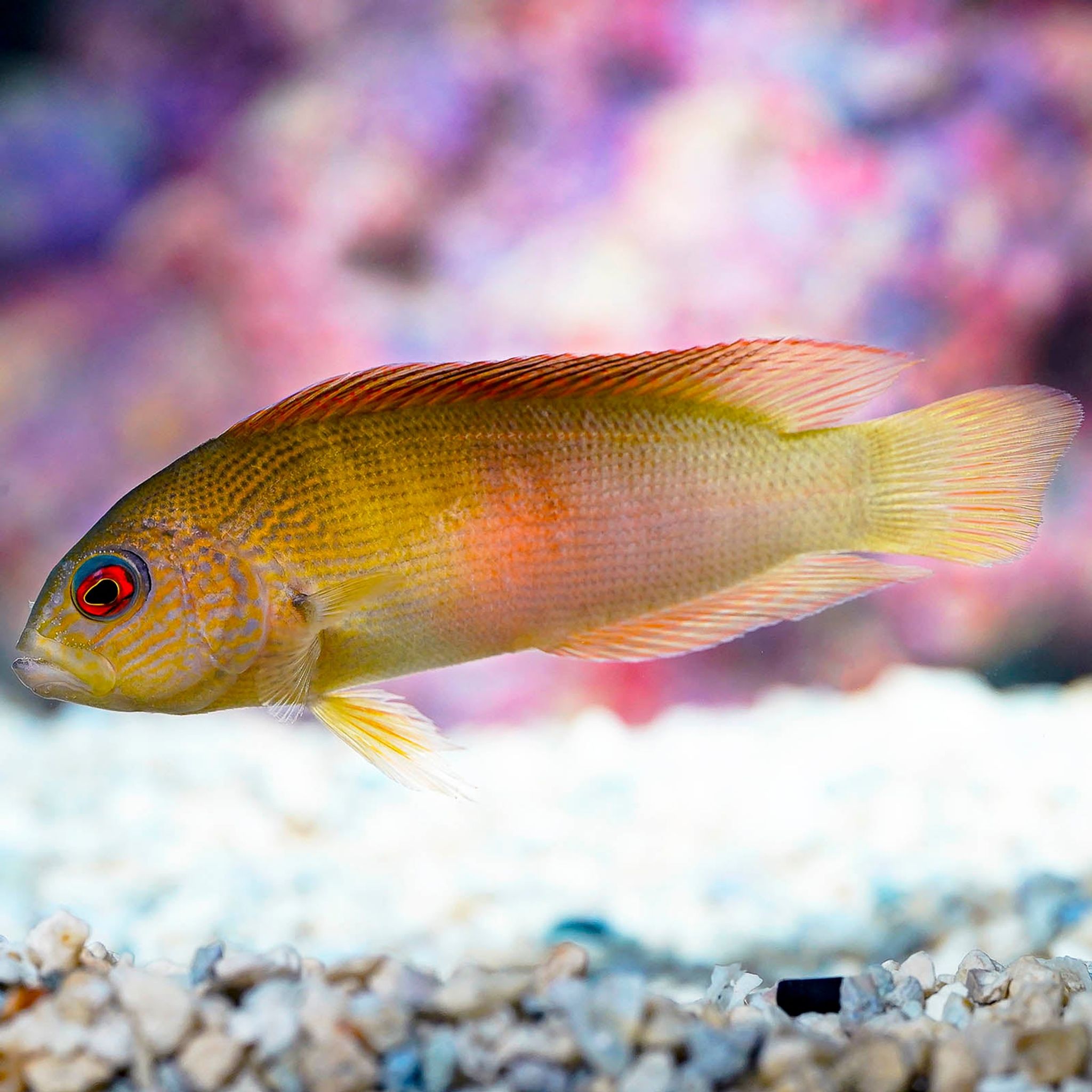

Is Dottyback Reef Safe? Coral and Invertebrate Compatibility Explained
Yes, dottybacks are reef safe when "reef safe" means safe with corals — they will not nip, host in, or otherwise damage SPS, LPS, soft corals, zoanthids, or anemones. What they are not automatically safe with is small, mobile invertebrates like shrimp, which is where most of the confusion around this fish comes from. This guide separates the two questions and walks through species-by-species and invertebrate-by-invertebrate compatibility so you can match the right dottyback to your specific tank.
"Reef Safe" vs. "Invertebrate Safe" — Two Different Questions
Hobbyists often use "reef safe" as a catch-all term, but it actually covers two separate categories of animal:
- Coral safe: Does the fish eat, nip, or physically damage sessile reef life — corals, zoanthids, mushrooms, and anemones? For dottybacks, the answer is essentially always yes, they're safe. Dottybacks are carnivorous hunters of small live prey, not coral grazers, so coral tissue simply isn't on their menu.
- Invertebrate safe: Does the fish leave mobile invertebrates — shrimp, crabs, snails, worms, copepods — alone? Here the answer is conditional. A dottyback that never touches a single coral polyp can still hunt down a small shrimp within days of being introduced.
Treating these as one label is the single biggest source of "my reef-safe fish killed my shrimp" surprise. A fish can be 100% coral safe and still be a real threat to certain tankmates.
Coral and Sessile Invertebrate Compatibility
Dottybacks (family Pseudochromidae) are among the most reliably coral-safe fish sold for reef tanks. There is no meaningful disagreement on this point across the hobby:
- They do not pick at SPS or LPS tissue.
- They do not host in or irritate anemones the way some damsels or clownfish behaviors can.
- They leave zoanthids, mushroom corals, and polyps completely alone.
The one indirect nuance worth knowing: a dottyback establishing a den in the rockwork may dig, shift sand, or rearrange loose rubble near a coral's base while claiming its territory. It isn't biting the coral, but a frag placed too close to a preferred crevice can occasionally get knocked over or buried at the edges. Give corals some breathing room from obvious cave openings and this is a non-issue.
Mobile Invertebrate Compatibility: The Real Risk
This is where "reef safe" and "tank safe" diverge. Dottybacks are opportunistic hunters, and small, slow-moving, or freshly molted invertebrates are exactly the kind of prey their instincts target.
Ornamental Shrimp
Small or juvenile shrimp — peppermint shrimp, sexy shrimp, and smaller cleaner shrimp species — are frequently hunted and eaten, especially:
- Right after introduction, before they've found secure hiding spots.
- During or right after molting, when they're soft-bodied and slow.
Larger, well-established cleaner shrimp — skunk cleaners, fire (blood) shrimp, and coral banded shrimp — are more often left alone, particularly if they were already living in the tank before the dottyback arrived. That said, sources disagree here: some hobbyists report large cleaner shrimp coexisting fine with orchid dottybacks for years, while others report the same species eventually killing an established shrimp regardless of size. There's no guaranteed-safe combination. Treat any dottyback-plus-shrimp pairing as a real risk rather than a sure thing, add the shrimp first, choose the largest and most established individuals you can, and have a backup plan — a divider or a spare tank — ready in case aggression shows up.
Snails and Hermit Crabs
Generally safe. Most dottyback species leave snails and hermit crabs alone — they're too well-armored or too much effort relative to the reward for a fish built to ambush soft, fast-fleeing prey.
Copepods, Amphipods, and Cleanup Crew Micro-Fauna
Expect losses here, and don't worry about them. Dottybacks will pick off copepods, amphipods, and other tiny live-rock fauna as a normal part of their diet. This is expected predation, not a stocking red flag, and a healthy tank replenishes these populations continuously.
Compatibility at a Glance
| Tankmate type | Typical risk from a dottyback | Notes |
|---|---|---|
| SPS/LPS corals | None | Not part of their diet or behavior |
| Zoanthids, mushrooms, polyps | None | Left alone entirely |
| Anemones | None | No hosting or nipping behavior |
| Small/juvenile shrimp | High | Especially at introduction or post-molt |
| Large, established cleaner shrimp | Moderate | Better odds, but not guaranteed |
| Snails | Low | Rarely bothered |
| Hermit crabs | Low | Rarely bothered |
| Copepods/amphipods | Expected predation | Normal, not a concern |
| Other fish (same size or larger) | Low to moderate | Depends on species and stocking order |
| Small, shy, or bottom-dwelling fish | Moderate to high | Competes for the same hiding spots |
Dottyback Species Overview and Temperament
Aggression level varies noticeably by species, and by individual fish. As a general, least-to-most-aggressive guide for the species commonly available:
- Orchid dottyback: Usually cited as one of the calmest and most popular reef choices.
- Neon dottyback: Similarly mild-mannered, a common recommendation for first-time keepers.
- Springer's dottyback: Generally moderate temperament, tolerable in a well-stocked reef.
- Sunrise dottyback: Moderate; territorial toward its own crevice but not usually a shrimp specialist.
- Splendid dottyback: Moderate, similar caveats to sunrise and springer's.
- Royal (bicolor) dottyback: Sources disagree here — some call it moderate, others rank it among the more problematic species because it defends territory aggressively for its size. Treat it as a spectrum rather than a fixed rating and expect individual variation.
- Strawberry (magenta) dottyback: Flagged frequently as one of the more aggressive, shrimp-hunting species.
- False gramma: Similarly flagged for aggression and shrimp predation.
- Diadem dottyback: Also among the more frequently reported troublemakers.
No matter the species, remember that any individual dottyback can be an outlier — a calm species can produce an unusually aggressive fish, and vice versa.
Dottyback and Clownfish Compatibility
This combination generally works, with conditions. If clownfish are established in the tank first and there's enough separated territory (multiple rock formations, not one shared cave system), a dottyback added afterward usually settles into its own space without conflict. Risk increases in smaller tanks or with the more aggressive dottyback species listed above, where territorial overlap becomes harder to avoid. Adding a dottyback from FishyHub's clownfish tankmates after the clowns are settled follows the same stocking-order logic that applies across the board.
Tank Setup and Stocking Guidelines
Tank Size
- 20 gallons (76 L) minimum for a single, calmer species (orchid, neon).
- 30+ gallons (114+ L) recommended generally, and specifically for royal/bicolor, strawberry, or any multi-fish reef setup.
- More rock and swimming space reduces aggression regardless of species, since it gives the fish more territory to claim without bumping into tankmates.
Rockwork and Layout
Dottybacks need rockwork with multiple caves and overhangs, not just one obvious hiding spot. A single dominant crevice forces every fish in the tank to compete for the same real estate, which is a direct driver of aggression. Spread caves across the rockscape so the dottyback claims one area without contesting a goby's or blenny's separate hideout. Standard reef lighting and filtration work fine — no special equipment is needed beyond adequate hardscape.
Stocking Order
Add the dottyback last, after shrimp, gobies, and other peaceful fish are already established. A dottyback introduced first will often treat the entire tank as its territory and become hostile toward every new arrival afterward, including fish it might have tolerated if it had arrived second.
Fish Tankmates
Pair dottybacks with semi-aggressive to moderately robust fish of similar or larger size — established clownfish, gobies, blennies, and larger wrasses tend to work well. Avoid small, shy, or slow fish, and avoid other bottom- or crevice-dwelling species that compete for the same hiding spots.
One Dottyback Per Tank
This is the standard rule unless you have a confirmed mated or bonded pair, or a very large tank with heavy rockwork. Two unpaired dottybacks in anything under roughly 100+ gallons commonly results in fighting, injury, or death. Conspecific aggression in this family is well documented and should be assumed rather than gambled on.
Secure Lid
Dottybacks are strong, capable jumpers. A tight-fitting lid isn't optional — an open top is one of the most common ways hobbyists lose these fish.
Feeding and Diet
Dottybacks are easy carnivores to feed. A varied diet supports both health and coloration:
- Mysis shrimp
- Brine shrimp (enriched when possible)
- Marine pellets
- Other small meaty frozen or prepared foods
Feed a couple of times daily in amounts the fish clears within a minute or two. Dietary variety matters more for these fish than exact feeding schedule — a monotonous diet tends to dull color over time, while a rotation of meaty foods keeps them vibrant.
Water Parameters
No special requirements beyond stable, standard reef conditions:
- Specific gravity: 1.023–1.025
- Temperature: 76–78°F (24.4–25.6°C)
- pH: 8.1–8.4
- Low, stable nitrate and phosphate
Anything that keeps your corals and other reef fish healthy will suit a dottyback equally well.
Common Mistakes to Avoid
- Adding the dottyback too early. It claims the whole tank as territory and turns hostile toward everything added afterward.
- Keeping two unpaired dottybacks in a tank under roughly 100 gallons, which usually ends in fighting.
- Assuming "reef safe" covers all invertebrates. It reliably means coral safe only — shrimp and other small crustaceans are a separate, conditional question.
- Introducing small or freshly molted shrimp right after adding a dottyback instead of letting the shrimp settle in first.
- Skimping on rockwork, which concentrates competition for one or two caves and raises aggression toward every tankmate.
- No tank lid, which leads directly to the fish jumping out.
- Judging temperament from store or first-week behavior. A dottyback often seems calm before it feels established; aggression frequently escalates once it does.
What to Do If Aggression Appears
If a dottyback starts chasing tankmates or you notice a shrimp has gone missing:
- Add more rockwork or break line of sight. Rearranging rock to create new hiding spots can reset territorial boundaries and give harassed tankmates somewhere to retreat.
- Use a temporary divider. A clear divider lets fish coexist visually while the dottyback's initial territorial phase settles, and can be removed later.
- Rehome as a last resort. If aggression persists and no other tankmate is safe, moving the dottyback (or the fish being targeted) to a different tank is sometimes the only workable fix.
Quarantine and Acclimation Best Practices
Quarantine any new dottyback before adding it to a display reef — this protects both the fish and existing livestock from disease introduction, independent of behavioral concerns. When adding shrimp to a tank that already has a dottyback, use drip acclimation and take your time; a stressed, slow-moving shrimp fresh out of a bag is far more vulnerable than one that has had time to settle. Browsing FishyHub's marine livestock selection ahead of time lets you plan stocking order before anything goes into the tank, rather than improvising after the fact.
Frequently Asked Questions
Are dottybacks reef safe with corals?
Yes. Virtually all dottyback species leave corals, zoanthids, and anemones completely alone. Their risk profile is with mobile invertebrates and certain fish, not with sessile coral life.
Will a dottyback eat my cleaner shrimp?
Possibly, especially if the shrimp is small or newly added. Larger, well-established cleaner shrimp have better odds of coexisting peacefully, but there's no guarantee with any individual fish.
Can I keep snails and hermit crabs with a dottyback?
Generally yes. Most dottyback species rarely bother snails or hermit crabs, since they're too well-armored to be worth the effort.
Which dottyback is the most peaceful for a reef tank?
Orchid and neon dottybacks are the species most commonly cited as calmest, though individual fish personality still varies. Even a typically mild species can occasionally turn out territorial.
Can I keep two dottybacks together?
Only if they're a confirmed mated or bonded pair, or the tank is very large with heavy rockwork. Otherwise, expect fighting between unpaired individuals, which can escalate to serious injury.
Do dottybacks get along with clownfish?
Often yes, especially if the clownfish are added first and the tank has enough separated territory. Outcomes depend on the specific dottyback species and overall tank size.
What tank size do I need for a dottyback?
Twenty gallons (76 L) is a reasonable floor for the calmer species like orchid or neon. Thirty-plus gallons (114+ L) is recommended generally, and especially for more territorial species like royal or strawberry dottybacks.
What should I feed a dottyback?
A varied carnivore diet of meaty frozen or prepared foods — mysis shrimp, brine shrimp, and marine pellets — fed a couple of times daily. Variety in the diet supports both health and coloration over time.
If you're ready to add one to your setup, FishyHub's dottybacks selection is a good place to compare species before deciding which temperament fits your existing tankmates.


