Is Clown Triggerfish Reef Safe? Coral and Invertebrate Compatibility Explained
No, the clown triggerfish (Balistoides conspicillum) is not reef safe, and this isn't close to a judgment call. Its jaws and instincts are built to crack shells and pick at coral polyps, which puts every reef invertebrate and most corals at risk the moment it settles into a display tank. This guide explains the biology behind that verdict, what a proper fish-only setup looks like, and what to do if one is already living in your reef.
The Verdict, Up Front
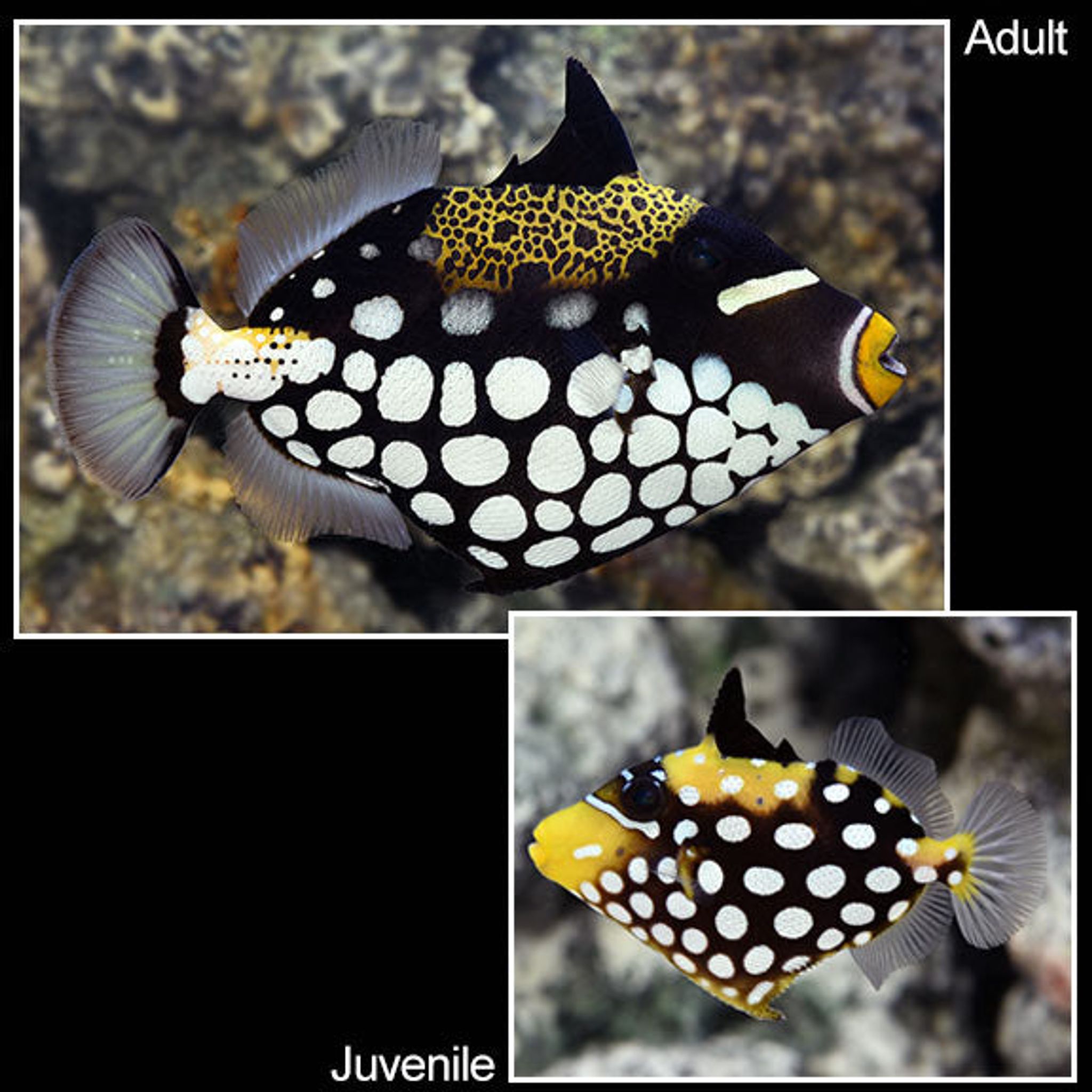
Clown triggerfish are one of the most striking fish in the marine trade — a jet-black body covered in large white and orange-yellow spots, with a yellow-netted pattern across the face. That striking look is also a warning label. This is a member of the family Balistidae, a group of fish evolved specifically to prey on hard-shelled reef life.
Across marine hobbyist communities, the consensus on reef compatibility is about as unanimous as it gets in the aquarium world: treat the clown triggerfish as fish-only-with-live-rock (FOWLR), full stop. A small number of hobbyists report a zoanthid colony or an unpalatable Palythoa surviving longer than expected in a trigger tank, but even those get uprooted during digging or sampled out of curiosity eventually. Don't build a stocking plan around an exception.
Why Clown Triggerfish Destroy Reef Tanks
The behavior isn't random nipping — it's natural predation carried over intact from the wild.
Built to Crush Shells
In the wild, clown triggerfish are opportunistic carnivores that specialize in hard-shelled invertebrates: crabs, sea urchins, snails, hermit crabs, clams, and shrimp. Their teeth and jaw muscles are adapted for crushing shell and coral skeleton, and that same crushing bite works just as well on a tank full of cleanup crew as it does on a natural reef. Snails, hermits, crabs, shrimp, urchins, clams, scallops, feather dusters, and bristle worms are all realistic targets — a clown trigger doesn't just harass a cleanup crew, it eats it.
Coral Polyps Are on the Menu Too
Wild clown triggerfish also eat sponges, coral polyps, and tube worms. In a reef tank, that translates to picking at LPS and SPS corals, especially anything fleshy or with visible feeder tentacles — torch, hammer, and frogspawn corals are frequent targets. Even coral colonies a trigger doesn't actively eat aren't safe: its constant digging and rearranging of the substrate and rockwork can topple or crush coral that was never on the menu in the first place.
The Instinct Doesn't Fade With Time
A common mistake is assuming a calm juvenile clown trigger means it's compatible with inverts. Predation instinct here is innate, not learned, and it often shows up only after the fish has fully settled into a tank — sometimes weeks or months after an initially quiet acclimation period. A trigger that ignored the cleanup crew in its first month is not "reef safe," it's still adjusting.
Species Snapshot
| Trait | Details |
|---|---|
| Scientific name | Balistoides conspicillum |
| Family | Balistidae (triggerfish) |
| Adult size | 18–20 in (45–50 cm) in the wild; commonly 12–16 in in captivity |
| Juvenile size at sale | 2–4 in — deceptively docile-looking |
| Minimum tank size | 180 gal for one adult; 250+ gal preferred |
| Diet | Carnivore/omnivore — shelled invertebrates, coral polyps, sponges, small fish |
| Lifespan | 15–20+ years with good care |
| Temperament | Bold, intelligent, increasingly territorial and aggressive with age |
| Reef compatibility | Not reef safe |
Full Care Profile for a Fish-Only Tank
If the goal is a robust FOWLR system built around a clown trigger rather than a reef, here's what the animal actually needs.
Tank Size and Growth
Juveniles are commonly sold at 2–4 inches and can start in a 75–90 gallon tank, but they grow quickly and will outgrow that space within 1–2 years. Plan for an eventual upgrade to at least 180 gallons for a single adult, with 250+ gallons giving noticeably better long-term results. Buying a small juvenile clown trigger for an existing reef tank because "it looks harmless" is one of the most common and costly mistakes in the hobby — it will out-grow that harmless look within months.
Water Parameters
Standard tropical marine parameters apply, since there's no coral to keep happy:
- Temperature: 72–78°F (22–26°C)
- Specific gravity: 1.020–1.025
- pH: 8.1–8.4
- dKH: 8–12
- Ammonia/nitrite: 0 ppm
- Nitrate: ideally under 20–30 ppm (less critical than in a reef system without corals to stress)
Aquascaping for a Digger
Clown triggerfish dig and rearrange rock and substrate as a normal behavior, which satisfies an instinct but also risks collapsing loose rockwork. Build the aquascape on a solid base — rock cement, pins, or a starboard platform — rather than a freestanding pile, and give the fish plenty of live rock for hiding spots and digging outlets.
Feeding and Dental Care
Trigger teeth grow continuously, so diet needs to include hard, shell-on foods to wear them down naturally. A reasonable rotation includes:
- Silversides, krill, squid, and clam meat
- Shrimp and shell-on crab legs
- Mysis as a supplemental item
- Occasional marine pellet or algae-based food for roughage
Feed juveniles 2–3 times daily and taper to less frequent feeding as the fish matures. Variety matters for nutrition, and shell-on items in particular prevent the overgrown-teeth problems that come from an all-soft diet — a detail that's easy to overlook but genuinely affects long-term feeding ability.
Origin and a Sustainability Note
Most clown triggerfish in the trade are wild-caught from Indo-Pacific reefs. Captive-bred, tank-raised juveniles do exist from a handful of specialty breeders but are less common and typically priced higher. For hobbyists weighing sustainability, a tank-raised individual is worth seeking out when available, even at a premium.
Quarantine
As with any wild-caught marine fish, quarantine a new clown trigger for 2–4 weeks before introducing it to a display. Use that window to watch for ich and other parasites and to confirm the fish is feeding reliably before it goes into permanent housing.
Mixing Aggressive Fish Successfully
A clown trigger needs tankmates that can hold their own. Good candidates include large angelfish, groupers, large wrasses, large tangs, and — with caution — other robust triggers in very large systems. You can browse compatible options among large marine angelfish and tangs and surgeonfish when planning a FOWLR stock list. Avoid small, slow, or passive species entirely — they simply can't compete.
A few practical rules make introductions smoother:
- Add the trigger last, or introduce similarly sized aggressive fish together so no single fish has an established territory advantage.
- Rearrange the rockwork before any introduction to reset territorial claims for every fish in the tank.
- Avoid overcrowding, which multiplies stress and aggression rather than diluting it.
- Watch closely for fin damage or bullying in the first weeks and be ready to intervene.
- Have a backup plan — a spare tank or a tank divider — in case a pairing doesn't work out.
Keeping multiple triggerfish together is possible in massive systems (400+ gallons) when all individuals are added simultaneously as juveniles, but this is an advanced, risky strategy rather than a typical hobbyist setup. In anything under roughly 300 gallons, avoid combining triggerfish species altogether.
Bite Risk During Maintenance
Clown triggerfish are intelligent and curious enough to recognize their owner and learn to beg for food, but that same boldness comes with real bite risk as they mature. Their jaws are strong enough to crack shells and coral skeleton, and an adult can break skin on a human hand. Feed from tongs rather than your fingers, and stay alert to hand position during any maintenance work once the fish is past the juvenile stage.
Reef-Cautious Triggerfish Alternatives
Hobbyists who love the trigger family but want less destruction do have a few options — none are guaranteed "reef safe," but they're meaningfully more reef-tolerant than a clown trigger:
- Niger triggerfish (Odonus niger) — mostly planktivorous in the wild, making it the most reef-tolerant common trigger, though still a risk to small invertebrates.
- Bluethroat/Crosshatch triggerfish — generally regarded as a better reef candidate among triggers, but still needs close monitoring around inverts.
- Blue-jaw triggerfish — another comparatively reef-cautious option for a species-level compromise.
The key distinction worth internalizing: "reef safe with caution" means some corals and larger inverts may survive with close monitoring and occasional losses, while "not reef safe" — the clown triggerfish's category — means treat it as fish-only and don't expect exceptions. Applying these two labels consistently avoids the vague, interchangeable language that makes a lot of trigger-family advice hard to act on.
If You Already Have One in a Reef Tank
Readers who bought a juvenile clown trigger before understanding its adult behavior aren't out of options, even without an immediate 180-gallon upgrade.
- Trade-in or rehoming: many local fish stores accept trade-ins or consignments for outgrown or incompatible fish — worth a call before assuming the only option is keeping the status quo.
- Partition strategy: a tank divider can isolate the trigger from vulnerable corals and inverts as a temporary measure while a larger tank or new home is arranged.
- Hospital or grow-out tank: moving the trigger to a secondary tank, even an undersized one short-term, halts ongoing coral and invert losses immediately while a permanent plan comes together.
- Don't wait on "it seems fine for now": if predation hasn't started yet, it's a matter of time, not a sign of compatibility.
Anyone building a fish-only system from scratch can browse marine fish and triggerfish stock on FishyHub to compare temperament and size before committing to a tank plan.
Common Mistakes to Avoid
- Buying a small juvenile for an established reef because it looks harmless.
- Assuming quiet early behavior means the fish is invert-safe.
- Undersizing the tank, which stunts growth and spikes aggression.
- Leaving rockwork unsecured, risking collapses that crush corals or trap fish.
- Handling maintenance with bare hands near an adult trigger.
- Skipping hard, shell-on foods, leading to overgrown teeth.
- Adding aggressive tankmates without a territory-reset plan.
Frequently Asked Questions
Can a clown triggerfish live with any corals at all?
Generally no. A handful of hobbyists report a zoanthid or an unpalatable Palythoa surviving longer than other corals, but these exceptions still get uprooted by digging or occasionally sampled. Treat the clown triggerfish as fish-only and don't plan a reef around an exception.
Will a clown trigger eat cleanup crew like snails, hermits, and shrimp?
Yes. Clown triggerfish are natural shell-crushing predators, and cleanup crew invertebrates are exactly the kind of prey their jaws and teeth evolved to handle. Expect them to be eaten, not just harassed.
How big of a tank does a clown triggerfish need?
At least 180 gallons for one adult long-term, with 250+ gallons recommended for the best results. Juveniles can start in a 75–90 gallon tank but will need an upgrade within 1–2 years as they grow.
What fish can live with a clown triggerfish?
Large, robust, semi-aggressive to aggressive species do best — think large angelfish, groupers, large wrasses, and large tangs. Avoid small or passive fish, and generally avoid pairing with other triggerfish unless the system is very large.
What do clown triggerfish eat?
Meaty, often shelled foods: silversides, krill, squid, clam meat, shrimp, and shell-on crab legs, plus mysis and occasional plant-based food for roughage. Shell-on items are especially important since trigger teeth grow continuously and need wear.
Are clown triggerfish aggressive toward their owners?
They can become bold and curious as they mature, sometimes nipping or biting hands during feeding or maintenance. It's rarely dangerous, but an adult's bite is strong enough to draw blood, so feeding from tongs is a smart habit.
How long do clown triggerfish live?
With good care, 15–20 years or more, making this a genuinely long-term commitment rather than a short-lived showpiece fish.
Is there a "reef safe" triggerfish I can get instead?
Niger, Bluethroat/Crosshatch, and Blue-jaw triggerfish are more reef-cautious choices than a clown trigger, though none should be labeled fully reef safe — expect to monitor closely and accept the possibility of occasional invertebrate losses.
Anyone still deciding between a FOWLR predator tank and a true reef build can compare corals and marine invertebrates available on FishyHub against the fish-only stock list above to pick the setup that actually fits the livestock going in it.


