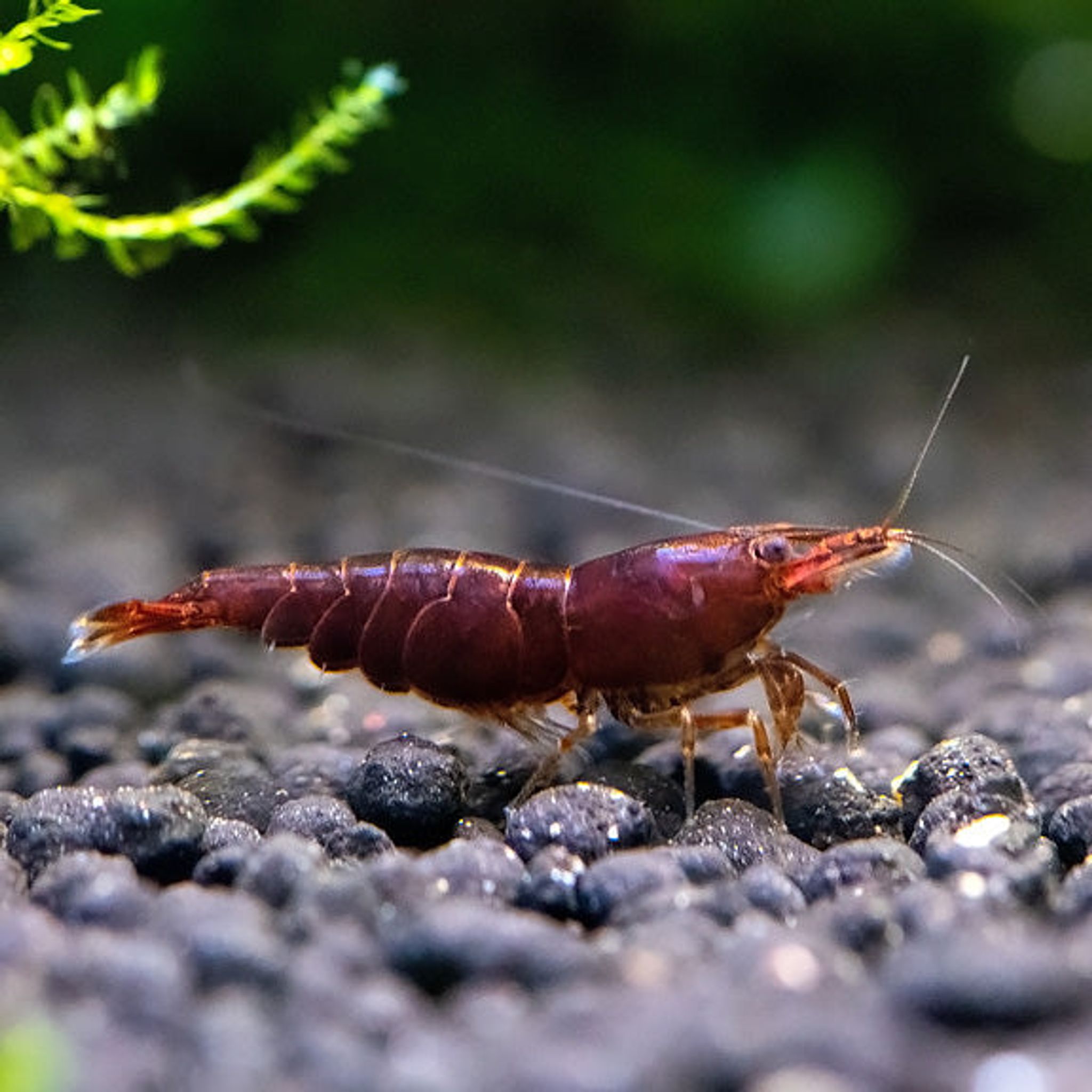
How to Set Up the Ideal Tank for Cherry Shrimp
Cherry shrimp are forgiving once a tank is stable, but the setup phase is where most beginner colonies fail. This guide walks through tank size, equipment, water parameters, and a safe stocking plan specifically for Neocaridina cherry shrimp, so you can build a self-sustaining colony instead of restarting after a die-off.
Neocaridina vs. Caridina: Know Which Shrimp You're Keeping
Most "shrimp tank" advice online blends two very different groups, and that mix-up causes real mistakes.
- Neocaridina davidi (cherry shrimp, and color grades like yellow or blue dream) are the hardy, adaptable end of the hobby. They tolerate neutral-to-hard water and a wide temperature range.
- Caridina shrimp (bee shrimp, crystal shrimp) need soft, acidic, buffered water and are far less forgiving.
This guide is written for Neocaridina cherry shrimp. If a source tells you to buy a pH-lowering, GH-buffering "active" substrate for cherry shrimp, that advice is really meant for Caridina — cherry shrimp generally do better without it.
Choosing the Right Tank Size
A 5-gallon (19 L) tank is a workable floor for an experienced keeper with a small group, but it leaves very little margin for error. Small volumes swing in temperature and chemistry much faster than large ones.
For most people, a 10-gallon (38 L) tank is the real starting point. It holds parameters steadier, gives a colony room to establish itself, and is easier to plant heavily enough to support grazing shrimp. Larger tanks (20 gallons and up) are even more forgiving and let a colony grow toward a larger natural population.
You can browse tank options, including compact starter sizes, in FishyHub's Tanks & Stands category.
Water Parameters for Cherry Shrimp
| Parameter | Workable Range | Comfortable Target |
|---|---|---|
| Temperature | 65–82°F (18–28°C) | 72–78°F (22–26°C) |
| pH | 6.5–8.0 | Mid-to-high 7s |
| GH (general hardness) | 6–8 dGH | 6–8 dGH |
| KH (carbonate hardness) | 3–5 dKH | 3–5 dKH |
| Nitrate | Under 10–20 ppm | Under 5 ppm long-term |
| Ammonia / Nitrite | 0 ppm always | 0 ppm always |
Cherry shrimp are notably more sensitive to ammonia and nitrite spikes than most fish, so those two readings should never move off zero in an established tank. KH matters because it buffers pH — without enough carbonate hardness, pH can crash suddenly during routine maintenance.
Does a Cherry Shrimp Tank Need a Heater?
Not necessarily. In a typical indoor room, Neocaridina tolerate the 65–82°F range without supplemental heat, and stability matters far more than warmth — a slow seasonal drift is harmless, while a sudden multi-degree swing is not.
A heater becomes genuinely useful when:
- The room is cold, drafty, or near an exterior wall or window.
- You want to nudge breeding activity, since mid-70s°F and up often increases breeding frequency.
If you do use a heater, keep it running continuously rather than on a timer, and choose a reliable, adjustable unit. A heater that sticks on can overheat a small volume of water fast enough to wipe out an entire colony before you notice. Either way, keep a thermometer in the tank — it's cheap insurance whether or not you run a heater.
Filtration: The Single Most Important Equipment Choice
Standard filters are built for fish, not shrimp, and an unprotected intake is one of the fastest ways to lose shrimplets.
Sponge Filters (the community favorite)
A sponge filter, run off an air pump or a small powerhead, has no intake risk at all. It also offers a huge surface area for the biofilm and beneficial bacteria that shrimp actively graze on.
Basic setup:
- Connect airline tubing from an air pump to the sponge filter's riser tube (or attach a powerhead head unit).
- Submerge the filter and prime it by squeezing the sponge underwater to push out trapped air.
- Place it low in the tank, ideally in a back corner.
- Once cycled, squeeze-clean the sponge monthly in a bucket of removed tank water — never tap water — to preserve the bacteria colony. The rinse water also makes a decent plant fertilizer.
Matten Filters for Larger or Breeding Setups
A Matten filter is a foam panel sealed across one side of the tank, driven by an air pump or powerhead pulling water through it. Breeders favor it because it combines a very large bio-surface with gentle flow, zero shrimp-intake risk, and low ongoing maintenance — it's a strong choice once you're scaling a colony beyond a single small tank.
Using a HOB or Canister Filter Instead
If you'd rather run a hang-on-back or canister filter, fit a foam pre-filter sponge over the intake tube and secure it with a zip tie or O-ring. This blocks shrimp and shrimplets from being pulled in while adding extra biological media. Any internal filter you use must be similarly guarded — shrimp will investigate any gap they can fit through.
Browse guarded and sponge-compatible options in FishyHub's Filters category.
Substrate: Simpler Is Better for Neocaridina
Inert sand or gravel is the simplest and safest choice. A darker or black substrate is a popular option because it shows off shrimp coloring and can reduce stress compared to bright white gravel.
Skip active, pH/GH-buffering substrates for cherry shrimp — those are aimed at soft-water Caridina species. Cherry shrimp generally do better with neutral-to-hard, stable water, and a buffering substrate can push parameters in a direction that offers no benefit and sometimes adds instability. If you want to shop substrate, FishyHub's Substrate category carries inert sand and gravel options.
Plants: Close to Essential
Live plants aren't decorative extras in a shrimp tank — they're functional infrastructure. They grow the biofilm and algae shrimp graze on, provide cover from stress, and give shrimplets somewhere to hide from adults and filter intakes.
| Plant | Light Needs | Why It Works for Shrimp |
|---|---|---|
| Java moss / mosses generally | Low | Best shrimplet nursery; huge grazing surface |
| Java fern | Low | Easy, attaches to wood/rock, doesn't need substrate |
| Anubias | Low | Epiphyte, tolerant, slow-growing hides |
| Floating plants (frogbit, salvinia, duckweed) | Low–moderate | Cover, shade, and nitrate uptake |
| Stem plants (rotala, hygrophila) | Moderate | Fuller planted look, extra grazing area |
| Pothos (grown emersed, roots in water) | Ambient | Very low-maintenance nutrient export |
Avoid plant setups that require heavy CO2 injection paired with copper-based fertilizers — copper is the one additive category to be genuinely paranoid about (more on that below).
Decor and Hardscape
- Driftwood — cholla wood is a shrimp favorite because it's hollow, biofilm-friendly, and breaks down slowly over time.
- Leaf litter — Indian almond (catappa) leaves add biofilm, release tannins, and offer a mild antibacterial effect as they break down.
- Rocks for structure and grazing surface.
- Ceramic hides or shrimp tubes — important for shrimp that are molting, when they're briefly soft-shelled and vulnerable.
Cycling the Tank Before Adding Shrimp
Shrimp tolerate ammonia and nitrite far worse than most fish, so a fully cycled tank isn't optional. You want ammonia and nitrite both reading zero, with nitrate present but controlled, before any shrimp go in.
- Fishless cycling with pure ammonia is the cleanest method — no animal welfare to manage during the process.
- Fish-in cycling with a hardy starter species works but takes several weeks of weekly testing, and you'll need to rehome those fish before or as shrimp go in.
- Seeding with mature filter media or substrate from an established tank speeds up cycling significantly and is worth doing if you have access to it.
A Realistic First-30-Days Timeline
- Days 1–3: Set up hardscape, substrate, and plants; start the fishless cycle.
- Days 4–20+: Monitor ammonia/nitrite weekly until both read zero with nitrate present; let plants and biofilm establish.
- Around day 20–30: Once cycled and planted in, drip acclimate a small starter batch (10–15 shrimp in a 10-gallon).
- Following weeks: Watch water parameters and shrimp behavior before adding more — resist the urge to stock heavily right away.
The Copper Warning
Copper is highly toxic to shrimp, even at trace levels that are completely harmless to fish. It shows up in some fish medications, in tap water from older plumbing, and in some plant fertilizers. Always check labels before dosing anything in a shrimp tank, and use a water conditioner rated as copper-safe.
Water Changes and Ongoing Maintenance
Small, frequent water changes — 10–20% weekly — are safer than large infrequent ones, because shrimp are sensitive to sudden shifts in TDS, GH, and pH. Match the temperature of new water and treat it before adding it. This is also why large, catch-up water changes after a period of neglect are a common trigger for mass molting deaths — the fix is to get back on a small, consistent schedule rather than one big correction.
How to Acclimate New Shrimp (Drip Method)
Shrimp are more sensitive to fast parameter shifts than most fish, so acclimation deserves more care than a quick temperature match.
- Float the sealed bag in the tank for 15–20 minutes to match temperature.
- Set up a length of airline tubing from the tank to the shrimp's container, using a valve or a loose knot to control flow.
- Start the drip at a few drops per second.
- Let it run for 1–2 hours or more, gradually mixing tank water into the container.
- Once the volume has roughly doubled, net the shrimp into the tank — never pour the old bag water in.
This slow approach matters more for shrimp than fish, and it's worth doing every time, including for higher-value or wild-caught stock where skipping it is a common cause of acclimation shock.
Building a Self-Sustaining Colony in a Planted Tank
A heavily planted, well-cycled tank can sustain a cherry shrimp colony almost indefinitely on biofilm and light supplemental feeding. Add shrimp gradually rather than all at once, avoid fertilizer or CO2 systems that risk copper exposure or unstable parameters, and expect the population to plateau naturally near the tank's carrying capacity rather than growing forever.
Stocking Density
A general guideline is 5–10 shrimp per gallon in a mature, planted, well-filtered tank. Start light — 10–15 shrimp in a 10-gallon — and let the colony grow into the space.
Research on crowding found that higher density (roughly double a moderate stocking level) didn't reduce survival or skew sex ratio, but it did measurably slow individual growth and dulled coloring. In practical terms: overcrowding won't necessarily kill your shrimp, but it will produce smaller, less vividly colored adults.
Temperature and Sex Ratio
There's some evidence that extreme or unstable temperatures during juvenile development can skew sex ratios in certain shrimp species, but firm consensus numbers for Neocaridina specifically are limited. Treat this as a minor supporting reason — on top of everything else — to keep temperature stable rather than chase a precise target.
Feeding
Cherry shrimp graze biofilm and algae most of the time. Supplement lightly with shrimp-specific pellets or wafers a few times a week, plus occasional blanched vegetables like zucchini or spinach. Remove uneaten food within a few hours — overfeeding is one of the most common causes of ammonia spikes in small, lightly filtered shrimp tanks.
Tankmates: Snails, Fish, or Solo
Cherry shrimp do best alone or paired with very peaceful nano fish that won't eat shrimplets. A dedicated shrimp-only tank is the safest route if your goal is a breeding colony.
Snails — nerite and mystery snails in particular — are a common and low-risk addition, since they share similar care needs and don't predate shrimp. A shrimp-plus-snail-plus-plant setup is a genuinely good, low-bioload combination for a first planted tank. You can browse compatible shrimp stock in FishyHub's Shrimp category.
Avoid mixing different Neocaridina color grades in the same tank — they interbreed freely, and offspring tend to regress toward the wild brown/green coloring over generations.
Molting Troubleshooting
Molting problems are one of the most common new-keeper questions. Watch for:
- A white or opaque ring around the body ("white ring of death") — often linked to low GH/calcium or a stressed, incomplete molt.
- Shrimp dying shortly after a molt — check GH first, since calcium availability directly affects shell formation.
- Molting spikes right after a water change — usually points to too large a change; scale back to smaller, more frequent ones.
Common Setup Mistakes to Avoid
- Adding shrimp before the tank is fully cycled.
- Running an HOB or canister filter with an unprotected intake.
- Using tap water, medications, or fertilizers containing trace copper.
- Overfeeding in a small, lightly filtered tank.
- Doing large, infrequent water changes instead of small, frequent ones.
- Skipping drip acclimation, especially for valuable or wild-caught stock.
- Mixing Neocaridina color grades in one colony.
- Overcrowding beyond what the tank's biofilm and filtration can support.
Quick Shopping Checklist
- Tank with a secure lid (10 gallons recommended)
- Gentle lighting suited to low-light plants
- Intake-protected filter (sponge, Matten, or guarded HOB/canister)
- Optional heater (continuous-run, adjustable) plus a thermometer
- Inert sand or gravel substrate
- Driftwood, leaf litter, and a few ceramic hides
Frequently Asked Questions
Do cherry shrimp need a heater?
Not usually. A stable room temperature in the mid-60s to low-80s°F works fine, and consistency matters more than warmth. A heater helps in cold or drafty rooms, or if you want to encourage more breeding activity.
What's the minimum tank size for cherry shrimp?
Five gallons can work for a small group kept by an experienced hobbyist, but 10 gallons is the realistic recommended starting point for a stable, growing colony.
Do shrimp need a filter?
Yes. Some form of gentle, intake-protected filtration — a sponge filter, a Matten filter, or a guarded HOB or canister filter — is necessary for water quality and for keeping shrimplets safe.
How many cherry shrimp per gallon?
Roughly 5–10 per gallon in a mature, planted, well-filtered tank. Start lower than that and let the colony grow into the space over time.
How do you safely add new shrimp to the tank?
Float the bag for 15–20 minutes to match temperature, then drip acclimate over 1–2 hours or more using airline tubing to slowly mix tank water in. Never pour the old bag water into the display tank.
Can shrimp live with fish or snails?
Peaceful nano fish and snails like nerites can work well alongside cherry shrimp. For a dedicated breeding colony, though, a shrimp-only tank is the safest setup.
Why are my shrimp dying after a water change?
This usually points to a fast shift in temperature, TDS, or pH from too large a change. Switch to smaller, more frequent water changes, and always pre-treat and temperature-match new water before adding it.
Ready to start stocking? Explore live cherry shrimp and compatible tankmates in FishyHub's Shrimp category.


