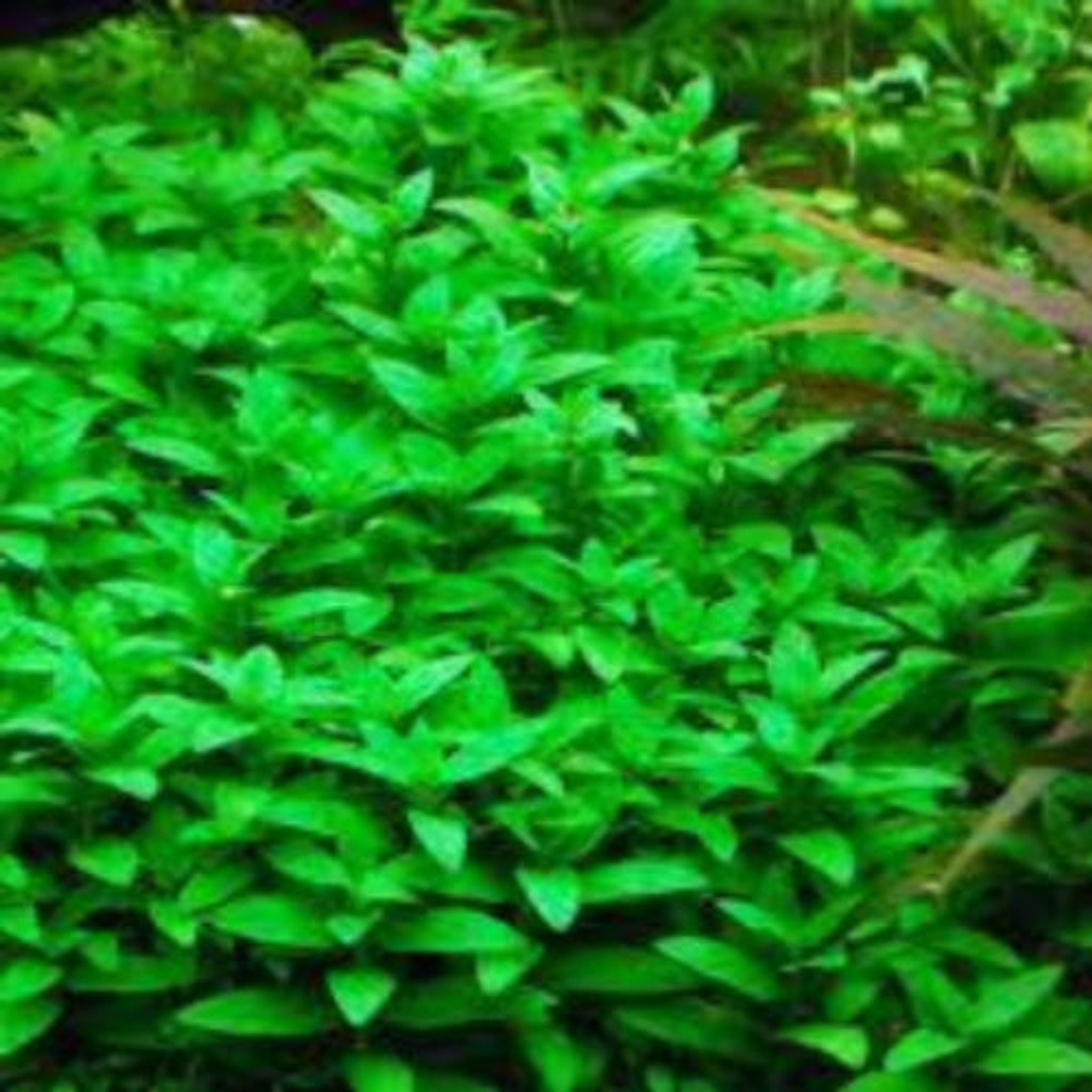

How to Plant and Propagate Staurogyne Repens in a Freshwater Aquarium
Staurogyne repens is one of the easiest true carpet plants a freshwater keeper can grow, forming a dense, low mat without demanding a full CO2 injection setup. This guide covers how to buy, plant, and care for it, plus the exact steps to propagate it once it starts sending out runners.
What Is Staurogyne Repens?
Staurogyne repens is a South American stem plant originally from Brazil, commonly sold as a compact rosette or carpet species rather than a typical tall stem plant. Left untrimmed under low light, it grows more upright and leggy; kept trimmed under adequate light, it stays low and spreads laterally into a dense mat 2-4 inches (5-10 cm) tall.
It sits at a beginner-to-intermediate difficulty level — more forgiving than true low-growing carpet plants like dwarf hairgrass or monte carlo, but it still carpets fastest with moderate-to-high light and supplemental CO2.
Buying Forms and How to Prep Each One
Staurogyne repens is typically sold in three forms, and prep differs for each:
- Tissue-culture cups: Grown in a sterile gel medium, these arrive pest- and algae-free. There's no rockwool to remove — just rinse off the residual gel and separate the plantlets, which are usually already small enough to plant directly.
- Potted stems in rockwool: The rockwool plug must be fully removed before planting. Squeeze and rinse it out under lukewarm water until no fibers remain tangled in the roots — leftover rockwool can rot and cloud the water or smother root growth.
- Bare-root bunches: These come without any growing medium but may still need a light rinse to remove shipping residue before separating into clumps.
Whichever form you start with, avoid planting single, isolated stems. Separate the mass into small clumps of 3-5 stems each — this is the single biggest factor in how quickly a carpet fills in.
Water Parameters and Lighting
Staurogyne repens isn't fussy once established, but it does best within these ranges:
| Parameter | Recommended Range |
|---|---|
| Temperature | 68-82°F (20-28°C) |
| pH | 6.0-7.5 |
| Water hardness | Soft to moderately hard |
| Lighting | Medium-high, roughly 30-50+ PAR at the substrate |
| CO2 | Optional, but strongly recommended for carpeting |
Lighting has the biggest effect on growth habit. Low light keeps the plant alive but produces upright, leggy growth rather than a carpet. Medium-to-high light (practically speaking, roughly 30-50 PAR measured at the substrate) drives the low, spreading form most people are trying to achieve. Because PAR readings vary between meters and fixtures, treat that number as a starting point rather than an exact target — and note that pushing light higher without matching fertilizer and CO2 dosing is a common way to trigger algae rather than better growth.
Substrate and Fertilization
A nutrient-rich planted substrate (aqua soil) or a capped nutrient substrate is the easiest path, since it feeds the roots from day one. That said, substrate type matters less than overall nutrient availability: Staurogyne repens roots fairly shallowly, so it also grows well in inert gravel or sand as long as you supplement with root tabs and a liquid fertilizer.
Either way, the plant benefits from a complete liquid fertilizer covering both macro- and micronutrients, with particular attention to nitrogen and iron. Pale, washed-out new growth is a classic sign of iron deficiency and usually responds to more consistent dosing.
Is CO2 Required?
No — but it makes a real difference. Without added CO2, Staurogyne repens still grows, just more slowly and often in a patchier, less uniform mat. With CO2, lateral spread speeds up noticeably and the carpet fills in denser and lower to the substrate. Think of CO2 as an accelerator rather than a requirement: budget setups without it can absolutely produce a full carpet, it just takes longer and rewards patience with fertilizer consistency.
Planted Aquarium Supplies and Care
Before planting anything, it helps to have the right basic kit on hand:
- Substrate: nutrient-rich aqua soil, or an inert substrate paired with root tabs.
- Lighting fixture: matched to your tank's depth so PAR at the substrate lands in the medium range.
- CO2 system: optional, but worth budgeting for if you want a faster, denser carpet.
- Complete liquid fertilizer: covering macros and micros, especially nitrogen and iron.
- Planting tools: long tweezers or forceps for placing small clumps, and curved scissors for trimming.
You can browse substrate options and lighting fixtures on FishyHub when putting together a planted setup.
How to Plant Staurogyne Repens Step by Step
- Prep the plant. Rinse off all rockwool or tissue-culture gel from the roots — none should remain tangled around the base.
- Separate into clumps. Divide the mass into small groups of 3-5 stems rather than single stems.
- Plant in rows. Using tweezers, bury the roots and place the crown of each clump right at the substrate surface — not buried, since a buried crown stalls new growth. Space clumps 1-2 inches (2.5-5 cm) apart in rows for the fastest visual fill.
- Time it right. Plant either before the tank is fully filled or with only a few inches of water in place. This keeps small, buoyant clumps from floating loose before their roots take hold.
- Let it settle. Avoid disturbing the substrate around new plantings for the first week or two while roots anchor.
Dealing With Melting After Planting
It's common for some outer leaves to yellow or melt shortly after transplanting. This is usually the plant adjusting from emersed (grown above water) to fully submersed conditions, compounded by shipping stress — not a sign of failure. Keep parameters stable and resist the urge to replant or fuss with it; new growth typically appears within 1-3 weeks.
How Staurogyne Repens Spreads and Propagates
Once established, Staurogyne repens spreads via lateral runners — side shoots that extend along the substrate and root down at intervals, gradually knitting separate clumps into a single mat. Each rooted point along a runner can become an independent plantlet.
Step-by-Step Propagation
- Identify a runner or a top cutting. Look for a side shoot with a few leaf nodes, or a healthy top section with a node and a bit of existing root.
- Snip it cleanly. Use curved scissors to cut the runner or top section away from the mother plant.
- Replant a short distance away. Bury the node lightly into the substrate — just enough to anchor it, not so deep that it stalls growth, following the same crown-at-the-surface rule as initial planting.
- Wait for new roots and shoots. A newly planted node typically produces fresh roots and shoot growth within 1-2 weeks under stable conditions.
- Repeat as the mat matures. Trimmed tops don't need to be discarded — they double as new propagules to fill in bare patches or start a second tank.
Trimming to Encourage Carpeting
Regular trimming redirects the plant's energy from vertical growth into lateral spread. Trim the tops every 1-3 weeks once the plant is established, cutting just above a node. Skipping trims lets the mat grow tall and stringy, which shades the lower leaves and actually slows lateral spread — the opposite of what most people planting a carpet want.
Maintenance and Water Changes
Weekly partial water changes help keep nutrient dosing consistent and reduce the algae risk that comes with a slow-growing, low-light carpet. Inconsistent CO2 or fertilizer dosing — swinging between heavy and light — tends to cause stop-start growth and algae blooms, so steady, modest dosing beats occasional large doses.
Tankmate Compatibility
Staurogyne repens is safe with shrimp and most community fish, and it isn't typically grazed on hard enough to matter. The main risk is physical: large or digging fish, such as cichlids or goldfish, can uproot clumps before they've anchored. The first 1-2 weeks after planting or propagating are the most vulnerable window, so keep an eye on tankmates known for digging during that period. If you're stocking a planted tank, shrimp are a low-risk, algae-grazing addition that pair well with a Staurogyne repens carpet.
Common Mistakes to Avoid
- Planting single stems instead of small clustered clumps, which leads to a sparse, slow-filling carpet.
- Skipping the rinse of rockwool or tissue-culture gel, which can rot and cloud the water.
- Burying the crown too deep, stalling new growth.
- Running high light with no CO2 or ferts, which favors algae over plant growth.
- Ignoring digging tankmates in the first couple of weeks, before roots establish.
- Giving up during the melt phase instead of waiting out the 1-3 week recovery window.
- Skipping trims, letting growth go tall and stringy instead of spreading laterally.
- Dosing inconsistently, causing stop-start growth and algae.
Troubleshooting Table
| Symptom | Likely Cause | Fix |
|---|---|---|
| Yellowing or melting leaves after planting | Emersed-to-submersed transition or shipping stress | Keep parameters stable; expect recovery in 1-3 weeks |
| Pale new growth | Iron or micronutrient deficiency | Increase liquid fertilizer dosing, especially iron |
| Slow or patchy spread | Low light, no CO2, or sparse initial planting | Raise light toward the medium range, add CO2, plant denser clumps |
| Clumps floating loose | Planted into a full tank of water | Replant before final fill or in a few inches of water |
| Tall, stringy growth | Infrequent trimming | Trim every 1-3 weeks just above a node |
| Algae on the carpet | High light without matching CO2/ferts, or inconsistent dosing | Balance light with steady fertilizer and CO2 dosing |
| Clumps uprooted | Digging or large tankmates before roots establish | Reposition and give 1-2 weeks of undisturbed rooting time |
How to Start a Planted Tank Around This Plant
If you're building a new planted aquarium around Staurogyne repens rather than adding it to an existing setup, a rough sequence helps avoid rework:
- Plan tank size and your plant and fish list first, since it affects light and CO2 choices.
- Choose your substrate before adding anything else — switching substrate later can crash an already-cycled tank.
- Place hardscape (rock, wood) first.
- Add and rinse substrate around the hardscape.
- Plant into a few inches of water, then slowly fill the rest of the way to avoid floating plants.
- Cycle the tank fully before adding livestock.
Treat lighting, substrate, and fertilizer dosing as one interdependent system rather than three separate decisions. Low light works fine with hardy, undemanding plants, but a denser carpet look under medium-to-high light needs matching fertilizer and CO2 support, plus more frequent trimming and algae monitoring — raising light alone without the rest of the system tends to backfire.
Frequently Asked Questions
Does Staurogyne repens need CO2 to grow?
No. It grows without CO2, but expect slower, patchier coverage. Adding CO2 noticeably speeds up spreading and produces a denser, lower carpet.
How fast does it carpet a tank?
Typically several weeks to a few months, depending on light, CO2, fertilizer dosing, and how densely you planted to start. Dense initial planting of small clumps speeds up the visual fill considerably.
Why is my Staurogyne repens melting or turning yellow after planting?
This is a normal transition and shipping-stress response, not a sign of a failing plant. Keep water parameters stable and expect new growth within a couple of weeks.
Can it grow in low light?
Yes, but it grows taller and more upright rather than forming a tight, low carpet. For a true carpet look, medium-to-high light works better.
Does it need root tabs if I already have nutrient substrate?
Not strictly required at first, but supplemental root tabs or liquid fertilizer help sustain growth long-term as the substrate's initial nutrient charge depletes over time.
How do you propagate it — cuttings or division?
Both methods work. Let the mother plant send out runners and separate the rooted side shoots, or cut a top section that includes a node and replant it a short distance away.
Is it safe for shrimp and betta tanks?
Yes. It's non-toxic and gives shrimp a good grazing surface. The main thing to watch is uprooting by larger or digging tankmates, not the plant itself being eaten.
How often should I trim it?
Every 1-3 weeks once it's established, trimming just above a node to keep growth low and push the plant toward lateral, carpeting growth instead of vertical stems.
Ready to start planting? Browse substrate and soil options on FishyHub to build the foundation for a Staurogyne repens carpet.


