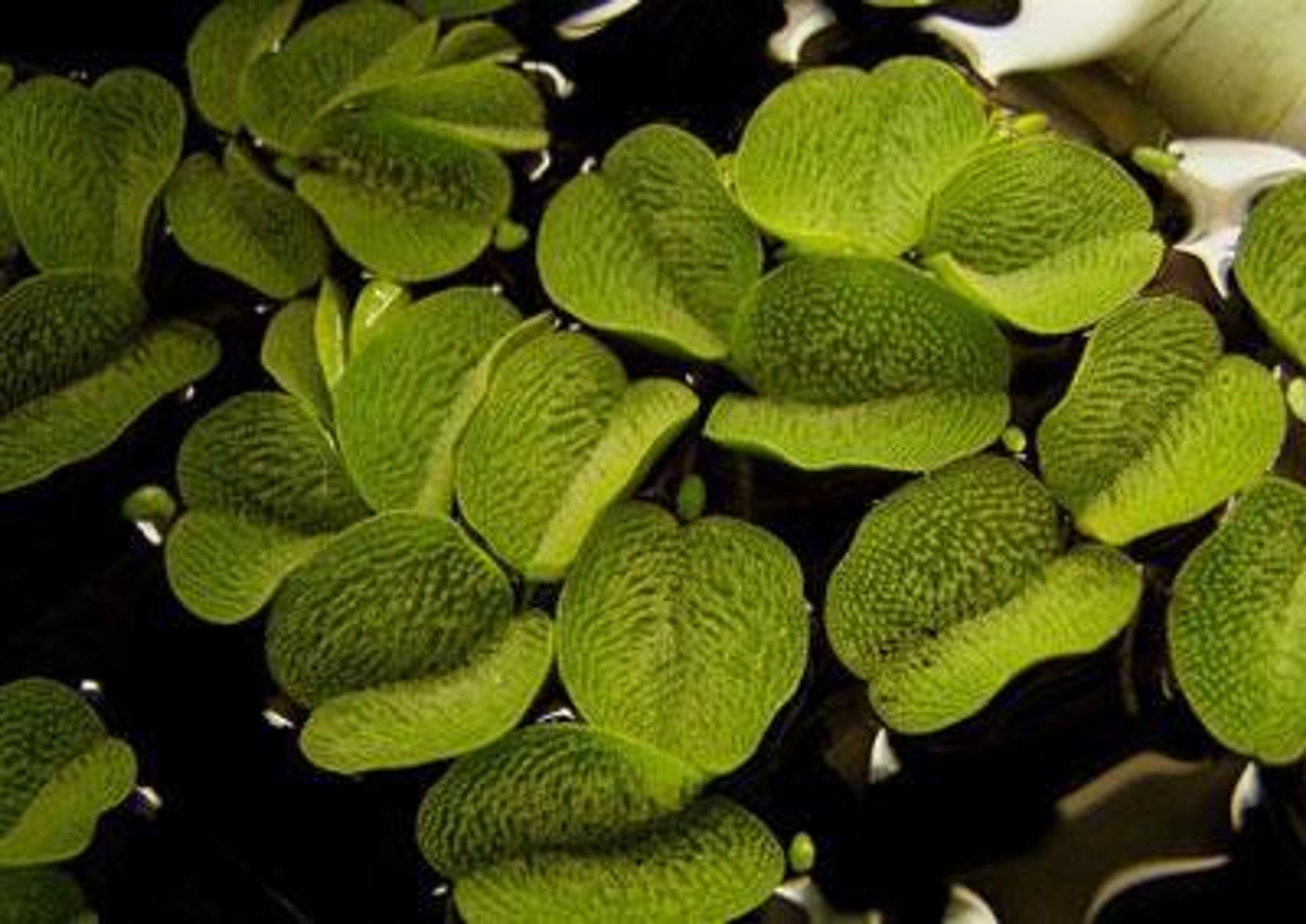
How to Plant and Propagate Salvinia in a Freshwater Aquarium
Salvinia isn't planted at all in the traditional sense — it's a free-floating fern that lives on the water's surface, not in the substrate. This guide covers how to introduce it correctly, keep it thriving, and manage its rapid vegetative growth so it becomes an asset rather than a surface-covering nuisance.
What Salvinia Actually Is
Salvinia is a genus of floating aquatic ferns, distinct from rooted plants like sword plants or crypts. The fronds sit on top of the water, and fine root-like structures hang down freely into the water column, absorbing nutrients directly rather than through soil or gravel. There's no substrate step at all — you simply place fronds on the surface and let them spread.
Several species show up in the aquarium trade, and telling them apart matters for both husbandry and legality.
| Species | Leaf size | Leaf hairs | US legal status |
|---|---|---|---|
| Salvinia minima | Small, oval, tightly packed | Fine, bristle-like | Legal in most states; most common aquarium species |
| Salvinia natans | Small to medium | Short, dense hairs | Generally legal; less common in the US trade |
| Salvinia auriculata | Medium, folded "ear" shape | Coarser hair clusters | Regulated in some states; check locally |
| Salvinia molesta (giant salvinia) | Large, heavily crumpled | Dense, egg-beater-shaped hairs | Federally listed noxious weed; illegal to sell or possess in many states |
Never buy or trade unlabeled "giant salvinia." S. molesta is a federally regulated noxious weed in the United States, and several states ban possession outright. If a seller can't confirm the species, treat it as a red flag and check your state department of agriculture or wildlife agency listing before purchasing anything labeled ambiguously.
Setting Up: Light, Water, and Flow
Since Salvinia has no substrate requirement, setup is really about matching water conditions and surface environment to the plant's needs.
Lighting
Salvinia wants moderate to bright light — roughly 6,500–8,000K, for about 6–10 hours a day. Too little light causes fronds to curl inward, lose buoyancy, and eventually sink and stop reproducing. Strong, direct light paired with warm water pushes growth into overdrive, which is useful if you're trying to build up a colony but something to watch if your tank is already crowded with floaters.
Temperature and Water Chemistry
Salvinia tolerates a wide range, roughly 65–90°F (18–32°C), but grows best around 72–82°F (22–28°C). It handles pH 6.0–7.5 and does fine in soft to moderately hard water, so it fits comfortably into most community freshwater setups without special dosing.
Surface Flow
This is where a lot of new growers run into trouble. Salvinia needs still to gently moving water at the surface. Strong outflow from a filter or heavy surface agitation will flip fronds over, wet the water-repelling hairs on top of the leaves, and either sink the plant or pile it against one wall of the tank. If your filter creates a lot of surface turbulence, redirect the output below the surface or toward the glass rather than straight across the top, and consider a low-flow option built for smaller or lightly stocked tanks; you can browse hang on filters sized to reduce surface disruption.
CO2: Not Required
Salvinia doesn't need injected CO2 — it grows perfectly well in a low-tech, non-CO2 tank. If your tank is CO2-injected, that's fine too, but tanks optimized for CO2 often run higher surface agitation for gas exchange, and that agitation actively works against floating plants. If you're running both, dial back surface skimming near the Salvinia and let gas exchange happen in an uncovered area instead.
Feeding: Fertilizer or Fish Waste
Salvinia is a heavy nitrogen and potassium feeder that pulls nutrients straight from the water column, which makes it genuinely useful for water quality. How much extra feeding it needs depends entirely on your tank's bioload:
- Heavily stocked tanks: fish waste alone usually supplies enough nitrogen and phosphate; little to no extra fertilizer is needed, and dosing on top of an already nutrient-rich tank can trigger algae elsewhere.
- Lightly stocked or newly set up tanks: nutrient levels may be too low to sustain fast growth. A liquid all-in-one fertilizer focused on potassium and iron helps fill the gap.
If you have plenty of light but growth has stalled, nutrient scarcity — not light — is usually the cause, especially in tanks running nitrate-removing media or very light stocking.
Propagation: How Salvinia Multiplies
Salvinia reproduces entirely through vegetative growth — there's no seed stage to manage. Established plants send out lateral runners (stolons) that bud new plantlets at regular intervals. Once a cluster has developed several leaf whorls, you can simply pull it apart by hand at the natural junction points between plantlets to create separate, independently viable pieces.
Under good light and adequate nutrients, Salvinia can double its surface coverage in one to two weeks. That speed is exactly why it's popular for filling out fry-rearing tanks or sharing with other hobbyists, and exactly why it needs a deliberate thinning routine rather than being left alone.
Coverage Guidelines
As a hard number to work from: keep Salvinia to no more than 30–50% of the water surface at any time. Beyond that, light penetration to lower plants drops off, and gas exchange at the surface for your fish becomes restricted. Thin weekly rather than waiting until the tank looks overrun — it's much easier to remove a handful of clumps regularly than to claw back a solid mat later.
Containing It with a Floating Ring or Divider
A simple floating barrier keeps Salvinia corralled under your light and away from filter output, preventing it from drifting into a pile against the glass. You can build one from a length of airline tubing or foam pool-noodle strip formed into a ring and anchored with a suction cup, or use a purpose-made floating plant frame. Either approach does the same job: it keeps the colony compact, easy to inspect, and easy to thin.
Benefits in the Aquarium
Beyond looking natural in blackwater and biotope-style setups, Salvinia earns its place functionally:
- Nutrient export — actively pulls nitrogen and potassium out of the water column, helping buffer against nitrate spikes between water changes.
- Shade — reduces light intensity for shade-preferring lower plants and shy fish species.
- Fry and shrimp cover — the dangling root network offers hiding spots and biofilm grazing for fry and shrimp, and reduces stress in skittish species.
- Biotope realism — its floating mat look suits blackwater and slow-river biotope displays.
It's a strong fit for tanks housing bettas and dwarf shrimp, both of which benefit from surface cover and the grazing surface Salvinia's roots provide.
Pairing with Other Floating Plants
Salvinia is often grown alongside duckweed or frogbit, but they compete directly for the same light and nutrients at the surface. A few things to weigh:
- Duckweed spreads faster in still water and is notoriously hard to fully remove once established, since even a few fronds left behind will regrow.
- Frogbit has larger, more attractive leaves and a similar root structure to Salvinia, making the two easier to combine without one totally smothering the other.
- Mixing species densely accelerates competition — if you want a clean, single-species mat, thin out competitors early rather than letting them establish.
Trimming, Thinning, and Disposal
Set a weekly check as part of routine maintenance. Remove excess clumps once coverage nears the 50% mark, and decide what to do with the surplus:
- Give it away to another hobbyist or trade it locally.
- Feed it to herbivorous fish or livestock that will graze on it.
- Compost it if you have a home compost setup.
- Discard it in the trash, sealed, if none of the above apply.
Never flush excess Salvinia down a drain or dump it outdoors, even in a backyard pond. It survives easily outside a tank and regrows from tiny leaf fragments, which is exactly why it's classified as invasive in warm US climates when released into ponds, streams, or storm drains.
Handling and Quarantine
New Salvinia — whether from a trade, a store, or a gift from another hobbyist — should be rinsed thoroughly and quarantined before going into a display tank. A short dip protocol (following standard floating-plant quarantine guidance) helps strip off hitchhiking snails, hydra, or duckweed fragments that often ride in on floating plant shipments. Skipping this step is one of the most common ways unwanted pests end up established in a tank.
Common Problems and Fixes
| Symptom | Likely cause | Fix |
|---|---|---|
| Fronds turning brown/mushy and sinking | Insufficient light, or leaf hairs wetted by splashing | Improve lighting; redirect flow away from the surface |
| No new growth despite good light | Nutrient-poor water (low bioload or heavy nitrate removal) | Add a liquid fertilizer with potassium and iron |
| Algae or biofilm coating fronds | Stagnant water below the mat, or excess light without flow | Increase gentle circulation; wipe fronds occasionally |
| Colony overtaking the tank | Skipped weekly thinning | Set a recurring reminder; thin to 30–50% coverage |
| Pests appearing after adding new stock | No rinse/dip before introduction | Quarantine and dip all new floating plants |
If your tank's lighting needs an upgrade to hit the 6,500–8,000K range Salvinia prefers, an LED aquarium lamp is an easy way to dial in both color temperature and photoperiod.
Frequently Asked Questions
Does Salvinia need to be planted in substrate?
No. Salvinia floats freely on the surface, and its roots hang directly in the water column — they're never buried in gravel or soil.
How fast does Salvinia multiply?
Very fast under good light and nutrients. A colony can double its surface coverage within one to two weeks, which is why weekly thinning is part of routine care rather than an occasional chore.
Can I keep Salvinia with a filter or air pump running?
Yes, but keep surface agitation gentle. Strong flow or turbulence will flip fronds and wet their water-repelling hairs, so a floating barrier or redirected filter outflow helps keep the colony intact.
Is Salvinia the same as duckweed?
No. They're different genera entirely — Salvinia has larger paired leaves with water-repelling hairs, while duckweed is much smaller, with a single root trailing from each tiny frond.
Is Salvinia legal to own?
The most common aquarium species, Salvinia minima, is legal in most US states. Salvinia molesta (giant salvinia), however, is a federally listed noxious weed and is banned or restricted in many states — check your state department of agriculture rules before buying or trading any Salvinia labeled ambiguously.
Why is my Salvinia sinking?
Usually one of two causes: leaf hairs getting wet from splashing or a spray bar, or insufficient light causing the fronds to decline. Calm the surface flow and check that your lighting meets the 6,500–8,000K, 6–10 hour range.
Do I need CO2 or substrate fertilizer for Salvinia?
No to both. Salvinia feeds directly from the water column, so substrate fertilizer never reaches it, and CO2 injection isn't necessary for its growth — it's a genuinely low-tech plant.
Ready to add floating cover to your setup? Browse freshwater livestock on FishyHub to find fish and shrimp that pair well with a Salvinia-topped tank.


