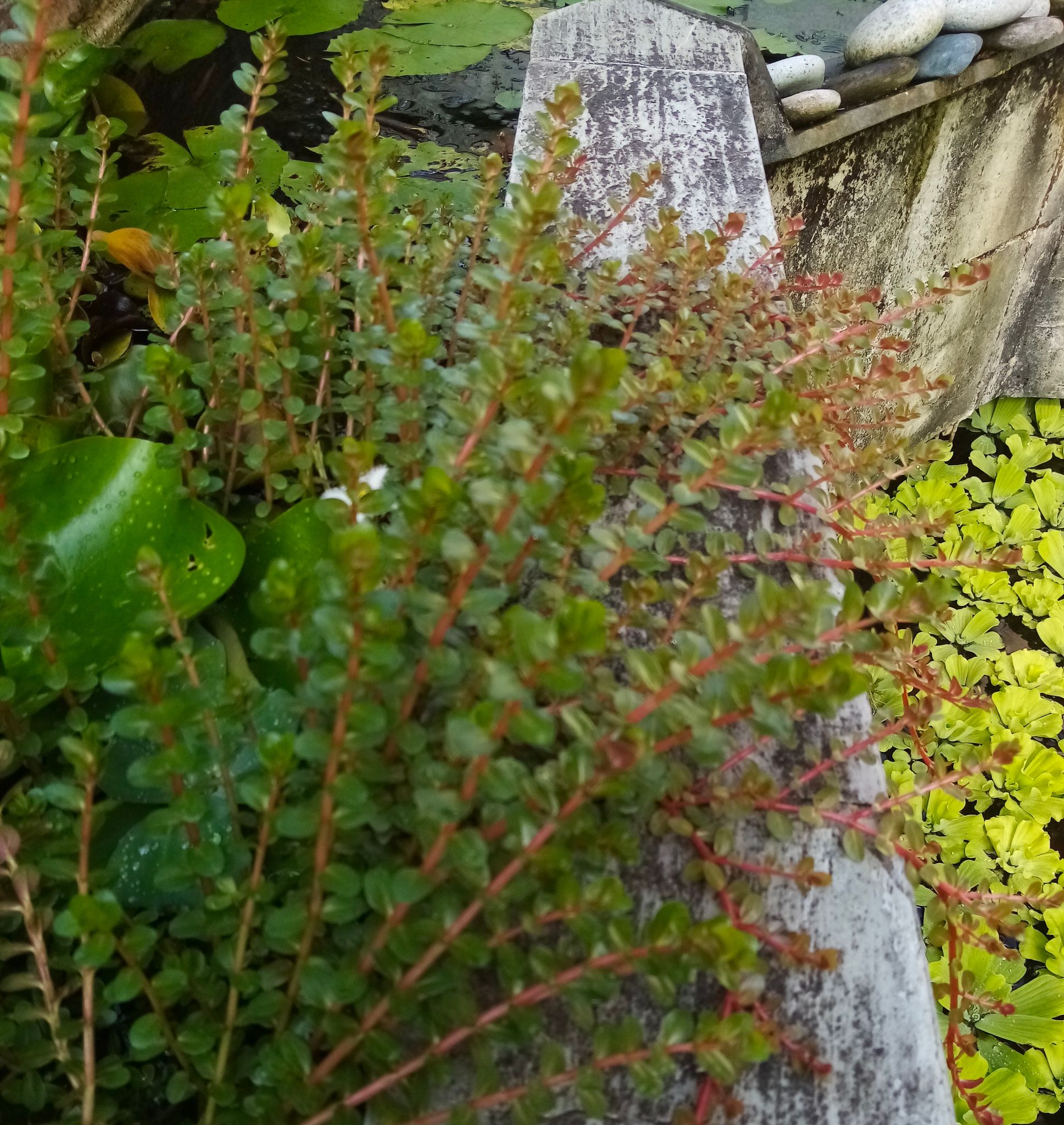
How to Plant and Propagate Rotala H'ra in a Freshwater Aquarium
Rotala H'ra is one of the most rewarding stem plants for hobbyists chasing red and orange tones without going full high-tech. This guide covers exactly how to plant it, what conditions bring out its color, and how to trim and replant it so a single bunch turns into a full hedge.
What Is Rotala H'ra?
Rotala H'ra (also sold as Rotala sp. 'Hra' or listed as a variant of Rotala rotundifolia) is a stem plant with narrow, opposite-to-whorled leaves that shift from green to orange-red to pink under strong light. Naming in the aquarium trade is inconsistent — the same plant sometimes ships under different tag names — so judge a bunch by its growth habit rather than the label: look for tight internodes (the space between leaf sets) and leaves that already show a pink or orange blush near the growing tip. A stretched, all-green stem with long gaps between leaves is a sign of low-light nursery growing, not necessarily a different plant.
Placement options:
- Midground to background as an upright stem mass, planted in rows for a gradient effect.
- Trimmed foreground hedge or "pseudo-carpet" — frequent topping keeps it low and dense, letting you use a red stem plant in a spot most people reserve for carpeting species.
Setting Up the Right Conditions
Lighting
Rotala H'ra needs medium-to-high light to color up. As a rough benchmark, many hobbyists aim for 50+ PAR at the substrate, but fixture output and reflector quality vary enough that chasing an exact number isn't practical. Instead, raise your intensity or photoperiod gradually and watch the plant: if new growth stays green with long internodes, light is likely too low; if you see thin films of algae developing before the plant colors up, ease off and let nutrients and CO2 catch up first.
A consistent daily photoperiod of 6–8 hours matters more than raw wattage. Using a timer or app-controlled fixture keeps the schedule steady, and ramping brightness up and down gradually (a simulated sunrise/sunset) reduces stress on both plants and fish while lowering the odds of an algae bloom from a sudden light spike.
CO2: Helpful, Not Mandatory
CO2 injection is the single biggest factor in how compact and richly colored this plant becomes, but it is not required to keep it alive. Without supplemental CO2, Rotala H'ra will still grow — just slower, greener, and with a tendency to stretch toward the light source. With CO2 in the roughly 20–30 ppm range, stems stay short-jointed, coloration intensifies, and growth speeds up noticeably.
If you're not ready for a pressurized system, see the "faking a high-tech look" section below for a middle path.
Water Parameters
| Parameter | Target Range |
|---|---|
| Temperature | 72–82°F (22–28°C) |
| pH | 6.0–7.5 |
| Hardness | Soft to moderately hard |
| Light | Medium to high (increase gradually) |
| CO2 (optional) | ~20–30 ppm for best color/density |
The plant tolerates a wider range than this, but it performs best in the slightly acidic, warmer water typical of planted aquascapes.
Substrate
A nutrient-rich planted substrate (aqua soil or a capped substrate) encourages stronger root development and buffers pH toward the acidic side this plant prefers. That said, Rotala H'ra is primarily a water-column feeder — an inert substrate paired with root tabs near the base and a regular liquid fertilizer routine works just as well for most home aquariums, just with somewhat slower growth.
How to Plant Rotala H'ra
- Inspect and trim each stem. Remove any melted, yellowed, or damaged lower leaves before planting — leaving them on invites rot at the buried node and lets the stem pull loose later.
- Group stems in small clusters. Plant 3–5 stems together rather than singly; clusters establish faster and look fuller sooner.
- Space clusters 1–2 inches apart to leave room for lateral spread as the stems bush out.
- Bury only the bottom node(s), stripped of leaves, at a slight angle rather than straight down. The angle helps the stem grip the substrate and gives a more natural, less "planted-in-rows" look.
- Use tweezers for placement, especially in a tank that's already planted out — fingers disturb neighboring plants and substrate far more than a good pair of aquascaping tweezers.
Planting too deep smothers the lower leaves and can cause rot; planting too shallow lets the stem float free before roots take hold. Aim for just enough depth to anchor the stripped node firmly.
Expect some leaf drop after planting. A few lower leaves yellowing or melting in the first week or two is a normal transitional response to transport and handling stress, not a sign of failure — as long as the growing tip keeps producing new leaves, the plant is adjusting normally.
Fertilizing for Color, Not Just Growth
Rotala H'ra needs a complete liquid fertilizer with iron and micronutrients, dosed several times a week, to push orange-red pigmentation rather than plain green growth. Nitrogen and phosphate should still be present — this is a fast grower and needs the macros — but excess nitrate relative to light intensity tends to favor green growth over red. In high-tech setups pushing rapid growth, a potassium supplement can help keep pace with uptake.
A detail most guides skip: timing fertilizer dosing around your trim schedule matters. Dosing right after a heavy trim gives the remaining stem and freshly cut tops immediate access to nutrients during their highest-demand regrowth window, rather than waiting for the next scheduled dose. If you trim and dose on the same day, you avoid a lag where regrowth stalls waiting for nutrients.
Trimming and Growth Rate
Under strong light and CO2, Rotala H'ra is a fast grower that can need trimming every 1–2 weeks; under lower light or without CO2, every 2–3 weeks is more typical. Rather than trimming on a fixed calendar, watch the plant: trim when stems approach the surface or start shading the growth below them, since shaded lower leaves eventually bald out.
The node count that actually matters: when you trim, cut above a node and leave 2–3 sets of leaves on the mother stem. This leaf count reliably triggers lateral branching at the remaining nodes, turning one stem into a bushier, multi-branched one instead of a single regrowing tip. Cutting too high (leaving only one leaf set) often produces a single weak shoot instead of a full branching response.
Propagating Rotala H'ra
Once you have an established stem mass, three methods let you multiply your stock:
1. Top-and-Replant
Cut the growing tip, strip the lower leaves that would otherwise sit below the substrate, and plant the cutting directly using the same technique as a new stem. This is the fastest way to fill in gaps or start a second grouping.
2. Branch and Divide
Let a trimmed mother stem branch out at its remaining nodes, then once branches have grown a few inches, cut and separate them into individual plantable stems. This works well when you want density without disturbing the row you already have.
3. Float-and-Root (Low-Effort Option)
Let cut tops float on the surface instead of planting them immediately. Rootless cuttings will grow roots on their own within a week or two while floating, after which you plant them once roots are visible. This is a good option when you don't want to disturb a fully aquascaped substrate right away, or when you're not sure yet where the new stems will go — it lets you multiply your stock before committing to placement.
Faking a High-Tech Look Without Full CO2
If pressurized CO2 isn't in your plans yet, you can still get reasonably close to high-tech color and density:
- Run moderate-to-high light paired with good surface agitation to keep oxygen and gas exchange stable.
- Use a liquid carbon supplement in place of injected CO2 — it won't match pressurized CO2's effect, but it measurably helps density and color over no supplementation at all.
- Combine root tabs at the substrate with a regular liquid fertilizer dosed in the water column.
- Stock a mix that includes a few undemanding-but-colorful stems alongside Rotala H'ra so the tank still reads as vibrant even where growth is slower.
Set realistic expectations: this approach narrows the gap with a dedicated CO2 tank, but it won't fully replicate the density and saturation of pressurized CO2 under strong light.
The Light–CO2–Nutrient Balance
Think of light, CO2, and nutrients as three points of a triangle that all need to move together. Light drives the plant's demand for both CO2 and nutrients — raise light alone, and you create a demand the plant can't meet, which is exactly the gap algae exploits. The practical rule: increase light intensity or duration slowly, and adjust fertilizing (and CO2, if used) in step with it, rather than maximizing one variable and hoping the others keep up.
This is also why fine-leaved stem plants like Rotala H'ra are prone to trapping algae on their foliage — it's rarely about light being too strong on its own, but about light outpacing CO2 or nutrients.
Routine Maintenance for a Rotala-Stocked Tank
- Water changes: roughly 20–30% weekly to export excess nutrients and keep parameters stable.
- Trim proactively, not just when stems hit the surface, to prevent lower growth from being shaded out.
- Remove dead or decaying leaves promptly — decomposing plant matter fuels algae and can affect water quality.
- Clean filter media gently, rinsing in removed tank water rather than scrubbing it clean, to avoid wiping out the beneficial bacteria colony.
- Dose fertilizer on a consistent schedule, adjusted around trim days as noted above.
- Wipe glass and clean leaves periodically to keep light penetration even and limit algae attachment points.
Flow and Filtration
Good, even water movement across a Rotala mass prevents detritus from settling in the dense foliage and reduces algae buildup on the fine leaves. Avoid overcrowding stems to the point where flow can't reach the middle of the planting — dead spots in a densely planted area are a common, overlooked contributor to algae on stem plants. A capable filter, such as those in FishyHub's filters category, paired with reasonable stocking density solves most of this.
Common Mistakes to Avoid
- Planting too deep or too shallow — buried leaves rot; unanchored stems float free.
- Skipping leaf removal before planting — leftover leaves at the buried node rot and loosen the stem.
- Ramping up CO2 or light too fast — sudden increases feed algae before the plant can use the extra input.
- Letting stems get leggy before trimming — tall, untrimmed growth shades and bald out the lower stem.
- Under-fertilizing, especially iron and micronutrients — the plant survives but stays pale green instead of red or orange.
- Overcrowding without adequate flow — traps detritus and encourages algae on fine foliage.
- Mistaking normal post-trim leaf drop for a dying plant — check new tip growth before assuming failure.
Is Rotala H'ra a "High-Tech" Plant?
In aquascaping terms, a "high-tech" plant is one that's fast-growing and demanding of light, CO2, and nutrients, rewarding that investment with denser, more colorful growth than a low-tech tolerant species would give under the same conditions. Rotala H'ra fits this category: it will survive low-tech conditions, but it's specifically the kind of plant that makes upgrading lighting and adding CO2 worthwhile if you want the color and compactness it's known for.
Tankmate Compatibility
Rotala H'ra pairs well with typical community fish and shrimp. Avoid fish known to shred fine-leaved plants and any heavy substrate-diggers that tend to uproot newly planted stems before they anchor. Community species from FishyHub's small community fishes category or shrimp from the shrimp category are generally safe choices around an established stem-plant layout.
Frequently Asked Questions
Does Rotala H'ra need CO2 to survive?
No. It will grow without CO2, just more slowly, greener, and less compact. CO2 mainly boosts coloration and density rather than being required for basic survival.
Why is my Rotala H'ra turning green instead of red or orange?
The most common causes are insufficient light intensity, low iron/micronutrient dosing, or excess nitrate relative to your light level. Increase light gradually and add a fertilizer rich in iron and micronutrients to push color back toward red or orange.
How often should I trim it?
It depends on growth rate rather than a fixed calendar — commonly every 1–2 weeks under strong light and CO2, or every 2–3 weeks under lower light. Trim when stems near the surface or start shading the growth beneath them.
Can I just cut and replant the tops?
Yes, this is the main propagation method. Strip the lower leaves and plant the cutting directly, or let it float until roots appear before planting if you'd rather not disturb your substrate right away.
Why are the bottom leaves dying or melting after I planted it?
This is usually normal transitional leaf loss from transport and planting stress, and it isn't a concern as long as new growth continues at the tips. If it persists, check that the stem isn't buried too deep or sitting in a low-flow dead spot.
What substrate is best for Rotala H'ra?
A nutrient-rich planted substrate (aqua soil) is ideal for root development, but an inert substrate with root tabs plus regular liquid fertilizer also works well since this plant feeds mainly through the water column.
Browse FishyHub's full range of stem plants and planted-tank supplies in the substrate category to put together the setup this plant needs to thrive.

