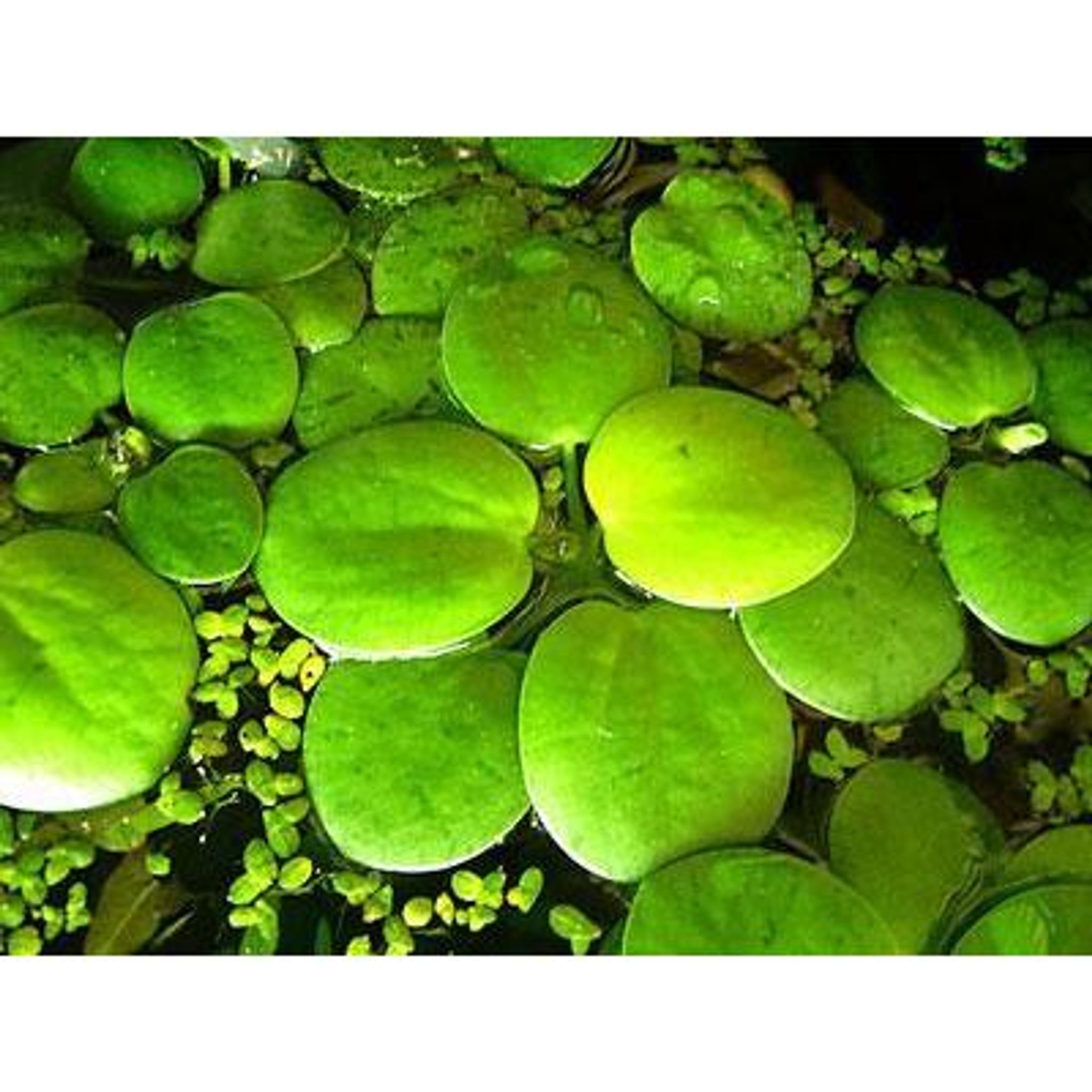

How to Plant and Propagate Frogbit in a Freshwater Aquarium
Frogbit isn't planted at all in the usual sense — it floats freely on the surface, and once it settles in, it multiplies almost on its own. This guide covers exactly how to introduce it, what water and light conditions keep it healthy, and how to manage the plantlets it produces so your colony stays useful instead of taking over the tank.
Which Frogbit Are You Buying?
Most frogbit sold in US aquarium shops is Amazon frogbit (Limnobium laevigatum): tropical, hardy, and tolerant of a wide range of conditions. It's the plant this guide focuses on.
A different plant — true or European frogbit (Hydrocharis morsus-ranae) — is sometimes labeled with the same common name. It's a temperate species that goes dormant and forms winter buds instead of growing year-round, and it's restricted or banned in some US states because of its invasive potential in ponds and waterways. If a listing doesn't specify the species, assume it's Amazon frogbit, and never release either type outdoors or into local waterways.
How to "Plant" Frogbit
There's no substrate step. To introduce frogbit:
- Rinse the plantlets under dechlorinated water to remove hitchhiking debris.
- Give new plants a brief quarantine or dip before adding them to a display tank — frogbit is a common vector for stray snails, algae, or pest larvae.
- Set the rinsed plants directly on the water's surface. Roots hang freely underneath; they should never be pushed into gravel or substrate.
- Position the plants in a calm area, away from filter outflow or air stone bubbles.
That's the entire "planting" process. From here, care is about water conditions, light, and surface flow.
Water Conditions and Lighting
Frogbit is forgiving on chemistry but has real preferences on temperature and light.
| Factor | Range | Notes |
|---|---|---|
| Temperature | 68–82°F (20–28°C) | Best growth at 72–78°F (22–26°C) |
| pH | 6.5–7.5 | Tolerates soft to moderately hard water |
| Light | Moderate to bright | Low light causes leggy growth and weak roots |
| Surface flow | Still to gentle | Strong agitation flips or drowns leaves |
Lighting is where guidance often conflicts. Low light produces small leaves, thin stems, and stunted roots, so frogbit does need reasonably bright light to develop properly. But dropping it straight under a strong LED fixture close to the surface can bleach or scorch the leaves. The safe approach is to acclimate gradually: float new plants under moderate or dimmed light for a week or two, then raise the fixture or increase intensity once the leaves look settled.
Surface flow matters just as much. Frogbit prefers still to gently moving water. A filter outflow, powerhead, or air stone aimed at the surface will constantly flip the plants, waterlog the leaf tops, and rot them. If your filter creates noticeable surface disturbance, redirect the outflow or corral the frogbit in a calmer corner using a floating line, a suction-cup ring, or a piece of driftwood as a barrier.
Humidity and airflow above the water line also affect leaf condition. A fully sealed, humid lid causes condensation to drip back onto the leaves, and leaves that stay wet on top tend to rot. Crack the lid, add a vent, or run a small fan across the surface to keep air moving while still holding in enough humidity for the roots.
Feeding Frogbit
Frogbit is a heavy surface feeder. Because its roots never touch substrate, it pulls nitrate, phosphate, ammonia, and some dissolved CO2 directly from the water column and atmosphere through its leaves and roots. This is exactly why it's popular for nutrient export in nano and shrimp tanks — it strips waste products fast.
Since root tabs and substrate fertilizers are useless to a floating plant, dose a liquid all-in-one or floating-plant-specific fertilizer instead, paying attention to potassium and iron in particular — deficiencies in either show up as pale or stunted new growth. You can browse water conditioners and dosing products in Treatment to keep parameters stable alongside fertilizing.
Frogbit Roots: What They Tell You
Frogbit's roots are fine, feathery, and white to tan, and they do more than feed the plant. They're valuable cover for fry and shrimp, giving small or newly hatched animals a place to hide and graze on biofilm. In good conditions, roots can trail several inches and sometimes over a foot.
Root length and condition are a quick health check:
- Long, bushy, white roots — plenty of light, good nutrients, calm water. Healthy.
- Short or thin roots — often a response to very bright light or nutrient-poor water; not necessarily a problem, just a different growth pattern.
- Blackening, mushy, or disintegrating roots — usually rot from stagnant water or an ammonia spike, and worth a water test.
- Some browning or shedding of older roots — normal, similar to old-leaf senescence, and not a cause for concern on its own.
Trimming roots is purely cosmetic. Cutting them back doesn't harm the plant or interrupt its growth — it only tidies the look, and new roots regrow.
If you're raising betta or shrimp fry, leave the roots long deliberately. A dense frogbit root mat functions as a low-effort nursery: fry and shrimplets shelter in it, forage on the microfauna it collects, and stay out of the direct sightline of adult tankmates. Pairing frogbit propagation with a fry-rearing setup means new plantlets and a growing root network arrive on the same timeline as a growing brood.
How Frogbit Propagates
Frogbit reproduces vegetatively, without any cutting or rooting step. A healthy mother plant sends out short runners (stolons) that form daughter plantlets attached at the end. Once a plantlet has grown a few leaves of its own and developed its own root system, it separates naturally and drifts off as an independent plant.
You don't have to wait for that to happen on its own. Pinching the stolon connecting a mature-looking plantlet to its parent is fine and speeds up the process, especially if you want to move plantlets to another tank or give them away. Both approaches — hands-off or manually separated — work equally well; manual separation just gives you control over timing.
Under good light and nutrient levels, a frogbit colony can double in population every one to two weeks. That pace is the main reason thinning becomes part of routine maintenance rather than an occasional chore.
Sharing or Moving Plantlets Safely
Excess plantlets are a near-guaranteed byproduct of healthy frogbit. To transport or gift them:
- Bag plantlets with a small amount of tank water rather than transferring them dry.
- Handle leaves gently — crushed or folded leaves are prone to rot after the move.
- Keep the bag out of direct sun or extreme temperatures in transit, since frogbit reacts poorly to sudden temperature swings.
Managing Surface Coverage
Left unchecked, frogbit will cover an entire tank's surface. That blocks light to plants growing below it and reduces gas exchange at the water-air interface, which can eventually stress both the frogbit and everything under it.
Aim to keep coverage around 30–50% of the surface. When it grows past that, thin it back by composting the extra, giving plants away, or feeding them to herbivorous fish or tortoises that will eat plant matter. A simple weekly or biweekly thinning pass keeps the colony in balance instead of letting it snowball.
A Simple Weekly Routine
- Thin the colony back to roughly 30–50% surface coverage.
- Check root color and length for signs of nutrient issues or rot.
- Wipe condensation off the lid to reduce leaf-top wetting.
- Dose liquid fertilizer, watching potassium and iron levels.
Using Frogbit as a Refugium Plant
A refugium is a separate chamber connected to the main tank — a sump section, a hang-on-back box, or a small plumbed container — where fast-growing plants like frogbit are stacked deliberately to strip nutrients and add biological filtration without cluttering the display. Because frogbit grows quickly and is easy to harvest by the handful, it's a natural fit for this role: you get the nutrient-export benefit without frogbit visually taking over the main tank's surface.
Frogbit and a Self-Sustaining Tank
A heavily planted tank with fast floaters like frogbit can meaningfully reduce how often you need to change water or dose fertilizer, since the plants continuously pull nitrate and phosphate out of the water and add oxygen. That said, "low-maintenance" is a more accurate description than "zero-maintenance." Top-offs for evaporation, periodic thinning, and occasional water testing are still part of the picture even in a well-balanced planted setup.
CO2-Injected Tanks
In a non-injected tank, frogbit's ability to pull CO2 from the atmosphere through its leaves gives it an edge over submerged plants competing for the same limited CO2 supply — often an advantage for the floater. In a CO2-injected, high-tech tank, the same trait works against you: heavy frogbit coverage limits gas exchange at the surface and can interfere with CO2 diffusion to plants below. If you're running injected CO2, thin frogbit more aggressively than you would in a low-tech setup.
Compatibility Notes
Frogbit does well in betta, shrimp, and community tanks, and its trailing roots are a bonus in tanks with shrimp or bettas that use them as cover. Avoid pairing it, without regular thinning, with light-hungry plants growing directly beneath the surface. Large or destructive fish will shred the leaves, so it's a better match for smaller, plant-safe tankmates.
Common Mistakes
- Direct strong light on day one — bleaches or browns leaves; acclimate under moderate light first.
- Filter or air stone output hitting the plant — causes constant flipping and rot; relocate the outflow or add a barrier.
- Sealed, humid lid — condensation drips rot leaf tops; crack the lid or add airflow.
- No thinning schedule — full coverage starves plants below of light and can crash gas exchange for everything in the tank.
- Assuming yellow outer leaves mean disease — usually normal old-leaf die-off; only worry if new leaves are also small or yellow, or roots turn mushy.
- Skipping quarantine — introduces hitchhiking snails or pest larvae; rinse and briefly quarantine new plants first.
Frequently Asked Questions
Can frogbit live with a filter, or does the current hurt it?
Yes, as long as it isn't positioned directly in strong surface flow. Keep it in a calmer corner, using a floating barrier if your filter creates a lot of surface movement.
Does frogbit need root tabs or substrate fertilizer?
No. Frogbit's roots never touch the substrate, so it only feeds through its leaves and the roots hanging in open water. Use a liquid all-in-one fertilizer or a floating-plant-specific formula instead.
Why are my frogbit roots turning brown or falling off?
This is usually normal shedding of older roots. If it's accompanied by a mushy texture, it more likely points to rot from stagnant water or an ammonia spike, so it's worth checking your parameters.
How fast does frogbit multiply?
Under good light and nutrient levels, a colony can double in population in about one to two weeks through daughter plantlets forming on runners.
Is frogbit invasive or illegal to own?
Amazon frogbit (Limnobium laevigatum) is legal and widely sold across most US states. True frogbit (Hydrocharis morsus-ranae) is restricted or banned in some states due to its invasive potential in ponds and waterways. Never release either species outdoors.
Can frogbit survive in cold water or unheated tanks?
It tolerates a range of temperatures, but growth slows noticeably once temperatures drop into the high 60s°F. It performs best in typical tropical community tank conditions.
Will frogbit hurt other plants by blocking light?
Yes, if it's allowed to cover the entire surface. Thin it regularly so light gaps reach plants growing below.
Can I keep frogbit with goldfish or larger fish?
Some larger or herbivorous fish will eat or shred the leaves. Frogbit does best with bettas, small tetras, livebearers, and shrimp rather than goldfish or bigger, plant-eating species.
Once you've got frogbit settled and thinned to a manageable coverage, browse freshwater livestock on FishyHub to stock tankmates that will actually make use of the cover it provides.


