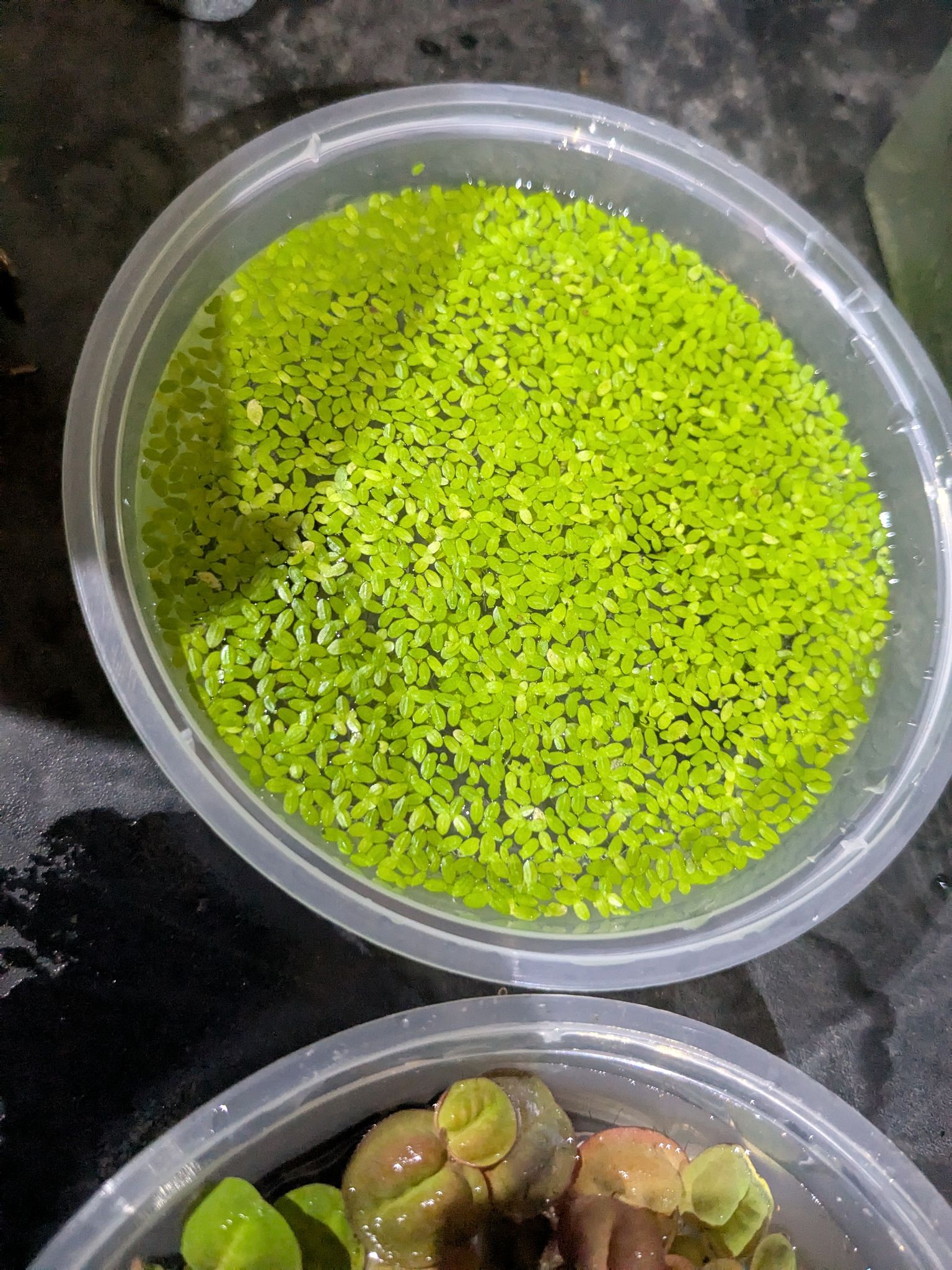
How to Plant and Propagate Duckweed in a Freshwater Aquarium
Duckweed is one of the easiest aquatic plants to grow because there's technically nothing to plant at all. This guide covers what duckweed actually is, the exact conditions that make it multiply fast, how to introduce it safely, and — just as important — how to keep it from taking over a tank once it gets going.
What Duckweed Actually Is
Duckweed is a group of tiny free-floating plants, most commonly the genus Lemna, that sit on the water's surface rather than rooting in substrate. Each individual plant, called a frond, consists of one or two flattened oval leaves roughly the size of a pinhead to a small lentil, with a single thin root thread trailing beneath it into the water.
That root isn't for anchoring anything. It exists purely to pull dissolved nitrogen and phosphorus/phosphate directly out of the water column, which is why duckweed can grow with no substrate, no root tabs, and no liquid fertilizer at all.
Duckweed vs. Giant Duckweed vs. Watermeal
Several similar-looking floaters get lumped together under the same name, and telling them apart matters for both stocking decisions and removal technique.
| Plant | Typical size | Identifying feature |
|---|---|---|
| Common duckweed (Lemna minor) | 1/16–1/8 inch (2–3 mm) | One to two leaves per frond, single trailing root |
| Giant duckweed (Spirodela) | 1/4–3/8 inch (6–10 mm) | Larger, rounder fronds, often with several roots per frond |
| Watermeal (Wolffia) | Under 1/32 inch (under 1 mm) | No visible roots at all; looks like green grains of sand or cornmeal floating on the surface |
Watermeal is considered the world's smallest flowering plant, and it's frequently mistaken for "duckweed dust" when it shows up uninvited. Because it has no root and is so small, it slips through standard fish nets — a detail that matters later when it comes to removal.
Ideal Conditions for Growing Duckweed
Duckweed is forgiving on water chemistry but picky about light. Match these ranges and it will multiply quickly; fall short on light and growth slows dramatically even if everything else is dialed in.
- Temperature: roughly 60–90°F (16–32°C) — comfortable in most heated community tanks, and tolerant enough to survive unheated tanks and outdoor tubs.
- pH: about 6.5–7.5.
- General hardness: has little measurable effect on growth, so it's not a limiting factor in most tap water.
- Light: the single biggest driver of growth rate. It needs strong, unobstructed light for 6 or more hours a day to multiply quickly. Under low light it just idles; under medium-to-high light, growth becomes explosive.
- Water flow: still to very gently moving surface water. Strong current or direct filter outflow pushes fronds into corners, forces them under the surface, and stresses the plant.
How to "Plant" Duckweed (There's No Planting Involved)
This is the part that trips people up expecting a normal planting process. There isn't one:
- Source a small starter portion. A cupped handful is enough to start a colony — duckweed's growth rate means a small amount becomes a full mat quickly.
- Quarantine and rinse it first. Duckweed is notorious for hitchhiking snails, snail eggs, hydra, and algae from wherever it came from. A common sterilization step is a brief, very dilute bleach dip — roughly 1 part bleach to 20–25 parts water for about one minute — followed by a thorough rinse in dechlorinated water before it goes anywhere near a display tank.
- Float it on the surface. No anchoring, no substrate, no fertilizer dosing. Just set it on the water where light reaches it.
- Wait. Under decent light and available nutrients, it establishes and starts spreading within days.
How Duckweed Propagates
Duckweed reproduces entirely by asexual, vegetative budding — there's no seed, cutting, or division step for the hobbyist to perform. A mother frond buds off a small daughter frond attached at its base; once the daughter matures, it detaches and continues growing as an independent plant. Repeat that across a growing mat and the population compounds on itself.
Growth speed estimates vary depending on the source. Under strong light and abundant nutrients, duckweed can double its total mass in as little as 16 hours. In more typical tank conditions — moderate lighting, average nutrient load — doubling every 2 to 4 days is a more realistic expectation. Either way, it's one of the fastest-growing aquatic plants available to hobbyists.
Is Duckweed a Good Fit for Your Tank?
Duckweed isn't universally good or bad — it's situational. Whether it belongs in a given tank depends heavily on what else is happening in that tank.
Where It Works Well
- Betta and fry-rearing tanks: the surface shade reduces stress for skittish or jumpy fish, and fry benefit from the cover.
- Overstocked or heavily fed tanks: its rapid uptake of nitrogen and phosphate makes it a genuine competitor against algae for the same nutrients.
- Goldfish and shrimp setups: duckweed doubles as a snack, offering roughly high protein, moderate fiber, and low fat — a useful supplemental food, though not a complete diet on its own.
- Outdoor tubs and unheated setups: its wide temperature tolerance suits seasonal outdoor ponds.
Where It's a Poor Fit
- High-light planted or carpet tanks: a duckweed mat blocks light penetration to stem plants and carpeting species below, which can stunt or kill them.
- Any tank where full light delivery to the water column matters, including tanks running a PAR meter to dial in lighting for demanding plants or corals kept in a paludarium-style setup.
Benefits of Keeping Duckweed
- Nutrient export: it pulls nitrate and phosphate straight from the water, directly competing with algae for the same food source.
- Surface cover: reduces stress for skittish species and gives fry somewhere to hide.
- Minor oxygen contribution during daylight hours.
- Supplemental food source for many fish and shrimp, and for goldfish and cichlids in particular. If you're stocking a tank specifically to make use of it, browse goldfish or bettas on FishyHub.
Harvesting Duckweed as Feed
Duckweed removed during routine thinning doesn't have to go to waste:
- Skim excess fronds off the surface with a net, cup, or fine strainer.
- Rinse the harvest under clean, dechlorinated water to remove any debris or waste particles trapped in the mat.
- Portion out a small amount per feeding — it's a supplement, not a staple, so treat it the way you'd treat any other fresh or freeze-dried food.
- Offer it fresh to fish, shrimp, goldfish, or even backyard ducks and turtles, since it's a natural part of many of their diets.
Whatever isn't fed out can go into a garden compost pile or a separate outdoor tub rather than the trash.
Preventing Overgrowth From the Start
The easiest way to manage duckweed is to plan for its growth rate before adding it, rather than reacting after it's already covering the tank.
- Stock it light. Start with a small amount rather than a thick starter mat — it will catch up quickly regardless.
- Confine it with a barrier. A floating ring or barrier made for surface plants keeps duckweed restricted to one section of the tank, so the rest of the surface stays open for light and gas exchange.
- Match removal frequency to light intensity. Tanks running strong lighting need more frequent skimming than dimly lit setups, since growth rate tracks directly with light.
Maintenance and Removal
Once established, duckweed needs a standing maintenance routine, not a one-time cleanup.
Routine Thinning
Skim excess duckweed off the surface with a net, cup, or fine strainer on a weekly basis at minimum — more often in strongly lit or heavily stocked tanks. Left unchecked, a full surface mat blocks gas exchange and light to anything below it, which can lead to oxygen crashes and dying lower plants.
Full Removal
There's no reliable chemical or biological product that eliminates duckweed outright. The only animals that meaningfully graze it down are goldfish, some larger livebearers, and outdoor ducks or turtles — and even they usually just slow growth rather than eliminate it. Some hobbyists describe duckweed as impossible to fully remove; a more accurate framing is that full eradication is difficult but achievable through persistent, frequent skimming combined with reducing light and excess nutrients. It's rarely a one-and-done job — expect a sustained campaign over several weeks.
A fine mesh net or an improvised skimmer positioned at the filter intake also helps catch stray fronds before they clog the intake itself.
Handling Watermeal Separately
Because watermeal is so small and has no visible root, it slips straight through a standard fish net. If a green, grain-like film shows up instead of normal-sized fronds, switch tactics: skim the surface with a paper towel laid flat on the water, use a very fine mesh, or — in small tanks or ponds — a turkey baster to suck up patches directly.
Common Mistakes to Avoid
- Letting it cover 100% of the surface. This cuts off gas exchange and light, risking oxygen crashes and stress on fish and lower plants.
- Skipping quarantine. Adding duckweed straight from another tank without rinsing or a dip step is the most common way snails, snail eggs, hydra, and algae get introduced.
- Dosing fertilizer for it. Duckweed needs none — adding nutrients on its account just accelerates growth you'll then have to remove.
- Underestimating the removal effort. A single skimming session won't solve an established infestation; treat it as a standing weekly task.
- Ignoring filter intakes. Loose fronds pulled toward a filter or hang-on filter intake can clog it over time if there's no screen or guard.
- Mistaking watermeal for duckweed and reaching for a standard net, which won't catch it.
Cross-Contamination Between Tanks
A single stray frond caught on a net, a plant, or a piece of decor is enough to start a new colony in another tank. If you keep multiple tanks, rinse and inspect any shared equipment carefully before moving it between them — treat duckweed as something that's genuinely hard to fully eradicate once it establishes anywhere in your setup.
Frequently Asked Questions
Does duckweed need substrate or fertilizer?
No. Duckweed floats on the surface and absorbs nitrogen and phosphate directly from the water column through its trailing root, so it needs no substrate, anchoring, or root fertilizer to grow.
How fast does duckweed grow?
Very fast — it can double its total mass in as little as 16 hours under strong light and abundant nutrients, though every 2 to 4 days is more typical under average tank conditions.
Is duckweed good or bad for my aquarium?
It depends on the tank. It's genuinely useful for nutrient control, cover, and food value in stocked, betta, or fry-rearing tanks, but a poor choice in planted display tanks where lower plants need full light penetration.
How do I get rid of duckweed once it's established?
Persistent manual net-skimming, combined with reducing light and excess nutrients, is the main practical approach. Fish that graze on it (goldfish, some larger livebearers) can help slow it down, but full eradication usually takes sustained effort over several weeks rather than a single cleanup.
Can I feed duckweed to my fish?
Yes. Many fish, shrimp, and goldfish eat it readily, and it offers decent protein and fiber content as a supplemental food — rinse it first and treat it as an occasional addition rather than a staple.
What water conditions does duckweed need?
Roughly 60–90°F (16–32°C) and a pH of about 6.5–7.5, with general hardness having little effect on growth. Strong, unobstructed light for 6 or more hours a day drives the fastest growth.
How do I stop duckweed from spreading to other tanks?
Rinse and inspect nets, plants, and decor carefully before moving them between tanks, since a single stray frond is enough to start a new colony elsewhere.
If duckweed sounds like a good match for a betta, fry, or heavily stocked setup, browse tank-appropriate stock and gear in FishyHub's Freshwater Livestock category to plan your setup around it.


