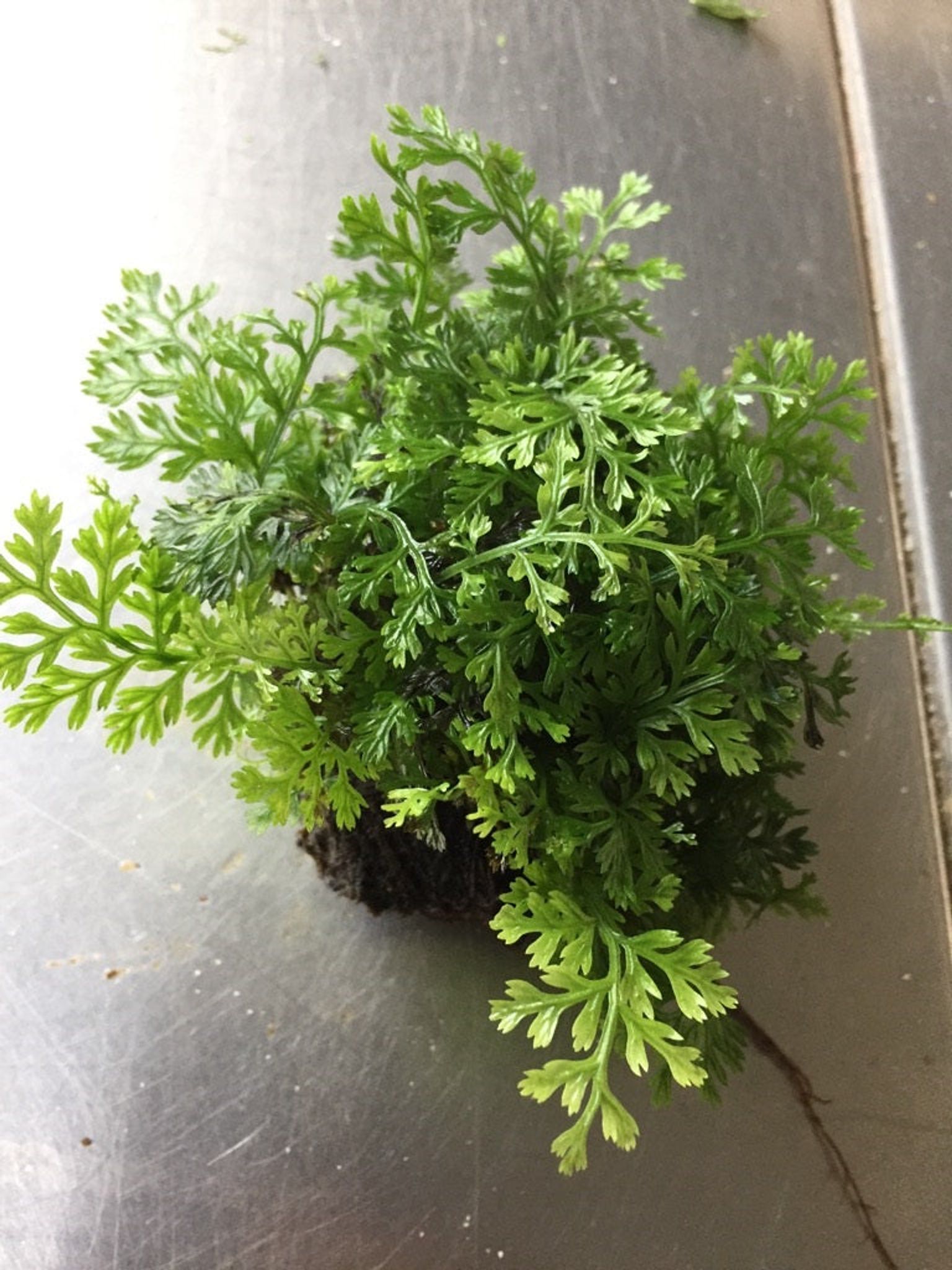

How to Plant and Propagate Bolbitis in a Freshwater Aquarium
Bolbitis heudelotii, commonly called African water fern, doesn't get "planted" the way most aquarium plants do — and treating it like a stem or rosette plant is the fastest way to kill it. This guide covers the correct attachment methods, the water and light conditions it actually needs, and how to safely divide a mature plant into new specimens.
Why Bolbitis Breaks the Usual Planting Rules
Bolbitis heudelotii is a rhizomatous, epiphyte-style fern native to fast-flowing rivers and streams in West Africa. In the wild, it clings to rocks and submerged wood in current rather than rooting in soil, which is exactly why it needs to be attached to hardscape in an aquarium instead of buried in substrate.
That native habitat also explains two of its biggest preferences: it wants moderate-to-strong flow, and it's used to growing in the shade of rocks, logs, and taller plants rather than in direct light.
The single most important rule: never bury or cover the rhizome (the thick, root-like stem the fronds grow from) in gravel or sand. A buried rhizome rots and the plant dies — this is the number one cause of failure with this species, and it's an easy mistake for anyone used to substrate-planting rosette or stem plants.
How to Attach Bolbitis to Hardscape
Choose a piece of driftwood, lava rock, or another porous stone with a crevice or flat-ish surface where the rhizome can sit exposed, with only the fine roots eventually growing into the material.
Attachment methods:
- Cotton thread or fishing line — wrap gently around the rhizome and the wood or rock, snug enough to hold it in place without crushing the tissue. This is reversible and easy for beginners.
- Cyanoacrylate (super) glue — apply a thin bead at the contact points between the rhizome and the surface. This bonds almost instantly underwater and holds well in tanks with active bottom-dwellers that might dislodge tied cuttings.
- Weighting or wedging — some pieces will self-anchor if simply wedged into a crevice or held down with a small weight, with no thread or glue at all.
New roots typically take hold and grip the hardscape within roughly 2 to 4 weeks. Once anchored, thread or fishing line can be removed, though leaving it in place indefinitely causes no harm.
Water Parameters and Tank Conditions
Sources vary slightly on the exact pH figures — some list 5.5–7.5, others 5.0–7.0, and some just say "acidic to neutral." Bolbitis is genuinely forgiving of a wider range than the strictest numbers suggest, but it does best on the soft, slightly acidic side.
| Parameter | Range |
|---|---|
| Temperature | 70–82°F (21–28°C) |
| pH | 5.5–7.5 (thrives best 6.0–7.0) |
| General hardness (GH) | Soft to moderately soft; avoid hard, alkaline water |
| Lighting | Low to moderate, 6–10 hours/day |
| CO2 | Not required; optional for modestly faster growth |
| Flow | Moderate to strong |
GH figures across sources are vague and inconsistent, so treat "soft to moderately soft" as a practical guideline rather than chasing a precise dGH number.
Lighting
Bolbitis genuinely prefers shade. Direct, high-intensity light or full sun causes algae to coat the fronds and leads to browning. Place it under overhangs, behind taller plants, or in the shadow of hardscape rather than under the brightest part of the light fixture.
Flow
Moderate-to-strong current does double duty: it mimics the fast-flowing streams this fern evolved in, and it helps keep algae and detritus off the slow-growing fronds, which can't easily outcompete algae on their own.
Placement and Tank Size
Mature Bolbitis specimens reach roughly 6 to 20+ inches, making it a mid-ground to background plant in most layouts. It works well:
- Fully submerged, attached to hardscape in a standard freshwater tank.
- Emersed, above the waterline in a paludarium or riparium, where it adapts readily to humid, out-of-water growth.
Because full-grown plants get large, Bolbitis suits medium-to-large tanks (20 gallons and up) better than small nano tanks in the long run — though young plants or fresh divisions do fine in nano setups while they're still small.
Choosing a Healthy Specimen
When picking out a plant or division, look for:
- A firm, dark-green rhizome with no soft, mushy, or discolored spots.
- Fronds free of black or translucent patches.
- No visible pest hitchhikers on the underside of leaves.
A brief quarantine dip before adding any new Bolbitis to an established display tank is a reasonable precaution against pests, the same as you'd do for other new plants. You can browse healthy freshwater plant stock and the tanks to house it in on FishyHub.
Growth Rate and Maintenance
Bolbitis is very slow-growing, especially early on. Newly attached or newly divided plants may take weeks to over a month just to push a single new leaf, even though the roots themselves grip the hardscape in a matter of a few weeks. Set your expectations for these two timelines separately: anchoring is relatively quick, visible leaf growth is genuinely slow.
Growth does speed up once the plant is well-established and gripping firmly. To encourage faster growth:
- Keep flow and light stable rather than constantly rearranging the tank.
- Avoid moving or replanting the specimen — relocation stress slows an already-slow grower even further.
- Dose trace elements lightly and consistently if you're running a planted tank with regular fertilization.
- Ensure adequate, steady flow so the fronds stay clean and algae-free.
Routine trimming: cut old, browning, algae-covered, or melting fronds at the base near the rhizome. This redirects the plant's energy into new growth instead of maintaining dying leaves.
Fertilization
Bolbitis isn't a heavy root feeder, so it doesn't need much extra fertilization. Light liquid fertilization is optional rather than necessary, and over-fertilizing is more likely to feed algae than help the fern.
Tank Mates to Avoid
The thin fronds damage easily, so avoid housing Bolbitis with fish or invertebrates that graze on soft plant matter — some larger cichlids and other plant-nibbling species in particular. In tanks with active bottom-dwellers that might bump or uproot tied cuttings, glue tends to hold better than thread alone.
Common Mistakes When Growing Bolbitis
- Burying the rhizome in substrate. The #1 cause of rot and death — always keep it exposed on top of hardscape, never covered.
- Over-fertilizing. Since it isn't a root feeder, excess fertilizer mostly benefits algae rather than the fern.
- Skipping water changes or algae control. Bolbitis is a magnet for algae when flow or light is off balance, so consistent maintenance matters more than with fast-growing species.
- Too much light without enough flow. This combination reliably leads to algae fouling on the slow-growing fronds.
- Overstocking or poor circulation. Both contribute to the same algae problems above.
How to Propagate Bolbitis by Rhizome Division
Bolbitis only propagates by rhizome division in aquarium culture — there are no runners or seeds involved. Only divide a healthy, mature plant that has at least 3–4 leaves on each side of the rhizome.
- Identify a section of rhizome with several healthy leaves and, ideally, a visible new growth point.
- Cut straight through the rhizome with a clean, sharp blade or scissors, giving each new section at least 2–3 leaves.
- Re-attach each cutting immediately to its own piece of hardscape using thread, fishing line, or aquarium-safe glue. Never let a cut section float loose or bury it in substrate.
- Keep divided pieces in stable, established water conditions and low-to-moderate light while they recover. Expect a slowdown in visible growth for several weeks after division — this is normal, not a sign of failure.
- Limit each parent plant to 2–3 divisions at a time. Over-dividing a small or young plant stresses it excessively and can set both halves back significantly.
The best time to divide is once the parent plant is clearly mature and healthy, not as soon as it reaches the minimum leaf count — a plant with a comfortable margin above 3–4 leaves per side recovers more reliably.
Troubleshooting
| Problem | Likely Cause | Fix |
|---|---|---|
| Rhizome rotting | Buried in substrate | Re-attach on top of hardscape, fully exposed |
| Algae coating fronds | High light, low flow | Relocate to shadier/higher-flow spot; increase water changes |
| Leaves browning, melting, or holed | Parameter swings, poor water quality, old age | Trim affected fronds; stabilize temperature and hardness |
| No visible growth for weeks | Normal early growth pattern, or loose attachment | Confirm firm attachment; check light/flow/CO2 before assuming a problem |
| Division fails to take hold | Too few leaves per cutting, immature parent, or left floating | Use at least 2–3 leaves per division and secure firmly right away |
| Cuttings knocked loose | Active bottom-dwellers disturbing thread ties | Add glue at the attachment points, or use glue instead of thread |
If you need supplies for attaching or securing plants — porous rock, driftwood, or a reliable filter to maintain the flow Bolbitis prefers — you can find them alongside other freshwater livestock essentials on FishyHub.
Frequently Asked Questions
Can Bolbitis be planted in substrate like other aquarium plants?
No. Bolbitis must be attached to hardscape such as driftwood or rock. Burying the rhizome in substrate cuts off its normal growth habit and causes it to rot.
How fast does Bolbitis heudelotii grow?
Very slowly, especially when newly attached or recently divided. Expect gradual growth measured in months rather than weeks, even though the roots themselves grip hardscape within a few weeks.
Does Bolbitis need CO2 or special fertilizer?
No. It grows fine in low-tech, non-CO2 tanks, and since it isn't a root feeder it doesn't need heavy fertilization. Light liquid fertilization is optional but not necessary.
Can Bolbitis grow emersed, out of the water?
Yes. It adapts well to paludarium and riparium setups above the waterline, in addition to growing fully submerged in a standard aquarium.
How do you attach Bolbitis to driftwood or rock?
Tie it on with cotton thread or fishing line, or apply a thin bead of aquarium-safe super glue directly to the rhizome-to-surface contact points. Either way, expect new roots to take hold and grip the surface within about 2 to 4 weeks.
When is the best time to propagate or divide Bolbitis?
Once the parent plant is mature and healthy, with at least 3–4 leaves on each side of the rhizome. Dividing a small or young plant too early stresses it and slows recovery for both halves.
Why are my Bolbitis leaves covered in algae?
This usually signals too much light relative to your flow and nutrient balance. Because Bolbitis grows so slowly, algae can easily outcompete it — improving circulation and dimming or shortening the light period typically helps.
Is Bolbitis heudelotii beginner-friendly?
Yes, once the "don't bury it" rule is understood. It tolerates a fairly wide range of water parameters and does well in low-tech setups, making it a low-maintenance choice despite its slow growth rate.
Ready to add African water fern to your setup? Browse hardscape-friendly freshwater livestock and tank essentials on FishyHub to get your Bolbitis project started.


