
How to Plant and Propagate Bacopa in a Freshwater Aquarium
Bacopa is one of the easiest stem plants to grow in a freshwater tank, but new stems have a habit of floating loose or turning mushy right after planting. This guide walks through picking a healthy specimen, anchoring it correctly, keeping it thriving, and taking cuttings so you never need to buy more than one bunch.
What Is Bacopa?
Bacopa is a genus of amphibious stem plants sold either emersed (grown above water at a nursery) or as tissue-culture cups. The most common aquarium species are:
- Bacopa monnieri (moneywort) — small, rounded leaves, stays compact
- Bacopa caroliniana (lemon bacopa) — larger leaves, a faint citrus scent when crushed, colors up under strong light
- Bacopa myriophylloides — finer, feathery leaves
- Bacopa salzmannii — larger leaves with a purplish underside
All four share similar care requirements, so the steps below apply to any of them.
Why Start With a Plant Like Bacopa
Live plants do real work in a tank beyond looking good. They take up fish waste and excess nutrients that would otherwise fuel algae, add oxygen to the water during daylight hours, and help buffer against the sudden chemistry swings that cause many beginner problems. They also give fish and shrimp places to graze and hide, which lowers stress in a community tank.
Bacopa is a good entry point for a first planted tank because it's a genuine low-tech plant — no CO2 injection required — yet it still grows quickly enough to reward attention and teach the basics of trimming and propagation.
Ideal Conditions
Bacopa is unusually tolerant for a stem plant, including in moderately hard, alkaline water where many other stems struggle.
| Parameter | Range |
|---|---|
| Temperature | 68–82°F (20–28°C) |
| pH | 6.0–7.8 |
| General hardness | 2–15 GH |
| Lighting | Medium to high, 8 hours/day photoperiod |
| CO2 | Not required (optional) |
| Substrate | Sand or gravel; nutrient-rich substrate or root tabs improve growth |
| Placement | Midground to background |
| Mature height | 6–12 in. (some specimens reach 20–30 cm) |
| Minimum tank size | About 10 gallons (38 L) |
A few notes on the numbers above:
- Light: 8 hours is a safe daily default. If you see algae developing on the leaves, that's usually a sign of too much light relative to nutrients — cut the photoperiod back rather than adding more.
- CO2: Bacopa doesn't need it, but adding CO2 or liquid fertilizer will speed growth and produce denser, more colorful stems, especially in B. caroliniana.
- Substrate: Plain gravel works fine, but because bacopa feeds through both its roots and the water column, a nutrient-rich substrate or occasional root tabs noticeably boost fullness and growth rate.
- Ambient light: If your room is dim or your fixture is an older, non-full-spectrum unit, bacopa may need supplemental lighting even though it's rated as low-tech.
Before You Plant: Quarantine and Handle With Care
Store-bought bunches and floating stem plants can carry snail eggs or algae hitchhikers. Give new bacopa a rinse or a brief pest-dip before adding it to an established tank, and inspect leaf undersides for egg clusters.
Bacopa stems are notably fragile and succulent — squeezing them between your fingers can crush the tissue and invite rot. Use a clean pair of aquascaping tweezers (straight tweezers are easier for burying stems into open substrate; curved tweezers help in tighter, planted spots) and sharp scissors rather than snipping with your fingernails.
Finding a node: A node is the point on the stem where a pair of leaves attaches. Roots and new side shoots form at nodes, so every cut for propagation should be made just above one, and every cutting should have several leaf-pairs (nodes) along its length.
How to Plant Bacopa: Step by Step
- Inspect the plant. Trim off any obviously dead, yellow, or mushy leaves before planting.
- Separate into small groups. Plant bacopa in groups of a few stems rather than singly, spaced about 1 inch apart so light reaches the lower leaves and stems aren't competing directly.
- Strip the bottom leaves. Remove leaves from the lowest 1–1.5 inches of each stem — buried leaves will just rot underground.
- Bury the stripped end. Using tweezers, push the bare stem 1–1.5 inches into the substrate. Don't go deeper than that or the buried stem tissue can rot.
- Decide: float or anchor. New stems without roots often want to pop back out. In a low-flow or low-tech tank, it's fine to let a stem float in open water until roots appear, then plant it. In a higher-flow tank, anchor it immediately with a plant weight or a small piece of soft mesh so current doesn't dislodge it before it roots.
- Watch for the emersed-to-submersed transition. Bacopa is often shipped grown emersed (above water). It's normal for some upper or lower leaves to melt or go mushy in the first one to two weeks as the plant converts to its underwater leaf form. Trim off mushy tissue, keep water quality stable, and new aquatic-form leaves should appear within that window.
How to Propagate Bacopa
Once your original stems are established, you can multiply them indefinitely using cuttings — every trim becomes a new plant.
Basic Cutting Method
- Identify a healthy stem with several nodes (leaf-pairs) along its length.
- Using clean, sharp scissors, cut a 3–6 inch section just above a node.
- Strip the leaves off the bottom 2 inches of the cutting.
- Plant the stripped end into substrate, or let it float until roots emerge.
- Roots typically appear in 1–2 weeks; a full, bushy new plant develops in roughly 4–8 weeks under adequate light and nutrients.
Topping (For a Bushier Parent Plant)
Cutting off the growing tip of a stem encourages the parent to branch at the node just below the cut, producing two new shoots instead of one. Repeated topping over several trims is the main way bacopa becomes bushy rather than tall and leggy.
Side-Shoot Separation
Bacopa naturally sends out lateral shoots — sometimes called pseudo-runners — from nodes along the stem. Once a side shoot has grown its own independent roots, you can separate it with scissors and replant it as a standalone specimen.
Ongoing Trimming
Trim whenever stems approach the water surface or start looking top-heavy and leggy — usually every 1–3 weeks depending on light and growth rate. Always cut just above a node so the remaining stem branches cleanly. Trim proactively; letting a stem reach the surface and flop over just makes the eventual cleanup messier.
Common Mistakes and How to Fix Them
| Problem | Likely Cause | Fix |
|---|---|---|
| Stem turns mushy at the base | Buried too deep, or too many leaves left on the buried section | Replant with only the bottom 1 inch buried, fully stripped of leaves |
| Stem keeps popping out of substrate | No anchor while roots are forming | Use a plant weight or mesh, or deliberately let it float until roots appear |
| Leaves melting after purchase | Emersed-to-submersed transition (not disease) | Remove mushy leaves, hold water quality steady, wait 1–2 weeks for new growth |
| Lower leaves dropping, stems sparse | Insufficient light reaching the lower leaves | Increase photoperiod/intensity, raise the plant in the water column, thin shading neighbors |
| Algae on the leaves | Excess light relative to available nutrients | Reduce photoperiod or add CO2/fertilizer to rebalance |
| Slow, weak growth despite good light | Overcrowded stems competing for light and nutrients | Re-space stems about 1 inch apart |
| Torn or bruised stem tissue | Snipping by hand instead of using scissors | Always use clean, sharp scissors and cut cleanly above a node |
Bacopa Above the Waterline
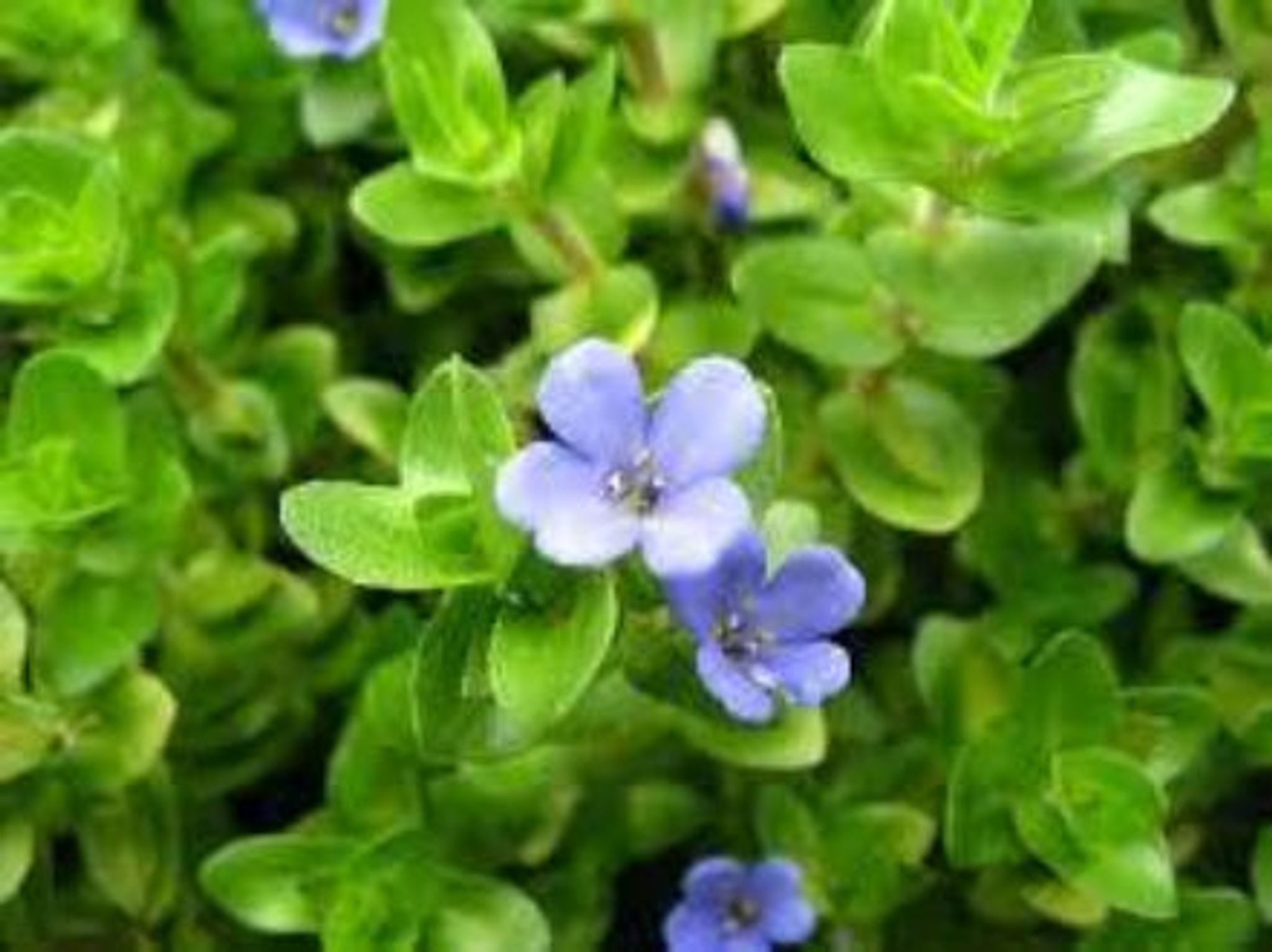
Because bacopa is amphibious, it can also be grown emersed as a paludarium or riparium plant along an open-top tank's damp margins. Grown this way, it produces small white, pink, or purple flowers — a feature you'll never see on a fully submerged stem.
If you're setting up a nutrient-rich base for new bacopa, browse substrate options or gravel and sand suited to root-feeding stem plants, and check current lighting if your fixture may be underpowered for a medium-to-high light plant like this one.
Frequently Asked Questions
Does bacopa need CO2 to grow?
No. Bacopa is a genuine low-tech plant and grows well without CO2 injection. Adding CO2 is optional and mainly useful if you want faster growth and richer coloration.
Why is my new bacopa melting or turning mushy?
This is almost always the normal transition from emersed (store-grown, above-water) form to submerged form, not a sign the plant is dying. Trim off the mushy tissue, keep water quality stable, and give it one to two weeks to push new aquatic-form leaves.
How do I stop bacopa from floating out of the substrate?
Bury the bare, leaf-stripped end about an inch deep, and for fresh cuttings without roots yet, use a plant weight or soft mesh anchor. Once roots form after one to two weeks, the stem will stay put on its own.
How often should I trim bacopa?
Trim whenever stems near the surface or start looking leggy, which is typically every one to three weeks depending on light and growth rate. Every trim also doubles as a propagation opportunity, since the cuttings can be replanted.
Can I just cut a piece off and replant it?
Yes. Cut a 3–6 inch section a few inches above a node, strip the lower leaves, and either plant the stripped end into substrate or let it float until roots appear. Roots typically show up within one to two weeks.
What's the difference between Bacopa monnieri and Bacopa caroliniana?
Bacopa monnieri (moneywort) has smaller, rounder leaves and stays more compact overall. Bacopa caroliniana (lemon bacopa) grows larger, has a citrus scent when its leaves are crushed, and develops stronger reddish coloration under high light.
What size tank does bacopa need?
Bacopa is comfortable in a 10-gallon (38 L) tank and up, given its eventual height of 6–12 inches or more. It can be kept in smaller tanks too, provided you trim more frequently to keep it in bounds.
Will bacopa grow without a nutrient-rich substrate?
Yes — bacopa will survive and grow in plain gravel or sand. It grows fuller and faster, though, with a nutrient-rich substrate or the occasional root tab or liquid fertilizer dose, since it feeds through both its roots and the water column.
Ready to add bacopa or fill out the rest of a new planted tank? Browse freshwater livestock on FishyHub for tankmates that will graze and shelter among your new stems.


