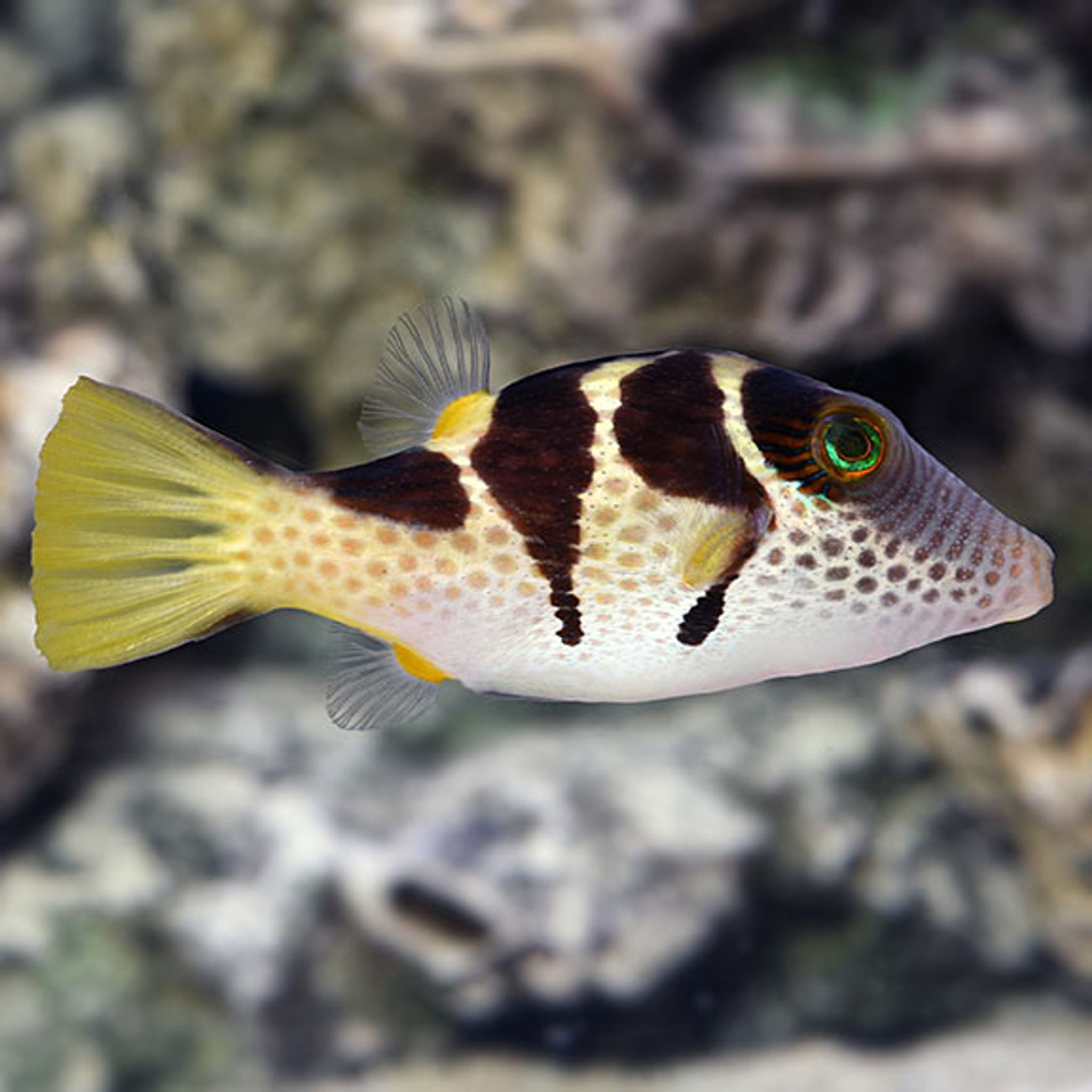

How to Feed Valentini Puffer: Foods, Frequency and Common Feeding Problems
The Valentini puffer (Canthigaster valentini) needs more than flake food to stay healthy — its beak grows continuously and requires hard, shell-based foods to wear down naturally. This guide covers exactly what to feed, how much, how often, and how to fix the most common feeding mistakes before they turn into overgrown beaks, obesity, or a puffer that won't eat at all.
Species Snapshot
Also sold as the saddled puffer, saddle valentini, or black-saddled toby, this small marine puffer tops out around 4-5 inches (10-13 cm). Juveniles are sometimes kept temporarily in nano tanks, but adults are territorial and produce a surprising amount of bioload, so a 30-50 gallon tank or larger is the realistic long-term minimum.
In the wild, Valentini puffers are omnivores that lean carnivorous, grazing on crustaceans, mollusks, tube worms, sponges, and some algae. In captivity, that means a single staple food is never enough — variety is a health requirement, not a preference.
What to Feed a Valentini Puffer
Build the diet around a rotation of meaty marine proteins, with hard-shelled foods as a non-negotiable weekly component.
Core rotation foods:
- Mysis shrimp
- Brine shrimp (ideally gut-loaded or enriched, since it's nutritionally thin on its own)
- Krill
- Silversides
- Squid
- Clams or scallops, chopped
- Shrimp or prawn meat
- Marine pellet or gel food formulated for carnivores/puffers
Hard-shelled foods (essential, not optional):
- Whole shell-on shrimp
- Snails, shell included
- Clams still in the shell
- Crushed crab or crayfish
- Fresh oyster or mussel with shell fragments left on
Why the Shell Matters
A puffer's teeth are fused into a beak that never stops growing. In the wild, crunching through shells and exoskeletons files it down automatically. Without that abrasion in an aquarium, the beak overgrows until the fish can no longer close its mouth properly or feed at all. This is arguably the single most important feeding-related care point for this species — more important than any specific food brand or formula.
Pellets and gel foods can supplement the diet, but they don't provide the grinding resistance a shell does. Treat them as a rotation ingredient, not a replacement for shell-on foods.
Feeding Frequency and Portions
Recommendations vary — some sources say feed adults daily, others say every other day or a few small meals a week once mature. The sensible middle ground:
| Life Stage | Frequency | Notes |
|---|---|---|
| Juveniles | 2x daily | Small portions each time |
| Young/growing adults | Once daily | Taper down as growth slows |
| Established adults | Once daily to every other day | Err toward slight underfeeding |
| Hard-food day (all ages) | 1-2x per week | Whole shrimp-in-shell or snail, in addition to the regular schedule, specifically for beak wear |
Portion size: feed only what disappears within 2-3 minutes. Valentini puffers will keep begging and eating well past the point of being full, so the keeper — not the fish — has to decide when a meal is over. As a rough practical guide, a single adult in a species or mixed tank typically takes a pinch of frozen mysis or brine shrimp (roughly what fits between two fingertips) at a small meal, or one whole shell-on shrimp/snail on a hard-food day.
A Sample Weekly Schedule
| Day | Food |
|---|---|
| Mon | Mysis shrimp + a few pellets |
| Tue | Chopped clam or squid |
| Wed | Hard-food day: whole shell-on shrimp or a snail |
| Thu | Krill or silversides |
| Fri | Skip or light feed (portion control day) |
| Sat | Chopped shrimp/prawn meat |
| Sun | Hard-food day: snail or clam in shell |
Adjust frequency down for well-established adults; the point of the schedule is rotation plus guaranteed beak wear, not a rigid daily count.
Feeding Method
Valentini puffers are slow, deliberate eaters. In a mixed-species tank with faster fish, they can easily get outcompeted before they get a bite. Target-feed with tongs or a feeding stick to make sure food reaches the puffer directly rather than being swept up by tankmates.
Weaning a New Arrival
Newly acquired puffers are often stressed from shipping and acclimation and may refuse frozen food for the first few days. Live foods — live brine shrimp, live ghost shrimp, snails, or blackworms — are often the key to getting a reluctant new fish to eat. Once it's feeding reliably, gradually transition to frozen and fresh foods over a week or two.
Water Quality and Feeding Are Linked
Puffers produce more waste relative to their size than many marine fish, and they're sensitive to poor water quality. Overfeeding compounds the problem directly, driving ammonia and nitrate spikes. Keep parameters stable to support a healthy appetite and digestion:
- Specific gravity: 1.020-1.025
- Temperature: 72-78°F (22-26°C)
- pH: 8.1-8.4
- Ammonia/nitrite: near zero
- Nitrate: low
Also remove uneaten shell debris from rockwork after feeding — leftover shells rot and cloud the water or contribute to ammonia spikes if left in place.
A Note on Toxicity
Valentini puffers are not considered dangerously toxic in the way true pufferfish species are often described, and there's no risk to a keeper from handling food around them. The more relevant feeding-time concern is behavioral: they can nip fins of slow tankmates and go after small invertebrates, not that their food poses any handling risk to people.
Feeding a Valentini Puffer in a Reef or FOWLR Tank
Valentini puffers are frequently marketed as nano reef fish, but most experienced keepers treat that claim with caution. In practice, this species will eat ornamental snails, hermit crabs, small crustaceans, and clam mantles, and it may nip coral polyps or soft coral tissue out of curiosity or hunger — occasionally sampling SPS or LPS coral too.
The practical take: it's reef-safe "with caution." It does fine in a fish-only or FOWLR (fish-only-with-live-rock) setup. If it must go in a reef tank, plan for it:
- Stick to hardy coral species and skip valuable snails, hermit crabs, or clams you don't want lost
- Provide a tank of at least 30-50 gallons with plenty of live rock for hiding spots and territory breaks
- Run stable filtration and skimming to handle the puffer's higher bioload
- Quarantine any new puffer before introducing it to an established reef system, both for the puffer's health and the tank's
If you're planning a reef build around other livestock, a broader look at marine fish options can help you figure out which species pair safely with a puffer's appetite.
Common Feeding Mistakes and How to Fix Them
Overfeeding leading to obesity. A puffer that's fed too much, too often, packs on weight, which can lead to fatty liver disease and a shortened lifespan. Fix it by measuring portions to the 2-3 minute rule and skipping a feeding day weekly.
Never offering hard, shelled foods. This is the most common long-term mistake and the one with the worst outcome: an overgrown beak that eventually prevents the fish from eating at all. Add shell-on shrimp, snails, or clams at least weekly. If a beak has already overgrown to the point of interfering with feeding, this generally needs a vet or experienced aquarist to trim — it isn't a home DIY fix.
A new puffer refusing food. Usually shipping or acclimation stress, or unfamiliarity with the food offered. Try live foods, dim the lights, and minimize disturbance for the first few days. Also check that it isn't being intimidated or outcompeted by tankmates at feeding time.
Frequent puffing/inflating. An occasional puff from a startle is normal. Frequent inflation, or gulping air at the surface, is a stress or water-quality signal — test parameters right away rather than assuming it's just personality.
Bloating or constipation. Usually from too much dry or pellet food without enough moisture or fiber from shelled foods. Vary the diet and soak dry foods before feeding to help.
Aggression at feeding time. A hungry puffer may nip the fins of slower tankmates competing for the same food. Target feeding and making sure every fish gets an adequate portion reduces this.
Cloudy water after feeding. Uneaten shell material left to rot in the rockwork drives ammonia and cloudiness. Remove shell debris after each feeding rather than leaving it for the cleanup crew.
If you're stocking hard-shelled foods for the beak-wear rotation, live or fresh snails from marine invertebrates and snails work well, and a rotating supply of freeze-dried foods can round out the protein side of the schedule between fresh or frozen feedings.
Frequently Asked Questions
How often should I feed a Valentini puffer?
Feed juveniles twice daily in small portions. For adults, once daily to every other day is typical, always with a dedicated hard-shelled food offering worked in at least once a week for beak wear.
What is the best food for a Valentini puffer?
There isn't one best food — the goal is rotation. Mix mysis and brine shrimp, krill, squid, clams, shrimp meat, and shell-on foods like whole shrimp or snails rather than relying on a single staple.
Do Valentini puffers need snails or hard shells to eat?
Yes. Hard, shelled foods wear down the continuously growing beak. Without regular shell-based foods, the beak can overgrow to the point where the fish struggles to eat.
Will a Valentini puffer eat my cleanup crew (snails, hermit crabs)?
Likely, yes, given time. Treat it as a predator of small invertebrates rather than a reef-safe tankmate for a cleanup crew, and stock accordingly.
Why won't my new Valentini puffer eat?
This is usually acclimation stress rather than illness. Try offering live foods, dim the lighting, reduce disturbance around the tank, and make sure it isn't being outcompeted by tankmates at feeding time. Monitor water parameters as well, since poor water quality can also suppress appetite.
How much should I feed at each meal?
Offer only what gets eaten within 2-3 minutes. Valentini puffers will keep eating past the point of being full if allowed, so portion control has to come from the keeper, not the fish's own signals.
Can Valentini puffers be fed flake or pellet food?
Yes, as part of a rotation, but not as the primary diet. Pellets and flakes don't provide the hard texture the beak needs for wear, so they should supplement — not replace — shell-on and shelled foods.
Is a Valentini puffer's bite dangerous when feeding by hand?
Their beak is strong enough to give a painful pinch to a finger, so hand-feeding isn't recommended. Use tongs or a feeding stick instead to keep fingers clear while still target-feeding a slow eater.
Ready to add one to your tank? Browse available marine puffers on FishyHub to find a healthy Valentini puffer for your setup.


