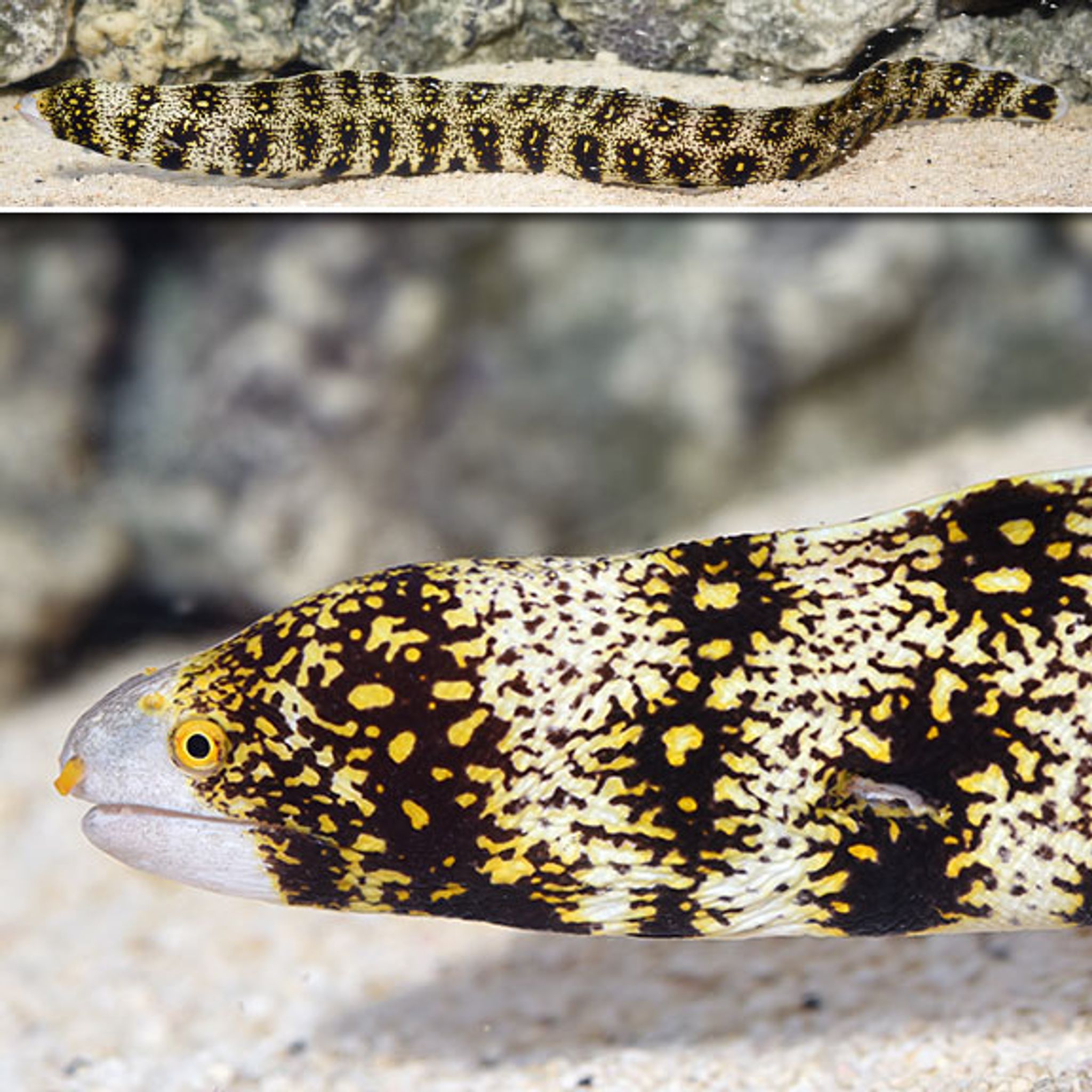

How to Feed Snowflake Eel: Foods, Frequency and Common Feeding Problems
The snowflake eel (Echidna nebulosa) is one of the easiest morays to feed once you know its rhythm: a handful of meaty foods, two or three sessions a week, and a pair of tongs. This guide covers exactly what to offer, how often, how to hand it over safely, and what to do when a new eel won't touch anything.
Snowflake Eel Diet Basics
Despite the freshwater-sounding name, the snowflake eel is a strict saltwater/reef species and a true carnivore-piscivore — it does not graze on algae or biofilm the way its name might suggest. Every feeding decision starts from that fact: this is an ambush predator built to eat meat, not a cleanup-crew animal.
In the wild it hunts crustaceans and small fish by smell rather than sight, since its eyesight is poor. That single trait shapes almost everything about how you should feed it in an aquarium, from lighting to feeding tools.
Foods That Should Make Up the Diet
Build the regular rotation around fresh or frozen seafood, never live freshwater feeders:
- Table shrimp (raw, unseasoned, unsalted, shell removed)
- Krill
- Squid, cut into strips
- Scallops
- Silversides
- Chopped fresh marine fish (avoid oily species fed exclusively)
- Frozen seafood or "carnivore medley" blends made for marine predators
Rotating between at least three or four of these items each week is more important than picking a single "best" food.
Occasional and Supporting Items
- Quarantined live feeder shrimp — useful for triggering a first feeding response in a newly acquired or nervous eel, not a long-term staple.
- Marine carnivore pellets — some eels will accept these once fully established and comfortable being hand-fed with tongs, but pellets should stay a bonus, not the base diet. Many snowflake eels never fully transition off fresh and frozen foods, and that's normal.
Foods and Situations to Avoid
- Feeder goldfish or other freshwater feeder fish — poor nutritional value and a common disease vector; never appropriate for a marine eel.
- An all-shrimp diet fed long-term — shrimp contains thiaminase, an enzyme that breaks down vitamin B1. Feeding shrimp exclusively, week after week, risks a thiamine deficiency over time. Shrimp is a fine component of the rotation, just not the only one.
- Corals and invertebrates in the display — a snowflake eel will treat small shrimp, crabs, snails, and similar tankmates as food, not neighbors.
How Often to Feed a Snowflake Eel
Morays are naturally infrequent, ambush-style eaters, and in a home aquarium overfeeding is a bigger real-world risk than underfeeding. Use body size and age to set the schedule:
| Eel size/age | Feeding frequency | Notes |
|---|---|---|
| Juveniles (under about 12 in / 30 cm) | 3–4x per week | Faster metabolism, still growing |
| Adults | 2–3x per week | Slower growth, easy to overfeed |
| New arrival, not yet eating | Attempt every 1–2 days | See troubleshooting below |
At each session, offer only what the eel will finish in 2 to 5 minutes. Several smaller pieces are safer than one large chunk, since an oversized piece raises the risk of choking or regurgitation. A reasonable portion-sizing rule of thumb: a single piece roughly the size of the eel's own head per feeding, split across two or three smaller pieces rather than fed whole.
When and How to Feed
Timing
Snowflake eels are nocturnal ambush hunters that rely on smell, not sight. They feed far more confidently in low light — after lights-out or at dusk. Feeding during bright daylight, when the eel is naturally inactive and tucked away, is one of the most common reasons a feeding attempt seems to fail even though the eel isn't actually refusing food.
Technique: Tongs, Never Fingers
Always deliver food with feeding tongs or a feeding stick. Bites are almost always cases of mistaken identity — the eel strikes at a hand it perceives as food by smell, not out of aggression — but a moray's puncture wounds can be deep and prone to bacterial infection. This rule doesn't relax once an eel becomes "hand-tame"; the risk of a mistaken strike never fully goes away.
Spear or clip the food, hold it near the eel's head or den entrance, and let it smell before it strikes. For a shy or newly acclimated eel, target-feed right at the entrance to its cave or burrow rather than dropping food into open water where it may never be found.
Cleanup and Water Quality
Remove any uneaten food within 15–20 minutes. Meaty items foul water quickly, and leftover shrimp or fish rotting in the rockwork is a fast route to an ammonia spike given how much biomass a single feeding piece represents relative to a typical reef feeding.
A Feeding-Time Safety Note: The Lid
Snowflake eels are notorious escape artists, and they are at their most active and excited right at feeding time. A loose-fitting lid or an open gap around cords and plumbing is far more likely to be discovered during the adrenaline of a feeding session than at any other moment. Check the lid before every feeding, not just occasionally — an eel out of water for even a few hours is often fatal.
Getting a New Eel Started
New arrivals commonly refuse food for one to four weeks, sometimes longer, while they settle in. A first successful feeding response is often the single best predictor of long-term survival, so patience and a consistent routine matter more than trying something new every night.
A simple weaning sequence for new eels that came in on live food:
- Live feeder shrimp only (quarantined) for the first attempts, to establish a feeding response.
- Live and frozen mixed in the same session, once the eel is reliably striking.
- Frozen and fresh seafood only, phasing out live shrimp entirely.
Throughout this process, an occasional vitamin or garlic soak on frozen food can boost palatability and help close nutritional gaps — particularly useful during acclimation, when appetite is inconsistent, or as a periodic supplement to counter the thiaminase concern from shrimp-heavy meals.
If the eel is in a hospital or quarantine tank for treatment, expect appetite to drop further under medication; keep offering small amounts on the usual schedule rather than pushing extra food to compensate.
How Snowflake Eels Compare to Other Eels
Ribbon Eels
Ribbon and black ribbon eels are considerably harder to keep fed. Many require live, gut-loaded small marine fish or live grass/ghost shrimp and frequently refuse frozen food outright. Food generally needs to be targeted right at the burrow entrance, and it can take weeks before a ribbon eel starts eating at all — poor feeding response is the leading cause of death in this species, with very high mortality in the first month of captivity. This is exactly why snowflake eels are recommended over ribbon eels for most hobbyists: they take frozen foods readily and don't require live prey to survive.
Dragon Moray Eels
Dragon morays share a similar carnivorous diet — squid, octopus, and strips of raw fish — and a similar twice-weekly feeding frequency. Like snowflake eels, they have poor eyesight and are fed with tongs, and new arrivals can go weeks or even months without eating during acclimation. Overfeeding a dragon moray carries the same caution as with snowflake eels: it contributes to fatty liver disease over time.
Common Feeding Mistakes to Avoid
- Hand-feeding instead of using tongs — the leading cause of accidental bites.
- Feeding daily or overfeeding — linked to fatty liver deposits, obesity, and regurgitation of undigested food.
- Leaving uneaten food in the tank — fouls water fast given the size of typical feeding pieces.
- Feeding in bright daylight — the eel is naturally inactive and far less likely to respond.
- Assuming a hidden eel is dying — a stressed or new eel refusing food for 1–4+ weeks is common; check water parameters and temperature, try different food types (fresh versus frozen, a different protein), dim the lights, and target-feed at the den entrance before assuming illness.
- Keeping vulnerable tankmates — small fish under about 4 inches, ornamental shrimp, crabs, hermit crabs, and snails will simply be eaten. This isn't a feeding "problem" so much as the most common feeding-related tank mismatch.
- Skipping a tight-fitting lid — see the safety note above.
If you're stocking fresh or frozen items and the occasional supplement for a snowflake eel, FishyHub's Food & Supplements selection, including freeze-dried food for variety, covers most of what a rotation-based diet needs.
Frequently Asked Questions
How often should I feed my snowflake eel?
Feed adults 2–3 times per week and juveniles 3–4 times per week, offering only what the eel eats within a few minutes. Overfeeding is the more common real-world mistake, not underfeeding.
What is the best food for a snowflake eel?
There's no single best staple — a rotation of shrimp, squid, scallops, silversides, and chopped marine fish beats feeding any one item exclusively. Rotation helps avoid nutritional gaps like thiaminase buildup from an all-shrimp diet.
Can I hand-feed a snowflake eel?
It's not recommended. Use feeding tongs or a feeding stick even once the eel seems tame, since bites are typically mistaken-identity strikes at a hand that smells like food rather than deliberate aggression.
Why won't my new snowflake eel eat?
New arrivals often refuse food for one to four weeks due to acclimation stress. Try feeding at night, offer a different food type, target-feed near the eel's hide, and confirm water parameters and temperature are stable before assuming a health problem.
Do snowflake eels eat pellets?
Some will accept marine carnivore pellets once fully established and comfortable being tong-fed, but pellets should stay a supplement. Fresh or frozen meaty foods should remain the base of the diet.
What can't I feed a snowflake eel, and what tankmates should I avoid?
Avoid freshwater feeder fish, which carry disease risk and poor nutrition. For tankmates, avoid small fish under about 4 inches, ornamental shrimp, crabs, hermit crabs, and snails, since the eel will treat them as food rather than companions.
Can snowflake eels overeat?
Yes. Overfeeding causes fatty liver problems and regurgitation, so frequency and portion control matter more than people expect for an animal that looks large enough to need constant feeding.
Is a snowflake eel harder to feed than a ribbon eel?
No — snowflake eels are among the easier morays to feed and take frozen foods readily. Ribbon eels frequently refuse food entirely and have very high mortality in the first month of captivity due to feeding refusal.
Ready to add one to your setup? Browse available specimens in FishyHub's Eels category.


