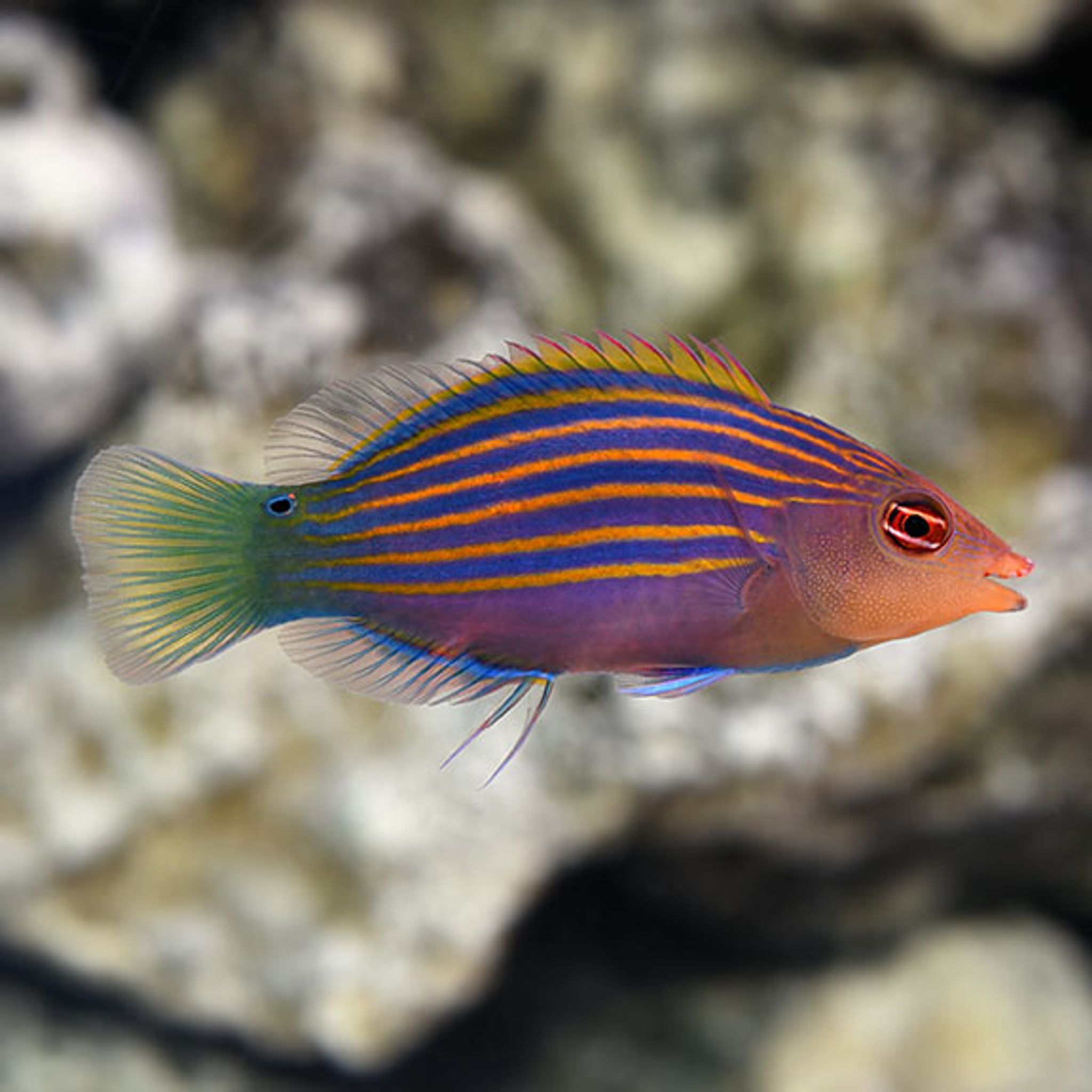
How to Feed Six-Line Wrasse: Foods, Frequency and Common Feeding Problems
Six-line wrasse (Pseudocheilinus hexataenia) are sold as pest-eaters, but they are meat-eating micro-predators that need a real feeding plan, not just a rock full of bristleworms. This guide covers exactly what to feed, how often, how much, and how to handle a shy new arrival, a food-guarding bully, or a fish that seems to be starving out its tankmates.
What Six-Line Wrasse Eat in the Wild
In nature, six-line wrasse spend their day picking through live rock and rubble for zooplankton, copepods, amphipods, small worms, and other tiny invertebrates. This constant grazing habit is the key to understanding captive feeding: this is not a fish that eats one big meal and rests. It is a fast, near-constant forager with a high metabolism, and its captive diet should mimic that grazing pattern as closely as possible.
Best Foods for Six-Line Wrasse
A varied, meaty diet is non-negotiable. Rotate at least two to three of the following rather than leaning on one item:
- Frozen mysis shrimp — a staple, appropriately sized protein source
- Frozen brine shrimp, ideally enriched with a vitamin or HUFA soak
- Finely chopped fresh or frozen seafood — shrimp, clam, or silverside cut small enough for a 3-inch fish with a small mouth
- High-quality marine pellets or flakes formulated for carnivores, as a supplement to frozen foods rather than a replacement
- Live foods such as baby brine shrimp or live copepods, useful for shy or wild-caught individuals that haven't yet learned to recognize prepared foods
This same rotation logic applies to most reef-safe wrasses: they are carnivorous or omnivorous fish that do poorly on flake alone, since flake lacks the concentrated meaty protein this group needs to maintain color and body condition. Live foods can jump-start a finicky new arrival of almost any wrasse species, not just six-line.
You can browse live options, including wrasse and prepared diets in the food and supplements category, when planning a feeding rotation before or after adding a fish.
Do Pests Count as Food?
Six-line wrasse will actively hunt and eat bristle worms, flatworms, small mantis shrimp, pyramidellid snails, and other nuisance crustaceans living in the rock. This is genuinely useful pest control, but it is a bonus behavior, not a feeding plan. Once pest populations decline, a wrasse that has been fed exclusively "off the rock" will start looking elsewhere for protein — including beneficial feather dusters, small ornamental shrimp, or snails. Always offer prepared food regardless of how much pest activity you're seeing.
Feeding Frequency and Portions
Sources vary here: some say one feeding a day is enough in a tank with abundant live rock and a healthy pest population, while others recommend two smaller feedings for consistent body condition. A practical middle ground:
| Tank situation | Recommended frequency | Notes |
|---|---|---|
| New tank, limited live rock, few pests | 2x daily | Fish has less natural forage available |
| Mature tank, heavy live rock, active pod/pest population | 1–2x daily | Can lean toward once daily |
| Community tank with slower or shy tankmates | 2x smaller feedings | Multiple small meals reduce food-guarding pressure |
Whatever the schedule, keep portions small: feed only what the fish consumes within 2–3 minutes, offered as several small pinches rather than one large amount. Because this fish forages nearly all day even outside scheduled feedings, established live rock reduces — but never eliminates — the need for supplemental feeding.
Tank Setup Matters for Feeding
Feeding success starts with the tank itself. Six-line wrasse are commonly kept in 30-gallon (114 L) or larger systems with plenty of live rock offering caves and crevices. This isn't just about swimming space — the rockwork gives the fish somewhere to forage between scheduled feedings and somewhere to retreat when nervous, which directly affects how readily it eats.
Because meaty foods add bioload quickly, and this species is often kept in nano and mid-size reef tanks, keep an eye on nitrate and phosphate levels after you increase feeding frequency or portion size. Uneaten food breaks down fast in a reef system, so err on the side of underfeeding slightly and observing, rather than dumping in a large amount "just in case."
A Feeding Protocol for New or Shy Arrivals
New six-line wrasse — especially wild-caught individuals, which are common for this species — frequently hide in the rockwork for days to weeks after introduction and refuse food. This is a normal stress response, not necessarily a health problem. A simple day-1-to-week-2 approach:
- Days 1–3: Dim the lights during feeding, avoid disturbing the tank, and offer small amounts of live baby brine shrimp or thawed mysis near the fish's chosen hiding hole using a feeding stick or turkey baster.
- Days 4–7: Continue target-feeding at the same spot and time each day to build a routine. Introduce frozen mysis or brine shrimp alongside live food to begin the transition.
- Week 2: Most individuals are coming out to feed more confidently by now. Gradually reduce reliance on live food and increase frozen and pellet offerings.
- During quarantine: Use this same patient, small-and-frequent approach — even wild-caught fish can typically be trained onto frozen and prepared foods with consistency and time.
If a fish is still refusing all food after two to three weeks with no improvement, that's the point to reassess water quality, tankmates, or overall health rather than continuing to wait it out.
Common Feeding Mistakes to Avoid
- Feeding only one food type. A diet of flake alone, or a single frozen food repeated every meal, leads to poor coloration and nutritional gaps over time. Rotate foods.
- Overfeeding. Meaty foods that go uneaten foul the water quickly and spike nitrates and phosphates, especially in smaller reef systems. Feed only what disappears in a couple of minutes.
- Assuming pests are a complete diet. Once bristleworms and pods run out, a wrasse relying solely on them will go hungry and may start harassing corals, small shrimp, or snails.
- Ignoring feeding-time competition. Six-line wrasse are fast and increasingly bold at feeding time. Slower or shier tankmates — gobies, dragonets, pipefish — can get outcompeted. Spot-feed those species separately or feed in multiple spots around the tank.
- Skipping a lid. Six-line wrasse are known jumpers, particularly when excited or startled during feeding. A tight-fitting lid is essential, not optional.
- Overlooking pod-dependent tankmates. This fish actively hunts copepods and amphipods and can noticeably reduce a tank's visible pod population, which is a real problem if you're also keeping a mandarin or other dragonet that depends on live pods to survive.
Enrichment and Long-Term Health
Occasionally soaking frozen mysis or brine shrimp in a vitamin, HUFA, or garlic-based supplement can support appetite, color, and immune resilience. This is particularly worth doing during and after quarantine, when a fish is recovering from shipping stress and benefits from extra nutritional support.
Frequently Asked Questions
Do six-line wrasses eat copepods, and will they wipe out my pod population?
Yes. They actively hunt copepods and amphipods on rock and sand and can significantly reduce visible pod numbers over time. This matters if you're relying on pods to feed a mandarin or other dragonet in the same system.
Can six-line wrasses live on pests alone without extra feeding?
No. Pests are a supplemental food source, not a complete diet. Prepared meaty foods like frozen mysis, brine shrimp, and quality pellets are required for long-term health.
How often should I feed a six-line wrasse?
Small feedings once or twice a day, offering only as much as the fish consumes within a couple of minutes. Lean toward twice daily in newer tanks with less natural forage.
Will a six-line wrasse eat my shrimp or snails?
It can bother or eat very small ornamental shrimp and snails, particularly at night when they're vulnerable, if the fish is underfed. Consistent feeding reduces this risk, and larger cleaner shrimp are generally safe.
Why won't my new six-line wrasse eat?
Stress and hiding after introduction are common, especially in wild-caught individuals. Dim the lights, target-feed near its hiding spot, and offer small live or frozen foods for the first one to two weeks.
Is a six-line wrasse reef safe with feeding in mind?
Generally yes toward corals, but a hungry or underfed individual may pick at small feather dusters, beneficial bristleworms, or tiny crustaceans living in the sump or refugium.
What size food or pellet is appropriate?
Small pellets or finely chopped frozen foods sized for a roughly 3-inch fish with a small mouth. Oversized chunks are often ignored entirely.
If you're planning a setup around this species, you can compare individual fish and browse feeding supplies together in the marine fish category on FishyHub.

