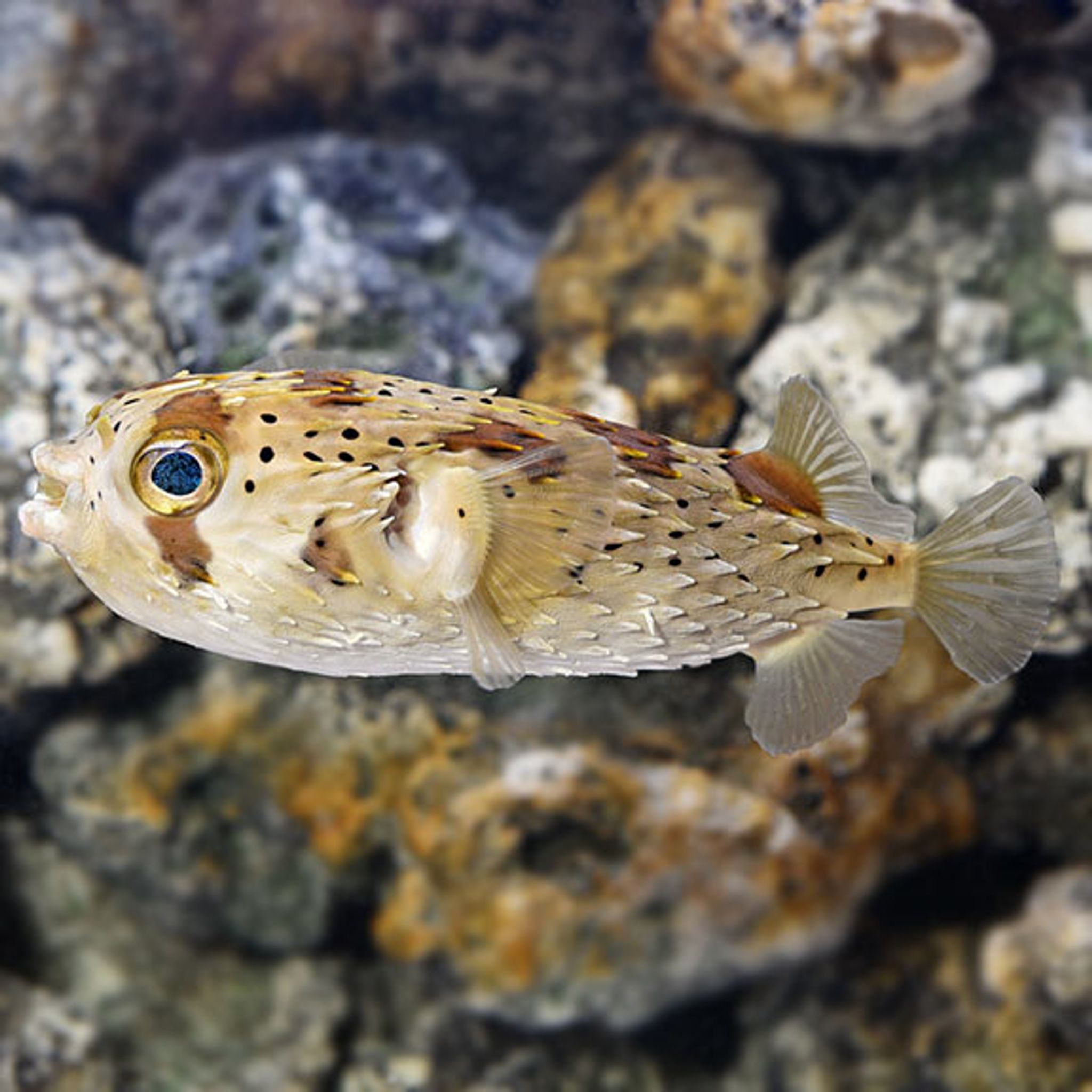

How to Feed Porcupine Puffer: Foods, Frequency and Common Feeding Problems
Porcupine puffers (Diodon holocanthus and Diodon hystrix) need more than meaty chunks tossed in the tank — their diet has to include hard-shelled foods that wear down a beak that never stops growing. This guide covers exactly what to feed, how often, how much, and how to fix the feeding mistakes that cause most of the health problems keepers see with this species.
Note that this article is specifically about marine porcupine puffers (Diodon spp.), not the smaller freshwater or brackish puffers sold under similar names — husbandry and diet differ enough between the groups that generic "puffer care" advice doesn't always apply.
Why Diet Is the Make-or-Break Factor for This Species
In the wild, porcupine puffers are opportunistic carnivores that hunt mollusks, crustaceans, sea urchins, hermit crabs, and small fish. Their mouth is built around a fused beak made of four teeth plates, and that beak grows continuously throughout the fish's life — just like a rodent's incisors.
Grinding against hard shells and exoskeletons is what keeps the beak worn down to a functional length. A captive diet of only soft fillets, shrimp meat, or pellets removes that grinding action, and the beak eventually overgrows to the point the fish can't close its mouth or eat normally. This single detail is the reason porcupine puffer feeding is different from feeding almost any other community fish: shell-on, hard-textured foods aren't a bonus item, they're a structural requirement.
Core Foods for a Porcupine Puffer
Build meals around a rotation of these items rather than repeating one food:
- Raw table shrimp, shell-on — widely available and a good beak-wearing staple
- Krill (whole, shell intact)
- Silversides
- Squid, cut into appropriate pieces
- Clams and mussels, ideally still in the shell
- Crab or lobster legs and shell pieces
- Snails, live or frozen
- Fiddler crabs or hermit crabs, occasionally live for enrichment
- Marine pellets or flake as an occasional supplement, never a staple
Frozen and thawed marine foods are standard practice and perfectly adequate nutritionally — there's no need for everything to be live. What matters is that hard-shelled items appear regularly, not that every item is freshly killed.
Foods to Avoid
Live freshwater feeder fish (goldfish, guppies) should not be fed to a porcupine puffer. Older care advice sometimes lists goldfish as an option, but current best practice avoids them entirely: goldfish carry thiaminase, an enzyme that destroys thiamine (vitamin B1) in the predator's system, they carry a real disease-transmission risk, and their nutrient profile doesn't match what a marine puffer needs. Live snails and hermit crabs are a fine substitute when you want a live-food feeding response.
How Often to Feed
Feeding frequency should track the fish's age and size, not its appetite — porcupine puffers beg constantly and will act "starving" right after a full meal.
| Life stage | Size | Feeding frequency |
|---|---|---|
| Fry / young juvenile | Under 4 in (10 cm) | Daily to every other day |
| Growing juvenile | 4–8 in (10–20 cm) | Every other day |
| Adult | 8 in+ (20 cm+) | 2–3x per week |
For healthy adults, aim for the middle of the range — roughly two to three feedings per week. Push toward every-other-day only for fish that are actively still growing; scale back toward twice weekly if an adult starts looking round or plump through the belly. Overfeeding is far more common in this species than underfeeding, so when in doubt, feed less often.
Portion Size
Offer only what the fish clears in 2–3 minutes. Porcupine puffers have no natural "off switch" — their begging behavior isn't a reliable signal of actual hunger, and they'll keep eating well past what's healthy if you let them. A useful habit: feed at the same spot each time, watch the clock, and remove anything left over promptly rather than letting it sit and foul the water.
A Sample Weekly Rotation
Turning "vary the diet" into an actual routine makes it easier to stick to. For an adult porcupine puffer fed three times a week, something like this covers both nutritional variety and beak wear:
| Day | Food |
|---|---|
| Monday | Shell-on shrimp + a few krill |
| Wednesday | Clams or mussels in shell, plus crab leg pieces |
| Friday | Squid, plus a live or frozen snail |
Rotate the specific items week to week (swap in silversides, lobster shell pieces, or hermit crabs) so the fish isn't fixating on one food and refusing everything else — puffers can get picky if fed the exact same item too many times in a row.
Feeding, Water Quality, and Filtration
Porcupine puffers are messy, heavy waste producers, and feeding directly drives bioload. Because meals are protein- and shell-heavy, uneaten scraps foul water quickly if left in the tank. A few habits tied directly to feeding help keep parameters stable:
- Remove uneaten food within a few minutes of a feeding, not at the next water change
- Run strong mechanical and protein-skimming filtration sized for a heavy, messy eater — a general community-tank filter setup often undersizes this fish's actual waste load; browsing filters built for higher-bioload marine setups is worth it for this species
- Tie a gravel-vac or substrate-cleaning pass to your feeding schedule rather than doing it on a fixed calendar unrelated to how much you're feeding
- Test water weekly, especially ammonia and nitrate, since both spike fastest from overfeeding and leftover food
Since adult porcupine puffers reach 12–18+ inches (30–46 cm) and need 180+ gallons (700+ L) long-term, filtration and skimming capacity should scale up alongside the fish and its feeding volume, not stay fixed at juvenile-tank levels.
Common Feeding Problems and How to Fix Them
Obesity and Fatty Liver from Overfeeding
The most frequent feeding mistake. Fix it by cutting back to 2–3 feedings per week for adults and trimming portions to what's cleared in 2–3 minutes. A visibly round or plump belly is the cue to reduce, not increase, feeding.
Beak Overgrowth from an All-Soft Diet
A puffer fed only shrimp meat or fish fillets, with no shell-on items, will develop an overgrown beak over time because nothing is wearing it down. Correct this by adding shell-on shrimp, clams, crab, or snails weekly. A healthy beak sits flush and lets the mouth close normally; an overgrown one starts to look tusk-like or prevents the mouth from closing fully. In advanced cases where the fish can't close its mouth or feed properly, an experienced fish veterinarian may need to trim the beak — don't attempt this yourself.
A New Puffer Refusing Food
Newly acquired or recently moved puffers often refuse food for the first days to weeks while acclimating. Don't panic and don't force-feed. Keep water quality pristine, minimize disturbance, and try live snails, hermit crabs, or live black worms to trigger a natural feeding response. Patience is the fix here, not intervention.
Bloating or Floating After Feeding
Not all bloating is the defensive inflation puffers are known for — surface air-gulping during feeding can cause similar-looking bloating. Reduce surface agitation and turbulence at feeding time, keep the tank calm, avoid startling the fish, and don't feed directly into a strong current. It's also worth avoiding feeding immediately after a stress-inflation event; let the fish settle back down first rather than offering food right away.
Ammonia or Nitrate Spikes
Almost always tied to overfeeding and leftover food breaking down. Remove uneaten food within minutes of each feeding, feed over a consistent target spot so scraps don't scatter, run carbon and protein skimming, and test water weekly to catch trends before they become a problem.
Food Aggression in Community Tanks
Porcupine puffers can be aggressive competitors at feeding time. If housed with slower eaters, target or spot-feeding with a feeding stick helps make sure the puffer isn't out-competing tankmates — though solitary housing is generally the better long-term setup for this species given its size and temperament.
Choking on Oversized Shellfish
Whole clams or crab legs that are too large for a smaller puffer's mouth risk choking or injury. Cut hard-shelled items down to a size the individual fish can comfortably handle, especially for juveniles.
Frequently Asked Questions
How often should I feed my porcupine puffer?
Feed juveniles under about 4 inches (10 cm) daily to every other day, and adults 2–3 times per week. In every case, offer only what the fish clears in a few minutes rather than feeding to satisfy its begging.
What is the best food for a porcupine puffer?
A rotation of shell-on shrimp, squid, clams or mussels, crab legs, and snails works best. Hard-shelled items are essential for beak wear, not just an occasional treat, so they should appear in most feedings.
Why won't my porcupine puffer eat?
Usually stress from a recent move or new tank, water quality issues, or a temporarily suppressed appetite from previous overfeeding. Try offering live shelled foods like snails or hermit crabs, check your water parameters, and give a newly acclimated fish one to two weeks before worrying.
Can I feed my porcupine puffer pellets or flake only?
No. A soft-food-only diet, including a pellet-only diet, leads to beak overgrowth over time because there's nothing hard for the fish to grind against. Pellets or flake can be an occasional supplement, but shell-on foods need to be a regular part of the rotation.
Why does my puffer's beak look overgrown?
This almost always traces back to a diet that's lacked hard-shelled foods. Add shell-on shrimp, crab, and snails regularly going forward, and if the fish can't close its mouth or feed normally, consult an experienced fish veterinarian rather than trying to correct it yourself.
Is it normal for my puffer to always act hungry?
Yes. Porcupine puffers beg constantly regardless of how recently or how much they've eaten, so appetite isn't a useful signal of actual hunger. Feed on a set schedule instead of on demand to avoid overfeeding and obesity.
Can porcupine puffers eat live feeder fish?
Live freshwater feeders like goldfish aren't recommended due to disease risk and a poor nutrient match (goldfish also carry thiaminase). Occasional live snails or hermit crabs are a better way to give the fish live-prey enrichment and beak wear.
How big will my porcupine puffer get, and does that change feeding?
Yes — porcupine puffers can reach 12–18+ inches (30–46 cm) in captivity and eventually need 180+ gallons (700+ L) of space. As the fish grows from juvenile to adult, both portion sizes and feeding frequency shift from more frequent, smaller meals to less frequent, larger ones.
A porcupine puffer isn't a fish some other tankmates should be confused with, either — a question that occasionally comes up is whether a bonnethead shark could share a similar setup. It couldn't: bonnetheads need 1,800+ gallon systems with serious swimming room and specialized elasmobranch care, putting them well outside what a typical home aquarium — or a puffer's tank — can support.
If you're ready to add a porcupine puffer or want to compare other marine species for your setup, you can browse marine fish on FishyHub.


