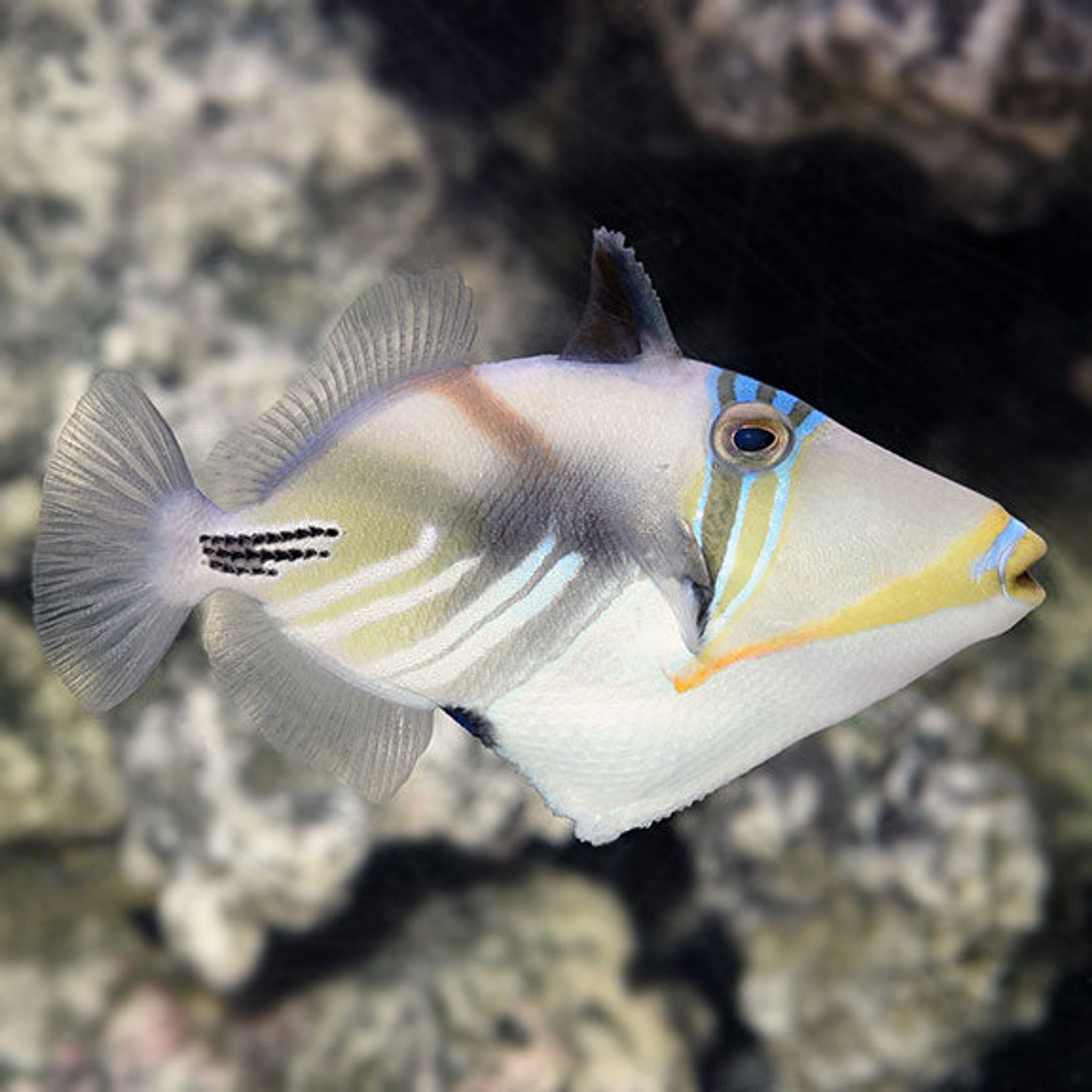
How to Feed Picasso Triggerfish: Foods, Frequency and Common Feeding Problems
Picasso triggerfish (also sold as Humu or Assasi triggers) are carnivorous predators that need frequent meals of hard-shelled and meaty foods, not flake or pellets, to stay healthy. This guide covers exactly what to feed, how often, how much, and how to fix the two most common feeding problems: overgrown teeth and fouled water from messy eating.
What Picasso Triggerfish Eat in the Wild
In the wild, Picasso triggerfish are opportunistic predators that crush and crunch their way through crustaceans, mollusks, and small invertebrates, with an occasional bite of algae or detritus rounding out the diet. That natural menu is the blueprint for captive feeding: mostly hard-shelled, protein-dense animal matter, with a small plant-based component.
This is not a species that thrives on convenience foods. Their jaw and beak-like teeth are built for crushing shells, and their digestive system expects a heavy protein load. Trying to raise one on soft frozen cubes alone eventually causes problems, which is covered in the troubleshooting section below.
Core Food Rotation
Rotate proteins rather than repeating the same item every day. A well-stocked rotation includes:
- Mysis shrimp — a good staple, easy to portion
- Krill — whole or chopped, adds variety
- Chopped squid — dense, filling, well accepted
- Marine fish flesh or silversides — a lean protein option
- Clams on the half-shell — hard-shelled, excellent for dental wear
- Mussels — meaty with some shell exposure
- Whole shrimp, shell-on — one of the best dental-wear foods
- Snails — hard-shelled, great for teeth
- Small crabs — hard-shelled, closest to a natural wild meal
Occasional marine algae or a nori sheet clipped to the glass covers the plant-matter portion of this omnivorous lean and gives the fish something to graze on between meals.
Hard-shelled foods are not optional. Shrimp, clams, snails, and crabs aren't just variety — they're required maintenance for a fish whose teeth and beak grow continuously throughout its life. Skipping them in favor of only soft frozen foods is one of the most common long-term feeding mistakes with this species.
Do Picasso Triggerfish Eat Pellets or Flake?
Juveniles sometimes accept high-protein, low-carb marine pellets or flake as a supplement to whole foods. Wild-caught adults, however, usually refuse dry food outright and need whole or meaty items to eat consistently. Treat pellets or flake as an occasional supplement at best, never the backbone of the diet, regardless of the fish's age — relying on dry food as a staple risks under-feeding a fish that needs a lot of animal protein.
Feeding Frequency and Portion Size
| Life stage | Feedings per day | Notes |
|---|---|---|
| Juvenile | 3–4 smaller meals | Faster growth needs more frequent fueling |
| Adult | 2–3 meals | Workable baseline for most home aquariums |
| Conditioning/fattening up | 3–5 small portions | Only when actively conditioning a thin or recovering fish |
Rather than fixating on a fixed portion size, use a simple rule: offer only what's consumed in about 3–5 minutes per feeding. If food is still sitting in the tank after that window, you offered too much. This approach naturally scales portions to the fish's size and appetite and limits leftover waste, which is the single biggest water-quality risk with this species.
Underfeeding out of a fear of overfeeding is its own mistake — it can stunt growth and actually worsen aggression, since a hungry trigger is a more territorial trigger. The goal is frequent small meals, not skipped ones.
A Practical Feeding Routine
- Feed shortly after lights-on, when triggers are typically most active and alert.
- Use tongs or a feeding stick for larger meaty items like whole shrimp, clams, or crab pieces — this lets you control portion size, place food precisely, and avoid dropping large chunks that a smaller tankmate might choke on.
- Watch the clock, not a measuring cup — stop once the 3–5 minute window has passed.
- Siphon out any uneaten food immediately. Because Picasso triggerfish are fast, messy eaters, scraps and shell fragments left behind break down quickly and spike ammonia.
- Rotate the protein each feeding or every couple of feedings rather than repeating the same item meal after meal.
Pro tip: soaking frozen foods in a vitamin or HUFA supplement before feeding, or gut-loading feeder shrimp and snails with a quality food beforehand, adds nutritional value that plain frozen cubes alone don't provide. This is an easy way to close nutritional gaps without changing the core rotation.
Tank Size and Feeding Behavior
Tank size isn't just a housing question — it directly affects feeding behavior. Recommendations for minimum tank size for a single Picasso triggerfish range from roughly 100–120 gallons (380–455 L) on the low end up to 180 gallons (680 L) on the higher end. The spread mostly reflects general territoriality guidance rather than a feeding-specific disagreement, but for feeding purposes it matters: crowded or undersized tanks increase food-related aggression and territorial guarding of feeding spots. When in doubt, err toward the larger end of that range for a single specimen.
Picasso triggerfish are unsuitable for reef tanks and should be kept in a FOWLR (fish-only-with-live-rock) setup. They're aggressive predators of snails, crabs, shrimp, and other invertebrates, though they generally leave the coral skeleton itself alone. If you're stocking a FOWLR system, you can browse compatible marine fish and see current triggerfish availability on FishyHub.
Water Parameters That Support a Healthy Appetite
Feeding success is tied to water quality. Keep parameters in these ranges to support consistent eating and digestion:
| Parameter | Target range |
|---|---|
| Temperature | 72–82°F (22–28°C) |
| pH | 8.1–8.4 |
| Specific gravity | 1.020–1.025 |
| dKH (alkalinity) | 8–12 |
Saltwater Care Fundamentals That Support Feeding
Good feeding outcomes depend on general tank husbandry, not just what goes in the water:
- Check parameters regularly — salinity/specific gravity, pH, temperature, and alkalinity should be monitored on a routine schedule, not just when something looks wrong.
- Do routine partial water changes, roughly 20–30% every 1–2 weeks, to dilute the waste that builds up from heavy meaty feeding.
- Top off evaporation every few days to keep salinity steady, since a heavy feeder in a smaller system can see swings faster than a lightly stocked tank.
- Match feeding load to filtration capacity and tank maturity. A Picasso triggerfish's meaty diet produces a heavy bioload, so strong filtration and consistent water-change habits aren't optional extras — they're part of feeding this species responsibly. Reviewing available filters for a heavily fed carnivore tank is worth doing before stocking.
Common Feeding Mistakes and How to Fix Them
Overfeeding and dirty water. Leftover meaty food fouls water fast in a carnivore tank. Fix it by feeding smaller amounts more often and removing uneaten food within minutes, not hours.
Skipping hard-shelled foods. Relying only on soft frozen foods leads to overgrown teeth and beak, which can cause difficulty eating, injury, or eventually require intervention. Fix it by rotating in shell-on shrimp, snails, crabs, and clams regularly.
Feeding only one food type. A diet of only mysis shrimp, for example, can cause nutritional gaps and dulled color over time. Watch for fin or color fading and lethargy tied to feeding monotony — these are signs of nutritional deficiency distinct from general illness, and the fix is a genuinely rotating multi-protein menu, not just occasional variety.
New or stressed fish refusing food. This is common right after acclimation, a tank move, or the introduction of a new tankmate — and it's also a distinct concern during quarantine, since new arrivals often need live food before they'll accept anything else. Try live foods like ghost shrimp or live snails to trigger a feeding response, then wean the fish back onto frozen and meaty staples over time.
Food-time aggression toward tankmates. A trigger may guard a feeding area or rush other fish at mealtime. Fix it by spot-feeding the trigger away from tankmates, or by using multiple feeding points around the tank so no single fish can dominate access.
Escaped or uneaten hard shells left in the tank. Shell fragments the fish ignores can sit and rot just like any other uneaten food. Treat leftover shells the same as any other feeding waste — check for them and remove them.
Underfeeding out of overfeeding-fear. Swinging too far the other way can stunt growth and worsen aggression from hunger. Frequent small meals, capped by the 3–5 minute rule, solve both problems at once.
Frequently Asked Questions
How often should I feed a Picasso triggerfish?
Adults do well on 2–3 feedings a day. Juveniles benefit from more frequent, smaller meals — typically 3–4 a day — to support faster growth.
What is the best food for a Picasso triggerfish?
A rotation of meaty, mostly hard-shelled foods works best: shrimp, clams, krill, squid, mysis, small crabs, and snails. No single food should make up the entire diet.
Will Picasso triggerfish eat pellets or flake?
Only sometimes, mainly juveniles accepting high-protein pellets or flake as a supplement. Adults generally prefer whole or meaty foods, so dry food shouldn't be relied on as a dietary staple.
Why does my triggerfish need hard-shelled food specifically?
Their teeth and beak grow continuously throughout life and need abrasive, hard foods like shell-on shrimp, snails, crabs, and clams to wear down naturally. Without them, teeth can overgrow and interfere with normal eating.
How much should I feed at each meal?
Offer only what the fish clears in roughly 3–5 minutes. This naturally scales the portion to the fish's size and appetite while avoiding excess waste in the water.
Can Picasso triggerfish live with invertebrates or in a reef tank?
No. They're aggressive predators of snails, crabs, shrimp, and other invertebrates and are unsuitable for reef systems, though they generally leave the coral itself alone. They belong in a FOWLR setup.
Why is my triggerfish not eating?
Usually recent acclimation stress, a tank move, or intimidation from tankmates is the cause. Try offering live food and, if needed, isolate feeding time away from more assertive tankmates until the fish settles in.
How do I stop my triggerfish from fouling the water when it eats?
Feed smaller portions more often and siphon out uneaten food promptly after each meal. Make sure filtration is strong enough to handle the heavy bioload that comes with a meaty carnivore diet.
Ready to stock live foods and hard-shelled staples for your setup? Browse marine invertebrates and other feeding options on FishyHub to keep a Picasso triggerfish's diet varied and its teeth in check.


