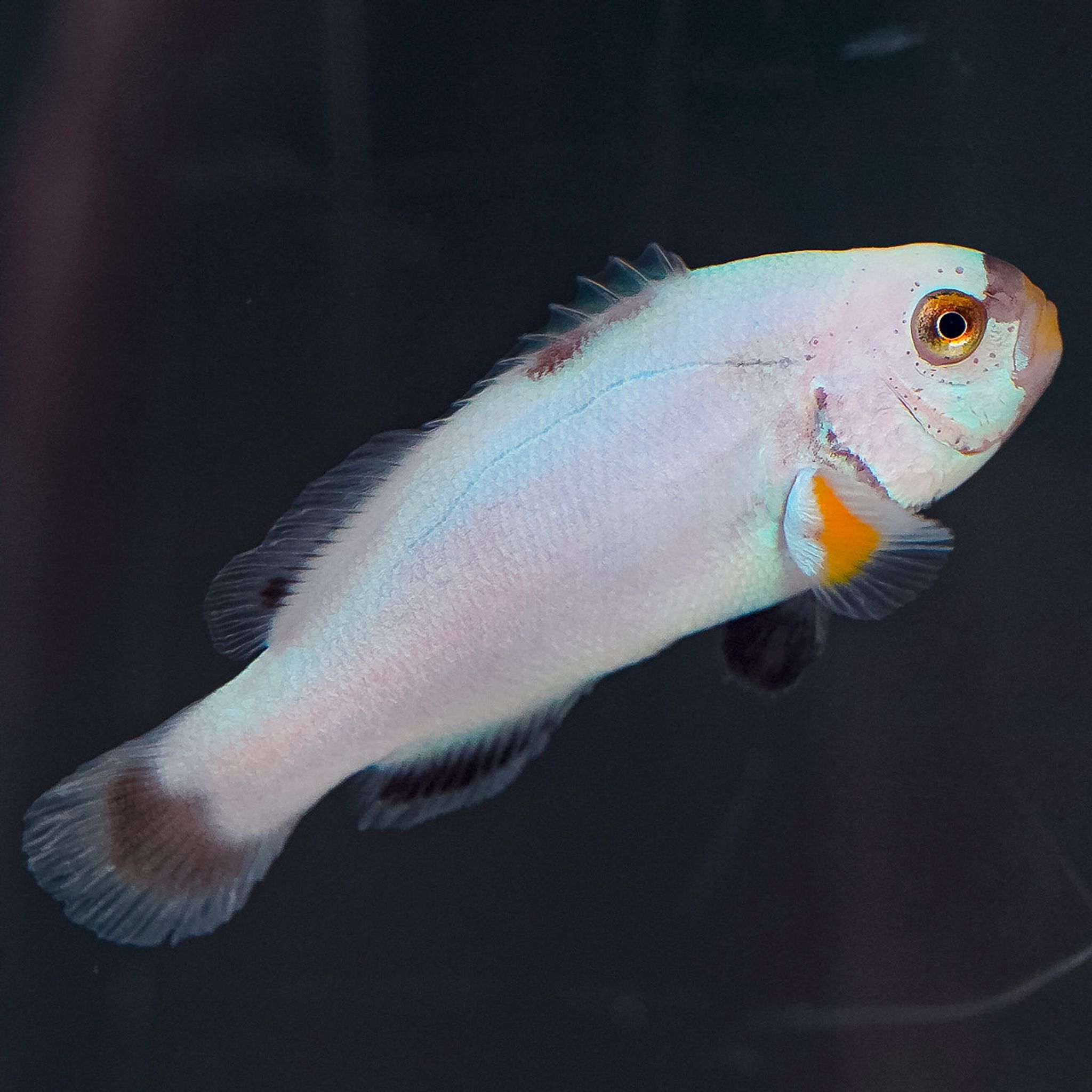

How to Feed Percula Clownfish: Foods, Frequency and Common Feeding Problems
Percula clownfish (Amphiprion percula) are easy eaters once you know the basics, but "just drop in some flake" is where most feeding mistakes start. This guide covers exactly what to feed, how often, how much per feeding, and how to solve the problems — refusal, bloating, cloudy water — that come up most often with this species.
What Percula Clownfish Eat
Perculas are omnivores, not strict carnivores. In the wild they pick at zooplankton drifting past their host anemone but also graze on algae growing on the rock and coral around them. A diet built only on brine shrimp or only on flake misses half of what they need, so the goal is a rotation of meaty protein and plant matter.
Core foods to rotate:
- Frozen mysis shrimp — the best everyday staple; large enough to see them eat it, high in protein and fat.
- Frozen or enriched brine shrimp (Artemia) — useful but nutritionally thinner than mysis; treat it as a supplement, not the backbone of the diet.
- Marine flake — convenient, good for daily use, best mixed with frozen foods rather than used alone.
- Marine pellets (1–2mm, sinking or floating) — a solid dry staple; sinking pellets suit fish that feed lower in the water column.
- Spirulina or algae-based flake — covers the plant-matter side of an omnivore's diet.
- Nori sheets clipped to the glass — lets fish graze at their own pace and supports coloration and gut health.
- Frozen "reef blend" mixes (chopped shrimp, clam, squid, plankton) — good variety in one product, useful once or twice a week.
Do Perculas Need Vegetable Matter?
Yes, even though they eat far less algae than a tang or rabbitfish does. Some general clownfish care guides skip nori and spirulina entirely and treat perculas as pure carnivores, but that overlooks the omnivore side of their biology. Including a nori sheet or spirulina flake two to three times a week is enough to support color and digestion without overcomplicating the routine.
Feeding Frequency and Portion Size
Frequency is one of the few points where sources genuinely disagree. Some recommend a single daily feeding for adults in stable, lightly stocked tanks; others push two to three small feedings a day. Both approaches work, but for most home aquariums:
- Feed 2 small meals per day for juveniles and adults — this supports better growth and color while keeping waste manageable.
- 1 feeding per day is acceptable for an established, lightly stocked tank where water quality is already tight.
- Only feed what the fish clear in 2–3 minutes. Anything left after that is a bioload problem, not a meal.
For portion size, aim for something concrete rather than "a small amount":
| Feeding style | Approximate portion per fish |
|---|---|
| Flake | A pinch roughly the size of a pea, crumbled on the surface |
| Frozen mysis | 3–4 pieces per fish per feeding |
| Frozen brine shrimp | A small pinch (thawed and rinsed), used as a supplement, not the main course |
| Pellets (1–2mm) | 4–6 pellets per fish |
| Nori | One small clipped square, 2–3x per week |
If you keep perculas in a mixed reef tank, drop portions slightly and watch for food drifting into coral and invertebrate feeding zones — perculas eat fast, but excess frozen food will still feed (and overfeed) the corals and inverts sharing the water column.
Mysis Shrimp vs. Brine Shrimp
This is the second point of disagreement across feeding guides: some treat frozen brine shrimp as a perfectly fine everyday food, while others flag it as mostly water and chitin with limited nutritional density. The practical middle ground:
| Mysis shrimp | Brine shrimp (Artemia) | |
|---|---|---|
| Protein/fat density | Higher — better muscle and fin condition | Lower unless enriched |
| Size | Larger, easier to target-feed | Smaller, good for juveniles or shy fish |
| Best role | Daily staple | Occasional treat, always enriched |
| Cost/availability | Slightly higher | Cheap, widely available |
| Fry use | Not used for larvae | Essential as baby brine shrimp (Artemia nauplii) for fry |
Bottom line: use mysis shrimp and pellets/flake as your daily backbone, and keep brine shrimp — enriched with a vitamin or spirulina product — as a supplemental treat rather than the main event.
Enrichment: Boosting a Basic Diet
Soaking dry foods in a vitamin or garlic-based supplement before feeding is a simple way to boost immunity and appetite, and it's especially useful for:
- Newly introduced fish that are still stressed from acclimation
- Fish recovering from illness or a recent quarantine period
- Any tank where you want richer color without switching the whole diet
This takes seconds — soak the pellets or flake for a minute or two before feeding — and it also helps "gut-load" brine shrimp so it carries more nutritional value than it would on its own.
Feeding Fry: A Different Diet Entirely
If you're breeding perculas, larvae cannot eat adult foods. The sequence is:
- Rotifers first — small enough for newly hatched larvae to eat.
- Baby brine shrimp (Artemia nauplii) once fry are large enough, typically a few days in.
- Gradual transition to crushed flake, pellets, and mysis as juveniles grow.
How to Keep Baby Brine Shrimp Alive Short-Term
Freshly hatched brine shrimp lose nutritional value fast, so plan to use them within 24–48 hours of hatching:
- Hold them in dechlorinated saltwater with light aeration and cooler temperatures to slow their metabolism.
- Feed them a pinch of yeast or liquid algae to keep them gut-loaded until you use them.
- Don't overcrowd the holding container — die-offs foul the water quickly.
- A turkey baster or a fine brine shrimp net makes it easy to dose small amounts without transferring excess water into the display tank.
Common Feeding Problems and Fixes
| Problem | Likely cause | Fix |
|---|---|---|
| Cloudy water, algae blooms, rising ammonia/nitrate | Overfeeding | Cut portions, feed 2x/day, siphon out anything uneaten within minutes |
| Dull color, weight loss, aggression at feeding time | Feeding only flake, not enough variety | Rotate frozen mysis, brine, pellets, and flake through the week |
| New fish won't eat | Acclimation stress, unfamiliar food, hiding | Try live baby brine shrimp or frozen mysis on a feeding stick, dim the lights, and give it several days before worrying |
| Two clownfish fighting near feedings | Usually a pairing/size-mismatch issue, not a food shortage | Make sure there's a clear size difference between the two fish and enough territory |
| Bloating or constipation | All-brine or all-flake diet lacking fiber | Add nori or a vegetable-based food; consider an occasional fasting day |
| Frozen cubes fouling water fast | Feeding straight from frozen without rinsing | Thaw and rinse frozen food in tank water first to cut down on phosphate load |
| Fish only eats near its anemone | Normal hosting behavior, not truly "picky" | Target-feed close to the anemone or let food drift naturally past it |
A few of these deserve more detail.
Newly Introduced Clownfish Refusing Food
It's common for a percula to refuse food for the first few days in a new tank. This is almost always acclimation stress, not illness. Live or frozen mysis offered on a feeding stick or via a turkey baster usually restarts feeding faster than flake or pellets, since the movement mimics natural prey. Captive-bred perculas — which make up most of the percula/ocellaris supply in the US trade — are generally much faster to settle in and accept prepared foods than wild-caught fish, which is one more reason to choose tank-raised stock when buying clownfish.
Overfeeding Is the Number One Mistake
More percula feeding problems trace back to overfeeding than any other cause. Uneaten flake and frozen food break down into ammonia and feed nuisance algae, especially in smaller nano tanks with less water volume to buffer the load. The fix is simple and worth repeating: feed less, more often, and physically remove anything left in the tank after a few minutes rather than letting it dissolve.
Do Clownfish Need an Anemone to Feed?
No. An anemone is a hosting and shelter relationship, not a feeding requirement. Perculas feed readily from the water column and substrate whether or not a host is present — many captive-bred fish never host an anemone at all and feed completely normally. If you do keep a host anemone or a rock/coral formation the fish shelters in, scatter food around the tank rather than in one spot so shy fish and tankmates all get a fair share.
Related Setups: Mocha Clownfish and Tomato Clownfish
If you're comparing options beyond the standard percula, two variants are worth knowing:
- Mocha clownfish, a designer strain related to ocellaris/percula lines, does well in tanks as small as 20 gallons (76 L) for a pair, at 74–80°F (23–27°C) and specific gravity 1.023–1.026. It's just as omnivorous, accepting mysis, brine, flake, and pellets, and follows the same 2–3 small feedings per day pattern.
- Tomato clownfish (Amphiprion frenatus) is a different species — larger and more aggressive than perculas — but eats a very similar omnivorous diet of mysis, brine, flake, pellets, and nori.
Most color morphs sold in the trade (picasso, snowflake, black/white, mocha) are the result of selective captive breeding within a species, not true interspecies hybrids — worth knowing if a listing calls something a "hybrid" when it's really a morph.
Breeding Basics: Pairing and Feeding for Spawning
All clownfish are born male, and the more dominant fish in a pair becomes female as they mature. To reduce aggression, buy two juveniles together, or add a smaller juvenile to an existing single adult, rather than combining two similarly sized adults. Watch for excessive chasing or nipping during introduction.
Stable water quality and consistent, high-quality feeding are what typically trigger spawning. Pairs lay eggs on a cleaned flat surface near their host — a piece of rock, a ceramic tile, or the base of an anemone — and the male tends the clutch for roughly 7–10 days until they hatch. From there, fry need a dedicated larval-rearing setup with rotifers, as described above.
Setting Up the System Perculas Will Live In
Good feeding habits only pay off in a tank with solid water movement and filtration behind them. If you're building or upgrading a marine system, matching your return pump to the tank matters as much as the food you choose:
- Aim for roughly 4–6x your display volume per hour in turnover, accounting for head-loss from plumbing.
- Check that the pump's rated head height comfortably covers your actual plumbing run, not just its maximum flow figure.
- An adjustable-speed or DC pump runs quieter and more efficiently than a fixed-speed model, which also matters for a tank sitting in a living space.
Is Saltwater Fishkeeping Actually Difficult?
Saltwater aquariums have a reputation for being complicated, but modern test kits, live rock and sand, and reliable equipment have made the hobby far more approachable than it used to be. Percula clownfish are routinely recommended as one of the best "first" saltwater fish alongside a basic cleanup crew, precisely because they're hardy and — when captive-bred — easy, willing eaters from day one.
Frequently Asked Questions
How many times a day should I feed percula clownfish?
Two small feedings a day works well for most home tanks. Adjust the amount so it's fully eaten within 2–3 minutes; if you're feeding once daily in a stable, lightly stocked tank, that's fine too.
What is the best staple food for percula clownfish?
A rotation of frozen mysis shrimp and a quality marine pellet or flake, with occasional enriched brine shrimp and nori mixed in for variety and vegetable matter.
Can percula clownfish eat only flake food?
They can survive on flake alone, but they do noticeably better in color and overall health with frozen or live protein mixed into the rotation.
Do clownfish need an anemone to eat properly?
No. Anemones provide optional hosting and shelter, not a feeding requirement — perculas feed readily from the water column or substrate with or without one.
Why is my new clownfish not eating?
It's almost always acclimation stress rather than illness. Try live or frozen mysis on a feeding stick, dim the tank lights, and give the fish several days to settle before assuming something is wrong.
How long can baby brine shrimp be kept alive before feeding?
Use them within 24–48 hours of hatching, since their nutritional value drops fast after that. Keep them cool and lightly aerated, and feed them a pinch of algae or yeast in the meantime.
Can I overfeed my clownfish?
Yes — it's the single most common feeding mistake, and it's the top driver of ammonia spikes and algae blooms in nano marine tanks. When in doubt, feed a smaller amount more often and remove anything left over.
What's the difference between mysis and brine shrimp for clownfish?
Mysis shrimp is denser in protein and fat, making it the better daily staple. Brine shrimp is thinner nutritionally unless it's enriched, so it works best as an occasional treat rather than an everyday food.
Ready to set up or expand your reef community? Browse tank-raised percula and other clownfish along with frozen and freeze-dried foods from FishyHub's food and supplements range to build a feeding routine your fish will thrive on.


