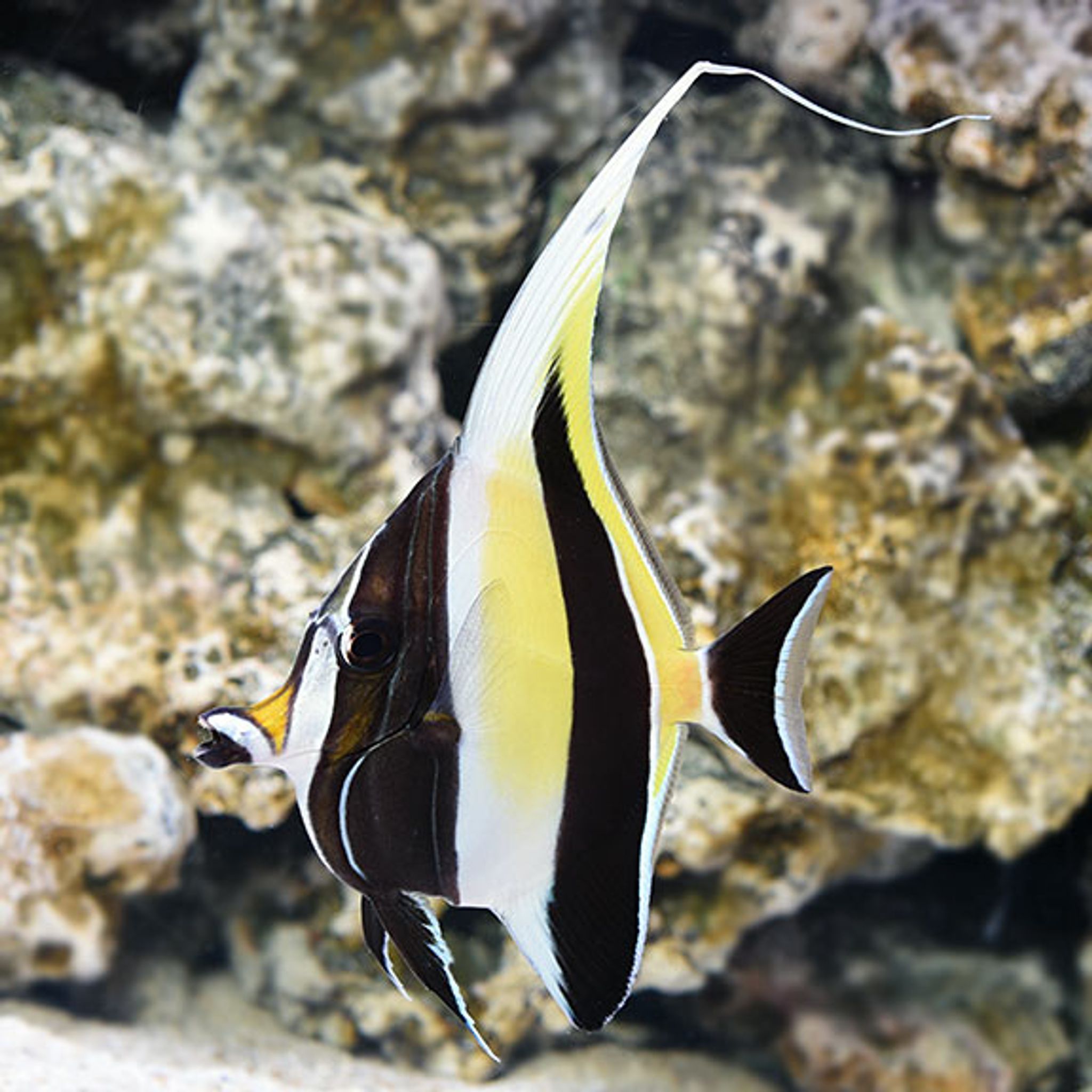

How to Feed Moorish Idol: Foods, Frequency and Common Feeding Problems
The Moorish Idol (Zanclus cornutus) is one of the hardest marine fish to keep alive, and feeding failure is the reason why. This guide covers exactly what to offer, how often, and how to intervene before a fish that "won't eat" becomes a fish that can't be saved.
Why Moorish Idols Are So Hard to Feed
In the wild, a Moorish Idol grazes almost constantly on marine sponges and tunicates, supplementing that with algae picked off reef structure. That narrow, specialized diet is the root of the problem: there is no perfect captive substitute for live sponge, and a newly imported idol often refuses every prepared food it's offered.
This is why the species carries a reputation few other marine fish share. Survival estimates commonly cited among experienced marine keepers put only 10–20% of imported Moorish Idols making it past their first year, with the majority of losses happening in the first 30 days. That statistic alone should reframe how you approach this fish: it is not a beginner community-tank addition, and it is not forgiving of an improvised feeding plan. Treat it as an expert-only project that needs a feeding and quarantine plan in place before the fish arrives home.
What to Feed a Moorish Idol
Because sponge is the natural staple, your captive diet should prioritize foods built around that base, then layer in variety to keep the fish interested and eating.
Priority foods:
- Frozen angelfish or sponge-based formulas — blends containing sponge material, mysis, krill, squid, brine shrimp, kelp or nori, and spirulina. These should be the backbone of the diet.
- Live or cultured sponge material, when it can be sourced, offers the closest match to the wild diet and tends to correlate with the best long-term outcomes.
- Mysis shrimp and enriched brine shrimp, offered in small portions.
- Small pieces of clam, scallop, or mussel meat — shell-on clam in particular can trigger a feeding response in a reluctant fish because the shape and scent mimic natural grazing targets.
- Blackworms, useful as a first food for newly acquired specimens that haven't yet accepted anything else.
- Nori or seaweed sheets, clipped in the tank for grazing.
- High-quality marine pellets, but only introduced once a fish is already reliably eating other foods.
How Important Is Nori, Really?
Nori is a useful grazing and enrichment item, not a nutritional backbone. It keeps the fish occupied and picking at something for hours, which mimics natural grazing behavior and can reduce stress. But macroalgae alone doesn't replicate the nutritional profile of sponge, so don't treat a nori clip as a substitute for sponge-based frozen formulas or live sponge — it's a supplement, not the main course.
Feeding Frequency and Technique
Moorish Idols have a very high metabolism relative to their grazing lifestyle, which means infrequent feeding is one of the fastest ways to lose one even if it looks fine at first.
Target schedule:
- 3–4 small feedings of meaty/frozen food per day, rather than one or two larger meals.
- Near-continuous grazing access to nori or algae for a large part of the day — leave a clip in for hours rather than a few minutes.
| Feeding element | Frequency | Notes |
|---|---|---|
| Sponge/angelfish frozen formula | 2–3x daily | Core diet once accepted |
| Mysis, brine shrimp, clam/scallop pieces | Rotate through 1–2 feedings daily | Use for variety and to re-trigger interest |
| Blackworms | As needed during training | Often the easiest first food |
| Nori/seaweed clip | Left in tank several hours daily | Grazing supplement, not primary nutrition |
| Marine pellets | 1x daily, once weaned | Optional, not guaranteed to be accepted |
Technique matters as much as food choice:
- Mash gel-bound frozen food into rock crevices or empty clam and scallop shells to mimic natural grazing texture.
- Use a feeding clip or skewer for nori and meaty chunks so the food stays put.
- Target-feed with a turkey baster or feeding tongs to deliver food directly to the idol before faster tankmates intercept it.
- Mature live rock with natural algae and sponge growth gives a new fish something to pick at between formal feedings and eases the transition into captivity.
Quarantine and Acclimation
Standard reef-keeping practice calls for a 30-day quarantine in a dedicated tank (40+ gallons, bare-bottom, a sponge filter, PVC hides) with prophylactic parasite treatment. This serves two purposes for a Moorish Idol: clearing parasites picked up during shipping, and using that low-stress window to train the fish onto prepared foods before it ever meets the display tank's competition.
There's a real disagreement here worth knowing about. Some experienced keepers argue that quarantine tanks themselves have killed otherwise-healthy idols within days — the bare, sterile, high-visibility setup can be so stressful that it suppresses feeding entirely. The safer middle path is a calm, low-stress quarantine: dim lighting, full visual cover, minimal handling, and an established biofilter rather than a stark sterile tank. If a fish is clearly declining in quarantine despite these precautions, weigh moving it to the display sooner rather than holding rigidly to the full 30 days.
Tank Setup and Tankmates That Support Feeding
Feeding success is inseparable from tank conditions. A stressed idol in a cramped or poorly established tank simply won't eat well, regardless of what's offered.
- Minimum tank size: around 125 gallons (475 L) for a single idol, 200+ gallons (760+ L) for a pair.
- Favor a long, mature tank with established live rock — natural sponge and algae growth on the rock gives the fish something to graze between feedings and reduces the stress that suppresses appetite.
- Avoid fast, aggressive eaters and large angelfish or tangs (pomacanthids and acanthurids) that will out-compete a slow-grazing idol at feeding time. Either stock the idol first, or keep tankmates that are calm and non-competitive during feedings.
Idols kept alongside such competitors often look like they're simply "not eating" when the real issue is that faster fish are stripping the food before the idol reaches it — always watch an actual feeding to confirm the idol is getting a fair share.
The Parasite–Feeding Connection
Import stress commonly causes mouth and gill parasites or irritation, and these directly suppress feeding — a fish with irritated gills or mouth tissue simply doesn't want to eat, no matter how appealing the food is. In many cases, treating the underlying parasite issue is a prerequisite to getting the fish eating at all, not something to address after feeding improves. If a newly acquired idol is refusing everything, don't assume it's pickiness before ruling out parasites.
A Feeding Contrast: Why the Lookdown Is a Different Story
It helps to see why some marine fish are easy feeders and Moorish Idols are not. The lookdown (Selene vomer) is a generalist predator whose diet shifts as it grows — tiny crustaceans as a juvenile, then benthic crustaceans and worms, then small fish and shrimp as an adult. It readily accepts a wide variety of enriched frozen and fresh meaty foods fed at least once daily, with none of the specialized grazing requirements that make idols so difficult. The trade-off is tank shape: despite its modest size, a lookdown needs a large tank with open swimming space rather than the reef structure an idol relies on. The comparison underscores that feeding difficulty in marine fish tracks dietary specialization, not size or activity level. Hobbyists comparing options across marine fish can browse the full range of marine fish available on FishyHub to weigh species with very different feeding demands.
Common Feeding Mistakes and Troubleshooting
- Buying on impulse without a tank or quarantine plan ready. Idols decline fast — there's no time to improvise setup after the fish is already home.
- Not confirming the fish is eating at the point of sale. A non-eating idol rarely recovers once stressed further by transport, so ask to see it feed before purchase.
- Offering only one food type and giving up after a few refusals. Rotate through several options — blackworms, clam, mysis, pellets — in sequence during the training window rather than abandoning the attempt.
- Feeding once a day. This species' metabolism needs 3–4 small feedings; once-daily feeding leads to slow wasting even if the fish initially looks fine.
- Housing with aggressive or fast-eating tankmates that out-compete the idol, which can disguise a feeding problem as illness.
- Skipping parasite treatment. Untreated gill or mouth parasites are a common hidden cause of a fish that "won't eat."
- Mistaking an early weight plateau for success. A recognized pattern is a fish eating well for weeks or months and then slowly wasting away — ongoing weight and behavior monitoring matters well beyond the first successful feedings.
- Over-sterilizing the quarantine setup, adding stress on top of an already fragile, newly imported fish.
Warning Signs to Watch For
Because the difference between "shy" and "starving" isn't always obvious, watch for:
- A sunken belly or pinched profile just behind the head — an early, visible sign of weight loss.
- Clamped fins held tight against the body rather than relaxed.
- Excessive hiding well beyond normal adjustment shyness, especially combined with ignoring food during an active feeding.
Catching these signs early — ideally within the first week or two — gives you time to adjust food type, treat for parasites, or address tankmate competition before the fish is too depleted to recover.
Supporting Nutrition During the Training Window
Because prepared foods don't fully replicate the nutrient profile of wild sponge, soaking frozen food in a vitamin or HUFA supplement before feeding is a simple way to offset that gap while a fish is transitioning onto captive diets. This is especially worth doing during the first weeks, when the fish's nutritional reserves are already stressed from shipping.
Frequently Asked Questions
What is the best beginner food to get a new Moorish Idol eating?
Start with live foods such as blackworms or shelled clam, or a sponge/angelfish-based frozen formula. Try several options in the first few days rather than repeatedly offering just one food the fish has already refused.
How often should I feed a Moorish Idol?
Aim for 3–4 small meaty feedings a day, combined with continuous access to a nori or algae clip for grazing throughout the day.
Why did my Moorish Idol stop eating?
Usually stress, gill or mouth parasites from import, competition from tankmates, or an unsuitable food. Once a fish stops eating for more than a few days, prognosis is poor, so identify and address the cause immediately.
Can Moorish Idols eat flake or pellet food?
Some individuals eventually accept high-quality marine pellets or flake once they're fully weaned onto prepared foods, but this isn't guaranteed and shouldn't be the first food you offer a new fish.
Do Moorish Idols need live sponge to survive?
Not strictly, but diets that include sponge-based frozen formulas or actual live sponge tend to have the best long-term success. Nori and other substitutes alone are considered nutritionally incomplete on their own.
How big a tank do I need before I even think about feeding one?
Around 125 gallons minimum for a single idol, and 200+ gallons for a pair, since tank-related stress directly suppresses appetite.
Should I quarantine a new Moorish Idol before adding it to my display?
Generally yes, for parasite control and to use the low-stress window for food training. Keep the quarantine setup calm and covered rather than a stark, over-treated tank that adds its own stress.
Are Moorish Idols reef safe with corals and invertebrates?
Mostly yes, though they can occasionally nip at coral polyps or sponges kept in the tank, so monitor sensitive coral species after introduction.
If you're assembling a feeding kit before bringing a Moorish Idol home, browse Food & Supplements on FishyHub for frozen formulas, gel foods and enrichment supplements suited to specialized marine grazers.


