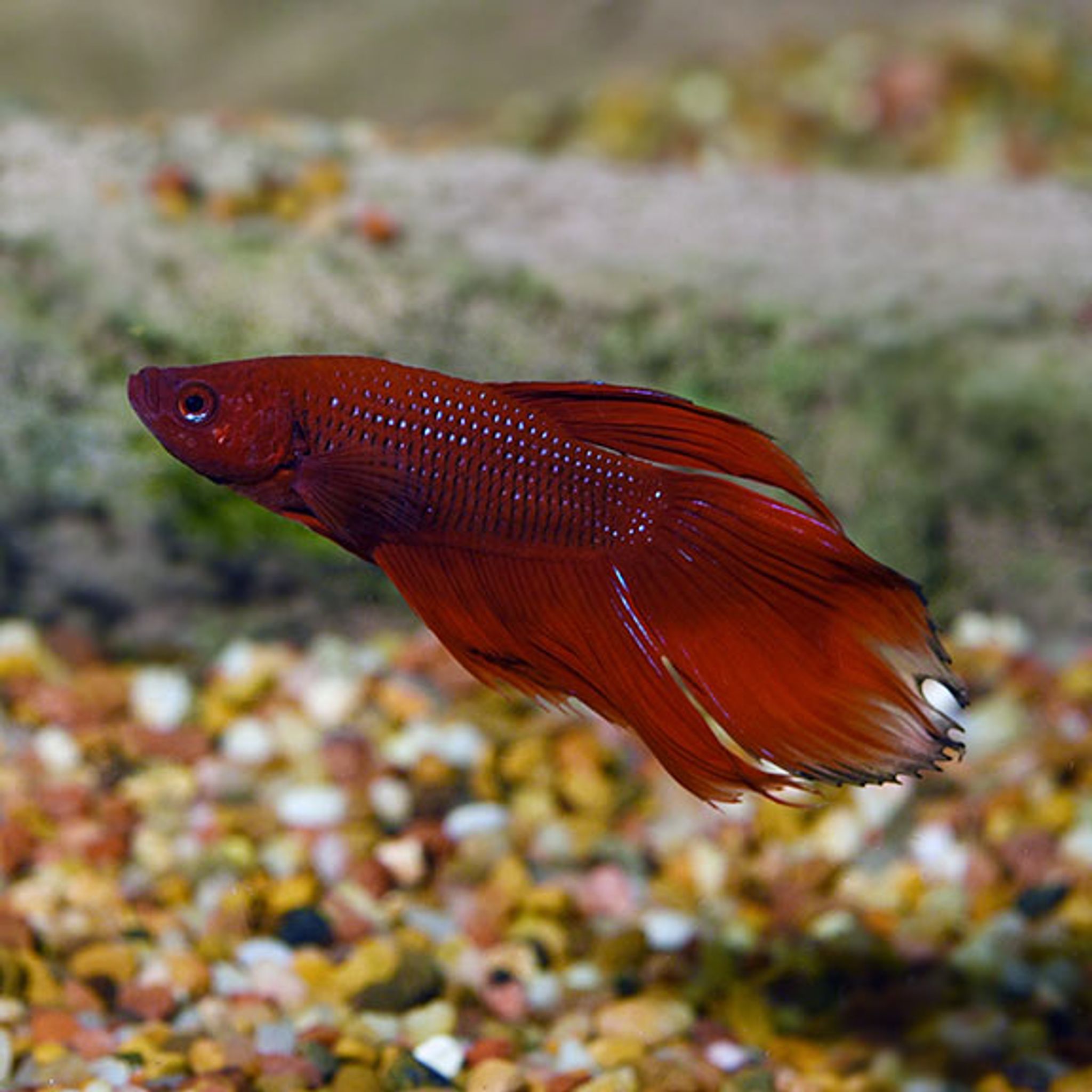

How to Feed Marine Betta: Foods, Frequency and Common Feeding Problems
The marine betta (Calloplesiops altivelis) has a reputation as a fussy eater, but most "picky eater" cases are really a housing or lighting problem in disguise. This guide covers the right foods, a realistic feeding schedule, and how to fix the most common reasons a marine betta stops eating.
What Is a Marine Betta, and Why Feeding Trips People Up
Despite the name, the marine betta is not related to freshwater bettas — it's a predatory reef fish that only resembles one in body shape and long, flowing fins. It's a nocturnal to crepuscular ambush predator: by day it wedges itself into a cave or overhang and barely moves, then becomes active and hunts as the lights dim toward dusk and into the night.
That behavior pattern is the key to feeding it successfully. A marine betta kept in a brightly lit, wide-open tank with no cover will often refuse food entirely — not because it's sick or naturally difficult, but because it doesn't feel safe enough to leave cover in those conditions.
What to Feed a Marine Betta
This species is a strict carnivore. In the wild it hunts small fish and crustaceans, so its diet in the aquarium should be built entirely around meaty marine proteins.
Core foods:
- Mysis shrimp (a staple, ideally enriched)
- Enriched brine shrimp
- Silversides
- Krill
- Chopped table shrimp or squid
- Marine fish flesh, cut small
- Frozen carnivore or reef-blend mixes
- Live feeder shrimp or ghost shrimp (the go-to fallback for reluctant eaters, especially recently acquired fish)
Flake and pellet foods are rarely accepted, particularly by wild-caught or newly imported individuals, and shouldn't be relied on as a primary food source.
A Simple Feeding Chart
| Food type | Best use | Notes |
|---|---|---|
| Live feeder/ghost shrimp | Newly acquired or refusing fish | Reliable starter food; don't use as the sole long-term diet |
| Enriched mysis shrimp | Everyday staple | Good size, good nutrition, easy to target-feed |
| Krill | Regular rotation | Larger size suits bigger juveniles/adults |
| Silversides, chopped shrimp/squid | Variety and enrichment | Cut to a size the fish can take in one or two bites |
| Frozen carnivore/reef blend | Rotation | Adds variety beyond a single protein source |
How Often to Feed a Marine Betta
Feeding frequency advice for this species varies quite a bit across the hobby — some keepers feed daily, others every other day, others 3–4 times a week. The reason for the spread is that a marine betta has a slow metabolism and an ambush feeding style, so it simply doesn't need the frequent small meals that active mid-water grazers do.
A sensible schedule:
- Juveniles/growing fish: feed once daily, since they're putting on growth.
- Adults: small meals every 1–2 days is generally enough.
- Adjust by body condition, not the calendar — a fish that looks slightly thin can move to daily feeding, while one that looks heavy-bellied can drop to every other day.
Portion size matters more than frequency. Only offer what the fish will finish within a couple of minutes. Meaty foods like mysis, krill, and chopped shrimp decompose quickly, and leftover food is one of the fastest ways to spike ammonia and nitrate in a reef system.
How to Actually Get It to Eat: Target Feeding
Because a marine betta won't chase food drifting through open water, especially under bright light, target feeding (also called spot feeding) is the standard technique:
- Load a turkey baster or a feeding stick with the food.
- Wait until the lights are dimming toward dusk, or feed after the main lights go off if you're using a moon light or similar low-level lighting.
- Deliver the food directly to the entrance of the fish's cave or hiding spot, rather than dropping it in open water.
- Give the fish a minute to come out and take it; don't hover with bright equipment lights or a flashlight while it's feeding.
This single change — feeding at the cave mouth at dusk instead of broadcasting food in open water — resolves a large share of "won't eat" complaints.
Weaning a Marine Betta onto Frozen and Prepared Foods
Newly imported or wild-caught marine bettas frequently refuse frozen and prepared foods at first, even when they'll eat live food readily. A gradual weaning process over 1–2 weeks works better than switching abruptly:
- Start with live feeder shrimp or ghost shrimp to confirm the fish is eating at all.
- Introduce frozen mysis or krill alongside the live food, offered from the same baster so the fish associates the delivery method with food.
- "Hide" frozen food among live food in the same feeding, gradually shifting the ratio toward frozen over the following week or two.
- Scent frozen food with a garlic or vitamin soak if the fish is slow to respond to it visually — the added scent can trigger a feeding response even when the fish isn't yet interested in the food's appearance.
- Once the fish is reliably taking frozen mysis or krill from the baster, rotate in silversides, chopped shrimp, and squid for variety.
Don't rush this process for a stressed or newly shipped fish — see the quarantine note below.
Supplementation and Enrichment
Live feeder shrimp and ghost shrimp are a reliable bridge food, but they're nutritionally thin on their own, and a diet of live feeders alone, long term, risks nutritional deficiencies. To prevent that:
- Soak frozen foods in a marine vitamin or HUFA supplement periodically rather than every feeding.
- Gut-load live feeder shrimp before offering them, so their nutritional value passes on to the betta.
- Rotate protein sources (mysis, krill, silversides, chopped shrimp/squid) instead of feeding one item exclusively.
You can browse a range of freeze-dried and frozen foods to build a rotation, and source live marine shrimp as feeder stock or as display invertebrates, depending on your stocking plan.
Quarantine, Stress, and Why New Fish Won't Eat
Like most wild-collected marine fish, a marine betta's willingness to eat is tightly linked to its stress level. A fish that's just been shipped or introduced to a new tank commonly shows zero interest in food for the first few days, sometimes up to two weeks. This is normal and not, by itself, a sign of illness.
During this window:
- Keep the tank dim and disturbance low.
- Offer live feeder shrimp daily, even if it's initially ignored.
- Avoid netting, moving rock, or other stressful handling.
- Don't panic and start dosing medications on the assumption something is wrong — give it time first.
If a fish still won't eat anything after two weeks, or shows a visibly sunken belly, that's the point to reassess rather than continue waiting — check water parameters, try a different live food, and consider whether the setup is giving the fish enough cover.
Tank Size, Housing, and Why They Affect Feeding
A marine betta will only come out to eat if it feels secure, and that comes down to housing:
- Rockwork with caves and overhangs is non-negotiable — without a defensible hiding spot, the fish stays stressed and reluctant to feed even in otherwise good conditions.
- Dim or moderate lighting, or shaded areas of rock, encourage it to feed during the day rather than exclusively at night.
- Tank size: recommendations vary — some sources say 30 gallons (114 L) is workable, others recommend 50–70 gallons (190–265 L). A practical long-term minimum is around 55 gallons (208 L) for a single specimen, with a smaller tank treated as a temporary setup only. More space and more rockwork make it easier for the fish to find a spot it's comfortable feeding from.
What Tank Size Is Best for a Reef Tank Overall
Zooming out from this one species: bigger reef tanks are generally more forgiving. Temperature and water chemistry swing more slowly in a larger volume, which buffers the small mistakes every reefkeeper makes early on. A commonly recommended starter reef range is roughly 40–75 gallons (150–285 L) — nano tanks under 20 gallons (75 L) are harder to keep stable, while much larger tanks cost more to set up and stock but tolerate error better.
For a marine betta specifically, aim for the larger end of that range. It needs both the rockwork volume for proper caves and enough footprint that it isn't constantly stressed by tankmates crossing its space — and a more stable, larger system makes it easier for the fish to settle into a normal feeding rhythm in the first place.
Is a Marine Betta Reef Safe?
This is where sources genuinely disagree, and the honest answer is "it depends what's in the tank with it":
- Corals and other sessile invertebrates: safe. The marine betta has no interest in corals, sponges, or anemones.
- Ornamental shrimp, small crabs, and small fish (under roughly 2 inches / 5 cm): not safe. A marine betta is an ambush predator that will eat anything small enough to fit in its mouth.
If your cleanup crew keeps disappearing, that's not a sign the fish isn't getting enough food — it's a sign the fish is eating other tank inhabitants. More feeding won't stop predation; different stocking choices will.
Tankmate Compatibility Checklist
| Tankmate | Compatible? | Why |
|---|---|---|
| Fish 3+ inches (7.5+ cm) | Generally yes | Too large to be swallowed |
| Fish under 2 inches (5 cm) | No | Likely prey |
| Corals, anemones, sponges | Yes | No predation interest |
| Ornamental shrimp (cleaner shrimp, etc.) | No | Commonly predated |
| Larger hermit/decorator crabs | Caution | Small crabs are prey; larger ones are usually left alone |
| Snails | Generally yes | Not typical prey |
Common Feeding Mistakes
- Feeding in open water instead of at the cave entrance. The food drifts past uneaten because the fish won't leave cover under bright light.
- Overfeeding. Excess meaty frozen food that isn't eaten within a couple of minutes should be removed — it fouls water quickly.
- Blaming "not eating enough" for disappearing small fish or shrimp. The fish is eating; it's just eating the wrong tankmates.
- Feeding only one food item long term, such as exclusively live brine shrimp — this leads to nutritional gaps. Rotate and enrich.
- Mistaking normal daytime hiding for illness. A marine betta sitting motionless in its cave all day is standard behavior, not a health problem, as long as it's active and feeding at dusk or night.
Frequently Asked Questions
How often should I feed my marine betta?
Small meals every 1–2 days works well for adults, while juveniles benefit from daily feeding to support growth. Adjust up or down based on body condition rather than sticking to a fixed schedule.
What is the best food for a marine betta?
Meaty marine proteins — mysis shrimp, krill, silversides, and chopped shrimp or squid — form the core diet. Live feeder shrimp or ghost shrimp work well as a bridge food for reluctant or newly acquired fish.
Why won't my marine betta eat?
The most common causes are stress from a recent move, lighting that's too bright, a lack of hiding spots, or food offered in the wrong place or time. Dim the lights, add caves, target-feed near its hiding spot at dusk, and give it up to two weeks to settle in before assuming something is wrong.
Is a marine betta reef safe?
It's safe around corals and other sessile invertebrates but will eat small fish, ornamental shrimp, and small crabs. Keep it only with tankmates too large to be considered prey.
What size tank does a marine betta need?
Around 55 gallons (208 L) or more is a practical long-term minimum, with plenty of rockwork for caves. Smaller tanks are workable only as a short-term arrangement.
Can I feed a marine betta live food only?
Live feeder shrimp is an effective starting and bridge diet, but it shouldn't be the exclusive long-term food. Rotate in frozen mysis, krill, and other proteins, and enrich with vitamins periodically to avoid nutritional deficiencies.
Is a marine betta nocturnal?
Yes, it's largely nocturnal to crepuscular, meaning it's most active and most willing to feed around dusk and after the lights dim. Daytime stillness in a cave is normal behavior, not a sign of poor health.
Ready to add a marine betta to your reef? Browse available specimens and compatible tankmates in FishyHub's marine fish category.


