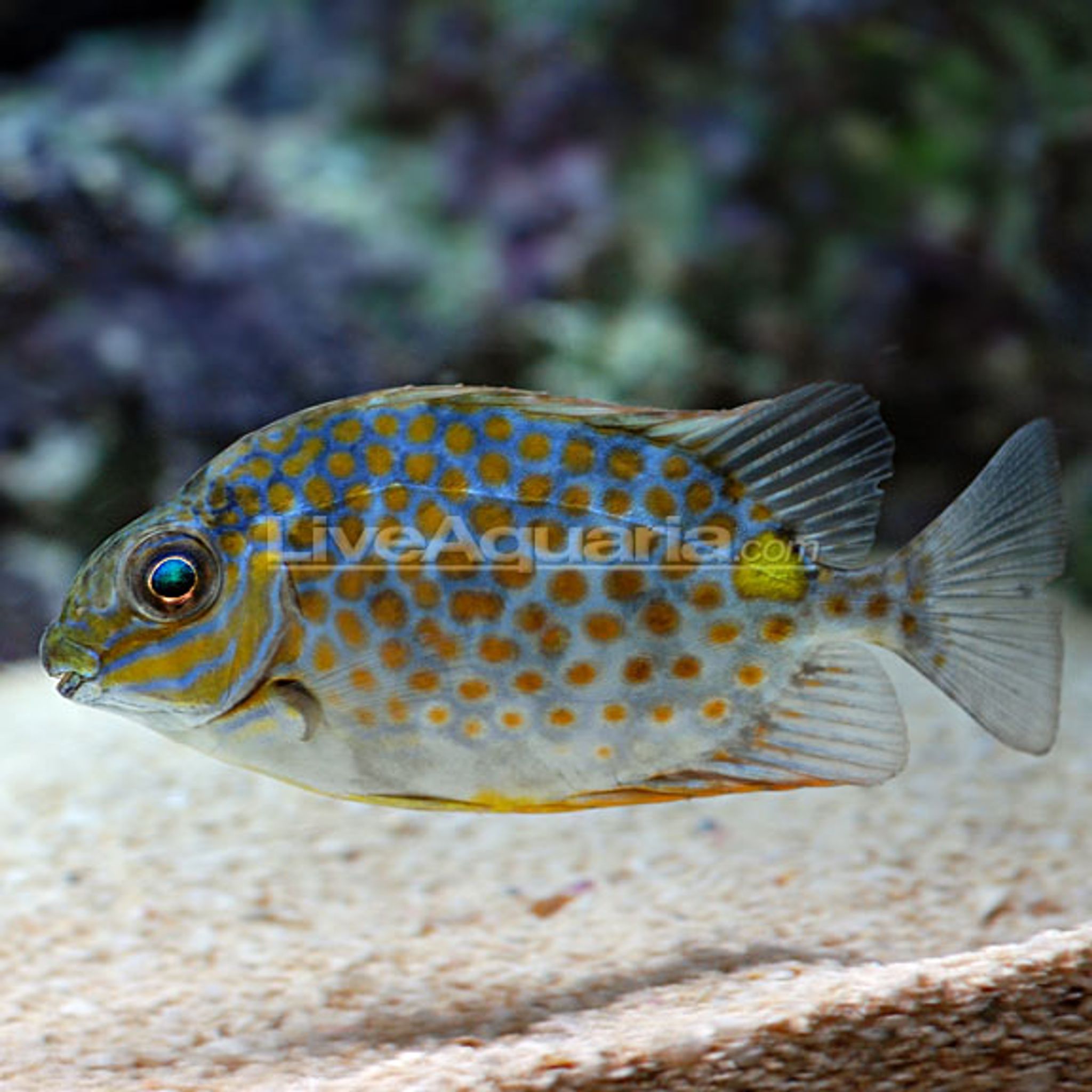

How to Feed Foxface Rabbitfish: Foods, Frequency and Common Feeding Problems
Foxface Rabbitfish are constant grazers, not occasional eaters, so a reef tank alone almost never gives them enough to browse on. This guide covers exactly what to feed, how often, how much nori or algae to offer per fish, and how to fix the two most common problems: coral nipping and new-arrival feeding refusal.
What Foxface Rabbitfish Eat in the Wild
On natural reef flats, Foxface Rabbitfish (Siganus vulpinus and related species) spend nearly all daylight hours picking at turf algae and biofilm coating rock and rubble. Their grazing is continuous and low-volume — small bites spread across many hours — rather than a few large meals. They also opportunistically pick off tiny invertebrates and zooplankton, which is where their omnivore label comes from, but algae and biofilm make up the bulk of their natural intake.
This pattern matters directly for tank feeding: a foxface's digestive system and behavior are built around grazing all day, not around one or two big feedings. Reproducing that "always something to nibble" rhythm reduces stress, curbs opportunistic nipping, and keeps the fish closer to its natural routine than a single daily meal ever could.
Where Foxface Fit Among Saltwater Fish
Saltwater fish are broadly grouped by diet and reef compatibility, and knowing where a foxface sits helps set feeding expectations:
- Obligate carnivores/predators — eat live or meaty foods almost exclusively and can be unsafe around small tankmates.
- Planktivores — pick pods and drifting particles from the water column continuously.
- Algae-grazing herbivores/omnivores — browse algae and biofilm most of the day, supplementing with occasional small proteins. Foxface Rabbitfish sit here, in the same dietary role as tangs, though the two groups aren't closely related.
- Reef-safe vs. reef-safe-with-caution — foxface fall into the "with caution" category: a well-fed individual generally ignores coral, but hunger pushes it toward nipping.
Understanding this grazer identity is the foundation for every feeding decision below.
Core Diet: What to Feed Daily
A foxface's diet should be algae-first, with protein and fresh vegetables as supporting players.
Algae and Seaweed (the daily staple)
- Dried seaweed/nori sheets clipped to a veggie clip or wedged under a rock — the single most important food.
- Spirulina-based marine algae flake or pellet food as a secondary staple, especially useful for spreading feeding across the tank.
Fresh Vegetables (occasional variety)
Blanched or fresh romaine or leaf lettuce, zucchini, and cucumber add variety and help avoid the monotony of a single algae source. Skip iceberg lettuce — it's mostly water with little nutritional value.
Protein (a minor supplement, not the backbone)
Frozen or live mysis shrimp and enriched brine shrimp offered 2–3 times a week round out the diet with amino acids that plant matter can't fully supply. Because foxface are algae-first grazers, protein should stay supplemental — build the herbivore side of the diet first, then layer in protein a couple of times weekly rather than treating it as a daily requirement.
Feeding Frequency and Portion Sizes
Treat "2–3 small feedings per day" as a floor, not a ceiling. The more important variable is keeping a grazing option available essentially all day, since that's what mimics natural behavior most closely. A fixed meal count matters less than making sure the fish never goes hours without something to pick at.
| Food type | How often | How much |
|---|---|---|
| Nori/algae sheet | Available most of the day | Roughly 30 sq in (a standard veggie-clip sheet) per adult foxface daily, adjusted to appetite and size |
| Spirulina flake/pellet | 1–2 small feedings daily | Small pinch consumed within a couple of minutes |
| Fresh/blanched vegetables | 2–3 times per week | Small piece, replaced before it fouls |
| Frozen mysis/brine shrimp | 2–3 times per week | Only what's eaten in a few minutes |
For meaty and pellet foods, feed only what disappears in a few minutes to avoid fouling the water. Algae sheets are different — because they're fibrous and grazed slowly, they can stay clipped in for hours without a problem. Pulling the veggie clip too soon is a common mistake; foxface eat algae steadily rather than in a quick burst, so let the sheet run its course.
Sizing the Daily Algae Portion
Because sources rarely give a concrete benchmark, a practical starting point is about 30 square inches of nori per adult per day — roughly the area of one standard veggie-clip sheet — scaled up or down based on the fish's size and how quickly it clears the clip. Undersizing this portion is one of the most frequent mistakes: a single small strip a day is often nowhere near enough for an adult with a large appetite relative to its body size.
As a reef tank matures, biofilm and algae growth on rock and glass naturally increase, which reduces (but doesn't eliminate) how much supplemental feeding is needed. Younger or newly set-up tanks typically require more deliberate feeding, while an established tank with visible algae film can stretch feedings further.
Feeding New or Quarantined Foxface
Foxface Rabbitfish are prone to stress-related feeding refusal after shipping, and it's common for a new arrival to refuse food for several days — sometimes up to about two weeks — while adjusting. Don't assume illness right away. Instead:
- Offer a variety of foods at once — nori, frozen or live mysis, brine shrimp, even live black worms.
- Try garlic-soaked or vitamin-soaked foods, which can stimulate appetite in a reluctant eater.
- Reduce tank lighting temporarily to lower stress during acclimation.
- Be patient before escalating to force-feeding concerns.
Tank-raised or long-held specimens typically adjust to prepared foods faster than freshly imported wild-caught adults. Juveniles also tend to lean more herbivorous and settle into prepared foods more readily than adults.
If keeping a new foxface isolated briefly during acclimation, note that their venomous dorsal and anal spines are a handling hazard — not a feeding issue directly, but a reason some hobbyists prefer a separate acclimation space rather than netting or handling the fish directly at feeding time.
A Simple Weaning Sequence for Wild-Caught Fish
For a foxface that's only grazing on live rock and ignoring prepared food, a gradual transition works better than switching everything at once:
- Let it continue grazing live rock and any existing algae film.
- Introduce a nori sheet on a clip near its favorite grazing spot.
- Once nori is accepted, add spirulina pellets or flake alongside it.
- Layer in frozen mysis or brine shrimp last, once the fish is reliably eating prepared foods.
Reef Safety and Coral Nipping
A well-fed foxface generally leaves coral polyps, clam mantles, and soft coral tissue alone. Nipping shows up when the fish is hungry, bored, or not getting enough algae volume — it's a feeding gap, not a fixed temperament trait. Before assuming a foxface is simply "not reef safe" and rehoming it, try increasing feeding frequency and algae variety first; that resolves the issue in most cases.
Vulnerable targets when a foxface is underfed include LPS and SPS corals, zoanthids, and clam mantles. Keeping a nori sheet available most of the day is the single most effective preventive measure.
Common Feeding Mistakes to Avoid
- Meaty foods only, no algae — leads to malnourishment, coral nipping, and dulled coloration over time.
- Not enough total algae volume — a small strip once a day rarely meets an adult's appetite.
- Pulling the veggie clip too early — let grazing continue for hours rather than minutes.
- Assuming illness during new-arrival refusal — try multiple foods and reduced lighting before worrying about disease.
- Housing multiple rabbitfish without enough food or space — competition over algae can trigger aggression; feed at multiple points in the tank if keeping more than one.
- Monotonous frozen-cube diets — repeating the same meaty food daily without vegetable matter can contribute to fatty liver and nutrient deficiencies.
Vitamins, Immune Support, and Travel Feeding
Soaking foods in a multivitamin or vitamin C supplement 1–2 times weekly supports coloration and immune health, which matters most for a diet that leans heavily on one or two algae sources. A nutrient-rounded, plant-forward diet also supports general disease resistance — a relevant point given how often wild-caught foxface arrive already stressed from shipping.
For owners who travel or can't feed multiple times a day, gravity-fed algae clips or timed dispensers help maintain the "always something available" grazing pattern without requiring hands-on feeding every few hours. You can browse live Foxface & Rabbitfish stock and pair a new arrival with appropriate algae-based foods and supplements before it comes home.
Frequently Asked Questions
Is Foxface Rabbitfish reef safe?
Generally yes, with caution. A well-fed foxface rarely bothers coral, but hunger or insufficient algae can trigger nipping, particularly toward soft corals, zoanthids, and clam mantles.
What vegetables can I feed a foxface?
Blanched or fresh romaine or leaf lettuce, zucchini, and cucumber work well alongside nori or dried seaweed. Avoid iceberg lettuce since it offers little nutritional value.
Why won't my new foxface eat?
Shipping stress and adjustment to a new tank are common causes, and refusal lasting several days to about two weeks isn't unusual. Offer a variety of foods, including live options, and reduce lighting to ease stress before assuming illness.
How much should I feed a foxface rabbitfish?
Keep nori or algae available for most of the day, roughly 30 square inches per adult, plus 2–3 small meaty or pellet feedings, adjusted so leftover food doesn't foul the water.
Can foxface rabbitfish eat flake food?
Yes. Spirulina- or algae-based flakes and pellets make a good staple alongside nori, but they shouldn't fully replace whole-leaf algae.
Do foxface rabbitfish need live food?
Not as a requirement, but occasional live mysis or brine shrimp can help finicky or newly imported specimens start eating and adds enrichment to the diet.
Are foxface rabbitfish aggressive at feeding time?
They can compete for food with other rabbitfish or similarly shaped tangs. Spreading food across multiple points in the tank reduces that competition.
What happens if a foxface is underfed long-term?
Expect increased nipping at coral and invertebrates, weight loss, faded coloration, and greater susceptibility to disease over time.
Ready to stock up for feeding time? Browse freeze-dried and algae-based foods on FishyHub to build out a well-rounded grazing routine for your foxface.


