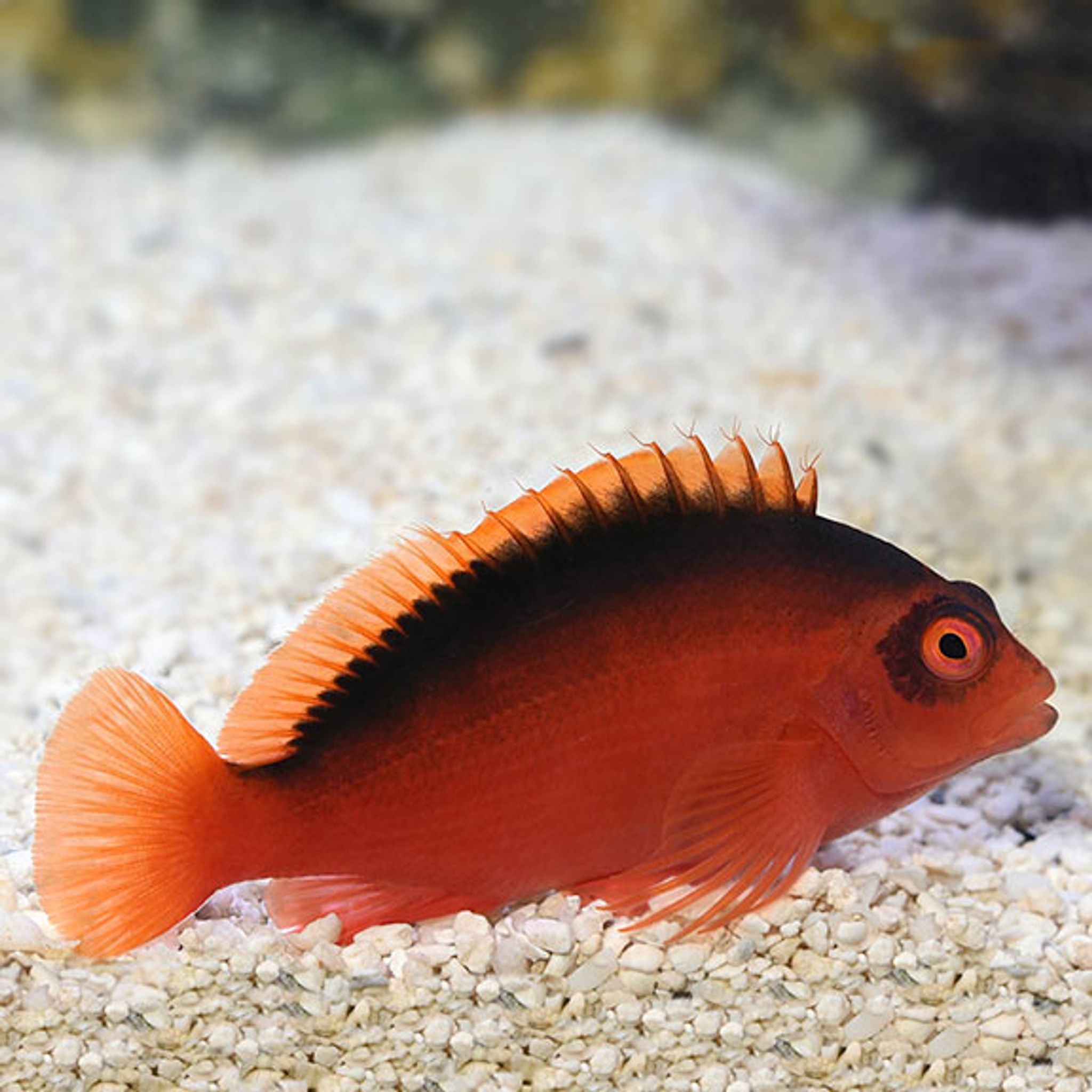
How to Feed Flame Hawkfish: Foods, Frequency and Common Feeding Problems
Flame Hawkfish (Neocirrhites armatus) are eager eaters once settled, but their perch-and-ambush hunting style means the usual "toss food in the tank" approach often leaves them shorted. This guide covers exactly what to feed, how often, how to get food to a fish that would rather sit still than chase, and how to tell a real feeding problem from normal predatory behavior.
How Flame Hawkfish Feed in the Wild
In the wild, Flame Hawkfish spend most of their time perched motionless on a branch of SPS coral or gorgonian, using it as a lookout rather than a place to graze. When a copepod, amphipod, small shrimp, or other bit of zooplankton drifts by — and occasionally a tiny fish — the hawkfish darts out, grabs it, and returns to the same perch.
This ambush strategy matters for captive feeding: these fish are not built to chase fast-moving food across open water. They're built to intercept slow-moving prey passing within a body length or two of a fixed spot. A captive feeding routine that mimics this — meaty food drifting or sinking gently near a favorite rock — works far better than food blasted around by strong current.
Best Foods for Flame Hawkfish
Flame Hawkfish are strict carnivores and generally easy keepers once acclimated. Build the diet around meaty marine proteins, not flake-only feeding.
- Frozen mysis shrimp — the staple; close in size and texture to natural prey.
- Frozen or thawed krill — chopped for smaller fish, left whole for larger specimens.
- Chopped meaty seafood — silverside, shrimp, squid, or clam cut to mouth size.
- Frozen brine shrimp — useful for variety, but lower in nutrient density than mysis or krill, so don't rely on it as the main protein.
- High-quality marine carnivore pellets or flake — a good supplement once the fish is confidently eating, not a starting food for a new arrival.
- Enriched or vitamin-soaked foods — offered occasionally to support color and immune health.
Rotate two to three of these rather than feeding one item exclusively. Variety supports the fish's namesake red-orange coloring and general immune health over the long term. You can browse live Flame Hawkfish and other hawkfish species on FishyHub, along with a range of frozen and freeze-dried foods suited to this kind of feeding rotation.
Where Sources Disagree: Is Brine Shrimp a Staple?
Some feeding guides list frozen brine shrimp as a core food; others dismiss it as low-value filler. The practical middle ground: brine shrimp is fine as one rotation item for variety, but mysis, krill, and chopped meaty flesh are the higher-value staples that should make up most of the diet. Don't build a feeding plan around brine shrimp alone.
How Often to Feed a Flame Hawkfish
| Fish stage / tank type | Recommended frequency |
|---|---|
| Juvenile or newly acquired fish | 2–3 small meals per day |
| Fish in a low-pod, newer, or heavily filtered reef | 2–3 small meals per day |
| Established adult in a mature, pod-rich reef tank | Once daily is generally sufficient |
The frequency debate in feeding guides comes down to how much natural microfauna is available. A young or newly settled hawkfish, or one in a tank without much of a copepod population, needs multiple small feedings to stay in good condition. A mature adult in an established reef with abundant live pods and microfauna to graze between meals can do fine on a single daily feeding.
A Simple Default Routine
For most home reef tanks, a straightforward plan works well:
- Morning: small portion of frozen mysis shrimp, target-fed near the fish's perch.
- Evening: frozen krill or chopped meaty seafood, rotated day to day.
- Once or twice a week: a small amount of marine pellet or flake alongside the frozen food, once the fish is established.
This gives nutritional variety without overcomplicating the schedule, and feeding at consistent times each day makes it easy to notice if the fish suddenly goes off food.
Portion Sizing and Feeding Method
Feed only what the fish (and any tankmates sharing the meal) can consume in 2–3 minutes. Uneaten meaty food that sinks into rockwork breaks down quickly and drives up nutrient load, feeding nuisance algae and stressing water quality. It's better to offer several small portions across the day than one large amount at once — this also matches how an ambush feeder actually eats: a few pieces at a time rather than a flood of food.
Because Flame Hawkfish perch rather than patrol the tank, broadcast feeding often means faster swimmers clean up the food before the hawkfish reacts. Target-feeding solves this directly:
- Use a pipette, turkey baster, or feeding stick to deliver food a few inches from the fish's usual perch.
- Time it for shortly after lights come on or during a consistent daily window, once the fish has learned to expect food then.
- Let the food sink or drift slowly past the perch rather than squirting it with force — this triggers the fish's natural ambush response.
- Watching the fish actually take the food also confirms it's eating, which matters for spotting problems early.
General Feeding Practices That Apply Here
A few basics from general saltwater feeding carry over directly to Flame Hawkfish care:
- Match food size to mouth size. Chop larger items like squid or silverside into pieces the fish can take in one bite.
- Feed at consistent times. A predictable routine makes it much easier to notice if the fish skips a meal.
- Avoid overfeeding. Excess food is the most common cause of poor water quality and algae blooms in reef tanks.
- Quarantine and acclimate new fish properly. Most Flame Hawkfish are wild-collected rather than aquacultured, and stress from transport and acclimation commonly suppresses appetite for the first several days — this is expected, not a sign of a sick fish.
Common Feeding Problems and Fixes
New Fish Won't Eat
It's normal for a newly acclimated Flame Hawkfish to refuse food for the first 1–3 days. Keep water quality pristine, dim the lights during feeding attempts, and offer frozen (or live, if available) mysis or brine shrimp before trying anything else. Target-feed at the same rock each time so the fish begins to associate that spot with food.
Refuses Pellets or Flake
Many wild-caught hawkfish accept only frozen food at first. Keep offering small amounts of pellet or flake alongside the frozen food rather than switching cold turkey — most fish convert over 1–2 weeks once they're established and confidently perching and hunting.
Fish Isn't Getting Food Before Faster Tankmates
If a hawkfish seems to be missing meals, the food usually isn't reaching it — faster swimmers are cleaning it up first. Target-feed near its perch with a pipette or turkey baster instead of broadcasting food across the tank.
Preying on Shrimp, Snails, or Other Small Inverts
This is the most misunderstood "problem" with this species, and it isn't really a feeding issue at all. A Flame Hawkfish that hunts cleaner shrimp, small hermit crabs, feather dusters, or tiny ornamental shrimp and snails is simply behaving like an opportunistic ambush predator. No amount of extra feeding will reliably stop it. Treat this as a stocking and compatibility decision: keep Flame Hawkfish with larger or well-armored invertebrates, and don't add small, soft-bodied marine shrimp or snails expecting them to be safe long-term.
Overfeeding and Water Quality
If you're seeing nuisance algae or cloudy water, scale back portions to what's eaten in 2–3 minutes and remove any uneaten meaty food promptly rather than letting it decompose in the rockwork.
Established Fish Suddenly Stops Eating
Flame Hawkfish are hardy and rarely go off food without a reason once settled. If a previously reliable eater suddenly loses its appetite, check water parameters first and watch for signs of illness or parasites rather than assuming pickiness.
Frequently Asked Questions
How often should I feed a Flame Hawkfish?
Feed juveniles and newly acquired fish 2–3 small meals daily. Once an adult is established in a mature reef tank with a healthy population of live pods and microfauna, once-daily feeding is generally enough.
What is the best food for Flame Hawkfish?
Frozen mysis shrimp is the best staple, rotated with krill and chopped meaty seafood like shrimp, squid, or clam. Add marine pellets or flake as a supplement once the fish is fully acclimated.
Will a Flame Hawkfish eat my cleaner shrimp or snails?
Yes, it can and often will target small, soft-bodied invertebrates — this is normal opportunistic predatory behavior, not something feeding schedule changes will fix. Choose tankmates with this in mind rather than expecting small shrimp or snails to be safe.
Why is my new Flame Hawkfish not eating?
Stress from transport and acclimation typically suppresses appetite for the first 1–3 days. Try frozen mysis or brine shrimp under dim lighting, target-feed near its chosen perch, and give it a few days before assuming there's a bigger problem.
Can Flame Hawkfish eat flake food?
Yes, most accept high-quality marine flake or pellet once they're settled and confidently perching. It shouldn't be the only food source, though — keep supplementing with frozen meaty foods for nutritional variety.
Do Flame Hawkfish need live food?
No, live food isn't required — frozen and prepared meaty foods are sufficient for a healthy, well-colored fish. Live food can still be useful as a short-term tool to coax a stressed or picky new arrival into eating.
How do I get food to a Flame Hawkfish that perches instead of swimming around?
Use a pipette, turkey baster, or feeding stick to deliver food directly near its perch rather than broadcasting it across the tank. This lets the fish intercept food with its natural ambush behavior instead of competing with faster swimmers.
If you're setting up a reef tank around a Flame Hawkfish, browse FishyHub's full range of marine fish to plan compatible tankmates before you add one to your stocking list.

