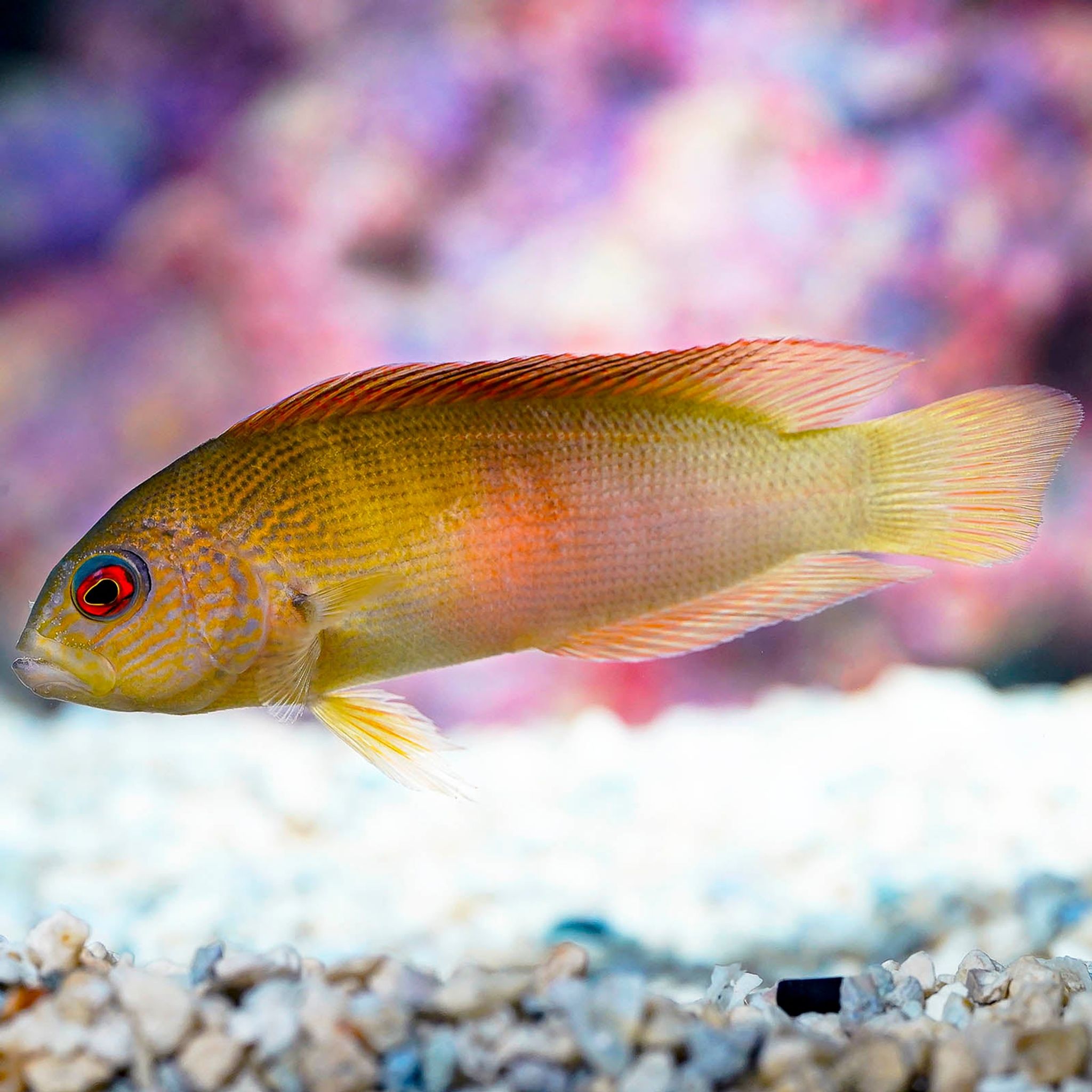

How to Feed Dottyback: Foods, Frequency and Common Feeding Problems
Dottybacks are among the easiest saltwater fish to feed, but "easy" still has rules worth following. This guide covers exactly what to offer, how often, and how to solve the feeding problems that actually come up — refusal after shipping, floating food going untouched, and one fish hogging every meal.
What Dottybacks Eat in the Wild vs. the Tank
In their natural reef habitat, dottybacks (genus Pseudochromis and closely related genera) are strict carnivores. They hunt zooplankton, small crustaceans, worms, and larval fish along rubble zones and reef crevices. Nothing in their diet comes from algae or plant matter.
That carnivorous instinct carries over cleanly into captivity. Dottybacks are unusually easy keepers at feeding time — most individuals accept prepared foods within days of settling into a tank, with none of the extended coaxing some marine fish require. The main job for a keeper is matching that carnivore biology with the right foods, not convincing a stubborn fish to eat.
Best Foods for Dottybacks
Build the diet around meaty, protein-forward foods and treat plant-based flakes as filler to avoid.
- Frozen mysis shrimp and brine shrimp — the staple of the diet, thawed before feeding.
- Chopped meaty foods — krill, clam, and finely diced table shrimp add texture and nutritional variety.
- Enriched frozen blends — foods boosted with HUFAs and carotenoids intensify color, which matters most for orange, purple, and pink species.
- Marine carnivore pellets — a convenient staple for days when frozen food isn't practical; look for formulas that lead with marine protein, not plant meal.
- Gel foods — a useful way to add variety without much extra prep.
Avoid flakes or pellets where the ingredient list is mostly plant filler. A dottyback can technically pick at these, but they don't deliver the protein density this fish needs, and over time a plant-heavy diet shows up as duller color and slower growth.
Sinking vs. Floating Food
Dottybacks feed in the mid-water column and around rockwork, not at the surface. Floating flake food dropped on top of the water often goes completely untouched because the fish never rises to meet it. Favor sinking pellets or thawed frozen cubes released near the rock the fish patrols — that single adjustment fixes a surprising number of "my dottyback won't eat" complaints.
How Often to Feed a Dottyback
Frequency recommendations vary across the hobby, mostly because tank setups vary. A dottyback in a heavily-stocked reef with abundant pod and worm grazing needs less offered food than one in a bare quarantine tank.
| Setting | Feeding frequency | Notes |
|---|---|---|
| Standard home reef tank | 2x/day | Solid default for most keepers |
| Mature, well-stocked reef with heavy pod grazing | 1x/day | Acceptable minimum; natural grazing fills the gap |
| Show or breeding specimens, juveniles | 3x/day | Optional, supports extra color and growth if water quality allows |
| Quarantine tank | 1–2x/day, small offerings | No live rock or pods, so monitor closely |
As a portion rule, only offer what the fish can finish in 1–2 minutes. Several small feedings consistently beat one large one, both for digestion and for water quality.
Feeding by Life Stage and Setting
- New arrivals and juveniles benefit from more frequent, smaller portions while they settle in and grow.
- Established adults in a mature reef tank with plenty of live rock can shift toward once-daily feeding, since natural grazing supplements the diet between meals.
- Quarantine tanks lack live rock and pods entirely, so 100% of the fish's nutrition comes from what you offer — feed a bit more consistently there than you would in a display tank, using small, frequent portions rather than one larger meal.
A Simple Weekly Rotation
Rotating food types across the week turns "feed a varied diet" into something you can actually follow:
| Day | Food |
|---|---|
| Mon, Wed, Fri | Frozen mysis or brine shrimp |
| Tue, Thu | Marine carnivore pellet |
| Sat | Chopped krill or clam |
| Sun | Enriched color-boosting frozen blend |
Adjust the exact split to taste, but aim for frozen or fresh meaty foods roughly 3–4 times a week, with pellets filling the other days.
Why Won't My New Dottyback Eat?
This is the most common troubleshooting question, and it's important to separate two things the hobby often lumps together:
- True pickiness in dottybacks is rare. Most individuals take to prepared foods within days of arriving in a stable tank.
- Shipping and acclimation stress is common and normal. A newly arrived dottyback refusing food for 1–3 days is a stress response, not a sign the species is difficult.
If a new fish isn't eating:
- Keep offering small amounts of live or frozen baby brine shrimp — it's highly enticing and often triggers a feeding response when other foods are ignored.
- Feed at the same cave or hiding spot each time so the fish associates a specific, secure location with food.
- Dim the lights and avoid disturbing the tank around feeding time.
- Don't overfeed out of worry — uneaten food sitting in the tank creates its own problems (more on that below).
Live baby brine shrimp is a short-term coaxing tool, not a long-term dietary requirement. Once the fish is reliably eating, wean it back onto the normal frozen and pellet rotation over a week or two rather than continuing to rely on live food indefinitely.
When to be concerned: if refusal extends beyond 5–7 days, or the fish shows other signs like clamped fins, constant hiding, or visible weight loss, that has crossed from normal adjustment into a possible health issue worth a closer look.
Overfeeding: The Biggest Feeding Mistake
Overfeeding is the single most common — and most damaging — dottyback feeding mistake, usually driven by "I never see it eat, so I should add more." A dottyback has a small stomach and a genuinely low daily food requirement.
Excess food that goes uneaten breaks down into ammonia, then contributes to nitrate and phosphate buildup, which in a reef tank shows up as nuisance algae or bristleworm population booms. This matters more for dottybacks than for many fish because they're typically kept in nutrient-sensitive mixed reef systems, where water quality swings affect corals and invertebrates too.
Fix: feed small, pre-measured amounts and watch the fish actually eat rather than guessing based on how much food is disappearing. Siphon or baster out any uneaten food within a couple of minutes of each feeding, before it has a chance to decompose.
Do Dottybacks Eat Bristleworms and Pests?
Yes. Dottybacks are effective, active hunters of bristleworms and small nuisance crustaceans like amphipods, and this natural hunting reduces pest populations in an established reef. It's a genuine bonus of keeping the fish — but it's a supplement to their diet, not a replacement for target feeding. Don't skip meals assuming the fish is living off pest control alone.
A tank with 30+ gallons (114+ L) of water volume and generous rockwork and caves supports this natural grazing behavior between feedings and also reduces stress-related feeding refusal, since the fish has secure places to retreat to.
Tank Setup That Supports Good Feeding
A few setup details make feeding easier and safer:
- Rockwork with caves and hiding spots reduces stress-driven refusal and gives a shy fish a secure base to feed near.
- A tight-fitting lid matters more than it sounds like it should — dottybacks are notorious jumpers, and a startled reaction during active target-feeding is a common way fish end up on the floor.
- Multiple feeding points, especially in a multi-fish tank, since dottybacks are territorial and semi-aggressive, particularly toward conspecifics or similarly shaped fish. A dominant individual will guard a single feeding zone and effectively starve tankmates if food only ever arrives in one spot.
For a tank with a boisterous dottyback and shyer tankmates, spot-feeding with a turkey baster directly into the dottyback's preferred cave — while offering food elsewhere for other fish at roughly the same time — keeps meals fair without triggering a chase across the tank.
If you're stocking a reef with a dottyback, pairing it with appropriately sized tankmates from the start makes multi-point feeding far less necessary.
Common Feeding Mistakes Checklist
| Mistake | Consequence | Fix |
|---|---|---|
| Overfeeding because the fish is rarely seen eating | Ammonia/nitrate/phosphate spikes | Pre-measure small portions, observe at feeding time |
| Floating flake as the only food | Food goes untouched at the surface | Switch to sinking pellets or thawed frozen cubes near rockwork |
| Leaving uneaten food in the tank | Decomposes, fuels bristleworms and algae | Siphon or baster out excess within 1–2 minutes |
| Feeding one food type long-term | Nutritional gaps, dull color | Rotate 2–3 food types weekly |
| One fish monopolizing food | Subordinate tankmates go hungry | Feed at multiple points; feed subordinates first |
| Treating QT feeding like display-tank feeding | Fish gets underfed with no pod grazing to fall back on | Feed small amounts more consistently in QT |
Frequently Asked Questions
How often should I feed my dottyback?
Twice a day is a solid default for most home reef tanks. Once a day is acceptable in a well-established, heavily-stocked reef with plenty of pod and worm grazing, and three times a day is an option for extra color and growth if your water quality can absorb the added feeding.
What is the best food for dottybacks?
Frozen mysis and brine shrimp as staples, supplemented with chopped meaty foods like krill, clam, and diced shrimp, plus a quality marine carnivore pellet for convenience. Enriched frozen foods with added HUFAs and carotenoids help bring out stronger coloration.
Will dottybacks eat pellets or flakes?
Yes, most dottybacks adapt readily to prepared pellets and flakes. Favor sinking or neutrally buoyant forms over surface-only flakes, since dottybacks feed in the water column and near rockwork rather than at the top of the tank.
Why won't my new dottyback eat?
This is almost always shipping or acclimation stress rather than true pickiness. Give the fish 1–3 days, offer live or frozen baby brine shrimp to entice it, keep hiding spots available, and resist the urge to overfeed out of worry during this window.
Do dottybacks eat bristleworms?
Yes, dottybacks actively hunt and reduce populations of bristleworms and small pest crustaceans in a reef tank. It's a helpful bonus for pest control, but it should not replace regular target feeding.
Can I overfeed a dottyback?
Yes, and it's the most common feeding mistake keepers make. Dottybacks have a small stomach and low daily food requirement, so excess food does more harm through ammonia, nitrate, and phosphate buildup than good for the fish itself.
Do dottybacks need live food?
Not routinely. Live baby brine shrimp is mainly a short-term tool to coax a stressed or newly arrived fish into eating, not a long-term dietary requirement once the fish settles into a normal rotation.
How much should I feed at each meal?
Offer only what the fish can consume within 1–2 minutes. It's better to feed smaller amounts more often than to offer one large meal that partly goes to waste.
Browse available marine fish on FishyHub to find a dottyback and compatible tankmates for your reef setup.


