
How to Feed Dogface Puffer: Foods, Frequency and Common Feeding Problems
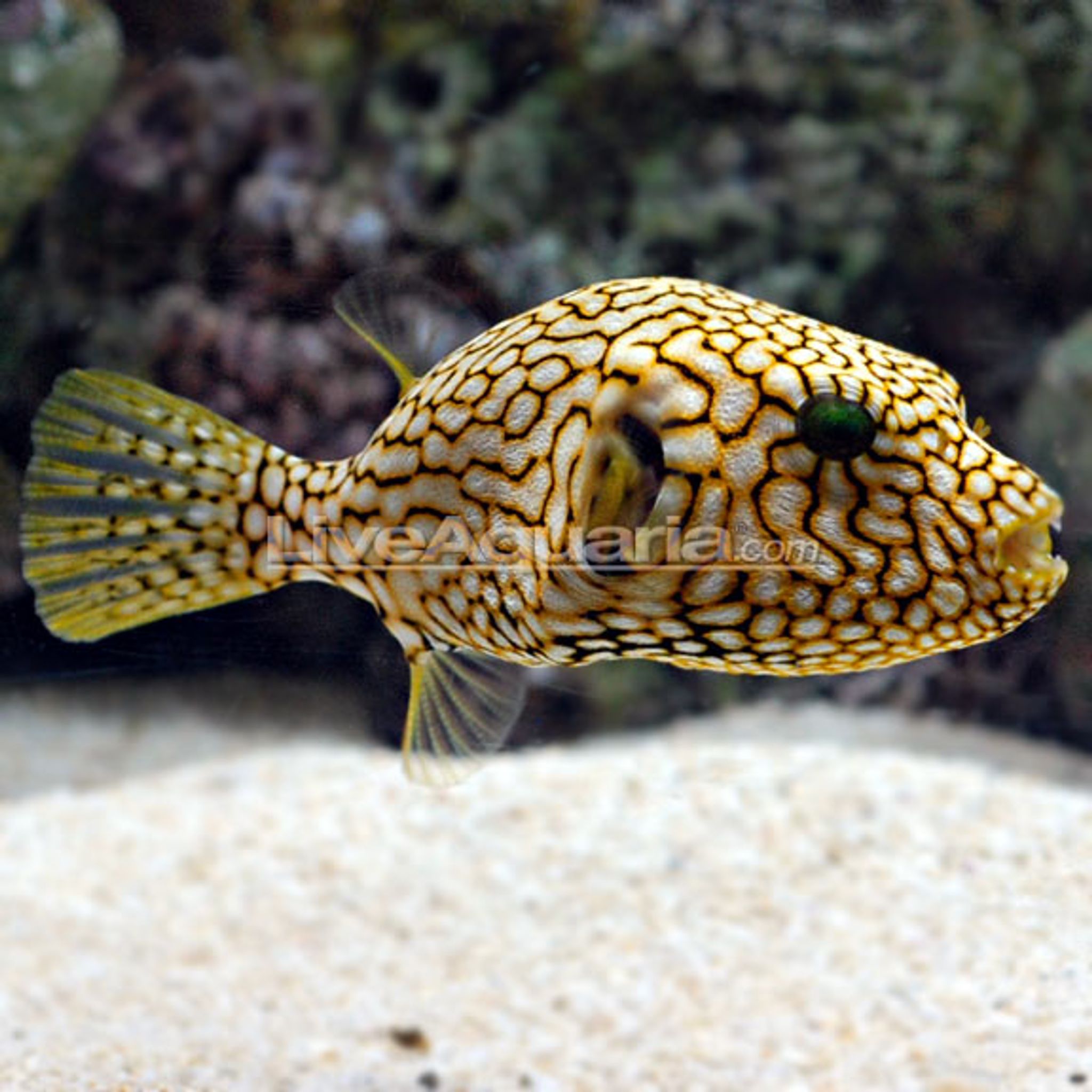
The Dogface Puffer (Arothron nigropunctatus) is a smart, food-driven carnivore that needs more than "feed twice a day and move on." Get the frequency, food variety, and dental care wrong and you risk obesity, overgrown teeth, or a fish that stops eating altogether. Here is a clear, checklist-style plan covering what to feed, how often, and how to solve the most common feeding problems.
Species Snapshot
The Dogface Puffer is a marine species, reaching roughly 6–8 inches in most home aquariums (up to 13 inches in the wild, though tank-raised specimens usually stay smaller). Because of its adult size and heavy waste output, it needs a tank of 75–125+ gallons (280–475+ liters) once fully grown.
Key facts that shape its feeding needs:
- Diet type: strict carnivore
- Teeth: fused, beak-like plates that grow continuously
- Temperament: intelligent, curious, and food-motivated — it learns to recognize its keeper
- Bioload: high relative to its size, due to frequent, protein-rich meals
You can browse live specimens in the Puffers category if you're sourcing a new fish or comparing options.
What to Feed a Dogface Puffer
A Dogface Puffer's diet should be built around fresh or frozen marine meaty foods, with hard-shelled items included regularly for dental wear. Pellets can supplement this base but should not replace it — some sources treat pellets as a fine staple, but a mostly fresh/frozen seafood diet with pellets as a convenient addition is the safer approach for long-term health.
Core Food List
| Food | Purpose | Frequency |
|---|---|---|
| Raw table shrimp or PE mysis | Staple protein | Most feedings |
| Squid | Staple protein, easy to portion | 2–3x/week |
| Clams or mussels in shell | Dental wear + protein | 1–2x/week |
| Krill | Staple protein, good nutrient profile | 2–3x/week |
| Silversides | Variety, whole-prey nutrition | 1–2x/week |
| Marine pellet or gel food (predator formula) | Convenient supplement | A few feedings/week |
| Hermit crabs or snails (in shell) | Dental wear | 1–2x/week |
Rotate at least three or four of these items weekly. Feeding only one food type — frozen shrimp alone is a common mistake — leads to nutritional gaps over time, even if the fish appears to be eating well.
Why Hard-Shelled Foods Are Non-Negotiable
A Dogface Puffer's teeth never stop growing. Without regular resistance from shell-on shrimp, snails, crabs, or clams, the beak overgrows. In mild cases this makes feeding awkward; in severe, untreated cases it can prevent the fish from eating at all, requiring a vet or an experienced aquarist to trim the beak. Include hard-shelled foods at least 1–2 times per week as a standing rule, not an occasional treat.
Foods to Avoid
Freshwater feeder fish and goldfish are a common but risky choice for marine puffers. They carry thiaminase, an enzyme that breaks down thiamine (vitamin B1) and can lead to deficiency over time, and their fat profile doesn't match what a marine carnivore needs. Skip feeder fish entirely and stick to marine-sourced proteins.
Feeding Frequency by Life Stage
Feeding frequency should shift as the fish matures. General marine-fish guides often recommend daily feeding at a fixed small amount, but puffer-specific guidance leans toward tapering frequency in adults to avoid obesity and fatty liver disease. A sensible middle ground:
- Juveniles: feed 1–2 times daily
- Established adults: feed every other day, roughly 3–5 times per week
- Portion size: an amount finished within 2–3 minutes
Adjust based on body shape rather than the calendar alone — a fish with a visibly rounded, bloated belly at rest needs fewer or smaller meals regardless of its age.
A Sample Weekly Rotation
| Day | Food |
|---|---|
| Monday | Raw shrimp (shell removed) |
| Tuesday | Squid strips |
| Wednesday | Clam or mussel in shell |
| Thursday | Krill |
| Friday | Silversides |
| Saturday | Marine pellet or gel food |
| Sunday | Fast day, or a snail/hermit crab in shell |
This is a starting template for adults on an every-other-day schedule — juveniles can follow the same rotation but with a meal added on the off days.
Portion Control: Feed by Schedule, Not by Begging
Dogface Puffers beg constantly at the glass regardless of how full they are. This is normal behavior, not a signal of genuine hunger. Feed on a fixed schedule and portion, not in response to begging, and remove uneaten food within a few minutes — leftover food breaks down quickly and adds to an already heavy bioload.
Healthy vs. Overweight Body Shape
Use body shape as your real-world check on portioning:
- Healthy: a gently rounded belly that flattens slightly between meals; the fish still shows some contour along its sides
- Overweight: a consistently rounded, ball-like belly that never flattens, even a day after eating; reduced activity
If the fish trends toward the overweight profile, cut back to the lower end of the every-other-day range and skip a feeding.
Target Feeding and Tank Setup
Because Dogface Puffers are intelligent and recognize their keeper, target or stick feeding works well. It lets you control exact portions, reduces wasted food, and cuts down on competition if the puffer shares a tank with other fish. In community setups, Dogface Puffers can be semi-aggressive at feeding time and outcompete slower tankmates — a dedicated feeding stick or a separate feeding station helps keep meals fair and precise.
This same curiosity and intelligence — often compared to that of a food-motivated invertebrate pet — means engagement matters. Puffers that are understimulated or handled roughly around feeding time are more prone to stress-related feeding refusal. Keep tanks secure: puffers are strong and exploratory enough to dislodge loose equipment, so use tight-fitting lids and covered intakes and outlets.
Never induce puffing ("inflation") for feeding, training, or entertainment. Puffing is a stress and defense response that draws on stored air or water; deliberately triggering it — through netting or handling — is stressful for the fish, not a harmless party trick.
Water Quality: Managing the Bioload
Puffers are messy, heavy eaters, and their waste output is significant relative to their size. To keep water quality stable:
- Run strong filtration and, ideally, a protein skimmer
- Perform larger or more frequent water changes than you might for a similarly sized non-puffer
- Remove uneaten food promptly rather than letting the tank's inhabitants "clean it up"
- Monitor ammonia and nitrate more closely during any period of increased feeding, such as juvenile growth phases
A dependable filter setup is worth prioritizing before the fish arrives — see the Filters category for options suited to a heavily stocked marine tank.
New Arrivals: When a Puffer Won't Eat
It's common for a newly arrived Dogface Puffer to refuse food for several days after acclimation. This is almost always stress from shipping and a new environment, not illness. A step-by-step approach:
- Give it space first. Dim the lights and minimize disturbance for the first day or two.
- Offer live or very fresh foods early. Live ghost shrimp or a fresh clam often trigger a feeding response when frozen food is ignored.
- Try a vitamin or garlic soak. Soaking frozen food in a vitamin or garlic dip before offering it can stimulate appetite and support immune health, particularly useful right after quarantine.
- Transition gradually. Once the fish is reliably eating live or fresh foods, mix in frozen items over the following week or two.
- Give it time before escalating. Most Dogface Puffers begin eating within a few days to two weeks. If a fish shows no interest after two weeks, or appears to be losing significant condition, that's the point to consult an experienced aquarist or aquatic vet rather than continuing to wait.
Live foods are a useful short-term tool for exactly this situation, but they aren't required long-term. Once a puffer is established and eating a varied fresh/frozen rotation with regular dental-wear items, live feeders become optional enrichment rather than a necessity — and using them sparingly also limits the disease and parasite risk that comes with live feeder stock.
Common Feeding Mistakes to Avoid
- Overfeeding: leads to obesity, fatty liver disease, and a shortened lifespan. Puffers act hungry regardless of how full they are, so let a schedule and body condition guide portions.
- Skipping hard-shelled foods: results in overgrown beak/teeth, which can eventually stop the fish from eating entirely.
- Feeding one food type only: causes nutritional deficiencies over time; rotate protein sources weekly.
- Letting uneaten food sit: degrades water quality quickly given a puffer's already heavy bioload.
- Feeding based on begging in community tanks: allows a semi-aggressive puffer to dominate feeding time at the expense of tankmates.
- Inducing puffing for feeding or fun: unnecessary stress with no training value.
An occasional skipped meal is not a mistake — a single missed feeding mimics natural feeding gaps in the wild and is nothing to worry about.
Frequently Asked Questions
How often should I feed my Dogface Puffer?
Feed juveniles once or twice daily. Once established, adults do well on an every-other-day schedule, roughly three to five times per week, with each portion consumed within 2–3 minutes.
What is the best food for a Dogface Puffer?
A rotation of raw shrimp, squid, clams or mussels in shell, krill, silversides, and occasional snails or hermit crabs, supplemented with a quality marine pellet or gel food, covers this species' nutritional needs well.
Do Dogface Puffers need hard-shelled foods?
Yes. Their teeth grow continuously, and hard or shelled foods wear them down naturally. Without this wear, teeth can overgrow to the point where the fish can no longer eat.
Why won't my new Dogface Puffer eat?
Stress from shipping and acclimation is the most common cause. Try live or very fresh foods, dim the lighting, minimize disturbance, and give the fish one to two weeks before assuming there's a bigger problem.
Can I overfeed a Dogface Puffer?
Yes, easily. They beg constantly regardless of fullness, and consistent overfeeding leads to obesity and liver problems. Feed by schedule and portion size, not by demand.
Can Dogface Puffers eat pellets or flakes alone?
Not ideally. Pellets can supplement the diet, but they shouldn't replace fresh or frozen meaty foods and the hard-shelled items needed for dental wear.
Are Dogface Puffers aggressive at feeding time?
They can be semi-aggressive and outcompete slower tankmates in a community setup. Target feeding with a stick, or using a separate feeding station, helps keep meals fair for everyone.
What happens if a Dogface Puffer's teeth get too long?
Overgrown teeth can prevent the fish from eating entirely and typically require a professional beak trim to correct. Preventing overgrowth with regular hard-shelled foods is far easier than fixing it after the fact.
Ready to plan a feeding routine around a new arrival? Browse marine puffers and other saltwater fish in the Marine Fish category on FishyHub.


