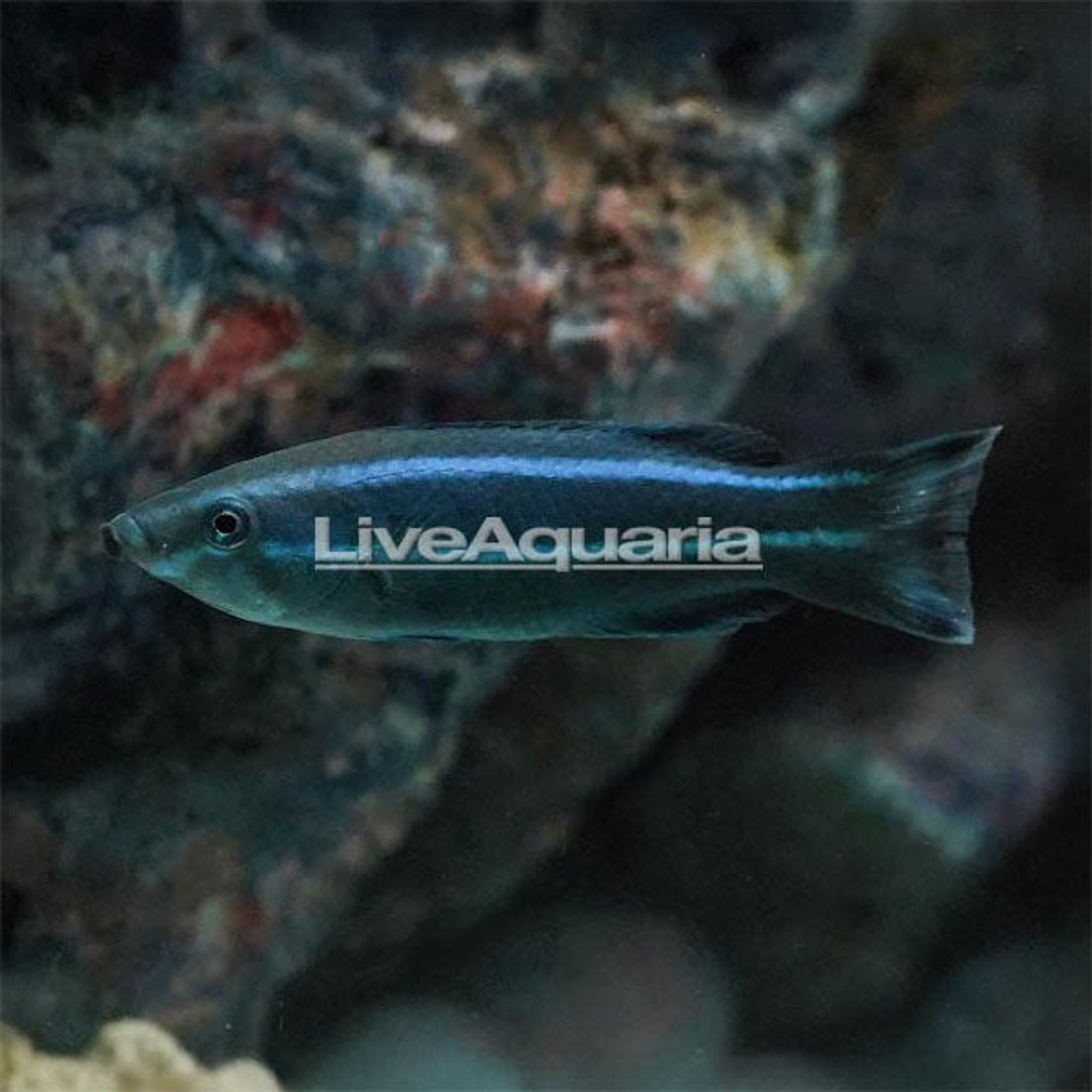
How to Feed Cleaner Wrasse: Foods, Frequency and Common Feeding Problems
Cleaner wrasse have one of the highest starvation rates of any commonly kept marine fish, and it almost always comes down to feeding. This guide covers exactly what to offer, how often, and the warning signs that tell you a wrasse isn't getting enough — before a pinched belly becomes an emergency.
Why Cleaner Wrasse Are Hard to Feed
In the wild, both the bluestreak cleaner wrasse (Labroides dimidiatus) and the bicolor cleaner wrasse (Labroides bicolor) spend nearly their entire day picking parasites, dead or damaged tissue, mucus, and small crustaceans like copepods off other reef fish. This isn't a handful of meals — it's continuous grazing from sunup to sundown.
A home aquarium almost never has enough natural parasite or mucus supply to replicate that. Most cleaner wrasse have to be weaned onto prepared foods, and that transition is where things go wrong. A fish that never learns to recognize frozen or pelleted food as edible can waste away over weeks while still looking outwardly normal for much of that time.
Species matters here. The bluestreak is the classic reef cleaner most commonly sold and discussed, but the bicolor cleaner wrasse grows larger, is more independent as an adult, and often adapts to prepared foods a bit more readily. If you're choosing between the two as a first cleaner wrasse, that difference is worth factoring in.
The Single Most Important Decision: Captive-Bred vs. Wild-Caught
Before feeding strategy even matters, survival odds are set at the point of purchase. Captive-bred cleaner wrasse, or wild-caught specimens that were conditioned during quarantine to accept frozen food before being offered for sale, have dramatically better outcomes than untrained wild imports.
Treat "is it already eating frozen or prepared food?" as a non-negotiable checkpoint, not a nice-to-have. A wild-caught fish that has never touched prepared food frequently never makes the switch at home, and the failure is slow and easy to miss. If you can, watch the specimen eat before you commit, or ask specifically whether it's captive-bred or pre-trained. You can browse available specimens, including wrasse, and it's worth asking about feeding status as part of that process.
Best Foods for Cleaner Wrasse
Once a wrasse is eating, build a rotation rather than relying on one item.
- Frozen mysis shrimp — the long-term staple once a fish is eating reliably; enrich it by soaking in a vitamin or garlic-based supplement before feeding.
- Frozen brine shrimp — useful for variety, lower in nutritional density than mysis so best as a supplement, not the sole food.
- Frozen cyclops and rotifers — small enough for a shy or newly acquired fish to take easily.
- Live copepods and amphipods — often the single most effective "bridge" food; many wrasse will accept live pods before they'll touch anything frozen or dry.
- High-quality marine pellet or flake — formulated for carnivores/omnivores; works best as an addition once the fish is already established, not as a first offering to a reluctant eater.
A simple way to think about it: live pods get a hesitant fish started, frozen mysis carries it long-term, and pellet or flake rounds out the rotation once feeding is reliable.
Enrichment Matters More Than It Gets Credit For
Soaking frozen mysis or brine shrimp in a vitamin or HUFA (fatty acid) supplement before feeding is standard practice for other small-prey specialist fish, and it applies just as well here. It supports long-term health and coloration in a fish that's otherwise living on a fairly narrow diet compared to what it would eat in the wild. Vitamin soaks and other Food & Supplements options are worth keeping on hand for this rotation.
How Often and How Much to Feed
Because cleaner wrasse graze almost continuously in nature, a single daily feeding is one of the biggest risk factors for slow starvation.
| Feeding approach | Frequency | Notes |
|---|---|---|
| Ideal target | 3-4+ small feedings per day | Closest match to natural grazing behavior |
| Acceptable minimum | 2-3 feedings per day | Only reliable if paired with a thriving refugium or live pod population |
| Not recommended | 1 large feeding per day | Major risk factor for gradual starvation |
Portion size matters as much as frequency. Offer small amounts that get eaten within a couple of minutes, rather than one large meal — this matches the fish's grazing biology and avoids the water quality hit from uneaten food sitting in the tank.
Target Feeding
If a wrasse is shy, being outcompeted, or slow to recognize food, use a turkey baster or similar tool to deliver food directly near it rather than broadcasting it across the tank. This is one of the most effective tools for a slow starter, since it removes competition and puts the food exactly where the fish can find it.
Weaning a New Cleaner Wrasse
Give a newly added cleaner wrasse anywhere from a few days to a couple of weeks to start eating reliably. During that window:
- Offer live copepods or amphipods first if the fish is ignoring frozen food.
- Target-feed with a baster to reduce competition from tankmates.
- Introduce frozen mysis once the fish is actively responding to food.
- Add pellet or flake last, once frozen food is being taken consistently.
Signs of successful weaning to watch for, rather than a vague sense that "it seems to be eating":
- The fish swims out to meet the baster or food cloud instead of hiding.
- It picks food out of the water column, not just off the substrate.
- Body shape stays rounded rather than developing a pinched profile behind the head.
If there's no real change in interest or body condition after 1-2 weeks, that's the point to try a different food type, reassess tankmates, or consider returning or exchanging the fish rather than continuing to hope it improves on its own.
Tankmates: A Supplemental Food Source, Not a Treatment
Keeping other fish in the tank gives a cleaner wrasse real cleaning opportunities — actual parasites and slime coat — that supplement prepared food, which is especially useful during the transition period. A cleaner wrasse housed completely alone loses that supplemental source and a normal behavioral outlet.
That said, don't overstate what this does for the tank as a whole. A cleaner wrasse picking at other fish does not meaningfully control a disease outbreak like ich. It's a feeding behavior and a dietary supplement for the wrasse, not a treatment plan for the tank.
Also watch who those tankmates are. Aggressive or fast, boisterous eaters can block a wrasse from food entirely, even when plenty is going into the tank. Visible feeding activity at the surface doesn't guarantee the wrasse itself is getting a fair share — it may simply be losing the race to quicker fish every time.
Refugium and Live Pod Culture as an Ongoing Strategy
Rather than treating live pods as a one-time crutch during weaning, running a refugium or dosing live copepods on a schedule turns them into an ongoing supplemental food source. This is especially valuable in the weeks right after purchase, but it continues to pay off later by giving the wrasse a grazing option between scheduled feedings, closer to its natural pattern than any feeding schedule alone can replicate.
Housing Conditions That Support Feeding Success
Feeding success isn't just about what goes in the water — it depends on the environment letting the fish actually get to the food and stay healthy enough to eat.
- Tank size: roughly 90 gallons (340 L) minimum, giving the wrasse room to move and a more stable environment overall.
- Water parameters: stable reef conditions around 72-78°F (22-26°C), specific gravity 1.020-1.025, and pH 8.1-8.4.
- Tankmates: calm, peaceful fish that won't outcompete or intimidate the wrasse away from feeding areas.
- Lid: a tight-fitting cover is essential — cleaner wrasse are known jumpers, and a stressed or hungry fish is more prone to jumping out.
Freshwater Dips: A Related but Separate Tool
A freshwater dip is a short bath — typically just a few minutes — in aerated fresh water matched to the display tank's temperature and pH, used to knock external parasites off a fish before it goes into quarantine or the display tank. It's a general supportive step for new marine arrivals, not something specific to cleaner wrasse, and it isn't a substitute for a full quarantine period.
Because the dip itself is stressful, match temperature and pH carefully, watch closely for signs of distress, and keep the dip brief. Think of it as one extra precaution for new fish generally, not a mandatory step tied to cleaner wrasse care specifically.
Common Feeding Mistakes
- Buying a wild-caught cleaner wrasse without confirming it already eats frozen or prepared food.
- Feeding once a day, or offering one large meal instead of several small ones.
- Assuming visible feeding activity means the wrasse is getting enough, when faster tankmates may be beating it to the food.
- Not checking body condition regularly — by the time a pinched belly or sunken area behind the head is obvious, the fish is already in serious trouble.
- Keeping a cleaner wrasse with no other fish to clean, removing a natural supplemental food source.
- Skipping live pods or refugium supplementation, especially in the first few weeks.
- Leaving the tank uncovered, given the species' tendency to jump when stressed or hungry.
- Overcrowding with aggressive or overly boisterous tankmates that block feeding access.
Frequently Asked Questions
Will a cleaner wrasse survive without other fish to clean?
Yes, if it's already trained onto prepared or frozen foods and fed several small meals daily. The risk rises without other fish present, since that removes a natural supplemental food source the wrasse would otherwise rely on.
How do I know if my cleaner wrasse is starving?
Look for a pinched or concave belly, a sunken area behind the head, lethargy, and reduced interest in food. If you see these signs, act quickly with live pods and direct target feeding rather than waiting to see if things improve.
Can cleaner wrasse eat flake food?
Yes, high-quality marine flake or pellet can be part of the rotation, but it works best once the fish is already eating reliably. It's not usually the first food a reluctant or newly acquired wrasse will accept.
Do cleaner wrasse need live food?
Not permanently, but live copepods and amphipods are extremely helpful for wild-caught or newly acquired fish that haven't yet learned to recognize frozen or prepared food as edible.
How often should I feed a cleaner wrasse?
Aim for 3-4 small feedings per day rather than one or two larger meals. Two to three feedings can work as a minimum if paired with a healthy live pod population from a refugium.
Is a freshwater dip needed before adding a cleaner wrasse to my tank?
It's an optional supportive step for knocking off external parasites during acclimation, not a required or wrasse-specific procedure. A full quarantine period is more important for long-term health.
What size tank does a cleaner wrasse need?
Roughly 90 gallons (340 L) minimum, along with stable reef parameters and secure rockwork to reduce stress.
Why is my cleaner wrasse not eating?
Most commonly it's a wild-caught, untrained specimen that hasn't yet learned that prepared food is edible. Try live pods, target feeding with a baster, and give it a defined window of patience before assuming the situation is a failure.
If you're ready to add a cleaner wrasse or want to compare feeding-ready specimens and build out a feeding rotation, browse wrasse alongside freeze-dried food options on FishyHub.

