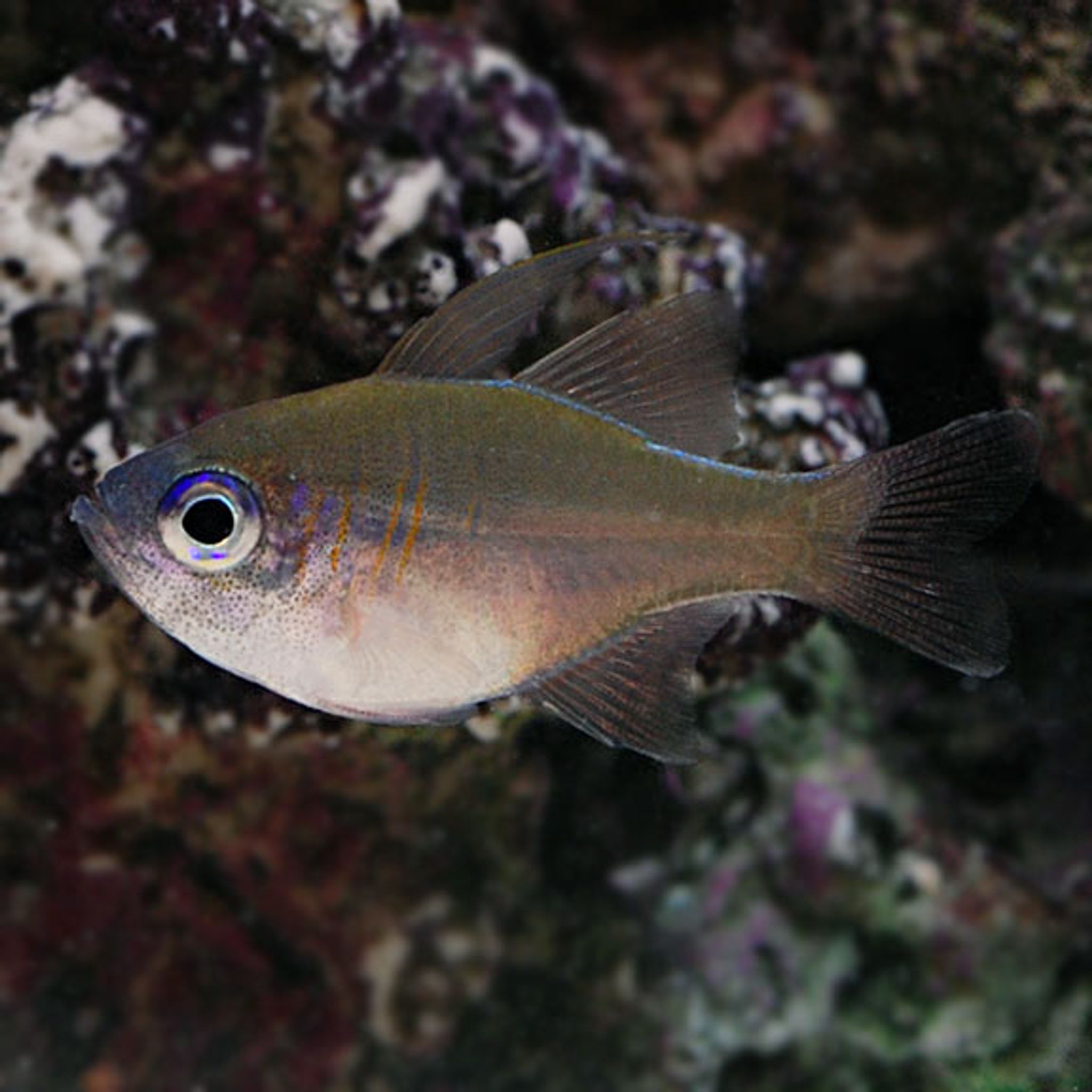

How to Feed Banggai Cardinalfish: Foods, Frequency and Common Feeding Problems
Banggai cardinalfish (Pterapogon kauderni) don't feed like most reef fish — they hover, watch, and pick off prey slowly instead of darting through the water column. That slow, deliberate style is exactly what trips up new keepers into thinking their fish isn't eating, is too thin, or is being starved out by tankmates. This guide covers the right foods, a realistic feeding schedule, and the specific problems this species runs into at feeding time.
How Banggai Cardinalfish Feed in the Wild
In their native waters around Indonesia's Banggai Archipelago, these fish don't chase prey through open water. They hold a fixed position near a sea urchin, anemone, or coral head and pick off zooplankton and small crustaceans that drift within reach. This ambush-style, low-energy feeding behavior is baked into their biology, and it carries straight over into the aquarium: a Banggai cardinalfish sitting motionless and only occasionally snapping at food is behaving normally, not refusing to eat.
Core Diet: What to Feed
The staple diet should be meaty frozen or live foods sized to fit a small mouth. Good regular choices include:
- Frozen mysis shrimp — the closest match to natural prey size and shape
- Enriched brine shrimp (frozen or live) — good bulk food, best when nutritionally boosted
- Finely chopped krill — cut small enough to swallow whole
- Marine plankton or zooplankton blends — adds variety in texture and nutrients
- Chopped fresh or frozen seafood — shrimp, squid, or clam, minced into bite-sized pieces
A high-quality marine pellet or flake formulated for carnivores can round out the diet, but it shouldn't be the only thing offered, especially in the first weeks after purchase. Many individuals — particularly wild-caught fish — simply ignore dry food until they've been feeding confidently on frozen items for a while. Treat pellets as a supplement you introduce later, not a starting point. You can browse frozen and freeze-dried options suited to marine carnivores in FishyHub's Food & Supplements section, including freeze-dried food that works well as an occasional variety item once a fish is established.
Do They Need Live Food?
Not permanently. Once settled, most Banggai cardinalfish adapt well to frozen and prepared foods. Live foods — baby brine shrimp, live mysis, copepods — are most valuable in two situations: getting a newly acquired or shy fish to start eating, and adding occasional variety. They're a tool for specific problems, not a standing requirement for a healthy adult.
Feeding Frequency and Portion Size
Recommendations vary because this species' metabolism is genuinely slower than that of many reef fish, and its reproductive biology adds another wrinkle — a mouthbrooding male can go 20 to 30 days without eating while holding eggs or fry in his mouth.
A sensible approach:
| Fish/Situation | Suggested Frequency | Notes |
|---|---|---|
| Juveniles, growing | 2x/day, small portions | Supports faster growth |
| Adults in an active group | 2x/day | Helps ensure subordinate fish get fed |
| Stable, established adults | 1–2x/day | Larger single portion is fine if nothing goes uneaten |
| Brooding male | Expect 0 feedings | Do not force-feed; this is normal, not illness |
For portion size, offer only what's consumed within 2 to 3 minutes. Because this fish feeds slowly and deliberately, plucking food from the water column one piece at a time, it's easy to assume it "didn't get any" and add more — that's how overfeeding happens. Watch the fish, not the clock, and give it the full window before adding another pinch.
Feeding Technique for a Slow, Shy Feeder
A few adjustments make a real difference for this species:
- Target-feed with a turkey baster or feeding tube. Draw up a small amount of thawed food and release it directly near the fish, rather than broadcasting it across the tank surface. This is especially useful when faster tankmates (damsels, wrasses) would otherwise clear the water column first.
- Feed in small pulses, not one big dump. Several small releases give a hesitant fish repeated chances to notice and approach the food.
- Use multiple feeding points for groups. Banggai cardinalfish are unusual among marine fish in that they tolerate being kept in pairs or small groups without constant aggression. Even so, a size or social hierarchy still forms, and a subordinate individual can get shut out at a single feeding spot. Spreading food across two or three points in the tank, and watching to confirm every fish gets a turn, prevents one fish from quietly losing condition over time.
Common Feeding Problems and Fixes
"My fish isn't eating"
The most frequent complaint is also the most frequently misread. Before assuming a problem, rule out normal behavior:
- Slow feeding style — give it 2 to 3 minutes before concluding it passed on the food.
- New arrival stress — freshly acquired fish, especially wild-caught ones, often refuse food for several days up to a week. Patience, plus offering live foods like baby brine shrimp, usually restarts feeding.
- Mouthbrooding fast — a male holding eggs or fry will stop eating for roughly 20 to 30 days. Don't panic-feed him or disturb the brood trying to coax a response; this resolves on its own once he releases the fry.
- Being outcompeted — fast, aggressive tankmates can strip food from the water before a Banggai cardinalfish reacts. Target-feeding solves this directly.
- Poor water quality — stressed fish in unstable conditions commonly go off food; check parameters if refusal continues past a week outside of brooding.
"My fish looks too thin"
Banggai cardinalfish have a naturally slender, laterally compressed body shape — they are not meant to look as filled-out as a damselfish or clownfish. Comparing them to other reef fish, rather than to healthy specimens of their own species, leads to well-meaning overfeeding. If the fish is active, holding its fins normally, and eating on schedule, a lean profile is likely just its natural build, not malnutrition.
Long-term nutritional decline ("wasting away")
Some Banggai cardinalfish gradually lose condition in captivity even while eating regularly — a known issue often linked to a diet that's technically accepted but nutritionally thin over time. Reduce the risk by rotating food types rather than feeding one item exclusively, and by soaking frozen foods in a vitamin or HUFA (highly unsaturated fatty acid) supplement occasionally before feeding. This adds back nutrients that can leach out of frozen food during thawing.
Skipping quarantine
A stressed, parasite-affected fish is far more likely to refuse food after arrival. Running a proper quarantine and acclimation period before introducing a new Banggai cardinalfish to the display tank reduces the odds of a prolonged feeding strike.
Live Foods for Marine Fish: A Quick Reference
Live foods are a useful backup tool for restarting a reluctant feeder or adding variety, even though they're not a permanent necessity for this species. Common categories include:
- Copepods and amphipods — small, natural-looking prey items that trigger a feeding response in shy fish
- Brine shrimp (live) — widely available and easy to hatch or culture
- Mysis shrimp (live) — closer in size and movement to natural prey than brine shrimp
- Rotifers — mainly useful for very small fry rather than adult cardinalfish
- Blackworms or feeder shrimp — occasional variety for larger individuals
Before offering any live food, gut-load it with liquid phytoplankton or a marine lipid supplement a few hours beforehand so the nutrition passes on to the fish eating it. Always strain out culture water before adding live food to the display tank, since culture water can carry excess organics or unwanted microorganisms.
Getting the Tank Right Before You Worry About Feeding
A stressed fish in unstable water is far more likely to refuse food, so feeding problems often trace back to tank setup rather than the food itself. Before adding any Banggai cardinalfish, confirm:
- The tank is fully cycled, with ammonia and nitrite both at 0
- Salinity is stable at roughly 1.020–1.025 SG
- pH sits between 8.1 and 8.4
- Temperature holds steady at 75–80°F (24–27°C)
A minimum of about 30 gallons (114 L) is recommended for a pair or small group, giving enough open swimming space that one dominant fish can't easily monopolize every feeding and reducing the stress-driven feeding refusal that shows up in cramped setups.
Single-Species Tanks Make Feeding Easier to Manage
Because Banggai cardinalfish are one of the few marine species that tolerates being kept as a same-species group without constant fighting, a Banggai-focused or single-species tank is a realistic option. With fewer competing species pulling food away, feeding is easier to observe and manage — you can watch each fish individually and confirm it's getting fed. A hierarchy still forms within the group, though, so multiple feeding points remain worthwhile even in a species-only setup.
Frequently Asked Questions
How often should I feed Banggai cardinalfish?
Feed 1–2 times a day in small portions that are eaten within a few minutes. Lean toward twice daily for juveniles and active groups, and once or twice daily for stable, established adults, adjusting the amount so nothing goes to waste.
What is the best food for Banggai cardinalfish?
Frozen mysis shrimp and enriched brine shrimp make a solid staple diet, supplemented with finely chopped seafood like shrimp, squid, or clam, plus occasional live foods for variety. Pellets or flakes can be added later as an optional extra once the fish is feeding confidently.
Why is my Banggai cardinalfish not eating?
The usual causes are new-arrival stress, being outcompeted by faster tankmates, poor water quality, or a male fasting while mouthbrooding. Give the fish time, try offering live food to restart feeding, and check water parameters if refusal continues for more than a week.
Can Banggai cardinalfish eat flake food?
Some individuals will, but many prefer frozen or meaty foods and ignore dry food altogether, especially early on. Flake or pellet food is best treated as a supplement rather than the primary diet.
Do Banggai cardinalfish need live food?
Not on an ongoing basis. Live food is most useful for getting a shy or newly acquired fish feeding again, or for adding occasional variety, but an established fish does well on frozen and prepared foods alone.
How do I feed a group of Banggai cardinalfish without bullying at feeding time?
Spread food across multiple points in the tank rather than one spot, and feed slowly in small amounts so subordinate fish have time to get their share. Watch each feeding to make sure no individual is consistently getting shut out.
How long can a Banggai cardinalfish go without eating?
A healthy adult can fast for weeks, most notably a brooding male holding eggs or fry for 20 to 30 days. A newly acquired fish that refuses food for more than a week outside of brooding needs troubleshooting for water quality, disease, or ongoing stress.
What's a good tank size to keep Banggai cardinalfish well fed and comfortable?
Around 30 gallons (114 L) works well for a pair or small group, giving enough space that no single fish can dominate every feeding. More open swimming room also reduces the stress that leads to feeding refusal.
If you're ready to add Banggai cardinalfish to your setup, you can browse available stock in FishyHub's Cardinalfish category and pair them with the right frozen and freeze-dried foods from the Food & Supplements section.


