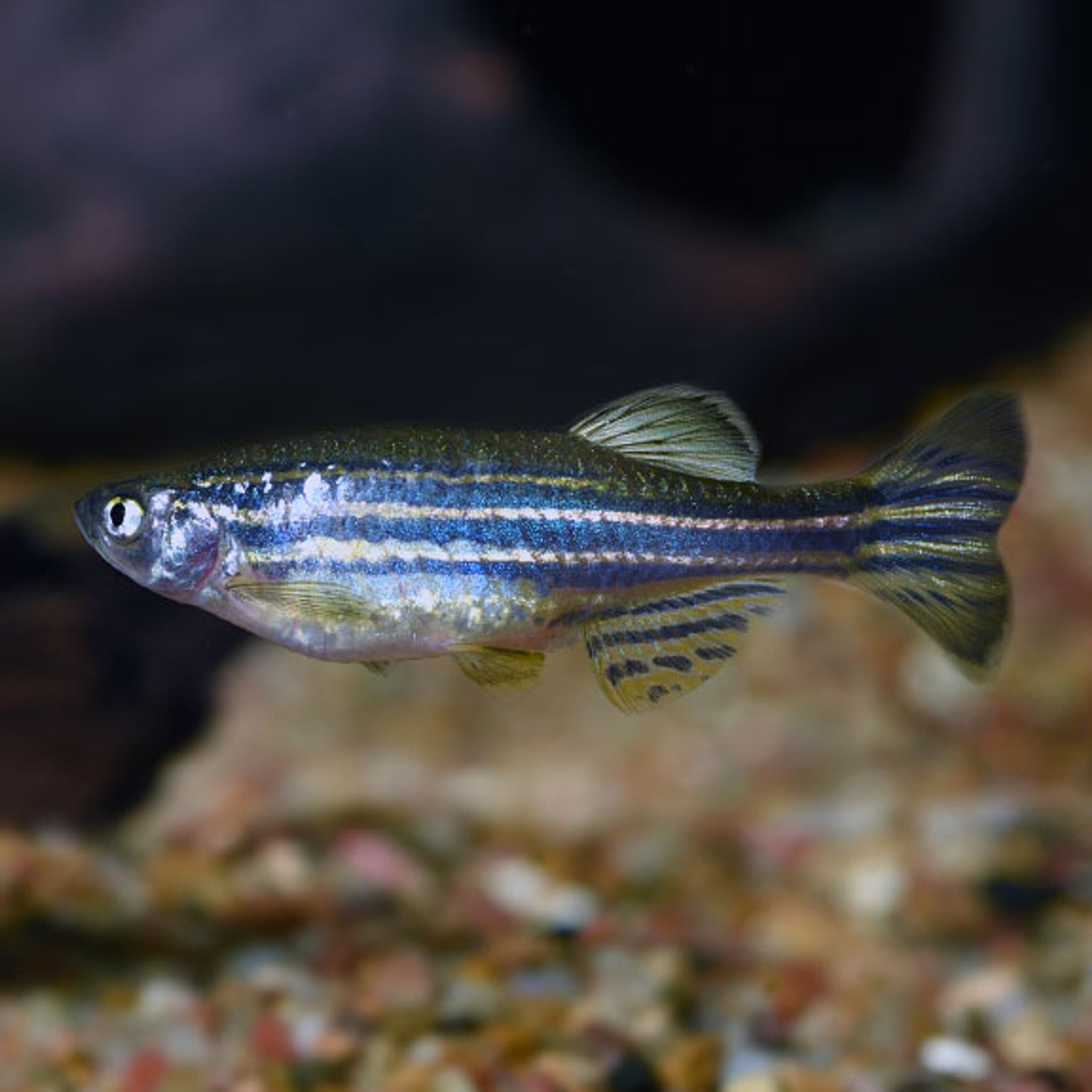

How Big Do Zebra Danio Get? Growth Rate, Adult Size and Tank Planning
A full-grown zebra danio typically measures 1.5 to 2.5 inches (about 4 to 6.5 cm), with 2 inches being a solid number to plan around. They grow fast — reaching most of their adult size within two to three months — which matters more for tank planning than the final inch or two ever will.
Adult Size: What to Actually Expect
Sources vary a little on the exact ceiling, which is normal for a fish measured by hobbyists rather than in a lab. The reliable range is 1.5–2.5 inches, with the biggest individuals under excellent conditions occasionally nudging toward 2.5–3 inches. Treat 2 inches as your typical, "plan for this" figure and 2.5 inches as the upper edge for an exceptional female.
Females run larger than males. A mature female is generally rounder-bellied and slightly longer, especially when gravid (carrying eggs) — often in the 2–2.5 inch range. Males stay slimmer and more torpedo-shaped, usually topping out around 1.5–2 inches. If you're trying to sex a group at the store, body shape is a better clue than length alone.
How to Measure a Danio's Size
Most published lengths refer to total length — nose to the tip of the tail fin — rather than standard length (nose to where the tail fin starts), which reads a bit shorter. If you're comparing a fish in your tank to a size chart, measure to the tail tip for an apples-to-apples number.
Growth Rate: From Fry to Full-Grown
Newly hatched fry are barely visible — roughly 1/8 inch (a few millimeters) and effectively invisible without magnification for the first few days. From there, growth is quick:
| Age | Approximate size/stage |
|---|---|
| Hatch (day 0–5) | A few millimeters; free-swimming fry, nearly invisible |
| 2–3 weeks | Visibly fish-shaped, a few millimeters to ~0.5 in |
| ~1 month | Around 1 inch |
| 2–3 months | Near full adult size |
| 4–6 months | Full/maximum adult size reached |
Zebra danios are among the fastest-maturing common aquarium fish, which also means they hit breeding maturity early — sometimes by around 3 months old. If you've had danio fry and they seem to change size weekly during month one and two, that's completely normal, not a sign of illness or deformity. Growth plateaus once adult size is reached around 4–6 months; unlike some fish, they don't keep growing slowly for years.
What Determines Final Size
A danio's final size is mostly genetic, but a few environmental factors shape how well it reaches its potential:
- Genetics/strain — wild-type, long-fin, and GloFish variants can differ slightly in typical size, though all fall in the same general range.
- Water temperature — warmer water within the safe range speeds up growth rate, but doesn't necessarily raise the final adult size ceiling.
- Diet quality and variety — a varied diet with regular feedings supports steady, healthy growth.
- Water quality consistency — stable, clean water lets a fish grow to its genetic potential.
- Tank space — chronic crowding or an undersized tank can stunt growth and shorten lifespan.
It's worth separating genetic potential from environmental stunting. A danio that stays on the small side despite good care may simply carry smaller genetics — that's not a welfare issue. But a fish stunted by a cramped, poorly maintained tank is a different story: stunting is a sign of chronic stress, not a convenient way to "manage" size, and it's linked to a shorter lifespan.
Danio Species Overview: Is Zebra the Right One?
Zebra danio sits in the middle of the danio size range. If you're comparing species before you buy, here's how they stack up:
| Species | Adult size | Minimum tank | Difficulty |
|---|---|---|---|
| Celestial pearl "galaxy" danio | ~0.75–1 in | 10 gal | Easy–moderate |
| Glowlight danio | ~1.5 in | 10 gal | Easy |
| Zebra danio | ~1.5–2.5 in | 10–20 gal | Easy |
| Leopard / long-fin danio | ~1.5–2.5 in (same species as zebra) | 10–20 gal | Easy |
| Pearl danio | ~2 in | 15–20 gal | Easy |
| Giant danio | ~3–4 in | 30+ gal | Easy–moderate |
Leopard and long-fin danios are simply color/fin variants of the same species as the zebra danio, so their size and care are identical. If you want something noticeably smaller, the galaxy danio is the pick; if you want something bigger and bolder, giant danio is the step up — just budget the larger tank it needs.
GloFish: Same Fish, Different Color
GloFish danios are genetically modified zebra danios (the same technology is now also applied to certain tetras and barbs) bred to fluoresce under aquarium or black lighting. Beyond the color, care is identical to standard zebra danios:
- Same adult size range (1.5–2.5 in)
- Same water parameters and tank-size needs
- Same schooling requirement (6+ fish)
- Same typical lifespan, though GloFish are sometimes cited slightly shorter — around 2–4 years, averaging roughly 3.5
One extra fact worth knowing: GloFish coloring can shift with age and maturity — the fluorescent effect sometimes intensifies as a fish matures and can look muted in very young juveniles, so don't judge a small GloFish's final color by how it looks at a month old. They're a popular choice for dark-substrate, black-light display tanks specifically because the glow reads best against contrast.
Tank Size and Stocking Math
Sources disagree here more than on almost any other point. Some cite 10 gallons as a workable minimum; others recommend 20. Here's a practical way to reconcile that:
- 10 gallons — an absolute floor for a small group in a pinch, not a long-term ideal.
- 15–20 gallons — the practical minimum for a proper school of 6–8 with real swimming room, and a footprint that leaves space to add tank mates later.
Shape matters as much as volume. Zebra danios are fast, horizontal swimmers, so a 20-long or similarly wide-footprint tank suits them far better than a tall, narrow one of the same gallon count. A browse through glass tanks with an eye toward footprint, not just capacity, will pay off for this species.
Danios are obligate schoolers — they need the company of their own kind to feel secure and display normal behavior:
- 6 — the hard minimum.
- 8–10 or more — ideal, producing calmer behavior, more natural schooling, and less fin-nipping within the group.
Water Parameters and Lifespan
| Parameter | Range |
|---|---|
| Temperature | 64–78°F (18–25.5°C); core comfort roughly 64–75°F |
| pH | 6.5–7.5 sweet spot; 6.0–8.0 outer tolerance |
| Lifespan | 3–5 years with good care |
Zebra danios tolerate more temperature and pH swing than most community tropicals, but that tolerance is a safety margin, not a target — aim for stability inside the sweet spot rather than testing the edges. Diet is straightforward: a quality flake or small pellet as the everyday staple, with live or frozen foods like brine shrimp, daphnia, or bloodworms added a few times a week for color and condition. You'll find suitable staples and treats browsing freeze-dried food options built for small schooling fish.
New Tank Setup Basics
If you're planning a tank specifically for danios, sequence matters:
- Rinse substrate and decor with plain water — no soap or detergent.
- Fill in stages while aquascaping, then install and run the filter.
- Cycle the tank fully before adding any fish — this takes days to weeks, not hours.
- Test for zero ammonia and zero nitrite with a liquid or strip test kit before stocking.
- Add fish gradually over a couple of weeks rather than all at once.
- Place the tank away from direct sunlight, drafts, and high-traffic areas, and put lighting on a timer.
A dependable filter sized for your actual gallon count is worth getting right the first time — undersized filtration is a common driver of the water-quality swings that stress a young school.
Common Mistakes to Avoid
- Buying fish the same day as the tank. No cycle means no biological filtration, and an ammonia/nitrite spike can stress or kill a brand-new school.
- Keeping fewer than 6. Small groups hide, stress, nip fins, and lose color intensity.
- Undersized or tall/narrow tanks. These restrict the horizontal swimming space danios are built for.
- Assuming "hardy" means "no maintenance." Regular partial water changes and filter upkeep are still required — hardiness refers to parameter tolerance, not zero upkeep.
- Overfeeding. A frequent cause of water-quality crashes in small, fast-growing schooling species.
- Mixing with slow, long-finned tank mates. Danios are quick and active; species like bettas or fancy guppies can get nipped or stressed by the pace.
- Mistaking juvenile growth spurts for disease. Rapid, visible size change in months one and two is expected, not a symptom.
One related practice worth flagging: some hobbyists use hardy fish like zebra danios to "fish-in cycle" a new tank. Danios tolerate this better than most species, but it still exposes them to ammonia and nitrite stress — it's not recommended even when it's survivable.
Low-Maintenance Fish for the Same Setup
Zebra danios consistently rank among the top one or two easiest, hardiest beginner freshwater fish, thanks to their wide parameter tolerance. If you're assembling a beginner-friendly community around them, other fish in the same easy tier are worth browsing on FishyHub, including guppies and other small community species alongside your danios.
Frequently Asked Questions
How big do zebra danios get in a 5-gallon or 10-gallon tank?
They'll still reach their normal genetic adult size — tank volume doesn't shrink the fish itself within reason. The real issue is that a school in a 5- or even 10-gallon tank lacks adequate swimming room and stable long-term water quality, so the fish may reach size but won't thrive the way they would in 15–20 gallons.
How fast do zebra danios grow?
Fast. Expect noticeable size within the first few weeks, roughly 1 inch by about a month old, near-adult size by 2–3 months, and full adult size by 4–6 months.
Do male or female zebra danios get bigger?
Females do. They're generally rounder-bodied and slightly longer than males, especially when gravid, typically reaching 2–2.5 inches versus a male's 1.5–2 inches.
Are GloFish danios the same size as regular zebra danios?
Yes. GloFish are genetically modified zebra danios, so size, water needs, schooling requirements, and typical lifespan are all the same — only the coloring differs.
What's the minimum tank size for zebra danios?
Ten gallons is an absolute floor for a small group in a pinch. Fifteen to twenty gallons is the recommended minimum for a proper school of 6–8 with enough swimming room.
How many zebra danios should be kept together?
Six is the minimum for this obligate schooling species. Eight to ten or more produces calmer, more natural behavior and reduces fin-nipping within the group.
Can zebra danios live with bettas or other fish?
Not ideally with bettas or other slow, long-finned fish — the danios' fast, nippy schooling style tends to stress or fin-nip them. They pair better with similarly active, robust community species.
Do zebra danios stop growing, or do they grow their whole life?
They stop. Growth plateaus once adult size is reached, typically around 4–6 months, and they don't continue growing slowly for years the way some fish do.
Ready to stock your school? Browse zebra danios and other schooling species in FishyHub's small community fishes category.


