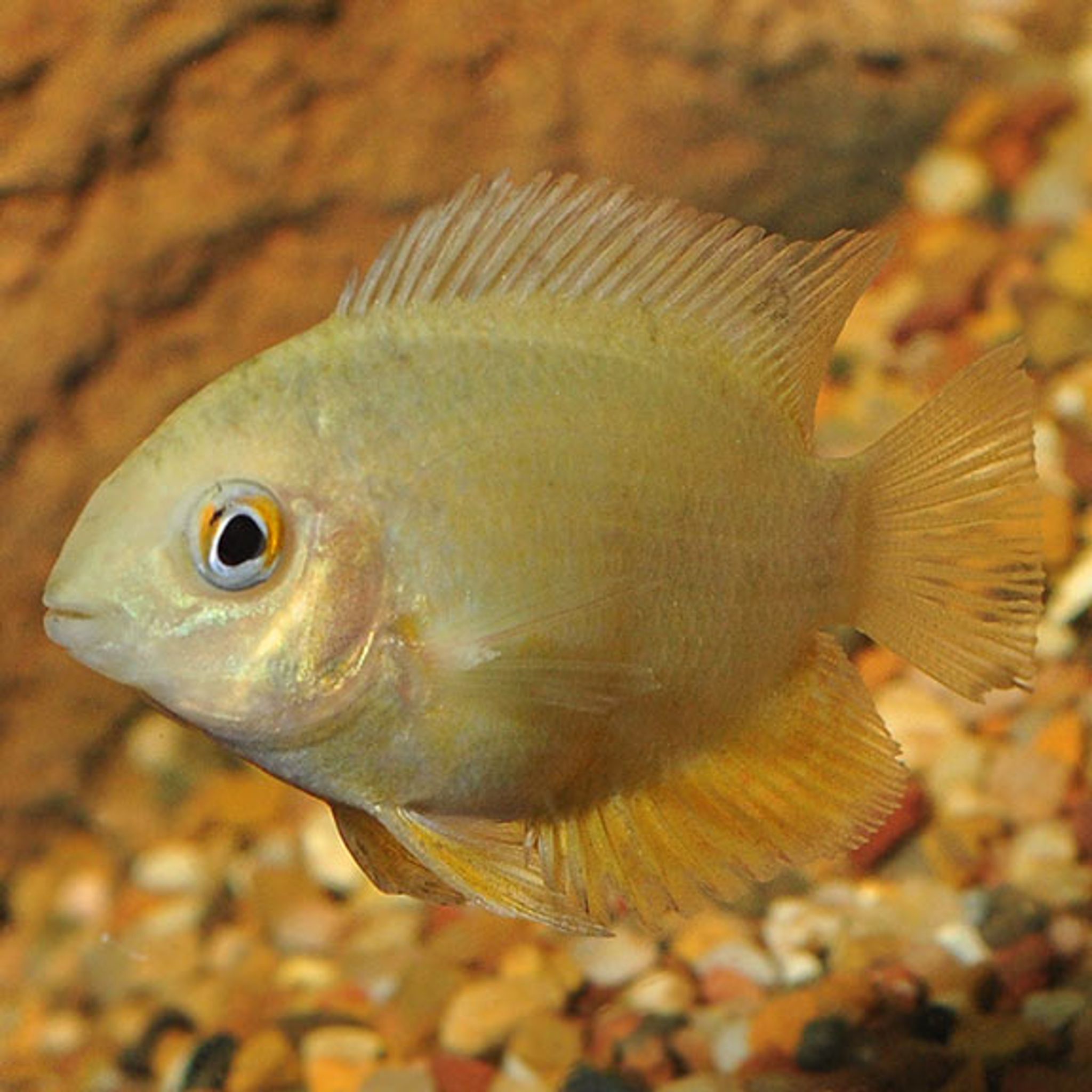

How Big Do Severum Get? Growth Rate, Adult Size and Tank Planning
A severum bought at 1-2 inches can double or triple in size within a year, which catches a lot of new owners off guard. Most severums settle around 8 inches as adults, with well-fed specimens in large tanks occasionally reaching 10-12 inches. Here's the real growth timeline and the tank size math you need before you buy.
Adult Severum Size: What to Actually Expect
Severums are deep-bodied, laterally compressed cichlids with an oval, disc-like profile, so they read as "bigger" than a slimmer fish of the same length. That body shape is part of why undersized tanks feel cramped so quickly — the fish takes up more visual and physical space than its length alone suggests.
For standard length (body only, not counting the tail fin):
- Typical pet-trade adult size: about 8 inches (20 cm)
- Common range across sources: 7-10 inches (18-25 cm)
- Exceptional specimens: 11-12 inches (28-30 cm) in very large tanks with excellent diet and water quality
Treat 8 inches as the number to plan around, and 10-12 inches as the ceiling for a fish that's had ideal conditions for years. Measurement method matters here too — total length (including the tail fin) will always read larger than standard length, which is part of why size claims vary so much between sources.
Severum Growth Rate: A Month-by-Month Timeline
Severums are fast-growing cichlids. Juveniles can gain roughly 0.5 inch per month through their first year, then growth slows sharply once the fish passes 7-8 inches. Most of a severum's total adult length is reached within 18-24 months; after that, gains are small and gradual.
| Age | Approximate Length | Notes |
|---|---|---|
| At purchase | 1-2 in (2.5-5 cm) | Common juvenile size in stores |
| 3 months | 2.5-3.5 in (6-9 cm) | Rapid early growth |
| 6 months | 3.5-4.5 in (9-11 cm) | Still climbing steadily |
| 12 months | 5-6 in (13-15 cm) | Growth rate starts to plateau |
| 18 months | 6.5-7.5 in (17-19 cm) | Approaching adult size |
| 24 months | 7-8+ in (18-20+ cm) | Near-final size for most fish |
| 3+ years | 8-10 in, rarely to 12 in (20-30 cm) | Slow incremental growth only |
This table is a general guide, not a guarantee — genetics, diet, and tank conditions shift these numbers in both directions.
Tank Size: Matching the Aquarium to the Adult, Not the Juvenile
The single biggest mistake in severum keeping is buying a tank sized for the fish you have today instead of the fish you'll have in a year. A severum purchased at 1.5 inches for a 20-gallon tank will likely need a full upgrade before its first birthday.
Single Severum
- Minimum: 55 gallons is the safer starting point; 45 gallons is an absolute floor and only realistic for smaller color varieties kept alone.
- Footprint over height: a long, wide tank matters more than a tall one. Severums are active horizontal swimmers, so look for at least 48 inches long by 18 inches wide rather than a tall, narrow profile. A tank that looks generous by gallon count but is tall and narrow won't give an 8-10 inch fish enough room to turn and cruise.
Pair or Small Group
- Recommended: 100 gallons or more for a pair, especially if there's any chance they'll pair off and breed.
- Bare minimum: 75 gallons can work for a pair but leaves little buffer for territorial disputes.
- Rule of thumb: add roughly 50 gallons for each additional severum beyond the first.
Matching Adult Size to Standard US Tank Sizes
| Tank | Typical Footprint | Best Fit |
|---|---|---|
| 40-gallon breeder | 36 x 18 in | Juvenile grow-out only, temporary |
| 55 gallon | 48 x 13 in | One adult, minimum long-term home |
| 75 gallon | 48 x 18 in | One adult with real swimming room, or a cautious pair |
| 90 gallon | 48 x 18 in (taller) | Pair, more forgiving on aggression |
| 120 gallon | 48 x 24 in | Pair/trio, or a mixed South American cichlid community |
If you're starting with a juvenile in a smaller quarantine or grow-out tank, plan the upgrade to the adult-size tank within the first 6-9 months, not after the fish already looks cramped. Growth is front-loaded, so waiting for visible crowding means you're already behind.
Male vs. Female Severum: Size and Appearance
Sexing severums by size alone is unreliable, but there's a general pattern:
- Males tend to grow slightly larger and develop a more pronounced nuchal hump (a fatty bump on the forehead) along with longer, more trailing fin extensions as they mature.
- Females typically stay a bit smaller and keep shorter, more rounded fins.
Treat this as a general cichlid tendency rather than a precise rule — individual variation is common, and the size gap between sexes is usually modest, not dramatic.
Do Varieties Differ in Size?
Color form does correlate loosely with typical adult size:
- Standard green or gold severum: typically 7-8 inches
- Red-shoulder / rotkeil types: often cited at the larger end, 8-10 inches
- Some regional or wild-type variants: can top out smaller, around 7 inches
None of these are hard rules — tank conditions and diet still have more influence on final size than color variety alone.
Diet, Growth, and Avoiding a Stunted Adult
Severums are omnivores, and diet quality directly affects whether a fish reaches a healthy adult size or ends up stunted and unwell. A solid feeding approach includes:
- Quality pellets or flakes formulated for cichlids as a base diet
- Occasional live or frozen protein such as bloodworms or brine shrimp
- Regular vegetable matter (blanched vegetables, a gel food, or spirulina-based foods) since severums graze on plant material in the wild
Avoid feeding mammalian meat like beef heart or liver regularly — the fat content is poorly suited to fish digestion and can cause bloating or organ issues over time. A fish that looks unusually round isn't necessarily "big and healthy" — it may be showing early signs of a poor diet rather than good growth.
Feed juveniles small amounts multiple times a day to support steady growth, tapering to one or two feedings daily as they mature.
Lifespan and Long-Term Health
Well-cared-for severums typically live 8-10 years in captivity, with some sources citing a broader 5-10 year range depending on care quality. Water quality is the biggest lever here — stable parameters and regular water changes support both healthy growth and a longer lifespan, while inconsistent conditions can slow growth and shorten life expectancy even if the fish still reaches a reasonable size.
Target water conditions for healthy growth:
- Temperature: 75-85°F (24-29°C), with breeding pairs preferring 78-81°F (26-27°C)
- pH: 6.0-7.5
- Hardness: soft to moderate, roughly 4-15 dGH
Consistency matters more than hitting an exact number — swings in temperature or pH are more stressful than being slightly outside the "ideal" range.
Tank Mates: Sizing for the Adult, Not the Juvenile
Because severums grow fast and end up medium-to-large, compatibility should be judged against their adult size, not how they look at purchase. Reasonable tank mates once both fish are near-adult size include other similarly sized South American cichlids, larger tetras, gouramis, and angelfish. You can browse compatible options among freshwater angelfish or other American cichlids suited to a similar adult footprint.
Avoid pairing a severum with small permanent tankmates like dwarf gouramis or small tetras — fish that are safe with a 2-inch juvenile can become prey once the severum matures.
Common Mistakes to Avoid
- Buying a "for now" tank. A 20-30 gallon tank meant to be temporary often becomes permanent by accident, forcing a stressful rehoming or rushed upgrade within 6-12 months.
- Choosing height over length. A tall, narrow tank can hold more gallons on paper but shortchanges a laterally active swimmer on the horizontal space it actually needs.
- Skipping the extra-gallon buffer for groups. Adding a second or third severum without roughly 50 extra gallons per fish invites territorial aggression and fin damage.
- Assuming juvenile size predicts adult size. A 1-2 inch juvenile can hit 6+ inches within a year — plan the endpoint, not the starting point.
- Overfeeding fatty protein. Diet mistakes show up as bloating or poor health, not healthy size.
- Neglecting water changes. Inconsistent water quality can produce a stunted, less healthy adult even if the fish technically survives to full size.
Frequently Asked Questions
How big does a severum get in a 55-gallon tank?
A severum can reach its typical adult size of roughly 7-9 inches in a 55-gallon tank, but this is a tight minimum for one adult long-term. If you can plan for a 75-gallon tank or larger from the start, you'll have more room to spare as the fish reaches full size.
Do severums stop growing?
Growth slows dramatically after about 18-24 months and once the fish reaches roughly 7-8 inches. Very slow, incremental growth can continue for several more years, but the dramatic early gains are over by that point.
How fast do severum cichlids grow?
Juveniles typically gain about 0.5 inch per month during their first year, which is fast for a cichlid. Growth slows noticeably after the first year, with most of the fish's total length gained within the first two years.
What is the biggest severum size ever recorded or kept?
Outlier reports put exceptional specimens at 11-12 inches, achieved in large, well-maintained tanks with excellent diet and water quality over several years. This isn't typical — most pet-trade severums max out closer to 8-10 inches.
Can severums live with angelfish or oscars?
Severums can coexist with size-appropriate, similarly tempered tankmates like angelfish once both fish are near adult size. Pairing a full-grown severum with a much smaller fish, or introducing it alongside a considerably larger oscar as a juvenile, raises the risk of bullying or predation.
Do male severums get bigger than females?
Generally yes — males tend to grow slightly larger and develop a more pronounced nuchal hump and longer fin extensions as they mature, while females stay a bit smaller and more compact. The size difference is usually modest rather than dramatic.
Why is my severum not growing?
Slow growth is usually tied to tank size, water quality, diet, or stress. Check that the tank isn't undersized, that water changes are frequent and consistent, that the diet includes varied protein and vegetable matter, and that tankmates aren't causing chronic stress or competition for food.
What size tank do I need for two severums?
Plan for 100 gallons or more for a pair, especially if breeding behavior is a possibility, with 75 gallons as a bare minimum that leaves little room for territorial disputes. A long, wide footprint matters as much as the total gallon count.
Ready to plan your setup around an adult-size fish from day one? Browse glass tanks sized for long-term cichlid housing, or explore American cichlids on FishyHub to find a severum or compatible tankmate suited to your tank's footprint.


