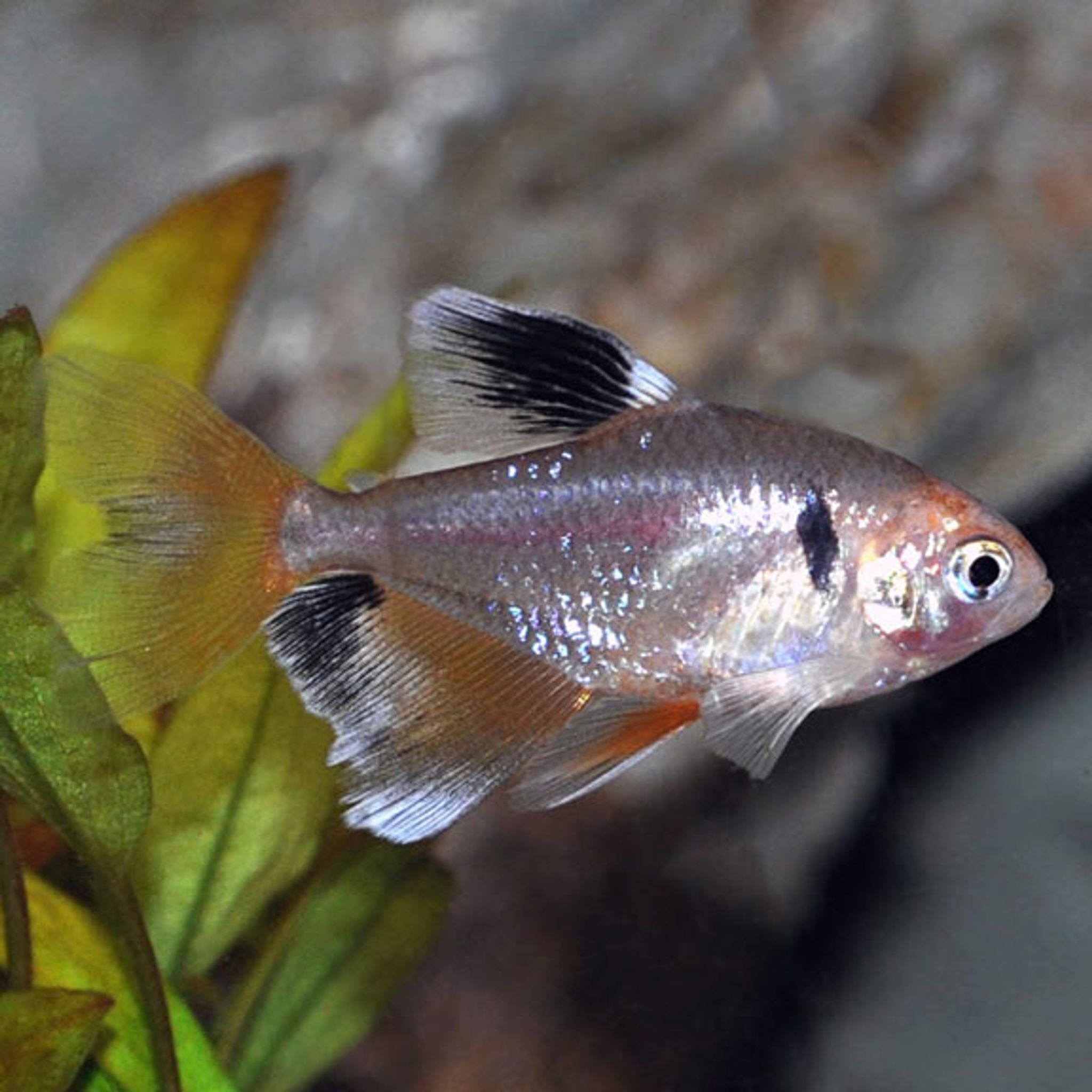
How Big Do Serpae Tetra Get? Growth Rate, Adult Size and Tank Planning
A full-grown serpae tetra tops out at roughly 1.5–2 inches (4–5 cm), with about 1.75 inches (4.5 cm) being the realistic average for most home-aquarium fish. That number alone undersells them, though — serpaes are deep-bodied, surprisingly strong swimmers, and their tank needs are built around behavior, not just body length. Here's the size math, the growth timeline, and how to translate both into a tank and school size that actually works.
Adult Size: The Real Range
Sources vary between a flat 1.5 inches and an upper limit of 2 inches, and both are correct in context. Genetics, diet, and water quality all shift where an individual fish lands in that range:
- Typical adult length: about 1.75 in (4.5 cm)
- Lower end: 1.5 in (4 cm), common in captive-bred stock from smaller genetic lines
- Upper end: up to 2 in (5 cm), occasionally exceeded slightly by wild-caught specimens with more genetic size variation
- Rare outliers: larger individuals do turn up, but they're the exception, not something to plan a tank around
The size discrepancy across different sources partly comes down to measurement method. Standard length measures from the snout to the base of the tail fin, while total length includes the caudal fin itself. A serpae tetra measured by total length will read noticeably longer than the same fish measured by standard length, which explains why one source says 1.5 in and another says 2 in for what might be a genetically identical fish.
Why They Look Bigger Than the Number Suggests
Serpae tetras are laterally compressed — tall and flat-sided relative to their length, rather than torpedo-shaped like a cardinal or neon tetra. A 1.75 in serpae has noticeably more body depth and visual mass than a slim tetra of the same length, so it reads as a "bigger" fish in the tank even though the length measurement is unremarkable. This body shape is also part of why they're such capable swimmers for their size.
Growth Rate: A Month-by-Month Framing
Most care guides state a final size without explaining how a fish gets there, which leaves new owners guessing whether their tetras are on track. Here's the rough trajectory under good conditions:
| Age / Stage | Approximate Size | Notes |
|---|---|---|
| At purchase (juvenile) | 0.75–1 in (2–2.5 cm) | Store tetras are typically far from full size — a common misjudgment point |
| 5–6 weeks in a new tank | Little visible change | Growth can appear "stalled" here; this is normal, not stunting |
| 4–6 months | Near full length | Most size gain happens in this window with warm water and varied food |
| 6–8 months | Full size and full color | Adult red intensity and body depth finish developing here |
Growth slows sharply after the first few months of rapid development. A fish that seems to plateau at five or six weeks hasn't stopped growing for bad reasons — that's simply where the growth curve flattens before the next push toward full size. Judging future tank needs from a pet-store specimen is one of the most common sizing mistakes, since a fish that looks half-grown in a display tank is, in fact, roughly half-grown.
Do Males or Females Get Bigger?
The difference is modest, not dramatic. Females tend to be slightly larger and rounder-bodied, especially when gravid (carrying eggs), while males run slimmer and typically show more intense red coloration during breeding displays. Neither sex is meaningfully harder to house — the distinction matters more for breeding setups than for general stocking decisions.
What Actually Drives Growth Rate
Genetics sets the ceiling, but husbandry decides whether a fish reaches it:
- Diet: A protein-rich, varied diet — flake or pellet supplemented with frozen or live bloodworms, brine shrimp, and daphnia — supports faster, fuller growth than flake alone.
- Temperature: Consistently warm water in the 72–79°F range keeps metabolism (and growth) running at a healthy pace; cold or fluctuating temperatures slow it down.
- Water quality: An uncycled tank or ongoing ammonia/nitrite exposure stunts growth and shortens lifespan — this is one of the most damaging and avoidable mistakes with juvenile fish.
- Group size and stress: Overcrowding or too-small a group increases stress and aggression, which can suppress growth and produce an uneven-looking school where some fish lag noticeably behind others.
Water Parameters for Healthy Growth
Serpae tetras are more adaptable than some species-specific sources suggest. A wider, more accurate range:
- Temperature: 72–79°F (22–26°C)
- pH: roughly 5.5–7.8, though closer to neutral or slightly acidic brings out the best color and supports breeding
- Hardness (dGH): moderately tolerant, in the range of about 4–20 dGH — treat this as "moderate hardness tolerant" rather than pinning an exact figure, since sources differ
Soft, slightly acidic water mimics their native Amazon basin blackwater habitat, but serpaes handle typical US tap water parameters without issue — one myth worth retiring is the idea that all tropical fish need near-identical, tightly controlled parameters. Serpaes are one of the more flexible schooling tetras on that front.
Tank Size for Full-Grown Adults
This is where the "small fish" label misleads people. Despite a max length under 2 inches, serpae tetras are strong, active swimmers that use a lot of horizontal space — length of tank matters more than height.
- Minimum: a 20-gallon long tank for a school of 6
- Comfortable: 29–30 gallons, which gives real margin, dilutes aggression across more space, and supports a larger, calmer group
- Ten-gallon claims: occasional anecdotal mentions of 10 gallons being workable exist, but this is undersized in practice — treat 20 gallons as the genuine floor, not a marginal option
A simple stocking formula: budget roughly 3–4 gallons per fish for a serpae school, with the 20-gallon/6-fish and 30-gallon/10-fish pairings as your two reference points. Fewer gallons per fish than that tends to produce the cramped, skittish behavior and faster water-quality swings that undermine both growth and color.
School Size: More Than a Minimum
Six is the absolute floor, but temperament improves visibly with more fish. A larger school spreads aggression across more targets instead of one fish getting singled out for fin-nipping — which is instinctive shoaling and foraging behavior, not something correctable through "training" or extra feeding.
| Tank Size | Realistic School Size |
|---|---|
| 20 gallons (long) | 6–8 |
| 29–30 gallons | 10–12 |
Buying too few at once (under 6) is one of the most common setup mistakes — it drives stress-related fin-nipping and can produce uneven growth within the group, since a stressed, understocked school doesn't feed or behave normally.
Tankmates Given Their Adult Size and Behavior
A serpae's small final size doesn't make it a gentle community fish. Avoid slow-moving or long-finned species — bettas, angelfish, and fancy guppies are classic targets for fin-nipping regardless of how well-fed or well-schooled the serpaes are. Better pairings are similarly fast, robust fish of comparable or larger size: other hardy tetras and tetra species, barbs, corydoras, or larger peaceful cichlids in a big-enough tank.
Lifespan and Long-Term Size
Serpae tetras typically live 5–7 years with good care, and they hold close to their maximum size for nearly all of that span once they finish developing around the 6–8 month mark. That's a long stretch to stock around — sizing the tank and school for adult behavior from day one avoids a re-do a few months in.
Aquarium Equipment Essentials
A basic setup that supports healthy growth and natural coloring:
- Filter sized for the tank's volume with gentle-to-moderate flow (serpaes don't love strong current)
- Heater with thermostat to hold the 72–79°F range consistently
- Thermometer for a quick daily check
- Dim-to-moderate lighting — bright light makes serpaes shy and washes out their color
- Dark, fine substrate (gravel or sand) to bring out natural red tones
First Aquarium Checklist
For anyone setting this up for the first time, a bigger tank is genuinely easier to stabilize than a small one — more water volume buffers swings in temperature and chemistry. A practical checklist:
- Tank and stand (20 gallons long is the sensible starting point, not a small starter kit)
- Filter and heater
- Thermometer
- Water conditioner
- Master test kit
- Substrate and decor/plants for cover
- Net and gravel vacuum
Cycle the tank fully with a conditioner and starter bacteria before adding any fish, then test water weekly through the first few months. Skipping the cycling step and adding a full school to fresh water is a common and costly mistake — ammonia and nitrite spikes can stunt or kill juveniles before they ever reach adult size.
A Few Budget-Friendly Setup Ideas
- Extra mechanical filtration: inexpensive polyester fiber fill packed into a filter compartment adds cheap, effective mechanical filtration.
- Ice-cube-tray portioning: freeze bloodworms or brine shrimp in an ice-cube tray for pre-measured, mess-free feeding portions.
- A floating-plant ring: an embroidery hoop floated at the surface keeps cover plants contained in one area and provides the dimmer, shaded zones serpaes prefer.
- DIY drip or auto top-off setups: simple repurposed-tubing arrangements help maintain stable water levels and parameters between full water changes, which supports steadier growth.
A Quick Glossary
A few terms worth knowing before shopping or reading further:
- dGH / hardness: a measure of dissolved minerals (mainly calcium and magnesium) in the water
- dKH: carbonate hardness, related to a tank's buffering capacity and pH stability
- Cycling: establishing the beneficial bacteria colony that converts ammonia to less-toxic compounds before fish are added
- Schooling vs. shoaling: schooling fish swim in a coordinated, synchronized group; shoaling just means staying loosely together — serpaes do some of both depending on comfort level
- Fin-nipping: a fish biting at the fins of tankmates, often instinctive foraging or shoaling-related behavior rather than random aggression
- Standard length vs. total length: standard length excludes the tail fin; total length includes it, which is why size figures for the same fish can differ
Not sure what's in a bag labeled "WC" (water change) or "dGH" on a forum or product listing? These acronyms show up constantly in freshwater care discussions, so having them defined up front saves a lot of confusion later.
Common Mistakes to Avoid
- Buying under 6 fish: triggers stress-driven fin-nipping and uneven growth — buy 6 minimum, ideally 8–10 at once.
- Undersized tank (under 20 gallons): fish appear cramped and skittish, water quality swings faster, and both growth and coloration suffer.
- Mixing with long-finned or slow tankmates: instinctive nipping behavior, not something a well-fed group grows out of.
- Assuming small size means low bioload: an active school of a dozen fish still needs real filtration and regular water changes — undersized equipment leads to poor water quality that suppresses growth.
- Judging size from the store tank: juveniles are often half their eventual length, which leads new owners to underestimate the tank size they'll actually need.
- Skipping the cycle: adding a school to an uncycled tank risks ammonia and nitrite spikes that stunt or kill fish before they mature.
Frequently Asked Questions
How big does a serpae tetra get in inches/cm?
Adults typically reach 1.5–2 inches (4–5 cm), with about 1.75 inches (4.5 cm) being the most commonly seen size in home aquariums.
How fast do serpae tetras grow?
Most of their size is gained in the first 4–6 months given warm water and a good diet, with full size and color development by around 6–8 months. Growth levels off sharply after the initial fast-growth period.
Do serpae tetras get bigger in a bigger tank?
No — tank size doesn't increase a fish's genetic maximum length. A properly sized tank (20+ gallons) does support healthier, fuller growth and better coloration than a cramped or poorly maintained one.
Are male or female serpae tetras bigger?
Females are usually marginally larger and rounder-bodied, especially when carrying eggs, while males tend to be slimmer with more intense breeding color. The difference is small enough that it rarely affects stocking decisions.
How many serpae tetras can I keep in a 20-gallon tank?
A school of 6–8 is the realistic ceiling for a 20-gallon long tank. Stepping up to 29–30 gallons supports a fuller, calmer group of 10–12 fish.
Why are my serpae tetras not growing?
The usual culprits are poor water quality, a low-protein or insufficient diet, overcrowding stress, or too small a group or tank. Check parameters and feeding routine first, then reassess school and tank size.
Can serpae tetras live with bettas or guppies given their size?
Not recommended. Their fin-nipping behavior targets slow-moving, long-finned fish regardless of how small the serpaes themselves are, so bettas, angelfish, and fancy guppies are best kept separate.
What's the lifespan of a serpae tetra, and does size change over that time?
Serpae tetras typically live 5–7 years, and they hold close to their maximum size for nearly the entire span after reaching maturity around 6–8 months old.
Ready to plan a school around these numbers? Browse tetras and other small community fish alongside sized-right glass tanks and filtration on FishyHub to put together a setup that fits a full-grown, fully active serpae tetra school.


