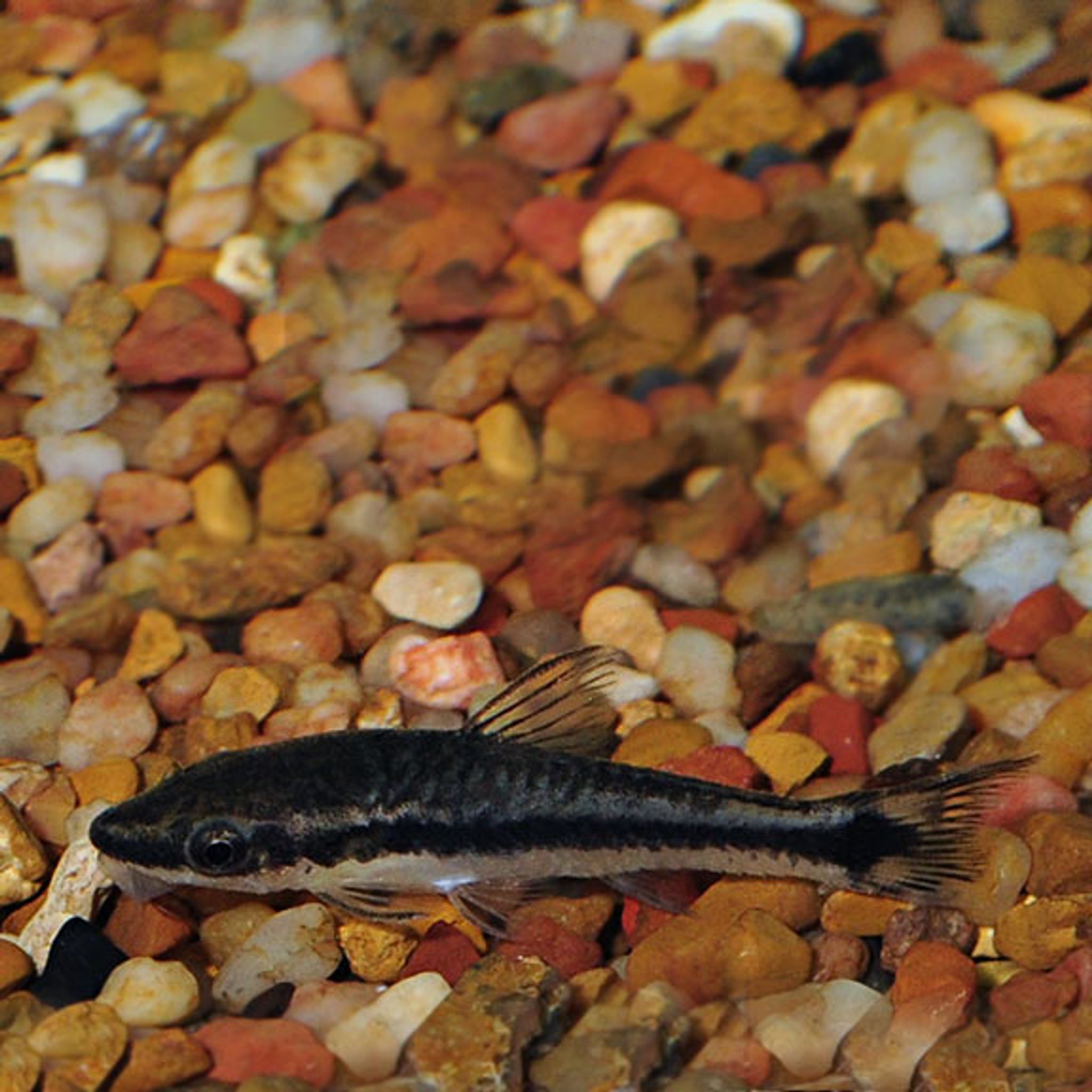

How Big Do Otocinclus Catfish Get? Growth Rate, Adult Size and Tank Planning
A common otocinclus tops out around 1.5 to 2 inches (3.8 to 5 cm) as an adult, with rare individuals reaching 2.5 inches under ideal conditions. The bigger planning question isn't how big one oto gets — it's how much space a proper group needs, since these are shoaling fish that must be kept in numbers, not singly.
Adult Size by Species
"Otocinclus" isn't one fish — it's a genus with several species sold under similar-looking labels, and their adult sizes vary more than most buyers realize.
- Common oto (O. vittatus/affinis, the typical fish sold in stores): 1.5–2 in (3.8–5 cm), occasionally 2.25–2.5 in in ideal conditions.
- Genus-wide range: roughly 1 in to 2.2 in (about 2.4–5.5 cm) across all named Otocinclus species.
- Zebra oto (O. cocama): 1.7–1.8 in (4.3–4.5 cm), similar in size to the common oto but a distinct, pricier, and more delicate species.
Most fish sold as generic "otos" in US pet stores are the smaller common types, so the 1.5–2 in figure is the number to plan around unless you know you're buying a specific named species.
| Type | Adult Size | Difficulty | Typical Price Point |
|---|---|---|---|
| Common oto | 1.5–2 in (3.8–5 cm) | Moderate | Budget |
| Zebra oto | 1.7–1.8 in (4.3–4.5 cm) | Hard | Premium |
| Genus range (all species) | 1–2.2 in (2.4–5.5 cm) | Varies | Varies |
A note on sourcing: some marketing copy for algae-eating "wafer fish" quotes a broader "2–3 inch" range. That figure overstates most real-world otos — treat 1.5–2 in as the reliable norm and anything past 2.5 in as an outlier, not the expectation.
Growth Rate: What to Expect Month by Month
Oto growth is slow enough that keepers often assume something is wrong when nothing is. Fry are nearly invisible at hatching and grow only about 1 mm per month early on.
| Age | Approximate Size |
|---|---|
| Newly hatched | Nearly invisible |
| 1 month | ~0.5 in (1.3 cm) |
| A few months | ~1 in (2.5 cm) |
| 10–12 months | Full adult size, 1.5–2 in (3.8–5 cm) |
Because the growth curve stretches out over roughly a year, don't expect visible week-to-week change. A healthy oto that looks the "same size" over a month of casual observation is normal, not stunted.
What Speeds Up or Slows Down Growth
Several factors shape both final size and how fast a fish gets there:
- Diet consistency — grazing on algae alone rarely supplies enough nutrition; regular supplemental feeding matters more than genetics for most pet-store fish.
- Water quality and stability — swings in parameters divert energy toward stress recovery instead of growth.
- Tank size and space — a cramped, understocked-for-algae tank limits foraging area.
- Genetics — some individuals and species naturally run larger or smaller.
- Overall health — internal parasites or a rough acclimation period commonly stunt growth permanently.
A practical, underreported detail: consistent daily access to grazing surfaces plus 3–4 supplemental feedings a week produces noticeably steadier growth than sporadic feeding, even when the weekly food total is similar. Little and often beats a big feeding once a week.
Wild-Caught vs. Tank-Raised
Most otos sold in the US are still wild-collected rather than commercially bred. Wild imports often arrive underweight and visibly smaller than their genetic potential, then catch up in size over the following months once they're eating reliably and settled into stable water. If a newly purchased oto looks tiny, that's frequently a starting condition, not a permanent trait — give it a few months of consistent feeding before assuming it's undersized for its age.
Sexing by Size
Once otos reach maturity, size becomes a rough way to distinguish males from females:
- Females: slightly larger and rounder-bodied, typically 1.6–2 in.
- Males: slightly smaller and slimmer, typically around 1.5 in.
This is useful less for breeding purposes and more as a sanity check — if your group has settled at these proportions, they've likely reached full size rather than being stunted.
Tank Planning: Sizing for the Group, Not the Fish
This is where most sizing guides fall short. A 2-inch fish sounds like it needs almost no space, but otocinclus are obligate shoalers — kept alone or in pairs, they stress, hide, and stop eating, which often gets mistaken for illness or stunted growth.
- Absolute minimum: a 10-gallon (38 L) tank for a small group.
- Realistic minimum group size: 6 or more individuals.
- Recommended tank size for a proper school: 15–20 gallons (57–76 L), since a 10-gallon tank is genuinely tight once you account for bioload and swimming space for six-plus fish.
- Zebra otos specifically: a group of 6 is often quoted as needing at least ~13 gallons (49 L), reflecting their added sensitivity.
A simple stocking rule of thumb for an already-planted, mature tank: budget roughly 2–3 gallons per oto once you're past the first six. That gives you room to scale a school of 8 or 10 without guessing.
Because otos typically live 3–5 years with good care, it's worth sizing the tank for the long haul rather than for the group's current small footprint — you won't be resizing this setup every few months the way you might with a fast-growing fish. If you're mapping out a nano or planted community setup from scratch, browsing freshwater livestock options up front helps you plan tankmates and stocking together instead of adding species one at a time.
Water Parameters
Sources vary slightly on exact numbers, but the consensus lands in a fairly narrow band:
- Temperature: 71–79°F (22–26°C)
- pH: 6.0–7.5, slightly acidic to neutral (a merged, slightly conservative target of 6.5–7.5 works well in practice)
- Hardness: soft to moderately hard water, roughly 2–18 dGH/dKH depending on the source
Stability matters more than hitting an exact number. Otos are sensitive to swings and are a poor choice for a brand-new or uncycled tank — introduce them only once a tank is established.
Diet: Why "They Eat Algae" Isn't the Whole Story
Otocinclus are primarily algae, biofilm, and diatom grazers, but that description undersells how much supplemental feeding they actually need. Wild-caught otos in particular need an established tank with existing algae or biofilm present at introduction — dropping them into a sparkling-clean setup is effectively starving them from day one.
Beyond grazing, a healthy diet includes:
- Algae wafers or similar sinking foods
- Blanched vegetables — zucchini, cucumber, spinach
- Spirulina-based foods
- A gel food formulated for grazing fish
Underfeeding is the single most common cause of slow growth and premature death in this species. If you're stocking up on sinking wafers or vegetable-based foods, the food and supplements category covers the supplemental side of an oto's diet.
Choosing an Algae Eater by Algae Type
Otos aren't a universal algae solution — they specialize in soft film and diatom algae on flat surfaces like glass and broad leaves. They do not effectively control hair algae, black beard algae, or cyanobacteria. If one of those is your actual problem, an oto won't fix it; you'll need a different species or a manual/chemical approach instead.
Otos in the Broader Algae-Eater Lineup
Otocinclus are one of several small algae-eating options for planted and nano tanks, alongside nerite snails and amano shrimp. Their appeal is staying small and grazing gently without uprooting plants or overwhelming a small footprint — unlike larger algae-eating catfish that quickly outgrow a nano setup. If you're comparing options, the algae eater category groups several of these small cleanup species together.
Otos vs. Plecos: Why the Size Difference Matters
Because otocinclus and plecos are both loricariid (armored) catfish sold as algae control, it's easy to assume they're just small and large versions of the same fish. They aren't remotely comparable in adult size. Common plecos can reach well over a foot, and even smaller ornamental types like gold nugget or cactus-pattern plecos commonly grow to several inches or more — enough to outgrow the tank they were bought for. Otocinclus, by contrast, stay in the 1–2.2 inch range for their entire lives. If you're weighing a pleco against an oto for algae duty, size alone should settle which one fits your tank long-term — check current stock in the pleco category before assuming a "small" pleco will stay that way.
Common Mistakes
- Adding otos to a brand-new tank. No established algae or biofilm means no food source; wait for visible algae growth or a diatom bloom first.
- Keeping too few. Solitary or paired otos get stressed, hide, and stop eating — this looks like stunted growth but is really starvation or stress.
- Assuming algae alone is enough long-term. It leads to slow wasting and early death without regular supplemental feeding.
- Overcrowding a small tank with a "full" shoal. Six otos in a bare 10-gallon leaves little bioload margin; pair the group with solid filtration and plant cover.
- Mistaking slow growth for illness. Ten to twelve months to reach full size is normal — real stunting looks like a sunken belly, clamped fins, or refusal to eat, not just a fish that "hasn't gotten bigger this week."
- Sudden parameter swings during acclimation or maintenance. This is a leading cause of early deaths in wild-caught stock specifically.
Frequently Asked Questions
How big does an otocinclus catfish get in inches?
Typically 1.5–2 inches (3.8–5 cm) as an adult, with occasional individuals reaching up to about 2.5 inches under ideal conditions. That range covers the common oto most US stores sell.
How long does it take an oto to reach full size?
Roughly 10–12 months from hatching, growing only about a millimeter or two per month. Growth is slow enough that you shouldn't expect visible change from one week to the next.
What size tank do I need for otocinclus?
A 10-gallon tank is the technical minimum, but 15–20 gallons is the more realistic floor for a proper school of six or more. Scale up further for larger groups using roughly 2–3 gallons per additional fish.
How many otocinclus should I keep together?
At least six. They are obligate shoaling fish, and keeping them alone or in pairs causes stress, hiding, and reduced feeding that can look like poor health.
Do otocinclus stay small forever, or can they outgrow a tank?
They stay small for life, topping out around the size of a large coin. That's a meaningful contrast with plecos, which can grow to several inches or more than a foot — tank-outgrowing simply isn't a concern with otos the way it is with larger catfish.
Why is my oto not growing or looks stunted?
The most common causes are insufficient food (not enough algae plus no supplemental feeding), poor or unstable water quality, or simply being a young or recently imported fish still within its normal slow growth window. True stunting shows up as a sunken belly, clamped fins, or refusal to eat — not just a fish that looks the same size as last month.
Can zebra otos and common otos be kept together, and are they the same size?
They're similar in adult size, but zebra otos are more sensitive and considerably pricier. Mixing them is possible, but the tank needs to be run to the stricter, more stable parameters that the zebra oto requires.
What do otocinclus eat besides algae?
Algae wafers, blanched zucchini, cucumber, and spinach, spirulina-based foods, and gel foods formulated for grazing fish. Algae and biofilm alone typically aren't sufficient for consistent long-term health.
If you're ready to plan a school around these numbers, browse current stock in small community fishes to see what pairs well with a group of otos in a properly sized, established tank.


