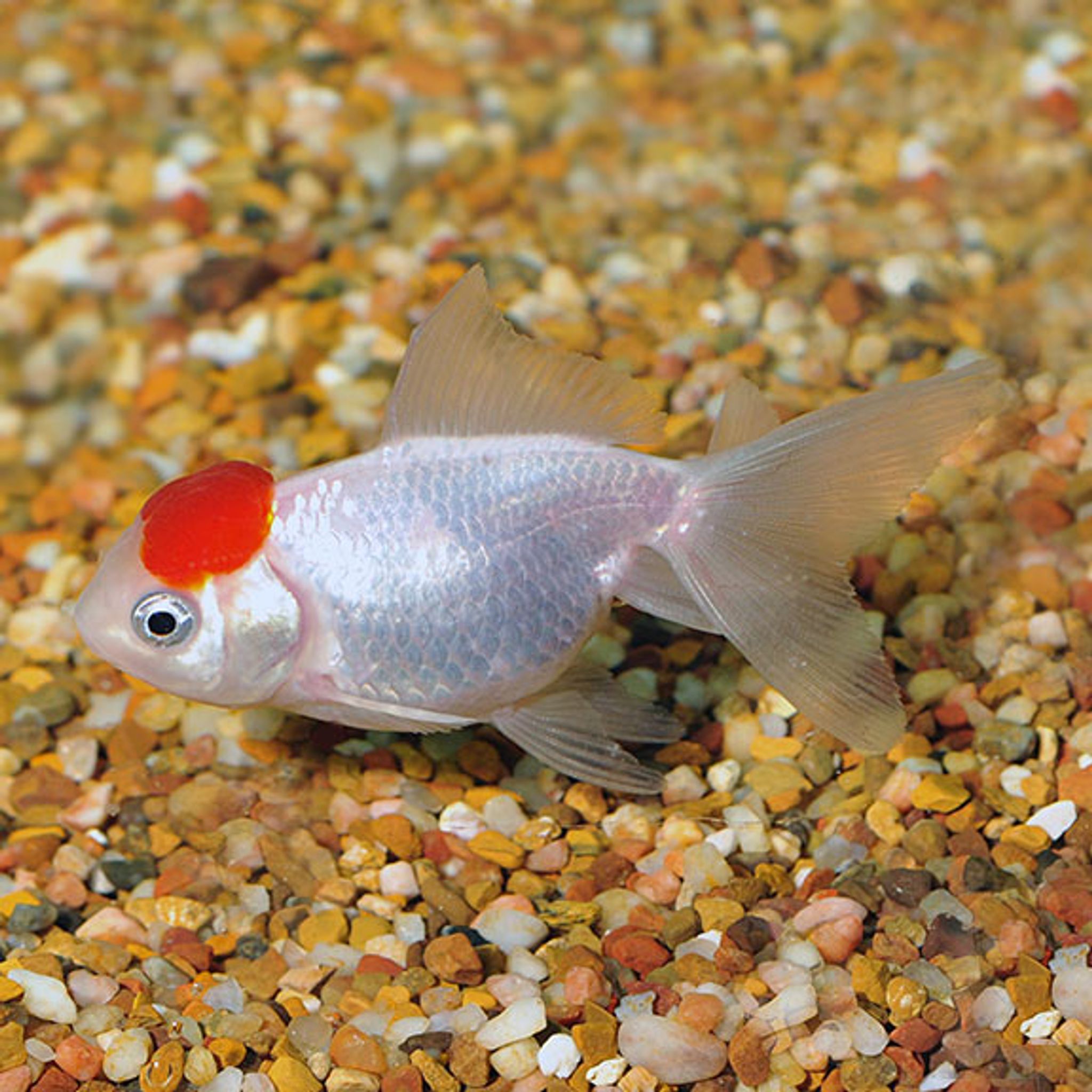

How Big Do Oranda Goldfish Get? Growth Rate, Adult Size and Tank Planning
A healthy tank-kept oranda goldfish typically reaches 8–10 inches (20–25 cm) in body length as an adult, with the wen (head hood) still filling out for a year or two after the body stops growing. This guide breaks down the growth timeline month by month and turns those numbers into an actual tank plan, so you can buy the right setup once instead of upgrading twice.
Adult Size: What to Actually Expect
Most well-kept orandas settle at 8 to 10 inches of body length, measured from nose to the base of the tail fin (the flowing tail itself adds extra visual length but isn't counted). Some individuals push past that to around 12 inches, and there are rare, well-documented specimens reaching 14 inches — almost always fish that spent years in a large pond rather than an indoor tank.
Treat these as a spectrum, not a single target number:
- 8–10 inches — realistic expectation for a well-maintained home aquarium
- 10–12 inches — achievable with excellent genetics, spacious housing, and years of consistent care
- 12–14 inches — outlier territory, seen mainly in outdoor ponds with long growth periods
Orandas are also rounder and deeper-bodied than slim, torpedo-shaped common or comet goldfish. Inch for inch, an oranda carries noticeably more mass, which means its bioload (the waste it produces) is higher than a common goldfish of the same length. Tank-sizing rules built for "goldfish in general" tend to undersell how much filtration and space an oranda actually needs.
Growth Timeline: Size by Age
Growth is fastest in the first year, then gradually tapers as the fish matures. The wen follows its own, slower schedule.
| Age | Approximate body length | Wen development |
|---|---|---|
| 1–2 months | 1–1.5 in (2.5–4 cm) | Not yet visible |
| 3–4 months | 2–3 in (5–7.5 cm) | Early hood growth begins |
| 6 months | 3–4 in (7.5–10 cm) | Slight puffiness starting |
| 1 year | 5–6 in (12.5–15 cm) | Visually obvious hood |
| 2 years | 6–8 in (15–20 cm) | Continuing to fill out |
| 3 years | 8–10 in (20–25 cm) | Near full development |
| 3+ years | Slow, incremental increase | Fully mature, minor filling possible |
During the first year, a well-fed oranda in good water can gain roughly 1 inch every 1–2 months. After that, growth slows considerably, and by the 2–3 year mark most of the body length has been reached even though the wen may keep filling in a bit longer. Final size and how fast a fish gets there both depend heavily on genetics, tank size, water quality, and diet — any one of those can hold a fish well below its potential.
The "Bonsai" Effect: Why Cramped Tanks Stunt Growth
A goldfish kept in a tank that's too small doesn't just grow more slowly — it can genuinely stop growing at a fraction of its potential size, a phenomenon sometimes called "bonsai-ing." The leading explanation involves a combination of accumulated waste products in the water and limited swimming space signaling to the fish's body that conditions aren't right for further growth. This is not a size the fish is happy at — a stunted oranda is a stressed one, and stunting is typically linked to shortened lifespan and organ strain, not a convenient way to keep a smaller fish.
Tank Size Guidance
Minimum vs. Long-Term Target
Gallon recommendations vary across sources mostly because they're answering different questions — "what's survivable short-term" versus "what supports a fish for its whole life." Here's how to read the numbers:
| Fish count | Bare minimum (young fish, temporary) | Long-term target |
|---|---|---|
| 1 oranda | 20 gallons (76 L) | 30 gallons (114 L) |
| 2 orandas | 30 gallons (114 L) | 40 gallons (151 L) |
| 3 orandas | 40 gallons (151 L) | 55 gallons (208 L) |
A 20-gallon tank is only appropriate as a starting point for a small juvenile, paired with a firm plan to upgrade to 30+ gallons before or as the fish reaches adult size — not as permanent housing. As a rule of thumb, add roughly 10 gallons per additional oranda beyond the first, and remember that with this messy, high-waste breed, bigger is essentially always better for long-term water quality.
Shape Matters More Than You'd Think
Prioritize length and surface area over height. A long, shallow-to-moderate tank beats a tall, narrow one for a few concrete reasons:
- Orandas are poor jumpers and climbers, so vertical space is largely wasted swimming room for them
- Surface area drives gas exchange — a wide, flat footprint oxygenates better than a tall column of water
- A prominent wen makes fish slightly top-heavy and less agile; tall tanks with vertical decor give them less room to maneuver comfortably
If you're choosing between two tanks with similar total volume, pick the one with the longer footprint. Browse glass tanks with an eye toward length rather than height when sizing up an oranda setup.
A Simple Upgrade Path
If you're starting with a young oranda, plan around these checkpoints rather than reacting after the fact:
- At purchase (1–3 inches): 20-gallon tank is workable short-term
- By 6 months to 1 year (4–6 inches): move to 30 gallons
- By 2–3 years (adult size): 30 gallons remains the single-fish target; add tank volume if you're keeping more than one
- Beyond juvenile size, if climate allows: an outdoor pond removes the size ceiling entirely and lets a fish grow toward its genetic maximum
Filtration and Water Parameters
Goldfish produce unusually high bioload for their size, so undersized filtration is one of the most common setup mistakes. Run filtration rated for roughly 4–6 times the tank's water volume per hour — a 30-gallon tank benefits from a filter rated near 120–180 gallons per hour of turnover.
Target water parameters:
- Temperature: 65–72°F is the comfortable range; avoid extended stretches below about 60°F
- pH: aim for 7.0–8.0 as a stable target range. Orandas can tolerate brief deviation outside that, but they shouldn't be kept at the extremes of the wider tolerance range (as low as 5.0) long-term
- General hardness: moderate, roughly 5–19 dGH
- Water changes: 25–35% weekly, given the bioload
Always fully cycle the tank before adding fish — ammonia at zero, nitrite dropping to zero, and some nitrate present. Orandas are particularly sensitive to ammonia and nitrite spikes, and the wen tissue is vulnerable to irritation during "new tank syndrome" episodes.
Substrate, Decor, and the Wen Factor
Orandas dig and sift through substrate while foraging, so choose smooth, rounded gravel or sand sized so it can't be swallowed or lodged in the mouth or gills. Skip sharp rock and small pebbles — they're a leading cause of impaction and mouth injury in goldfish that sift substrate naturally. When picking substrate, favor sand or larger smooth gravel over anything pebble-sized.
Keep all hardscape smooth-edged. The wen is soft, vascular tissue that's easily abraded on rough decor, and abrasions can develop into bacterial or fungal infections. A few oranda-specific husbandry notes that generic goldfish care sheets often skip:
- Vision: a large wen can partially obstruct a fish's eyesight, making it slower to find food and more prone to bumping into decor
- Water flow: gentler filtration output is kinder to wen tissue than a strong, direct current
- Tankmates: avoid pairing orandas with fast, slim-bodied common or comet goldfish, or with fin-nipping species — reduced eyesight and slower swimming put orandas at a disadvantage competing for food and can expose the wen to nipping damage
Diet
Feed a balanced sinking or floating pellet formulated specifically for goldfish, supplemented with vegetables like peas and blanched leafy greens. Avoid overfeeding — it's a major driver of poor water quality, and in a body shape already prone to buoyancy issues, overfeeding raises the risk of swim bladder problems on top of degrading the tank.
Lifespan
Well-kept orandas commonly live 10–15 years, with some sources citing up to 15–20 years in especially spacious, well-maintained tanks or ponds. This is realistically shorter than hardy common goldfish (often cited at 20–25+ years) because selective breeding for fancy traits like the wen has traded off some hardiness. Record-holding individual goldfish have reportedly lived into their 40s, but those are extreme outliers under ideal, low-stress conditions over a lifetime — not a realistic planning number.
It's also worth noting that fish rarely die of "old age" in isolation. Death is usually driven by the cumulative effects of water quality, disease, and stress over time — which means a consistently well-run tank meaningfully pushes an oranda's realistic lifespan toward the higher end of its range, while cramped or neglected conditions shorten it considerably. Among common freshwater aquarium fish generally, goldfish already rank among the longest-lived when kept well, so the difference between an average and excellent setup compounds over a decade or more.
Ponds as a Growth Option
For orandas past the juvenile stage, an outdoor pond (where climate allows) removes the size ceiling that even a large tank imposes, letting fish approach or reach their genetic maximum size over several years.
Water Movement and Aeration
Adding a waterfall, fountain, or air pump to a pond improves oxygenation, which supports both fish health and long-term growth potential — stagnant, poorly aerated ponds tend to hold fish back the same way an undersized tank does.
Predators and Pests
Outdoor ponds introduce risks that indoor tanks don't have: herons and raccoons are common predators of pond goldfish, and ponds also deal with pest insects and algae blooms that aquariums are largely shielded from. Netting, adequate depth, and cover plants are typical mitigations.
Seasonal Pond Maintenance
- Spring: clean out accumulated debris and restart or check filtration and UV equipment after winter
- Summer/growing season: normal feeding and monitoring
- Fall: gradually reduce feeding as temperatures drop
- Winter: stop feeding once water temperature falls below about 40°F, since digestion slows dramatically and uneaten food fouls cold water
Common Pond Illnesses
Pond-kept orandas can face the same core issues as tank fish, often triggered by the same root causes: ich, fin rot, and general parasite issues are the most common, along with swim bladder or buoyancy problems tied to the oranda body shape and overfeeding. The general remedy approach is consistent: quarantine any new or symptomatic fish, address underlying water quality first, and medicate as needed rather than treating symptoms alone.
Common Mistakes to Avoid
- Buying a bowl or under-10-gallon tank because the fish is sold small — orandas are always sold as juveniles and outgrow undersized housing within months
- Underestimating bioload based on price or size, leading to under-filtering and infrequent water changes
- Choosing a tall, narrow "designer" tank for looks over a long, low-footprint tank suited to goldfish swimming and gas exchange
- Using sharp or small gravel that risks impaction or gill injury during natural digging behavior
- Overfeeding, which compounds ammonia buildup and raises swim bladder risk
- Skipping the nitrogen cycle, inviting "new tank syndrome" ammonia and nitrite spikes
- Mixing orandas with fast or fin-nipping tankmates that outcompete them or damage the wen
- Assuming small size from a cramped tank is fine — stunted growth is a stress and health issue, not a space-saving bonus
If you're ready to plan your setup, you can browse oranda and other fancy goldfish alongside filters sized for the tank you're building toward.
Frequently Asked Questions
How big does an oranda goldfish get in a tank vs. a pond?
Tank-kept orandas typically top out around 8–10 inches. Pond-kept fish, with more space and years of unrestricted growth, can approach or exceed that range, sometimes reaching close to 12 inches.
How fast do oranda goldfish grow?
Growth is fastest in the first year, with roughly 1 inch of body growth every 1–2 months under good care. The wen and overall body size keep developing for another year or two after that before growth slows substantially.
What size tank does one oranda goldfish need?
Treat 20 gallons as an absolute minimum for a young fish with a plan to upgrade, and 30 gallons as the long-term single-fish target. Add about 10 gallons for each additional oranda you keep.
Can I keep an oranda in a 10-gallon tank?
Not long-term. A 10-gallon tank is suitable only very briefly for a newly purchased, very young fish before moving up — permanent housing that small causes stunted growth and poor water quality.
Do orandas need a filter stronger than other goldfish?
Not stronger than other fancy goldfish, but noticeably stronger than most tropical fish of similar size. Aim for filtration rated at roughly 4–6 times the tank's water volume per hour to handle goldfish-level bioload.
How long do oranda goldfish live?
Typically 10–15 years with consistent good care, and well-maintained tanks or ponds can push toward the higher end of that range or beyond. Cramped housing or poor water quality shortens this considerably.
What water temperature and pH do orandas need?
Roughly 65–72°F and a pH near 7.0–8.0, with stability mattering more than hitting an exact number. Avoid sustained exposure to extremes at either end of the broader tolerance range.
Can orandas live outdoors in a pond?
Yes, in moderate climates, and pond life also supports larger adult size over time. Pond keepers need to plan for predator protection (herons, raccoons) and seasonal care, including stopping feeding once water drops below about 40°F.


