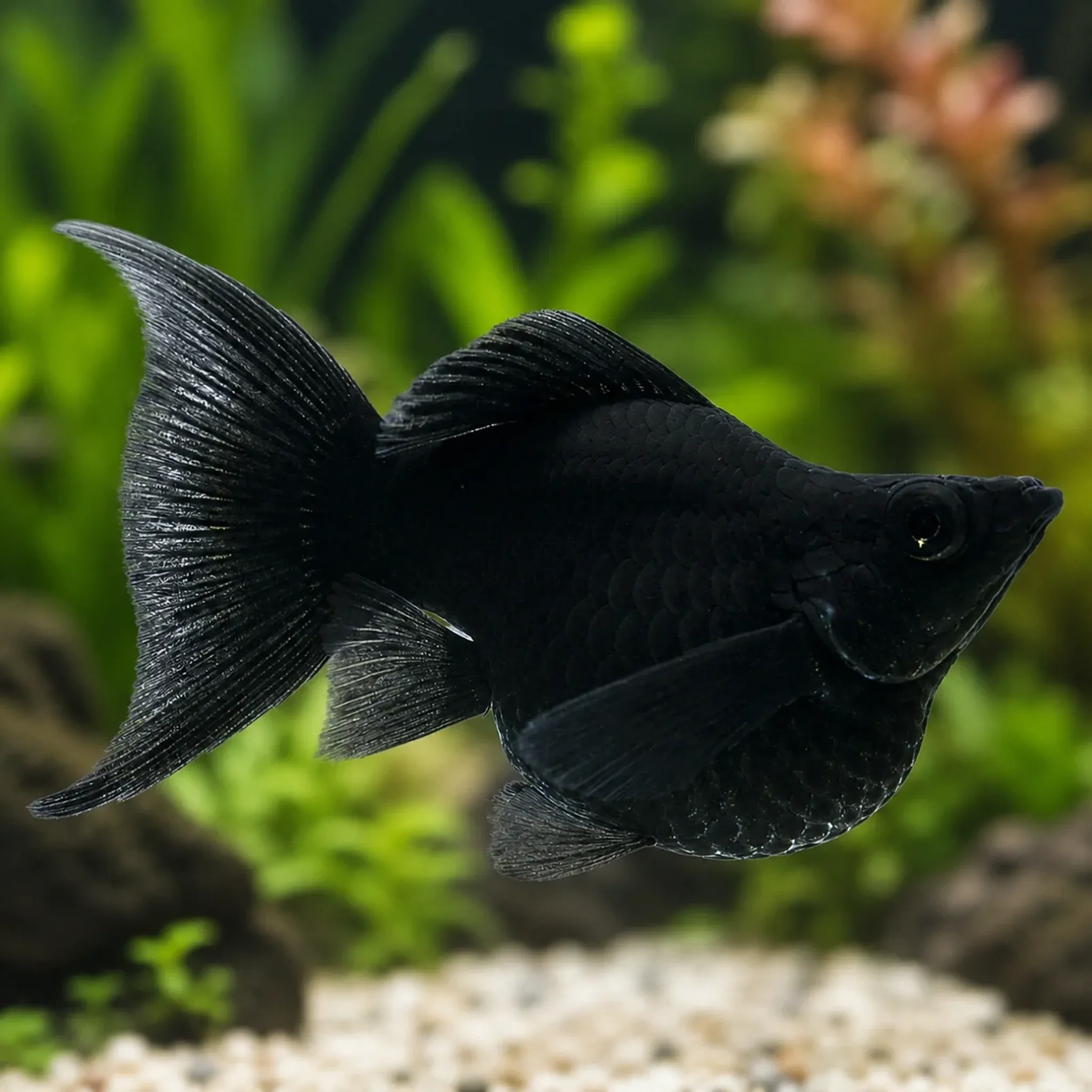

How Big Do Molly Get? Growth Rate, Adult Size and Tank Planning
Most common mollies top out around 3.5–4.5 inches (9–11 cm), but that single number hides a lot of variation — sailfins run bigger, balloon mollies stay small on purpose, and wild-type strains fall somewhere in between. This guide breaks down adult size by variety, maps out the growth timeline from fry to full-grown, and turns those numbers into an actual tank-planning decision.
Adult Molly Size by Variety
"Molly" isn't one fish with one size — it's a group of livebearer varieties bred from a few wild species, and body type changes the numbers considerably. Sorting by variety, rather than quoting one blanket figure, is the only way to get a useful answer.
| Variety | Typical Adult Length | Notes |
|---|---|---|
| Common/black molly | 2.4–3.9 in (6–10 cm) | The standard pet-store molly |
| Dalmatian molly | 3–5 in (8–13 cm) | Spotted pattern, standard fin shape |
| Sailfin molly (males) | 4–5 in (10–13 cm) | Length includes the tall dorsal sail |
| Sailfin molly (females) | 3–4 in (8–10 cm) | Slightly smaller, less showy fin |
| Balloon molly | 2–3 in (5–7.5 cm) | Naturally stunted by a bred spinal curve |
| Wild-type short-fin molly | ~2 in (5 cm) up to larger, population-dependent | Ancestral P. sphenops/mexicana stock |
| Giant sailfin / Liberty molly | 5–6+ in in the wild | Rarely reaches this size in home tanks |
Because the size range spans nearly 4 inches depending on variety, always check which type you're buying before sizing a tank around it. A tank that comfortably fits a trio of balloon mollies can be undersized for the same number of sailfins.
Males vs. Females
Within any variety, females are generally larger-bodied than males. Males compensate with display features — an extended sail-like dorsal fin in sailfin strains, and sometimes sword-like fin extensions in certain lines — plus a gonopodium, a modified anal fin used for reproduction, in place of the female's rounded anal fin. Size alone isn't a reliable way to sex a molly at a glance; fin shape and the gonopodium are the clearer tells.
Growth Rate: From Fry to Full-Grown
Mollies grow quickly early on, then taper off as they approach adult size. A rough timeline:
- Birth: fry are born free-swimming at about 0.2–0.3 in.
- 0–12 weeks: fastest growth phase; feeding and water quality make the biggest difference here.
- ~3 months: roughly half of adult size.
- 6–12 months: full adult size reached, with growth largely leveling off by 9–12 months.
Genetics, diet, and water quality all shift this timeline earlier or later — a fish on a strong varied diet in warm, well-maintained water can reach full size closer to six months, while a poorly fed fish in fluctuating conditions may take the better part of a year and still fall short of its potential size.
Tank Size and Stocking Math
Sizing a tank around a still-growing juvenile molly is one of the most common planning mistakes. A 3-inch molly at the store can become a 4.5-inch adult within months, and stocking decisions should be made for that adult size, not the fish in the bag.
Minimum Tank Sizes
- 10 gallons (38 L): bare minimum, and really only appropriate for a single molly or a small trio of dwarf/balloon types.
- 20 gallons (76 L): realistic minimum for a small group of standard (common/black/Dalmatian) mollies to reach full size and stay healthy.
- 29–30 gallons (110–114 L) or more: recommended once sailfins enter the picture, or for larger groups of 4–6+ mollies of any type, given their length and swimming activity.
Gallons-Per-Fish Rule of Thumb
Beyond a base tank size, plan roughly 3–5 gallons per additional adult molly, with the higher end of that range reserved for sailfins because of their length and more active swimming pattern. A group of five common mollies, for example, lands comfortably in a 20–25 gallon range; the same group of sailfins pushes toward 30+ gallons.
As mollies grow from fry to adults, their bioload grows with them — a tank stocked for fry-sized fish needs its filtration reassessed by the time that group reaches full adult size, since larger, more active fish produce more waste per fish than the same numbers suggest at three weeks old. You can browse filtration options sized to growing bioloads, along with mollies themselves, in FishyHub's freshwater livestock molly listings.
Water Parameters That Support Healthy Growth
Mollies are often sold alongside soft-water community fish, but they actually favor harder, more alkaline water:
- Temperature: 72–82°F (22–28°C)
- pH: 7.5–8.5
- GH: 12–25 dGH
- Nitrates: kept low through regular water changes
A pinch of aquarium salt, or a slightly brackish setup, can benefit growth and overall health — particularly for sailfins and wild-type mollies closer to their natural habitat. That said, salt isn't mandatory for typical captive-bred, pet-store-sourced mollies; freshwater with adequately hard, alkaline water is sufficient for most common and Dalmatian strains. Reserve brackish setups as a plus for sailfin and wild-type fish rather than a blanket requirement.
Diet's Role in Growth
Mollies are omnivores that lean herbivorous, and diet is one of the most common reasons a molly fails to reach expected size. A balanced diet includes:
- Vegetable matter: algae, blanched vegetables, spirulina-based flakes
- Protein: brine shrimp, daphnia, and other small live or frozen foods
Skipping the vegetable component is a frequent mistake — it shows up as slow growth, faded color, or a pinched, thin body shape rather than the fuller-bodied look a well-fed molly should have.
Group Composition and Sex Ratio
Because males pursue females persistently, keep roughly 2–3 females per male. This reduces mating-related stress on females, which in turn supports steadier growth and better long-term condition rather than a female being chased into a constant stress state.
Breeding and Rearing Livebearers
Mollies breed very readily once mature — often the real challenge is having too many fry rather than too few. A few basics:
- Reproduction type: mollies are ovoviviparous, like guppies — eggs develop and hatch internally, and the female gives birth to free-swimming fry rather than laying eggs.
- Gestation: roughly 20–45 days, depending on temperature.
- Signs of an approaching birth: a dark "gravid spot" near the vent that darkens as she nears delivery.
- Repeat broods: every 4–6 weeks once mature. Because females can store sperm, broods can continue even without a male present.
Since adults will eat their own fry, use a planted or divided rearing area to give newborns a chance. Fine first foods — crushed flake, baby brine shrimp, or infusoria — paired with frequent small water changes support a healthy fry growth rate.
Female Condition After Giving Birth
It's normal for a female to look visibly slimmer or hollow-bellied right after dropping a brood. This is a temporary postpartum appearance, not a sign of illness. Good feeding in the following days and weeks helps her recover size and condition before the next brood arrives 4–6 weeks later.
Why Mollies Vary So Much in Size: Wild-Type Background
Wild short-fin mollies (Poecilia mexicana/sphenops) are the ancestral stock behind today's common aquarium strains. They tend to run smaller and more drab in color than the selectively bred sailfin, Dalmatian, and balloon varieties sold in stores. That breeding history is a big part of why "molly" size varies so widely — a wild-type fish, a heavily line-bred sailfin, and a deliberately deformed balloon strain are all marketed under the same common name despite very different growth potential.
Mollies are frequently listed among the easiest freshwater fish to breed, alongside guppies, platies, and swordtails. That ease of breeding is exactly why tank space planning matters — an unplanned colony of fry grows into adult-sized fish fast, and a tank stocked correctly for the original group can be overwhelmed within a few months.
Common Mistakes and Troubleshooting
- Buying juveniles for a small tank and assuming they'll stay small. A molly bought at 1.5 inches can hit 4+ inches, leading to overcrowding.
- Underfeeding vegetable matter. Causes slow growth, faded color, and a thin body shape.
- Using soft, acidic water meant for tetras or other soft-water fish. This depresses growth and increases susceptibility to disease, including the shimmies (a livebearer-specific stress condition tied to poor water conditions).
- Overstocking from unplanned breeding. A fast-breeding colony adds fry faster than expected, straining bioload well past the original stocking plan.
- Mistaking a balloon molly's curved spine for a health issue or a juvenile stage. It's a permanent, selectively bred deformity, not something the fish will grow out of.
- Housing multiple sailfin males with too few females or too little space. Competition over display and mating can lead to fin-nipping, stress, stunted growth, and a shortened lifespan.
Mollies typically live 3–5 years with good care, occasionally longer, so getting the tank size and water chemistry right early pays off over the fish's full lifespan.
Frequently Asked Questions
How big does a molly fish get in a home aquarium?
Most common types reach 3.5–4.5 inches. Sailfin mollies can exceed 4–5 inches, while balloon mollies stay under 3 inches due to their bred body shape.
How long does it take for a molly to reach full size?
About 6–12 months, with the fastest growth happening in the first 2–3 months of life. Diet and water quality can shift this timeline earlier or later.
What size tank does a single molly need?
A 10-gallon tank is the minimum for one fish, but mollies do best in groups, so plan for 20 gallons or more once you're keeping several.
Do mollies need salt in their water?
Not for common, captive-bred mollies — hard, alkaline freshwater is sufficient. A small amount of salt can benefit health and is appreciated by sailfin and wild-type mollies, but it isn't mandatory for typical pet-store stock.
Why is my molly not growing?
Usually a poor diet lacking vegetable matter, suboptimal water hardness or pH, overcrowding, or genetics if it's a balloon strain. Check feeding and water parameters before assuming anything is wrong.
Can mollies stop growing if the tank is too small?
Yes. Cramped conditions and poor water quality can stunt growth permanently, similar to what happens with other livebearers kept in undersized tanks.
How can I tell a male from a female molly by size?
Females are typically larger-bodied. Males have a pointed gonopodium instead of a rounded anal fin, and in sailfin types, a noticeably larger dorsal fin display.
How often do mollies have babies, and does breeding affect size?
Roughly every 4–6 weeks once mature. Frequent breeding can leave females temporarily thinner after each brood, and the resulting fry population grows fast enough to demand more tank space sooner than expected.
Ready to size up your setup? Browse mollies and other livebearers in FishyHub's freshwater livestock small community fish category to find stock that matches the tank size and water conditions you've planned for.


