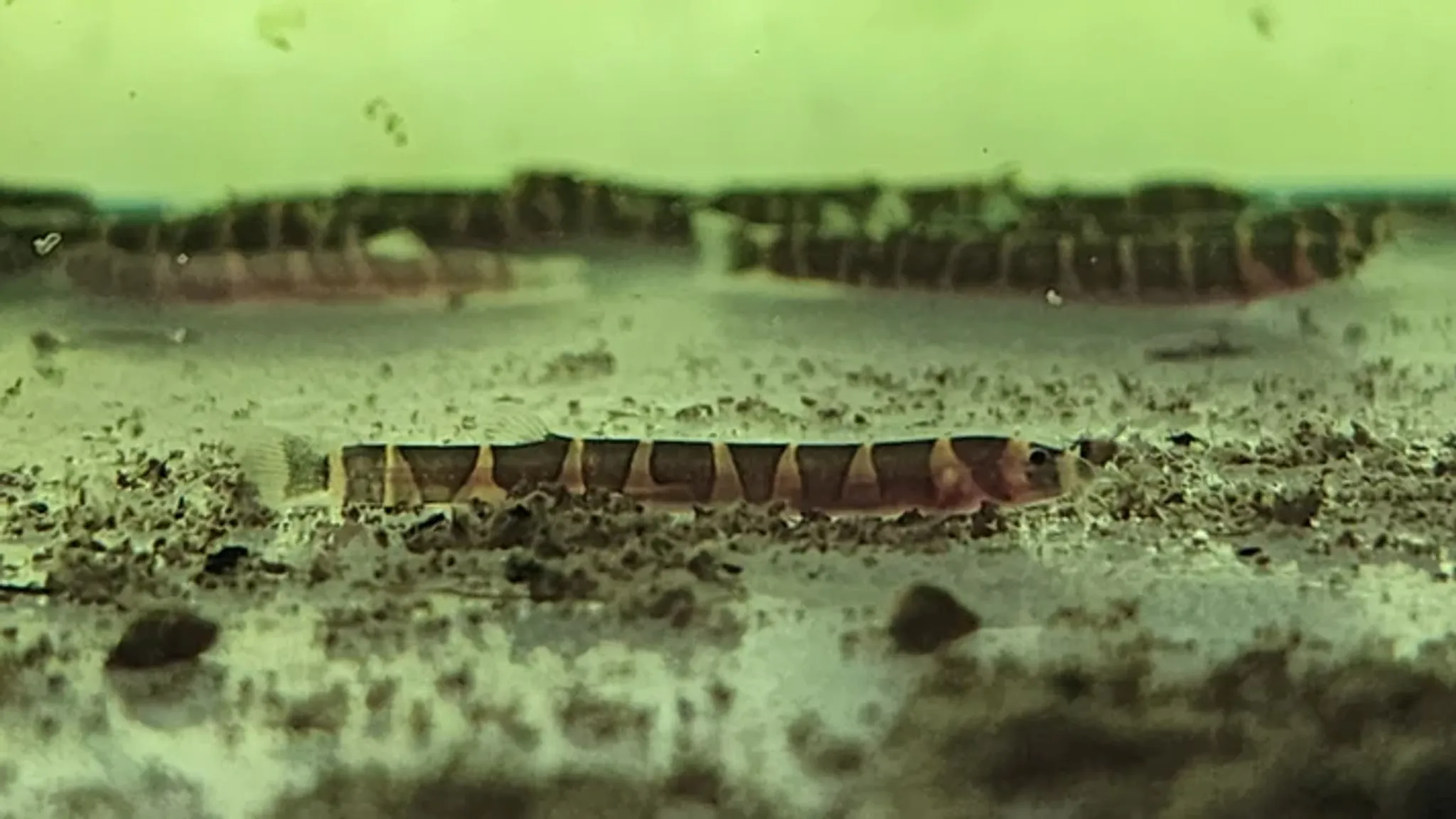

How Big Do Kuhli Loach Get? Growth Rate, Adult Size and Tank Planning
Kuhli loaches typically reach 3 to 4 inches (7.5–10 cm) as adults, with full size usually arriving between 12 and 18 months. The number by itself doesn't tell you much, though — what actually matters for your tank is how fast they get there and what conditions let them reach that size at all.
Adult Size: What to Actually Expect
Most kuhli loaches settle in at 3–4 inches nose to tail once fully grown. Some references cite a lower average closer to 2.75 inches, with 4 inches as a practical ceiling for typical Pangio kuhlii specimens. Treat 3–4 inches as the range to plan around, and don't be surprised if an individual lands a bit under or over it.
A few outliers do get bigger. Related loach species sometimes sold under similar common names — including some Java and "black kuhli" variants — can reach closer to 5 inches. If your loach seems to be blowing past 4 inches, it's worth double-checking the species rather than assuming your care is wrong.
One measurement note that trips people up: quoted lengths are almost always nose-to-tail while the fish is relaxed and stretched out flat, not curled into its usual resting coil. A kuhli loach balled up in a cave looks much shorter than its true length, which is why tank-side size estimates are often off.
Growth Rate: A Month-by-Month Timeline
There's surprisingly little numeric detail out there on kuhli loach growth rate — most care sheets just say "grows slowly" and leave it at that. Here's a practical timeline built from the commonly cited milestones:
| Age | Approximate Length | Growth Stage |
|---|---|---|
| At purchase (store juvenile) | 1–1.5 in (2.5–4 cm) | Newly settled, still fragile |
| 3 months | ~1.5–2 in (4–5 cm) | Fastest growth phase |
| 6 months | ~2 in (5 cm) | Growth still steady |
| 12 months | ~2.75–3 in (7–7.5 cm) | Approaching adult size |
| 18 months | 3–4 in (7.5–10 cm) | Full adult size, growth mostly stopped |
Growth is front-loaded: kuhli loaches pack on the most relative length in their first six months, then keep growing at a slower pace through the rest of year one. By the time they're near 2.75–3 inches, growth slows markedly, and most individuals reach their final adult size somewhere in the 12–18 month window under good conditions. In a stressed or undersized setup, that timeline can stretch out considerably, and final size may end up smaller than genetics would otherwise allow.
What Size Will I Actually Bring Home?
Kuhli loaches sold in stores are almost always juveniles, around 1–1.5 inches. That's easy to mistake for a "small species," but it's really just a young fish. Buyers who assume the store size is the adult size are the ones most often caught off guard six months later when their loach has nearly doubled and a tank that felt spacious suddenly feels tight.
What Affects Final Size and Growth Rate
Several factors interact to determine whether a kuhli loach reaches its full genetic potential:
- Tank size — a cramped tank is the single most common cause of stunted growth in this species.
- Diet quality and consistency — irregular or low-quality feeding slows growth and can leave fish visibly thin even at full length.
- Water quality and stability — swings in parameters stress the fish and divert energy away from growth.
- Stress levels — inadequate hiding spots or bright, exposed tanks keep loaches on edge, which suppresses both appetite and growth.
- Genetics and individual variation — even in identical conditions, some individuals simply grow larger than others.
- Disease history — a loach that's fought off illness, especially early in life, often ends up smaller than an unaffected sibling.
Tank Size and Setup for Proper Growth
Because kuhli loaches are bottom-dwelling and spend most of their time foraging along the substrate, floor space matters more than tank height. A 20-gallon tank is the practical minimum for a proper group, and a long, low footprint beats a tall, narrow one every time.
Substrate and Layout
Kuhli loaches burrow and sift through substrate constantly, and their barbels and smooth skin are easily scratched by sharp material. Use:
- Soft, rounded sand or smooth fine gravel — never sharp or jagged gravel.
- A reasonable substrate depth they can actually dig into, not just a thin dusting.
- Dense cover — driftwood, leaf litter, plants, or tunnels — since a well-hidden loach is a less stressed, faster-growing loach.
A tank that's technically the right gallon count but bare-bottomed with no cover will still produce stressed, slow-growing fish. Substrate depth and hiding density are as much a part of "tank planning" as the gallon number on the label.
Water Parameters
| Parameter | Range |
|---|---|
| Temperature | 70–80°F (21–27°C) |
| pH | 5.5–7.0 (best on the acidic side, below 7.0) |
| GH | 2–10 dGH |
| Water flow | Gentle, mimicking a slow stream |
Some sources cite a wider 73–86°F range, but that's not a target to aim for. Treat 70–80°F as the safe, mainstream window; brief excursions into the mid-80s are tolerated but shouldn't be a long-term condition.
Group Size: Don't Keep Them Alone
Kuhli loaches are social and should never be kept singly or in pairs. Recommendations vary by source: some list 3 as a minimum, others insist on 6 or more. In practice, treat 6+ as the target for natural behavior, visible activity, and better long-term health, and consider 3 only an absolute floor in a genuinely space-limited setup — with the understanding that more is always better for this species.
A stressed, under-grouped loach often hides constantly, eats poorly, and can end up smaller and less healthy than one kept in a proper group. Group size and tank size work together: a group of six needs the swimming and foraging room a 20-gallon-plus long tank provides, not just the water volume.
Feeding for Proper Growth
Kuhli loaches are nocturnal omnivorous scavengers, and this is where a lot of underfeeding happens by accident. They're often assumed to live off leftover food from other fish, but relying on scraps alone typically means underfeeding and slower, weaker growth.
- Feed sinking pellets or wafers as a base diet.
- Supplement with live or frozen bloodworms, brine shrimp, tubifex, or blackworms.
- Feed 1–2 times daily, ideally after lights-out when they're naturally active.
- Target-feed near their hiding spots rather than assuming they'll find enough on their own.
Sizing Up Tank Mates and Stocking
At 3–4 inches and slender, kuhli loaches have a low bioload for their length, so they don't push a stocking plan the way a similarly sized cichlid would. For scale, a full-grown kuhli loach is noticeably longer than a neon tetra or most livebearers but slimmer overall than a corydoras of similar length — useful context if you're trying to picture how it'll look next to established tankmates. Small, peaceful community fish and other calm bottom dwellers generally make good neighbors; FishyHub's small community fish selection is a reasonable place to browse compatible options.
Their eel-like, flexible bodies are the real stocking hazard — not their size. Kuhli loaches can squeeze through surprisingly small gaps, so:
- Use a tight-fitting lid with no gaps at the back or around cords.
- Cover or shield filter intakes — a loach can wedge into an intake slot that looks far too small.
Lifespan and Why It Matters for Planning
Kuhli loaches commonly live around 10 years, with well-kept individuals reaching up to 14. That's a genuinely long commitment — closer to a dog's lifespan than most community fish — so the tank, group size, and filtration decisions you make now are ones you'll be living with for a decade or more, not just through the growth phase.
Common Mistakes That Affect Size and Health
- Assuming store juveniles are full-grown — they're typically 1–1.5 inches and will nearly double or more over the next year.
- Sharp gravel or bare-bottom setups — these stunt growth through stress and can injure barbels and skin.
- Keeping loaches alone or in pairs — this suppresses feeding and normal behavior.
- Relying on leftovers instead of target feeding — a common cause of slow, thin growth.
- Loose lids and open filter intakes — a real risk given how slender and flexible these fish are.
- Confusing kuhli loach with larger look-alike species — sets unrealistic size expectations in either direction.
- Sudden parameter swings — a frequent trigger for stress-related skin issues and slowed growth.
Frequently Asked Questions
How big do kuhli loaches get in a home aquarium?
Most reach 3–4 inches as adults, with some sources citing a lower average around 2.75 inches. A few related look-alike species can reach closer to 5 inches, so confirm the species if your fish seems unusually large.
How fast do kuhli loaches grow?
Growth is fastest in the first 6 months, roughly doubling from a 1–1.5 inch juvenile to about 2 inches. Growth then continues steadily to adult size by 12–18 months, after which it slows sharply.
Does tank size affect how big a kuhli loach gets?
Yes. A cramped or poor-quality tank can stunt growth and leave a loach smaller than its genetic potential, while a stable, properly sized 20-gallon-plus setup supports normal growth to full adult size.
What size tank do I need for kuhli loaches?
A 20-gallon tank is the minimum for a proper group, and a long, low footprint is better than a tall one since these fish spend nearly all their time along the substrate.
How many kuhli loaches should be kept together?
At least 3 as an absolute floor, but 6 or more is the better target for natural behavior, reduced stress, and healthier long-term growth.
How long do kuhli loaches live?
Typically around 10 years, with well-cared-for individuals reaching up to 14. That long lifespan is worth factoring into any tank-size and tankmate decision from day one.
Ready to plan your bottom-of-the-tank lineup? Browse FishyHub's loach selection to compare stock on hand before you settle on group size and tank dimensions.


