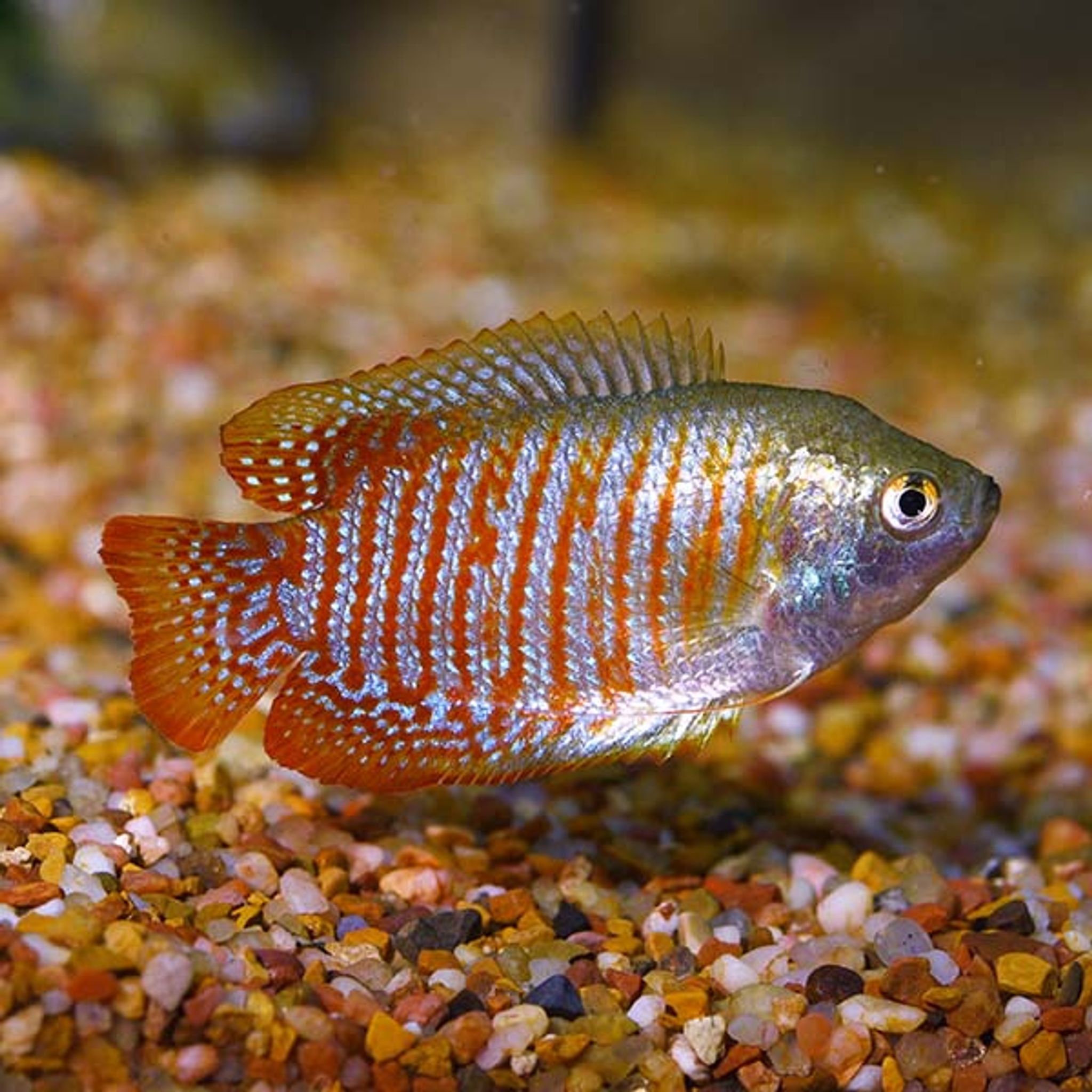

How Big Do Dwarf Gourami Get? Growth Rate, Adult Size and Tank Planning
A full-grown dwarf gourami typically reaches 2 to 3.5 inches (5–9 cm), with males finishing larger and more colorful than females. Most individuals hit that adult size by 9 to 12 months of age, with the fastest growth happening in the first six months. Below is the full growth timeline, the factors that decide where your fish lands in that range, and how to size a tank around it.
Adult Size: What to Actually Expect
The dwarf gourami (Trichogaster lalius) is one of the smaller members of the gourami family, and its adult length is fairly predictable once you account for sex:
- Standard adult range: 2–3.5 inches (5–9 cm)
- Males: typically 3–3.5 inches, deeper-bodied and more brightly colored
- Females: typically 2–2.5 inches, slimmer and duller in color
- Rare outlier: occasional individuals approach 4 inches (10 cm) under ideal genetics and care, but this is not the norm to plan around
Different care guides quote slightly different averages — some center on 2–2.5 inches, others push the range up to 3.5 inches. Treat 2–3.5 inches as the working range for stocking and tank decisions, and treat 4 inches as an upper bound you might see, not a target.
How to Measure Correctly
At-home measurements often run shorter than published figures simply because of measuring technique. Standard length measurements (the ones most size charts use) run from the tip of the nose to the base of the tail fin, excluding the caudal fin itself. If you measure nose-to-tip-of-tail instead, your fish will look bigger than the reference numbers suggest — which explains a lot of "my gourami is already 4 inches" confusion.
Sexing by Size: Males vs. Females
Size is one of the clearest, easiest-to-spot differences between the sexes, and it lines up with other markers:
| Trait | Male | Female |
|---|---|---|
| Adult length | 3–3.5 in (7.5–9 cm) | 2–2.5 in (5–6.5 cm) |
| Body shape | Deeper-bodied | Slimmer, more streamlined |
| Dorsal fin | Long, pointed | Shorter, rounded |
| Coloration | Brighter, more contrast (blue/red patterning) | Duller, more silvery |
If you're trying to sex a young or newly purchased gourami, size alone can be misleading before 6 months of age — pair it with dorsal fin shape for a more reliable read.
Growth Timeline: Month by Month
Dwarf gourami grow fastest early in life and then taper off as they approach maturity. Sources tend to give scattered data points rather than a single timeline, so here's a consolidated version:
| Age | Approximate Length |
|---|---|
| At purchase (juvenile) | 0.5–1 in (1.5–2.5 cm) |
| 1 month | ~1–1.5 in (2.5–4 cm) |
| 3 months | ~1.5–2 in (4–5 cm) |
| 6 months | ~2–2.5 in (5–6.5 cm) |
| 9–12 months | Full adult size, 2–3.5 in (5–9 cm) |
Growth is fastest in the first three to six months, then slows noticeably. A common surprise for new owners: the small, cheap juvenile you bought is nowhere near full size, and it can noticeably double in body length within a few months of good care.
What Determines Final Adult Size
Genetics sets the ceiling, but several everyday factors decide whether a given fish reaches it:
- Diet quality: consistent access to protein-rich food supports steady growth; a poor or inconsistent diet slows it.
- Tank size: an undersized tank, combined with the poor water quality that often comes with it, can stunt growth permanently — the fish never fully catches up even if conditions later improve.
- Water stability: frequent swings in temperature or chemistry stress the fish and divert energy away from growth.
- Genetics/line: some bloodlines simply run larger or smaller, which is part of why average-size reports vary between sources.
- Overall health: chronic illness or stress (including from bullying tankmates) suppresses growth even when food and water are fine.
Water Parameters for Healthy Growth
| Parameter | Target Range |
|---|---|
| Temperature | 77–82°F (25–28°C) |
| pH | 6.0–7.5 (tolerates up to 8.0) |
| General hardness | 4–18 dGH (soft to moderate) |
Some guides list a slightly cooler range (76–78.5°F), but consistency matters more than hitting an exact number — pick a point in the 77–82°F band and hold it steady rather than chasing precision.
Diet for Growth
Dwarf gourami are omnivores. A growth-supporting diet includes:
- A quality flake or pellet as the daily base
- Occasional live or frozen protein — brine shrimp, daphnia, or bloodworms
- Some vegetable matter for digestion and overall condition
Feed small amounts once or twice daily rather than one large feeding; overfeeding is a common cause of bloating that gets mistaken for illness (more on that below).
Tank Planning: Sizing a Tank to the Fish
Because adult size is modest but the species carries a territorial streak, tank recommendations vary more by social setup than by the fish's own footprint.
- Single dwarf gourami: 10 gallons (38 L) as an absolute floor
- Pair or small community: 20 gallons (76 L) recommended
- Each additional gourami or similarly sized tankmate: add roughly 5 gallons (19 L)
So a trio of gourami, or one gourami plus a handful of small community fish, comfortably points toward 20–30 gallons rather than the 10-gallon minimum. If you're planning a mixed community tank, you can browse small community fishes sized to fit alongside dwarf gourami without crowding them.
Why Tank Height Matters Less Than Surface Access
Dwarf gourami are labyrinth fish — they breathe atmospheric air through a specialized labyrinth organ in addition to their gills. That makes surface access more important than tank height:
- Leave an air gap between the water line and the lid
- Avoid a fully airtight lid or one sealed with wet towels/tape
- Don't let dense floating cover block the entire surface
Reducing Water Flow
Dwarf gourami evolved in still, densely vegetated water and are noticeably stressed by strong current. To recreate that:
- Use a gentle sponge filter or baffle a hang-on-back outflow
- Add floating plants to break up surface turbulence
- Position any outflow away from resting or nesting areas
Strong flow shows up as clamped fins, hiding, and general stress — it's worth checking filter output if a gourami that used to patrol the tank suddenly stops.
Setting Up a First Tank for Dwarf Gourami
A dwarf-gourami-appropriate first setup differs from a generic small-fish bowl in a few key ways:
- Cycle the tank before stocking — establish beneficial bacteria first; don't add fish to an uncycled tank.
- Heater + gentle filter — stable warmth (77–82°F) plus low-flow filtration, as above.
- Substrate and hardscape — a natural substrate with driftwood or rockwork for structure.
- Hiding spots and floating plants — dense planting near the surface mimics their native habitat and gives shy fish or females somewhere to retreat.
- Dim-to-moderate lighting — gourami come from shaded, vegetated water and don't need intense light.
- Patience during the nitrogen cycle — resist adding fish just because the tank looks ready; test parameters first.
You can browse glass tanks in the 20-gallon-and-up range if you're planning for a pair or small community from the start rather than upgrading later.
Wild Origins
Dwarf gourami are native to slow-moving, densely vegetated freshwater habitats across South Asia — India, Pakistan, Bangladesh, and Nepal. That origin explains most of their care preferences: calm water with minimal current, heavy plant cover for security, and relatively low, filtered light. Setting up a tank that mimics these conditions isn't just aesthetic — it directly reduces stress and supports normal growth.
Temperament and Personality
Dwarf gourami temperament is more variable than a simple "peaceful" or "aggressive" label suggests:
- Generally peaceful, especially females and single males in a community setting
- Males can be semi-aggressive or territorial, particularly toward other males or in cramped quarters
- Females are calmer and typically better suited to mixed community tanks
- Individual personality varies — many owners describe their gourami as curious, patrolling the tank, investigating activity outside the glass, or flaring at reflections
Two males in the same tank, or a male sharing space with a similarly shaped or colored fish, is a common trigger for chronic fin damage from repeated territorial disputes.
Enrichment and Tank Interest
Rather than toys, dwarf gourami respond to visual stimulation and structural variety:
- Live or silk plants at different heights
- Driftwood and rockwork that break up sightlines
- Varied line of sight so the fish can patrol, investigate, and retreat
A tank with more visual complexity tends to produce a more active, visibly "interested" gourami than a bare tank of the same size.
Lifespan Context
With good care, dwarf gourami typically live 4 to 6 years. That's a useful frame for the size question: a fish you buy small will reach its full 2–3.5 inch adult size within its first year and then hold roughly that size for the rest of a multi-year lifespan — the tank you set up for a juvenile needs to work for an adult almost immediately.
Health Issues That Affect Growth and Size
Dwarf Gourami Disease (Iridovirus)
Dwarf Gourami Disease, caused by a megalocytivirus, is common in commercially farmed stock. Symptoms include color loss, appetite loss, lesions, bloating, and listlessness. There is no cure. Infected fish typically decline rather than continue growing normally. The main defenses are:
- Quarantining new gourami for 4–6 weeks before adding them to an established tank
- Sourcing captive-bred, less mass-farmed stock where possible, which meaningfully lowers exposure risk compared to high-volume imported batches
Swim Bladder Issues
Buoyancy problems — floating, sinking, or swimming sideways — are usually caused by overfeeding, constipation, or gulped air rather than a standalone disease. Treat with a short fast (24–48 hours) followed by a skinned pea. Escalate to antibacterial treatment only if lesions or fin rot are also present.
Fin Rot and Ich
- Fin rot: frayed, ragged fins from poor water quality or bacterial infection; treat with water changes and an antibacterial product.
- Ich (white spot): raise temperature gradually and treat with a standard ich medication. Since gourami tolerate lower dissolved oxygen than many fish, keep aeration adequate but not excessive during treatment.
Reliable treatment and water condition products are worth having on hand before a problem shows up, rather than sourcing them mid-outbreak.
When to Worry: Late-Stage Illness Signs
Watch for clamped fins, hiding, faded color, gasping at the surface, and erratic or listless swimming. These are general late-stage warning signs rather than symptoms of one specific disease, and they warrant checking water parameters and isolating the fish promptly.
Common Mistakes to Avoid
- Assuming a juvenile is full-grown — the small fish you bought can double in size within a few months.
- Undersized tank or bowl — stunts growth and shortens lifespan.
- Housing two males together (or a male with a similarly shaped fish) — leads to chronic fin damage from fighting.
- Overfeeding — causes bloating and swim bladder symptoms that get mistaken for disease.
- Skipping quarantine — risks introducing Dwarf Gourami Disease to an established tank.
- Too much water flow — stresses a species adapted to still water, causing clamped fins and hiding.
- Ignoring early illness signs — faded color, clamped fins, and reduced appetite are easier to treat early than after serious decline sets in.
How Dwarf Gourami Compare to Related Species
If you're choosing between gourami species partly based on eventual size, here's a quick comparison:
| Species | Typical Adult Size |
|---|---|
| Dwarf gourami | 2–3.5 in (5–9 cm) |
| Honey gourami | 1.5–2 in (4–5 cm) |
| Pearl gourami | 4–5 in (10–12.5 cm) |
| Opaline gourami | 4–6 in (10–15 cm) |
Dwarf gourami sit in the middle-small end of the family — noticeably smaller than pearl or opaline gourami, but slightly larger on average than honey gourami.
Frequently Asked Questions
How big does a dwarf gourami get in a 10-gallon tank?
The fish's genetic maximum size (2–3.5 inches) doesn't change based on tank size. Tank size affects comfort, water quality, and stocking limits rather than raising or lowering the ceiling on adult length — though chronically poor conditions in an undersized tank can stunt growth below the fish's potential.
How can you tell a male from a female dwarf gourami by size?
Males run larger, up to about 3.5 inches, with a pointed dorsal fin and brighter coloration. Females stay smaller, typically 2–2.5 inches, with a rounder dorsal fin and duller color.
How fast do dwarf gourami grow?
Growth is fastest in the first few months — roughly 0.5 inch of growth by month one and around 1.5 inches by month three. It then slows gradually until the fish reaches full adult size around 9–12 months old.
What is the maximum size a dwarf gourami can reach?
Typically 3.5 inches, with rare individuals approaching 4 inches under ideal genetics and care. Plan around 3.5 inches rather than treating 4 inches as a realistic target.
Do dwarf gourami need a heater and filter to grow properly?
Yes. Stable warm water (77–82°F) and gentle filtration support healthy, on-schedule growth. Unstable temperatures or poor water quality slow growth and increase disease risk.
Can you keep two dwarf gourami together?
A male and female, or multiple females, can usually work in a large enough tank (20+ gallons) with adequate hiding spots and plant cover. Two males in the same tank usually results in fighting.
Why isn't my dwarf gourami growing?
Check for an undersized tank, a poor or inconsistent diet, unstable water quality, or disease — including Dwarf Gourami Disease — as the most likely causes of stunted growth.
Is dwarf gourami disease common, and does it affect size and growth?
Yes, it's widespread in commercially farmed stock. Infected fish tend to decline rather than grow normally — losing appetite, becoming lethargic, and eventually fading in color. It's fatal with no cure, so quarantining new fish for 4–6 weeks remains the main defense.
If you're planning a tank around adult size and temperament, you can browse available gourami stock on FishyHub to compare individuals before choosing one for your setup.


