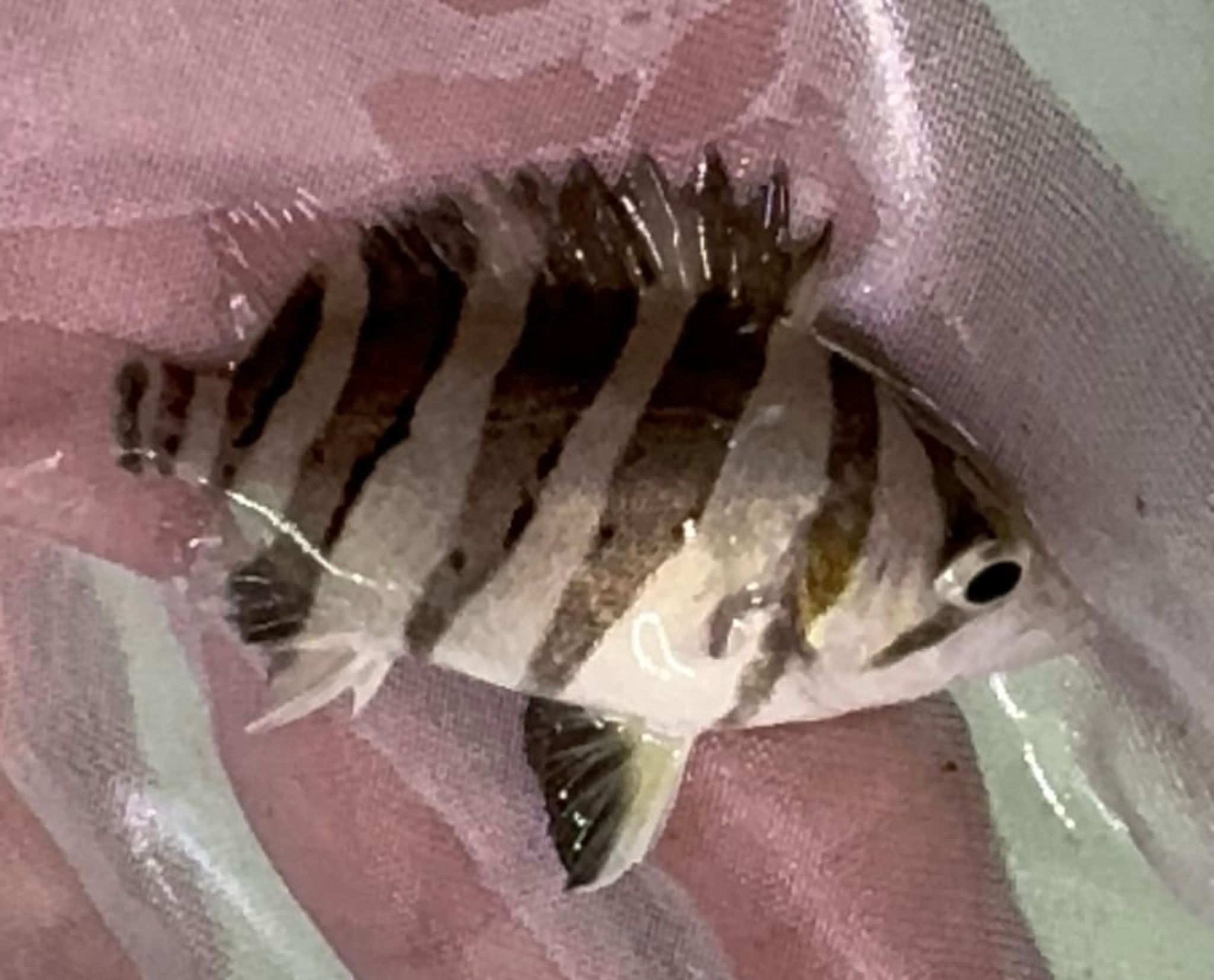

How Big Do Datnoid Get? Growth Rate, Adult Size and Tank Planning
A datnoid usually reaches 12 to 16 inches (30-40 cm) as an adult in a home aquarium, though some species push past 18 inches. Growth is slow but steady, so the small, inexpensive juvenile sold in most stores will eventually need a tank several times larger than what it ships in. Here's the species-by-species breakdown and a staged plan for getting the tank size right at every point along the way.
What Is a Datnoid, Exactly?
Datnoid (also called tiger fish or tiger perch) isn't one species — it's a genus, Datnioides, made up of roughly four to five commonly traded Southeast Asian predatory fish. All of them share a similar body shape (deep, laterally compressed, built for ambush) and a bold banded pattern, but they differ meaningfully in maximum size, temperament toward brackish water, and price. Knowing which species you actually have matters more than most care sheets suggest, because "how big will my datnoid get" has a different answer depending on the answer to "which datnoid is it."
Datnoid Size by Species
Aquarium-realistic size is usually smaller than the wild maximum quoted in field guides, since fish in captivity rarely live as long or forage as widely as wild specimens. Use the table below as a planning guide, not a hard ceiling — some individuals, especially well-fed males of the larger species, will exceed these figures.
| Species | Common name | Typical aquarium adult size | Wild maximum | Notes |
|---|---|---|---|---|
| Datnioides microlepis | Indonesian tiger datnoid | ~12 in (28-30 cm) | 16+ in | Most common species in the US trade; freshwater is fine |
| Datnioides pulcher | Siamese tiger datnoid | 14-16 in | 17-18 in (45 cm) | Prized coloration; rarely hits wild max in a tank |
| Datnioides undecimradiatus | Mekong tiger datnoid | ~16 in (40 cm) | similar | Often confused with microlepis when young |
| Datnioides campbelli | New Guinea tiger perch | 12-15 in | similar range | Golden-yellow body distinguishes it from the others |
| Datnioides polota / quadrifasciatus | Silver datnoid, silver tiger perch | 16-20+ in | 20+ in reported | Largest-growing; benefits from mild brackish conditions as an adult |
Quick Species ID Cues
Because size expectations swing by several inches between species, it's worth identifying what you actually bought before you buy a tank:
- Bar pattern: microlepis and undecimradiatus show thinner, more numerous vertical bars; pulcher tends toward fewer, broader, more contrasty bars.
- Body color: campbelli has a distinctive golden-yellow base color rather than the typical tan/olive background.
- Silver datnoid is easiest to spot — a flatter silver-white background with darker, less saturated banding, and a noticeably more elongated body than the "tiger" species.
- When in doubt, size up conservatively and plan for the largest reasonable species until coloration and bar pattern fill in with age.
How Fast Do Datnoids Grow?
Datnoids are not a fast-growing fish, but they aren't as slow as their reputation suggests early on either. The realistic picture:
- Year 1-2: with consistent feeding and good water quality, expect roughly 3/4 inch to about 1 inch of growth per month. This is the fastest growth phase.
- Growth slows noticeably after the first couple of years, even though the fish is far from finished growing.
- By 2-3 years, a well-kept datnoid is commonly around a foot long.
- Full adult length and, especially, body depth — the deep-bodied, filled-out look mature datnoids are known for — often isn't reached until 4-6+ years of age. A datnoid that "hasn't grown much lately" at 12-14 inches isn't finished; it's filling out rather than lengthening.
This reconciles the two things you'll read elsewhere: some sources call them fast growers (true, when young and well-fed) and others call them slow growers (also true, once you look at total years to full maturity). Both are describing the same growth curve from different points on it.
Growth Timeline and Tank Size by Stage
This is the piece most care sheets skip: tying a specific size milestone to the tank you should already be moving toward, not just quoting a final adult minimum.
| Datnoid size / approx. age | Life stage | Minimum tank size at that stage |
|---|---|---|
| 2-4 in (juvenile, as purchased) | New arrival | 40-55 gal, short-term only |
| 6-8 in (~6-12 months) | Growing juvenile | Time to move to 75-125 gal |
| 8-10 in (~1-2 years) | Sub-adult | 100-125 gal |
| 10-14 in (~2-4 years) | Near-adult | 125-150 gal |
| 14 in+ (~4-6+ years) | Full adult | 150-200+ gal (larger for pulcher/silver datnoid) |
The 40-55 gallon tank in that first row is a starter tank, not a home — treat any purchase at that size as a fish you're committed to upgrading, not a long-term stocking decision.
Footprint Over Height
Datnoids are mid-water ambush predators, not surface or bottom specialists, and they want length and swimming lane more than vertical space. A long, low, wide tank (think a stock 6-foot, 125-150 gallon footprint) houses an adult far more comfortably than a taller tank of the same nominal gallonage. When comparing two tanks of similar volume, pick the one with more floor length and swimming width.
Tank Setup Essentials
- Substrate: fine sand or smooth gravel; datnoids don't dig much, but a soft substrate protects their undersides and barbels-adjacent facial area during feeding chases.
- Cover and structure: driftwood, rockwork, and broken sightlines give a naturally shy fish places to retreat. Datnoids that feel exposed are more likely to refuse food.
- Lighting: subdued, indirect lighting is better tolerated than bright, direct lighting, especially for recently acquired fish.
- Lid: a tight-fitting lid is non-negotiable — datnoids are capable jumpers, particularly when startled.
- Filtration: oversize it relative to typical stocking guidelines. Datnoids produce a heavy bioload and are unusually sensitive to nitrate buildup, so filtration and turnover should be sized for a predatory fish well beyond the tank's nominal gallon rating. Browse filters sized for heavier bioloads rather than the minimum rated for the tank's volume.
Water Parameters and Water Quality
- Temperature: 75-82°F (24-28°C)
- pH: roughly 6.5-7.5
- Hardness: moderate
- Salinity: most species (microlepis, pulcher) are fine in straight freshwater. Silver datnoid is the exception — it comes from more estuarine, brackish-influenced habitats and often does noticeably better with mild salinity as it matures, in the range of specific gravity 1.005-1.010. Treat brackish conditions as species-specific, not a blanket datnoid requirement.
- Water changes: weekly partial water changes are worth treating as routine rather than optional. Datnoids are more sensitive to nitrate accumulation than many comparably sized predatory fish, and clamped fins, appetite loss, or increased disease susceptibility often trace back to lagging water quality rather than disease itself.
Diet and the Hunger Strike Problem
Datnoids are strict carnivores. Newly acquired fish, especially wild-caught imports, often start out on live foods — feeder shrimp, earthworms, and insects — before they can be coaxed onto easier long-term options.
Weaning onto prepared foods:
- Most individuals can eventually be trained onto frozen meaty foods (silversides, shrimp, krill) and quality carnivore pellets, but patience matters more than persistence here.
- Feed once or twice daily; avoid overfeeding, which adds directly to the nitrate load this species is already sensitive to.
- Live feeder fish or active dither fish in the tank can help model feeding behavior for a shy new datnoid, encouraging it to investigate food it might otherwise ignore.
- Quality frozen and freeze-dried options for weaning a picky carnivore can be found under freeze-dried food.
Hunger strikes are common, especially right after transport or a tank move, and can last weeks. The instinct to keep switching foods or adjusting lighting to "find what works" usually backfires — a stressed, newly rehomed datnoid generally does better with calm, dim, low-disturbance conditions and a standing offer of live food than with constant experimentation.
Tank Mates
Datnoids are shy and skittish rather than aggressive, and they generally coexist peacefully with fish too large to eat and not inclined to bully them.
Good tank mates (similar size class or larger):
- Larger peaceful-to-semi-aggressive gouramis
- Larger barb species
- Other predatory catfish
- Arowana
- Bichirs
- Peacock bass
Poor long-term tank mates:
- Small schooling fish — fine as short-term dither fish for a shy juvenile, but a datnoid will eventually grow into eating anything that fits in its mouth
- Fin-nippers or overly boisterous tankmates, which can stress an already skittish fish into refusing food
Keeping More Than One
Datnoids can be kept singly or in small groups of 4-6, but only in very large setups — realistically 300+ gallons. In smaller tanks, they tend toward intraspecies aggression and territoriality. If group-keeping is the goal, introducing juveniles together tends to go better than adding adults to an established group later.
Common Mistakes to Avoid
- Buying a 3-4 inch juvenile for a 20-40 gallon tank with no upgrade plan. This is the single most common datnoid mistake, and it leads to stunted growth, spinal deformity, and chronically poor water quality.
- Assuming slow visible growth means the fish has stopped growing. Datnoids just take years to show their full size — "it hasn't grown much lately" is not a green light to stay in an undersized tank.
- Underestimating bioload. Undersized filtration or infrequent water changes shows up as clamped fins, appetite loss, and disease susceptibility well before anything looks obviously wrong.
- Keeping small fish long-term on the theory that a datnoid is "too slow to bother hunting." It's an ambush predator, not a lazy one — small tankmates get picked off eventually, not never.
- Panicking over a hunger strike. Constantly changing foods and lighting in response to a fish that won't eat usually adds stress rather than solving anything; calm, dim, low-disturbance conditions do more.
- Mixing multiple juveniles in too small a tank expecting a peaceful group. Group-keeping only works at adult size in genuinely large tanks; doing it early leads to fin-nipping and stress-related illness.
Lifespan and Long-Term Commitment
Datnoids commonly live 10-15+ years or more in captivity. That lifespan is the real argument for buying the tank you'll need at full adult size relatively early, rather than treating tank size as a series of upgrades bought one after another. A stunting event in year one can affect a fish you're committed to housing for well over a decade.
It's also worth knowing before you buy: sexing a datnoid is essentially impossible without observing breeding behavior or DNA testing, and captive breeding in the hobby is rare to undocumented. Nearly all stock available is either wild-caught or farmed from wild broodstock, which means availability and pricing can vary by species and season — a reasonable factor to weigh when choosing which species and size to commit to.
You can browse current datnoid and other large predatory freshwater fish under Monster Fishes, and check tank options sized for a growing predator under Glass Tanks on FishyHub.
Frequently Asked Questions
How big does a datnoid get in a home aquarium?
Most commonly traded species reach 12-16 inches in a home aquarium, with the largest species (Siamese tiger and silver datnoid) sometimes reaching 18-20 inches. Wild maximum sizes are often quoted higher than what's realistic in captivity, so use aquarium-specific figures when planning a tank.
How fast do datnoids grow?
Roughly 3/4 to 1 inch per month when young and well-fed, slowing gradually over the next 2-4 years. Full adult length and body depth often aren't reached until 4-6+ years of age, even though most of the length is gained earlier.
What size tank does an adult datnoid need?
125 gallons is an absolute bare minimum for a single smaller-species adult, but 150-200+ gallons is the genuinely recommended range, especially for larger species like pulcher or silver datnoid. Prioritize length and floor footprint over tank height.
Can datnoids be kept in a 55-gallon or 75-gallon tank?
Only temporarily, and only for a juvenile under roughly 6-8 inches, with a firm plan already in place to upgrade. Neither size is appropriate for a datnoid past sub-adult size.
Do datnoids need brackish or salt water?
Not as a rule — microlepis and pulcher do fine in plain freshwater. Silver datnoid is the exception and typically benefits from mild salinity (specific gravity around 1.005-1.010) as it matures, reflecting its more estuarine wild habitat.
What do datnoids eat, and how do you get a picky one to eat?
They're strict carnivores, usually started on live foods like feeder shrimp, earthworms, and insects, then gradually weaned onto frozen meaty foods and carnivore pellets. For a stubborn eater, calm and dim conditions, cover to reduce stress, and active dither fish to model feeding behavior generally work better than repeatedly switching foods.
Can you keep more than one datnoid together?
Yes, but only in a very large tank — realistically 300+ gallons — since datnoids can be territorial and intraspecies-aggressive in smaller groups. Introducing several juveniles together tends to work better than combining adults later.
How long do datnoids live, and does that affect tank planning?
10-15+ years is common, which is long enough that the tank you buy should be treated as the adult, forever tank rather than another stepping-stone upgrade. Planning for full adult size from the start avoids repeated tank purchases and reduces the risk of stunting along the way.


