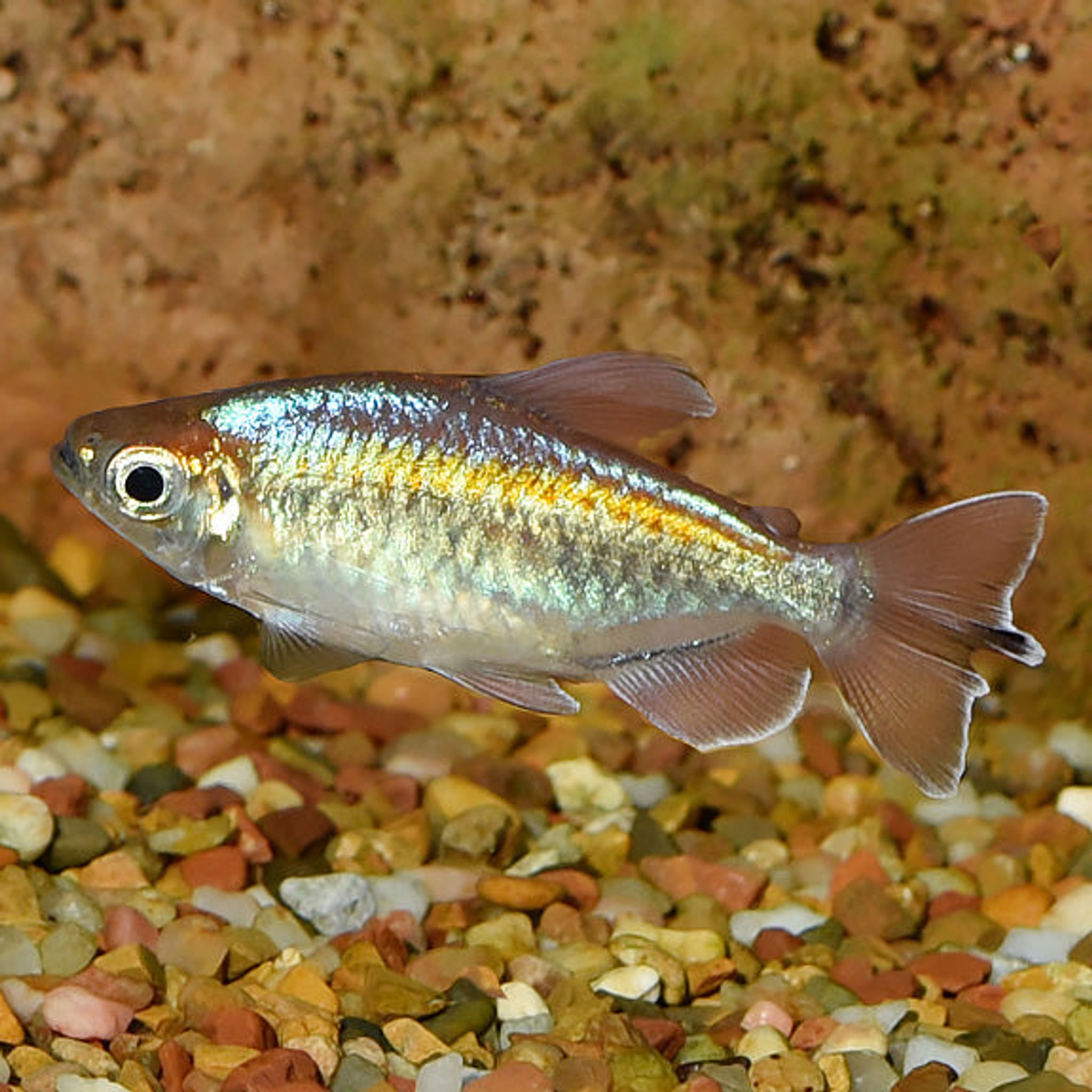
How Big Do Congo Tetra Get? Growth Rate, Adult Size and Tank Planning
Congo Tetras are one of the largest tetras commonly kept in home aquariums, with males reaching about 3–3.5 inches (7.5–9 cm) and females slightly smaller at 2.5–3 inches (6–7.5 cm). They grow faster than most tetras, hitting near-adult length by six months but continuing to fill out for up to a year. Below is exactly how big they get, how quickly, and what tank size actually supports that growth.
Adult Size: Males vs. Females
Congo Tetras (Phenacogrammus interruptus) dwarf the neons and cardinals most people picture when they hear "tetra." In a well-run home aquarium:
- Males: typically 3–3.5 inches (7.5–9 cm), measured body length excluding the flowing fin extensions.
- Females: typically 2.5–3 inches (6–7.5 cm), with a noticeably plumper, rounder body shape.
Wild-caught specimens pulled from the Congo River basin can grow larger still, occasionally reaching 4–4.5 inches (10–11.5 cm). That gap isn't a contradiction between sources — it reflects real differences in habitat. Wild fish have effectively unlimited swimming space, a much more varied natural diet, and no competition for a fixed feeding schedule. Farm-raised and tank-bred stock, which is what most US hobbyists buy, is bred and raised in denser conditions and typically tops out closer to 3.5 inches even under excellent care. When planning a tank, anchor your expectations to the captive range rather than the wild maximum.
Beyond Size: How to Sex a Congo Tetra
Size alone isn't the only tell, and it becomes obvious well before fish are fully grown:
- Males develop long, feathery dorsal and caudal fin extensions and show more intense iridescent blue-violet and gold coloring, often with white edging along the fins.
- Females stay plainer in color, keep shorter, less ornate fins, and appear rounder-bodied — especially when carrying eggs.
These differences become distinguishable around the three-month mark, well before the fish reach full size.
Congo Tetra Growth Rate: A Month-by-Month Look
Congo Tetras grow fast for a tetra, but "fast" is relative — most sources quote two data points (2 inches at 3 months, 3 inches at 6 months) without connecting them into a usable timeline. Here's a merged view, including the plateau that follows:
| Age | Approximate Length | What's Happening |
|---|---|---|
| 1 month | 0.5–0.75 in (1.3–2 cm) | Juvenile coloring only; sex not yet distinguishable |
| 3 months | ~2 in (5 cm) | Sex becomes distinguishable; males start showing fin growth |
| 6 months | ~3 in (7.5 cm) | Near-adult length; fish are breeding-capable |
| 9 months | 3–3.25 in (7.5–8.2 cm) | Body length mostly set; males' fins and color still intensifying |
| 12+ months | 3–3.5 in males, 2.5–3 in females | Full size and finnage typically complete |
Two things are easy to misread in this table. First, "breeding-capable at six months" does not mean "fully grown at six months" — those are different milestones that happen to land close together. A six-month-old male can spawn but will keep adding length, fin extension, and color saturation for several more months. Second, the 12-month mark isn't a hard deadline; some individuals keep filling out modestly beyond a year, particularly males finishing their dorsal and caudal fin development.
Why Tank Size Can Actually Stunt Growth
It's not just folklore that a small tank produces a small fish — there's a mechanism behind it. Fish raised in cramped, high-bioload conditions experience chronic low-grade stress and inconsistent water quality, both of which suppress the hormonal signals that drive normal growth. A tall, narrow tank compounds this for Congo Tetras specifically, because they're active mid-water swimmers that want horizontal cruising room, not vertical space. The visible result in an undersized tank is a fish that plateaus early, with frayed or clamped fins and dulled color, rather than reaching its genetic potential. This is separate from the stocking guidelines below — it's the reason those guidelines exist.
Tank Size and Stocking: What They Actually Need
Minimum Tank Size
Recommendations for Congo Tetras range from "20 gallons can work" to "55 gallons for a proper shoal," and both are technically true for different scenarios:
- 30 gallons, long footprint: the realistic floor for a small group of 6. The "long" shape matters more than raw volume because it maximizes horizontal swimming room.
- 40–55+ gallons: recommended for a full, healthy shoal of 6 or more, especially if you're adding any tankmates.
- 20 gallons: workable only as a short-term compromise for a very small group. Expect more visible stress, fin damage, and a higher chance of stunted growth.
A Simple Stocking Rule
A useful rule of thumb is roughly 5–10 gallons of swimming space per adult Congo Tetra in an established school, prioritizing length and width over tank height. Worked example for a 40-gallon breeder (36 in × 18 in × 16 in) or a 55-gallon long:
- 6 Congo Tetras at ~7 gallons each ≈ 42 gallons of swimming space
- Add a small school of bottom dwellers (say, 6 dwarf corydoras) that use the floor rather than mid-water space
- Total bioload stays reasonable in a 40–55 gallon tank with adequate filtration, since the corydoras aren't competing for the same water column
This is why a 55-gallon long is often recommended over a taller 55-gallon standard for this species — same volume, but the horizontal footprint suits how Congo Tetras actually swim. You can browse glass tanks sized for a long-footprint setup before committing to dimensions.
School Size and Sex Ratio
Congo Tetras are a shoaling species and should be kept in groups of at least 6, ideally more. Below that threshold, expect more fin-nipping between individuals, skittish behavior, and duller color since the fish never feel secure enough to display normally. Within the group, favor more females than males — a ratio like 2:1 female-to-male spreads out male breeding-chasing behavior so it doesn't concentrate on one or two females, reducing stress and fin damage.
Water Parameters and Diet That Support Full Size
Congo Tetras come from soft, slightly acidic Congo River water, and matching that at home supports both health and growth:
- Temperature: 73–82°F
- pH: 6.0–7.5, soft to neutral
- Flow: moderate to fast filtration, reflecting their native river habitat
Diet plays a bigger role in final size than most care sheets mention. These fish are omnivorous and will accept flake and pellets, but a varied diet that adds frozen or live foods — bloodworms, brine shrimp, daphnia — supports reaching the upper end of the size range rather than the lower end. Feed portions small enough that the school clears them in a few minutes, once or twice a day.
Full Setup Cost and Time Commitment
What a Full Setup Costs
Because Congo Tetras need a larger tank than nano species, total start-up cost varies more widely than for a 10-gallon community tank. A basic setup (tank, hang-on filter, standard heater, basic light) costs less than a premium equivalent (better filtration, a full-spectrum light, a more precise heater) at the same gallon size — think "budget vs. better" rather than one fixed number. The gallon size you choose has a bigger effect on total cost than which tier of equipment you buy at that size.
Time Commitment
A well-planted, moderately stocked Congo Tetra tank takes roughly two short feedings a day plus about 30 minutes a week for a 10–15% water change and light cleaning. Because this species carries more bioload than small tetras, larger tanks with an active school need that maintenance done consistently — skipped water changes show up faster as ammonia or nitrite spikes and clamped fins than they would in a lightly stocked nano tank.
Money-Saving Tips
- Source rock and hardscape from non-aquarium suppliers where it's confirmed safe for aquarium use, rather than paying aquarium-specific markup for the same material.
- Rinse and reuse filter media in old tank water instead of replacing it on a fixed schedule — this also preserves the beneficial bacteria colony.
- Keep the school at the size it needs (6–8, not 15) rather than overbuying fish "for the look," which controls both upfront and long-term feeding/filtration costs.
Starter Kit Guidance
Most all-in-one starter kits in the 5–20 gallon range are sized for nano species and will undersize adult Congo Tetras. If you're buying a kit, look for one rated 30 gallons or larger, or plan on upgrading the tank before your fish reach adult size around six months.
Why Keep an Aquarium Like This
Beyond the fish themselves, a planted, actively schooling tank has real benefits: watching an established shoal move together has a documented calming effect and can lower stress, it's genuinely educational for kids observing feeding and social behavior, and the ongoing cost and space footprint is modest compared to many other pets. A visually striking schooling fish like the Congo Tetra is a good argument for the larger tank investment — the display payoff scales with the extra space.
Do Congo Tetras Recognize Their Owners?
Research on individual recognition in schooling tetra species is thin. Congo Tetras are generally considered to have simpler social recognition than solitary, more cognitively complex species like oscars or bettas. They likely associate a person's presence at the tank with feeding time and routine, rather than recognizing that person as an individual the way some larger, more territorial fish appear to.
Handy Accessories for This Setup
Once you've settled on a tank size, a few practical add-ons make ongoing care easier:
- A gravel vacuum/siphon for substrate cleaning — useful given the higher bioload of a Congo Tetra school compared to nano fish.
- A magnetic algae scraper to keep viewing glass clear without disturbing the substrate.
- A dedicated aquarium bucket and hose, kept separate from household cleaning supplies, to avoid chemical contamination during water changes.
Common Mistakes to Avoid
- Buying juveniles into a small starter kit without planning for the 3+ inch adult size, forcing an upgrade later or stunting the fish.
- Keeping fewer than 6 — increases fin-nipping, skittish behavior, and dulled color in this shoaling species.
- Male-heavy ratios that concentrate chasing and stress on too few females.
- Tall, narrow tanks instead of long ones — this species needs horizontal swimming room, not height.
- Overfeeding or inconsistent water changes in an undersized tank, where the larger bioload makes ammonia and nitrite spikes show up faster than in a small-tetra setup.
- Assuming growth is "done" at 6 months — full fin extension and coloration in males can keep developing for several more months.
- Mixing with fin-nipping tankmates — some barbs and other aggressive tetras will target the flowing fins of mature males.
Frequently Asked Questions
How big does a Congo Tetra get in a home aquarium?
Males typically reach 3–3.5 inches (7.5–9 cm) and females 2.5–3 inches (6–7.5 cm), occasionally a bit larger under ideal conditions with a varied diet and low-stress tank setup.
How fast do Congo Tetras grow?
Expect roughly 2 inches by 3 months, near full length by 6 months, and continued filling out in body and finnage through about a year of age.
What size tank do I need for Congo Tetras?
Plan on 30 gallons long as the minimum for a small group of 6, and 40–55+ gallons for a proper shoal, ideally in a long rather than tall footprint.
How many Congo Tetras should be kept together?
At least 6, and ideally more, with a sex ratio favoring extra females over males to reduce chasing and fin-nipping.
Do male and female Congo Tetras look different?
Yes. Males grow larger with long, flowing dorsal and caudal fins and brighter iridescent blue-violet and gold coloring; females stay smaller, plumper, and comparatively plain.
How long do Congo Tetras live?
About 3–5 years with stable warm, soft-to-neutral water and a consistent, varied diet; some individuals live longer under excellent water quality.
Can Congo Tetras be kept in a 20-gallon tank?
Only as a short-term compromise for a very small group. Growth, fin condition, and coloration are noticeably better in 30 gallons or larger.
What water conditions help Congo Tetras reach full size?
Stable warm, soft-to-neutral water (73–82°F, pH 6.0–7.5), consistent varied feeding, and low stress from an appropriately sized tank and school all support reaching the upper end of the size range.
If you're planning a Congo Tetra shoal, browse the current tetra selection on FishyHub to compare available stock before you finalize your tank size.


