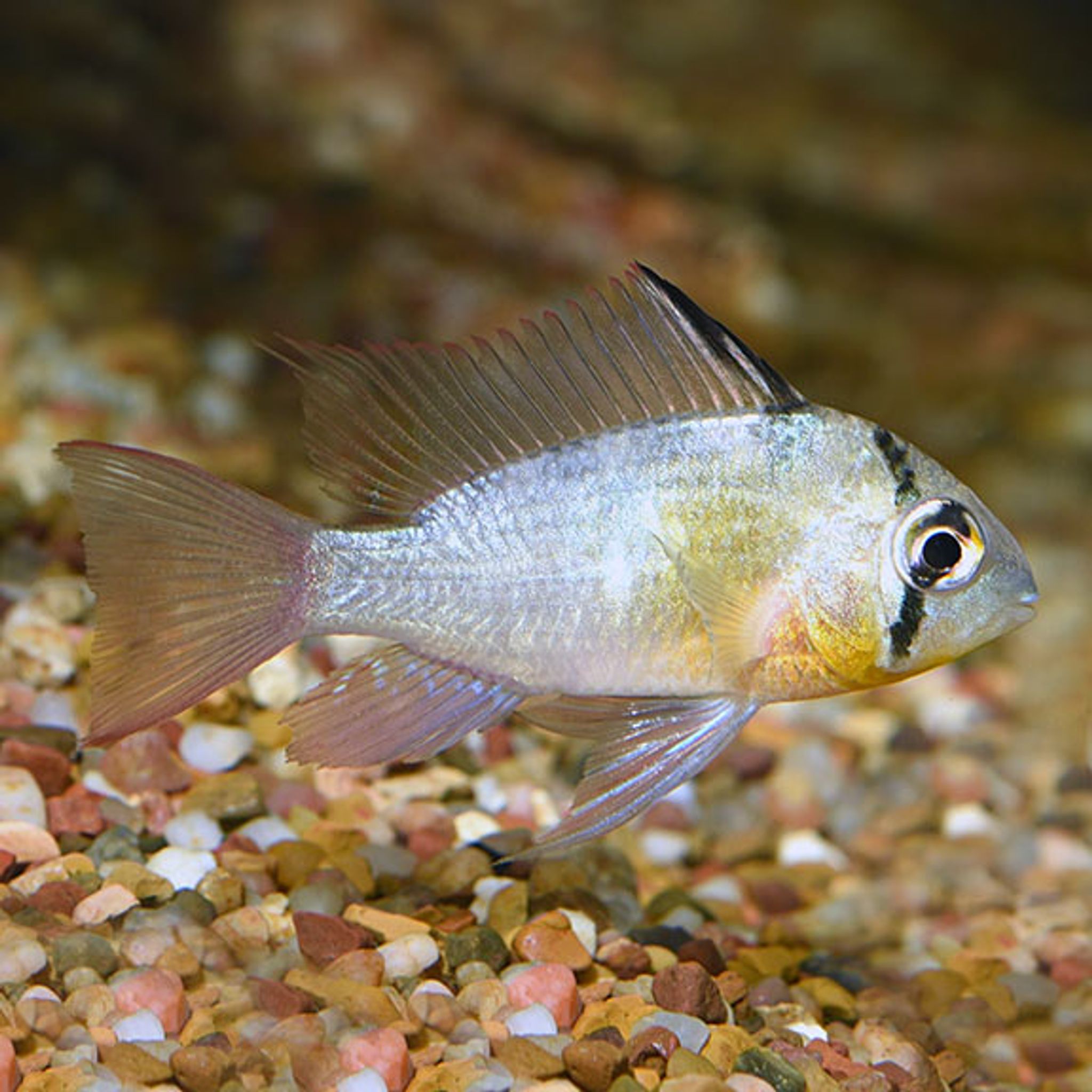

How Big Do Bolivian Ram Get? Growth Rate, Adult Size and Tank Planning
A full-grown Bolivian ram typically reaches about 3 inches (7.5 cm), with a realistic range of 2.5–4 inches depending on sex and care. Growth is slow and steady over 12–18 months rather than a quick sprint, which matters when you're picking a tank and judging whether your juvenile is developing normally.
Bolivian Ram Adult Size: The Short Answer
Mikrogeophagus altispinosus, commonly called the Bolivian ram, is a South American dwarf cichlid native to the Mamoré and Guaporé river basins spanning Bolivia and Brazil. It's one of the most popular beginner-friendly dwarf cichlids sold in the US hobby, prized for its calm temperament and soft coloration.
Size estimates vary because sources measure differently:
- The commonly cited scientific standard length (body only, excluding the tail fin) runs about 2.8–3.1 inches.
- Hobbyist and vendor reports of total length (including the tail) on large, well-fed males push closer to 3.5–4 inches.
For planning purposes, treat 3 inches as the safe, practical number, and expect exceptional males to edge toward the 3.5–4 inch ceiling. This measurement gap — standard length versus total length — is the main reason two people can look at the same fish and quote different sizes.
Males vs. Females
Bolivian rams show clear sexual dimorphism:
- Males grow larger, develop longer and more pointed extensions on the dorsal and ventral fins, and carry more vivid, saturated color as they mature.
- Females stay noticeably smaller and rounder-bodied, especially when gravid, when they often show a pink or reddish blush across the belly.
If you're trying to judge whether your ram is "big for its age," check the sex first — a female topping out around 2.5 inches is completely normal.
Growth Timeline: Age-by-Age Size Chart
Growth is gradual and visible week-to-week rather than day-to-day. There's a genuine acceleration during the mid-juvenile stage before it tapers off as the fish approaches adult size.
| Age | Approximate Size | Notes |
|---|---|---|
| Newly free-swimming fry | Under 0.5 in (1.3 cm) | Still schooling near the substrate |
| ~1 month | 0.5–0.75 in (1.3–1.9 cm) | Slow early growth |
| ~3 months | 1–1.5 in (2.5–3.8 cm) | Growth spurt begins to accelerate, then eases |
| 5–6 months | 1.25–1.5 in (3.2–3.8 cm) | Typical size sold in stores; young-adult coloring emerging |
| 8–12 months | 2–2.5 in (5–6.4 cm) | Approaching adult proportions |
| 12–18 months | 2.5–3.5 in (6.4–8.9 cm) | Full adult size; growth essentially stops |
The fastest window is roughly months 2 through 4, when a young ram can visibly change size from one week to the next. Before and after that spurt, growth is much more gradual — so don't panic if a 6-month-old fish looks like it "hasn't grown" over a couple of weeks; that's normal pacing, not a plateau.
What Affects Final Adult Size
Several factors determine whether a given ram lands at the small end of the range or the large end:
- Genetics and lineage — some captive-bred lines simply run larger than others.
- Diet quality and frequency — frequent, varied feeding with high-protein foods (frozen or live options alongside quality pellets) supports faster growth and a larger final size than a flake-only diet.
- Water quality and stability — consistent parameters and clean water support uninterrupted growth; swings and poor water quality slow it.
- Tank size and stress — crowded or understimulated fish can experience stunted growth.
- Temperature — staying within the recommended range keeps metabolism and digestion running efficiently.
- Wild-caught vs. captive-bred — captive-bred stock tends to be hardier and adapts more readily to a broader range of home-aquarium parameters than wild-caught fish.
Bolivian Ram vs. German Blue Ram: Size and Hardiness
Bolivian rams are frequently confused with the German blue ram (Mikrogeophagus ramirezi), a related but distinct species with different care requirements.
| Trait | Bolivian Ram | German Blue Ram |
|---|---|---|
| Adult size | ~3 in, up to 3.5–4 in for large males | ~2–2.5 in |
| Hardiness | More tolerant of temperature and parameter swings | More sensitive; needs stable, warm, soft water |
| Beginner suitability | Better first-time cichlid choice | Better suited to more experienced keepers |
| Coloring | Softer, more muted tones | Brighter blue and yellow/orange highlights |
Because Bolivians grow a bit larger and tolerate a wider swing in temperature and water hardness, they're generally the sturdier, more forgiving choice for someone new to dwarf cichlids.
Where Bolivian Rams Fit Among Small South American Dwarf Cichlids
Bolivian rams belong to a broader group of compact, personality-rich South American cichlids that let keepers enjoy cichlid behavior without the bulk or aggression of larger species. Within that niche, size runs roughly like this:
- Smallest: many dwarf Apistogramma species, often under 2.5 inches.
- Mid-pack: the Bolivian ram, alongside the German blue ram (Bolivians sit at the larger end of this middle tier).
- Checkerboard-type cichlids and other similarly compact SA cichlids round out the group with comparable footprints and temperaments.
If you like the Bolivian ram's look but want something smaller, an Apistogramma species is worth researching; if you want something similar in size but more temperature-sensitive, the German blue ram fills that spot. You can browse options in the Angelfish, Discus, Rams & Cichlids category to compare what's currently available.
Translating Adult Size Into Tank Planning
A 3-inch fish sounds small, but Bolivian rams are semi-territorial bottom-and-mid-dwellers that need floor space more than they need vertical water volume. Sizing a tank purely by gallons, without considering footprint, is one of the most common planning mistakes.
Minimum and recommended tank sizes:
- 20 gallons is the realistic floor for a single pair — treat this as a bare minimum, not a comfortable target.
- 29–30 gallon long, or a 40-gallon breeder, is the more comfortable recommendation for a pair plus light community stocking, since these footprints give roughly 30+ inches of tank length.
- Length matters more than height. Aim for a tank at least 30 inches long; some sources recommend a 35-inch (90 cm) minimum base for long-term comfort.
- Add roughly 10+ gallons for each additional pair, or when building toward a small group/harem setup, to keep territorial disputes manageable.
Water Parameters for Planning
- Temperature: 76–84°F — warmer than many popular community fish, so factor this into tank mate selection.
- pH: roughly 6.0–7.5, with captive-bred stock generally tolerating up to about 7.5–8 dKH without issue.
- Water hardness: soft to moderately hard water suits tank-bred Bolivian rams well.
Choosing Tank Mates by Size
Because adult Bolivians stay small and are naturally peaceful, they pair well with similarly sized, non-nippy community fish:
- Small tetras
- Corydoras and other small bottom dwellers
- Small loricariid plecos
- Rasboras
Avoid fast, fin-nipping species that could damage a male's flowing dorsal and ventral fins, and avoid much larger or aggressive cichlids that could bully or even eat a fish this size. FishyHub's Small Community Fishes category and Plecos, Corys & Bottom Dwellers category are good starting points for compatible tank mates.
Feeding for Healthy Growth
Diet has a direct, visible effect on both growth rate and final size:
- Offer a varied diet rather than flakes alone — rotate in frozen or live protein sources alongside a quality staple pellet or gel food.
- Juveniles benefit from more frequent small feedings (multiple times daily) to fuel the mid-juvenile growth spurt.
- Adults can move to one to two feedings per day once growth has slowed.
- Underfeeding, or feeding a nutritionally thin diet, is one of the most common reasons a Bolivian ram falls short of its genetic potential in both size and color.
Common Mistakes That Stunt Growth or Cause Confusion
- Buying a too-small tank because the fish looks small — ignoring the floor-space needs of a semi-territorial bottom dweller.
- Running the tank too cold to match typical community-tank temperatures in the low 70s°F, which slows metabolism, digestion, and overall growth.
- Underfeeding or feeding only flakes, which slows growth and dulls adult coloration.
- Assuming slow juvenile growth is a health problem — patience is normal here; true stunting comes from poor water quality, insufficient food, or overcrowding, not simply a fish's natural pace.
- Housing with oversized or aggressive tank mates, which can stress a ram into hiding and contribute to stunted growth.
- Confusing Bolivian rams with German blue rams when researching care, since the two species have different temperature tolerances and slightly different adult sizes.
Frequently Asked Questions
How big does a Bolivian ram get in inches/cm?
About 3 inches (7.5 cm) is the typical adult size, with a realistic range of 2.5–4 inches depending on sex and care quality. Large, well-fed males occasionally reach the top of that range.
How fast do Bolivian rams grow?
Growth is slow to moderate overall, but there's a noticeable growth spurt around 2–4 months of age. Rams typically reach near-adult size by 8–12 months and their full adult size by 12–18 months.
Are Bolivian rams bigger than German blue rams?
Yes. Bolivian rams generally grow slightly larger than German blue rams, which top out around 2–2.5 inches, and Bolivians are also considered hardier and more tolerant of parameter swings.
What size tank do I need for Bolivian rams?
Twenty gallons is the practical minimum for a single pair, but a 29–30 gallon long tank or larger is recommended for long-term comfort. Prioritize tank length and floor space over raw gallon count, since these are bottom-and-mid-dwelling fish.
Do male or female Bolivian rams get bigger?
Males get bigger and also develop longer, more pointed extensions on their dorsal and ventral fins along with more vivid coloring. Females stay smaller and rounder, especially when carrying eggs.
How long do Bolivian rams live?
With good care, Bolivian rams typically live 3–5 years, which is worth factoring into long-term tank and stocking plans.
Can I keep Bolivian rams in a community tank based on their size?
Yes, their small adult size and peaceful temperament make them compatible with similarly sized, non-nippy community fish like small tetras, corydoras, small plecos, and rasboras. Avoid fast fin-nippers and much larger or aggressive fish that could stress or harm them.
Why is my Bolivian ram not growing?
Before assuming a health issue, check water temperature (too cold slows growth), diet variety and feeding frequency, water quality and stability, tank size, and whether tank mates are causing stress. Slow, steady growth is normal for this species — true stunting usually traces back to one of these environmental factors rather than the fish itself.
Ready to plan a tank around this species? Browse current stock in the Angelfish, Discus, Rams & Cichlids category on FishyHub to compare Bolivian rams with other small cichlids before you buy.


