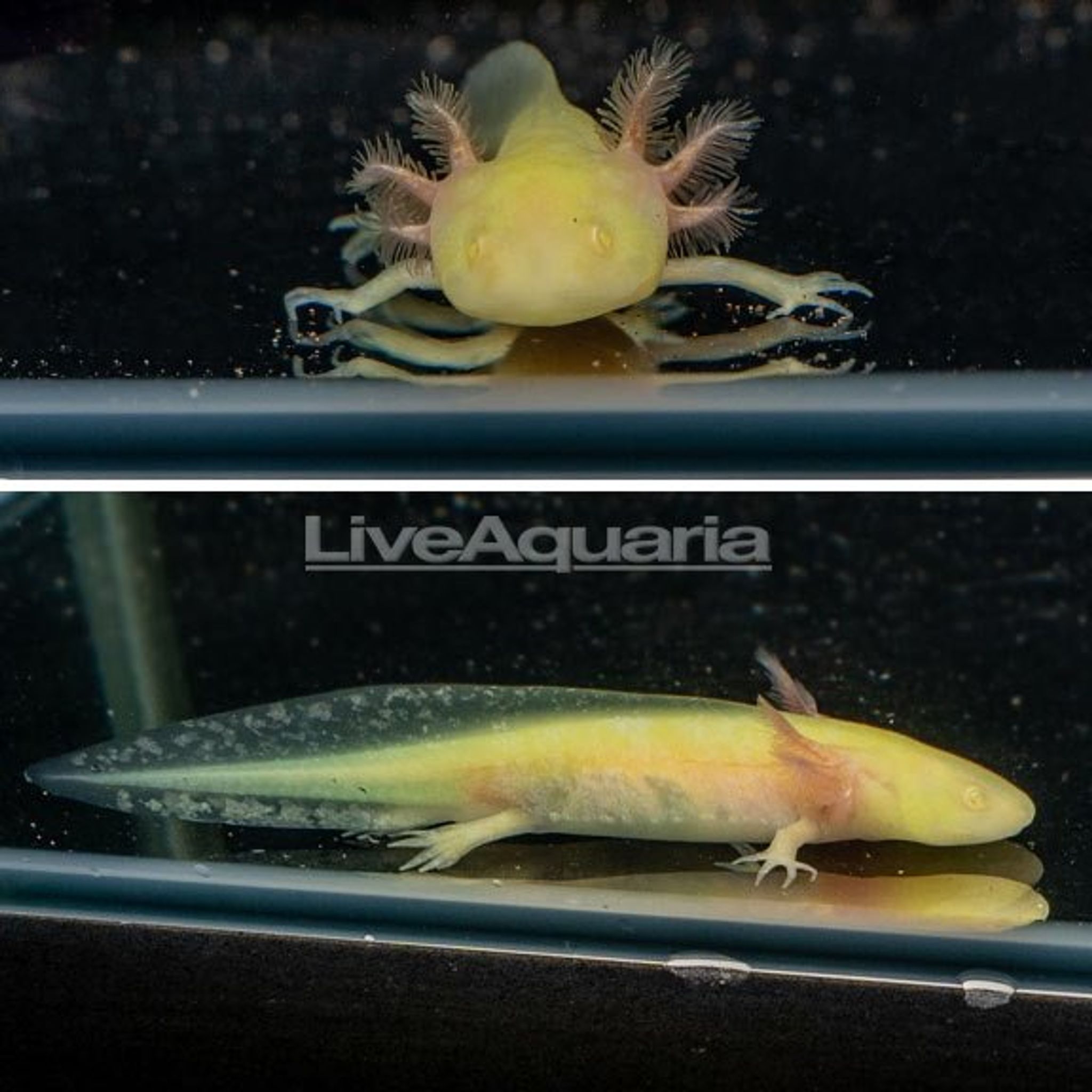

How Big Do Axolotl Get? Growth Rate, Adult Size and Tank Planning
Most pet-trade axolotls settle at 9-12 inches (23-30 cm) nose to tail-tip as adults, though the full range runs 6-18 in (15-45 cm) depending on genetics and care. This guide walks through the month-by-month growth curve and gives you a tank-planning framework so you size the enclosure for the adult you'll have in a year, not the hatchling you have today.
Axolotls are neotenic salamanders, not fish — they stay in a permanently aquatic, larval-like form their whole lives — but they're a staple of the freshwater aquarium hobby and get housed and shopped for like any other aquatic pet.
How Big Do Axolotls Get as Adults?
Adult length is usually measured from the tip of the snout to the tip of the tail, and that measurement method is a big reason size figures vary so much between sources.
- Typical adult: 9-12 in (23-30 cm) — the range most healthy, well-fed pet-trade axolotls land in.
- Full reported range: 6-18 in (15-45 cm), with the low end usually reflecting stunted or body-only measurements and the high end reflecting large wild-type or leucistic individuals.
- Outliers: some individuals are documented past 14 in, and rare specimens approach 18 in — impressive, but not something to plan a tank around.
If you see wildly different numbers on different pages, check whether the source is measuring the whole animal (nose to tail-tip) or just the body — that single difference explains most of the disagreement.
How to Measure Your Axolotl Accurately
To compare your own axolotl against published charts fairly, measure the same way the charts do:
- Let the animal rest flat on the tank floor or in a shallow container of water — never stretch or restrain it.
- Measure from the tip of the snout to the tip of the tail (not body-only).
- Use a soft measuring tape or a ruler held against the glass rather than reaching into the tank.
Body-only measurements can read 20-30% shorter than nose-to-tail-tip figures for the same animal, so always note which method a chart uses before comparing.
Axolotl Growth Timeline: Month by Month
Growth is fastest in the first six months and then decelerates steadily. This table gives a rough, husbandry-dependent timeline:
| Age | Typical Length | Notes |
|---|---|---|
| At hatching | Under 1 in (2.5 cm) | Free-swimming larva, external gills already visible |
| 2-3 months | 3-4 in (7.5-10 cm) | Rapid early growth; needs frequent small feedings |
| 6 months | 6-8 in (15-20 cm) | Growth rate begins to slow |
| 1 year | 8-10 in (20-25 cm) | Approaching adult proportions |
| 12-18 months | Adult size reached | Most individuals finish their main growth here |
| 18-24 months | Slow trickle growth | Small additional length possible, but the pace has flattened |
Two things drive the spread in this table: water temperature and feeding. Cooler water in the 60-68°F (16-20°C) range supports steady, healthy growth, while warmer water speeds up metabolism and growth but raises stress and illness risk. A well-fed axolotl in stable, cool water tends to hit the 12-month mark; one with inconsistent feeding or fluctuating water quality may not finish growing until 18-24 months.
Sexual maturity is not the same milestone as full body size. Axolotls can become reproductively mature at 12-18 months (sometimes sooner), but body growth often continues afterward — don't assume a maturing axolotl has finished getting bigger.
What Affects Growth Rate and Final Size
- Water temperature: Cooler, stable temperatures (60-68°F/16-20°C) favor steady, healthy growth. Warmer water accelerates growth but increases metabolic stress and disease risk.
- Feeding frequency and quality: A varied, protein-rich diet fed at an age-appropriate schedule supports normal growth; sparse or low-protein feeding slows it.
- Water quality: Clean, well-cycled water with no ammonia or nitrite spikes is essential — chronic poor water quality is one of the most common causes of stunted growth.
- Genetics and morph: Individual genetics account for more size variation than morph does (see below).
Factors That Stunt or Slow Growth
Watch for these common causes of slower-than-expected growth:
- Poor water quality, including ammonia or nitrite spikes
- Insufficient feeding or a consistently low-protein diet
- Overcrowding, especially multiple axolotls competing for food
- Chronic stress from too much light, current, or handling
- Water that's consistently too warm
Does Morph Affect Adult Size?
Not meaningfully. Leucistic, wild-type, golden albino, melanoid, copper, and other morphs reach similar adult size ranges. Size variation is driven far more by individual genetics and husbandry than by color or pattern morph — don't pick a morph expecting a bigger or smaller adult.
Do Males and Females Grow to Different Sizes?
Not reliably. Any size difference between sexes is minor and not something you can use to sex an axolotl. Instead, look at physical traits: mature males often develop a more prominent, bulging cloaca (the vent area) and can appear slightly slimmer-bodied, while females tend to look a bit broader through the midsection, especially when carrying eggs. Treat size as a secondary, unreliable clue at best.
Tank Planning: Sizing for the Adult, Not the Baby
The single most common mistake in axolotl keeping is buying a small tank for the hatchling stage and needing a stressful upgrade a few months later. Since axolotls reach most of their adult size within 12-18 months, plan the tank around that adult from day one.
- Absolute minimum: a 20-gallon long tank for one adult. "Long" matters — this is about footprint, not just volume.
- Recommended target: 29-40 gallons for a single adult's long-term home.
- Additional axolotls: add roughly 10-20 gallons per additional animal.
Why Footprint Beats Height
Axolotls are bottom-dwellers and poor climbers or swimmers compared with fish. A tall, narrow tank wastes volume they'll never use, while a long, wide footprint gives them the floor space they actually need to move around comfortably. Prioritize a length of at least 24-30 in over extra height.
| Setup | Minimum | Recommended |
|---|---|---|
| One adult | 20 gal long | 29-40 gal |
| Two adults (similar size) | 30-40 gal long | 40-55+ gal |
| Each additional adult | +10 gal | +15-20 gal |
Never house differently sized axolotls together. A size mismatch creates real cannibalism risk — the larger animal can bite off limbs or gills of the smaller one. Only pair similarly sized individuals, and monitor closely even then.
Substrate and Filtration for a Growing Axolotl
- Substrate: Use bare-bottom tanks or fine sand. Avoid gravel entirely — axolotls forage along the substrate as they feed, and gravel-sized particles are easily ingested, leading to impaction. This risk grows as the animal grows and feeds more aggressively.
- Filtration: Axolotls dislike strong current, so gentle flow is essential regardless of tank size. A sponge filter is the consensus recommendation for axolotl setups at any life stage.
Should Axolotls Have Tank Mates?
Generally, no. Axolotls are best kept alone. Fast-moving fish can nip at their feathery gills and limbs, and axolotls will readily eat small tank mates that fit in their mouths. If "tank planning" for you includes a community setup, plan for a single-species axolotl tank instead and keep any community fish in a separate aquarium — browse freshwater community fish for a tank of their own.
Feeding by Life Stage
Feeding frequency should scale down as the axolotl grows, both to match its slowing metabolism and to prevent obesity:
- Juveniles (under ~3-4 in): Feed daily — baby brine shrimp, then chopped blackworms or nightcrawlers as size allows.
- Sub-adults: Feed every other day.
- Adults: Feed every 2-3 days to avoid obesity.
Growth, Overfeeding and Long-Term Health
Faster growth isn't automatically better growth. Pushing growth with overly warm water or excessive feeding is linked to shorter-term stress and long-term health problems, not just a bigger animal sooner. Since axolotls typically live 10-15 years, and most of their size growth happens in the first one to two years, the tank you set up now needs to serve a large, mature adult for the next decade or more — that's the real argument for buying the recommended tank size upfront rather than upgrading twice.
Common Mistakes to Avoid
- Starting in a 5-10 gallon "baby" tank and needing a stressful re-home within months — buy adult-size from day one.
- Using gravel substrate that gets ingested during feeding, causing impaction (bloating, lethargy, appetite loss) — switch to bare-bottom or sand.
- Keeping water too warm, above roughly 72-74°F (22-23°C), which suppresses appetite and raises the risk of stress-related illness such as fungal or bacterial issues — cool with a fan, a chiller, or frozen water bottles as needed.
- Overfeeding past the juvenile stage, leading to obesity and a shortened lifespan — scale feeding frequency down as size increases.
- Housing mismatched sizes together, risking bitten-off limbs or gills.
- Mistaking normal growth deceleration for illness — slowing growth after year one is typical; true problems look like weight loss, refusing food, or visible lesions, not just a slower size increase.
Frequently Asked Questions
How big does an axolotl get in inches/cm?
Typically 9-12 in (23-30 cm) as an adult, with a full reported range of 6-18 in (15-45 cm) depending on genetics and care. Anchor your expectations at the 9-12 in average so the wider range doesn't surprise you either way.
How fast do axolotls grow?
Growth is fastest in the first six months, tapering off toward near-full size by 12-18 months. Some slow, additional growth can continue up to around 2 years, mostly depending on temperature and diet.
What size tank does an axolotl need?
A 20-gallon long tank is the absolute minimum for one adult, but 29-40 gallons is the recommended long-term target. Footprint (length and width) matters more than height, since axolotls live and forage along the bottom.
Do axolotls keep growing their whole life?
Growth slows dramatically after 1-2 years but doesn't hard-stop entirely — small trickle growth is possible. A sudden large jump in size after that point is unusual and worth reviewing husbandry for rather than assuming it's normal.
How can I make my axolotl grow faster or bigger?
Consistent cool water (60-68°F/16-20°C), a quality varied diet, and clean, stable water quality support steady growth. Faster growth isn't necessarily healthier growth — rushing it with warm water or overfeeding raises stress and illness risk.
What's the biggest an axolotl can get?
Outlier individuals have been recorded up to roughly 18 in, but this is uncommon. Plan your tank around the 9-12 in typical adult, not the extreme upper end.
Do males and females grow to different sizes?
No significant, reliable size difference exists between sexes. Sex is better identified by cloaca shape and body proportions than by length.
Can I keep a baby axolotl in a small tank and upgrade later?
It's discouraged. Cycling a smaller tank now and re-cycling a bigger one later adds stress and disruption; starting near the adult-size footprint even for a juvenile avoids the extra move entirely.
Ready to set up a properly sized home for your axolotl? Explore glass tanks built for a long, low footprint on FishyHub.


