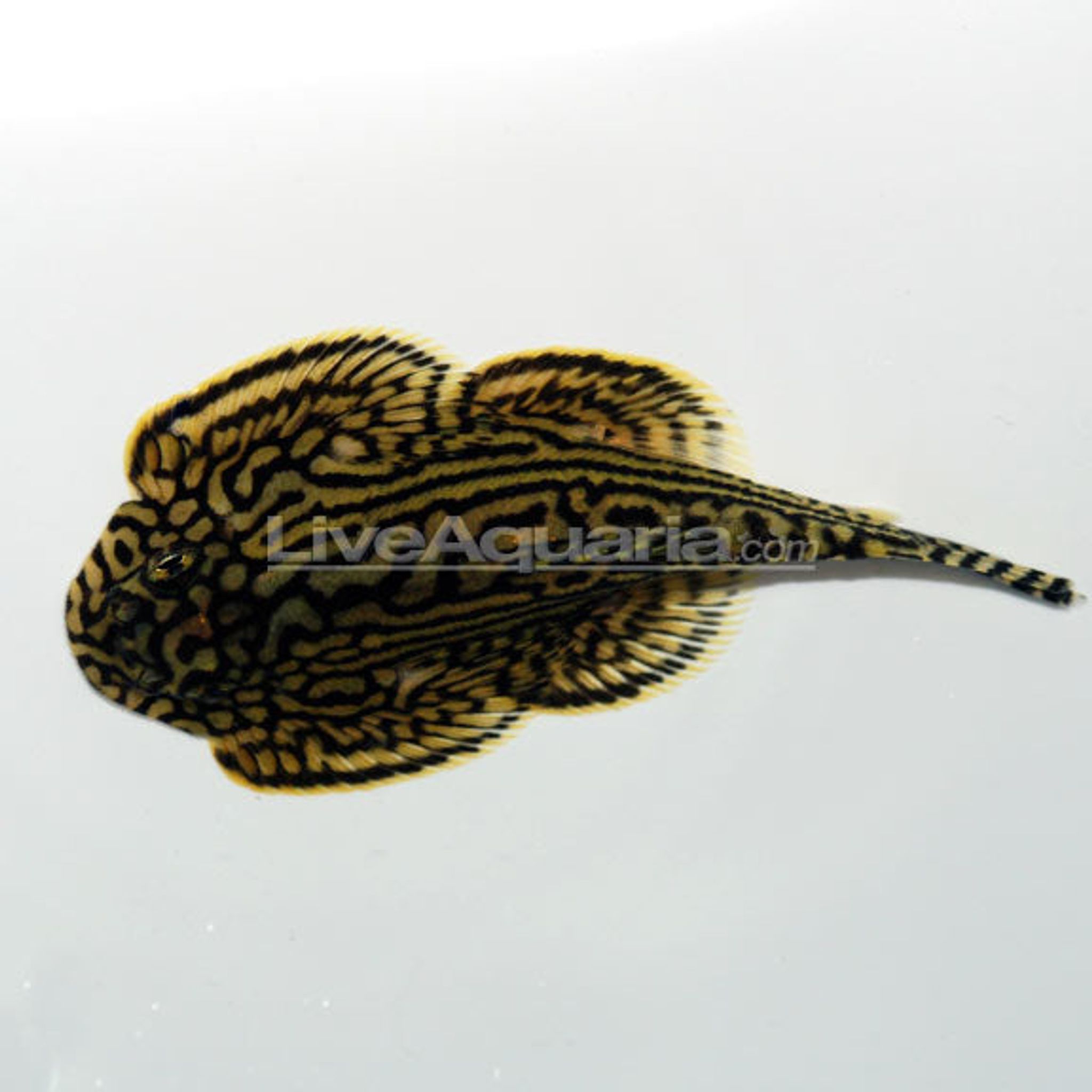

Hillstream Loach Care Guide: Tank Size, Diet, Water Parameters and Temperament
That flat, star-shaped little fish clinging to the glass like a "mini stingray" is a hillstream loach, and it lives nothing like a typical tropical community fish. It comes from cool, fast, oxygen-saturated mountain streams, so success comes down to three things: cooler water, strong flow and oxygen, and a mature surface to graze on. This guide covers tank size, temperature, diet, tank mates, and the setup mistakes that cause most early deaths.
What Is a "Hillstream Loach," Exactly?
"Hillstream loach" is a trade umbrella term, not one species — which is why care advice online is so inconsistent. It covers several flat-bodied gastromyzontid and balitorid loaches adapted to riffles and rapids, with flattened bellies and sideways-spread fins that act like a suction cup against current-swept rock.
Commonly sold types in the US:
- Reticulated/tiger hillstream loach (Sewellia lineolata) — from Vietnam and Laos, the classic "starry" pattern.
- Butterfly/Chinese hillstream loach (Beaufortia kweichowensis and relatives) — broader, wing-like pectoral fins.
- Borneo suckers (Gastromyzon species) — small, flat, shy, from fast Bornean rivers such as the Rajang.
- Pseudogastromyzon species, including types marketed as green lizard or blue-tail loaches.
Knowing which one you bought matters, since temperature tolerance, adult size, and territorial behavior differ by species.
Species Comparison
| Species/type | Adult size | Ideal temp | Temperament |
|---|---|---|---|
| Sewellia (reticulated/tiger) | 2–3 in (5–7.5 cm) | 65–75°F (18–24°C) | Peaceful, mild sparring |
| Beaufortia (butterfly) | 2.5–3 in (6.5–7.5 cm); some relatives to ~5 in (13 cm) | 65–75°F (18–24°C) | Peaceful, some territoriality |
| Gastromyzon (Borneo sucker) | 1.5–2.5 in (4–6 cm) | 65–75°F (18–24°C) | More territorial per rock, shy |
| Pseudogastromyzon | 2–2.5 in (5–6.5 cm) | 65–75°F (18–24°C) | Peaceful to mildly territorial |
| Panda loach (Yaoshania pachychilus) | ~2 in (5 cm) | 68–75°F (20–24°C) | Peaceful, shoaling |
Panda loaches deserve a special note: they're wild-caught, often pricey, need 15–20x turnover, and should only go into an established tank in a group of four or more.
Tank Size and Setup
Footprint matters far more than height. A long, low tank gives loaches more streambed to spread across than a tall one holding the same water volume.
- 20-gallon long — a workable minimum for a small group of 3 Sewellia in a species-only nano setup.
- 30 gallons or more — better, especially for a mixed community.
- 40–55 gallons — suits larger groups or bigger Beaufortia relatives.
Sources disagree here, ranging from 20 gallons to 50–55. The honest answer: scale tank size to rock/grazing-surface area and group size, not just a number on a box — more flat rock and slate means you can support more loaches without crowding.
Aquascape
- Smooth river rocks, slate, and pebbles or sand as substrate.
- Driftwood for texture and additional grazing surface.
- Hardy plants — anubias, java fern, bucephalandra — tied to rock or wood rather than planted in substrate.
- Open, hard surfaces are essential: that's where biofilm and diatoms grow, and biofilm is the loaches' primary food source.
- A tight-fitting lid is non-negotiable. Hillstream loaches climb glass and slip through surprisingly small gaps.
- Cover filter intakes with a sponge pre-filter to prevent small loaches from being pulled in.
Only add hillstream loaches to a tank that has been running 2–3+ months, with visible biofilm and diatom growth on the hardscape. Adding them to a brand-new tank is one of the most common reasons they fail.
Water Parameters
| Parameter | Target range | Notes |
|---|---|---|
| Temperature | 65–75°F (18–24°C) | Tolerated to ~64–80°F (18–27°C), but stress and low oxygen risk climb above 77°F (25°C) |
| pH | 6.5–7.8 | Stability matters more than hitting an exact number |
| General hardness | ~8–15 dGH | Moderate KH alongside it |
| Ammonia/nitrite | 0 ppm | Non-negotiable |
| Nitrate | Under 20 ppm | Keep dissolved organics low |
Sources disagree on the top end of the temperature range — some say 75°F is the ceiling, others say 80°F is fine long-term. The safer read: keep the tank at or below 75°F as a rule and treat 76–80°F as short-term tolerance only. Many US homes already sit around 70–74°F, so a heater is often unnecessary; if used, set it low, just to stop winter dips. pH advice is similarly split between "slightly acidic" and "7.0–7.8" — in practice, stability anywhere within 6.5–7.8 matters more than chasing an exact number.
Flow and Oxygen: The Non-Negotiable Part
Hillstream loaches evolved in fast, churning water saturated with oxygen. Cooler water alone doesn't guarantee enough oxygen — you need movement too. Aim for roughly 10–20x total tank turnover per hour, combining your filter's rated flow with a powerhead or wavemaker, plus surface agitation or an air stone for extra gas exchange.
Turnover (times/hour) = total flow rate (GPH) ÷ tank volume (gallons):
| Tank size | Target total flow (10–20x) | Rough powerhead pick (added to filter) |
|---|---|---|
| 20 gal (75 L) | 200–400 GPH | ~150–200 GPH |
| 30 gal (114 L) | 300–600 GPH | ~250–350 GPH |
| 40 gal (151 L) | 400–800 GPH | ~300–400 GPH |
| 55 gal (208 L) | 550–1,100 GPH | Two units, ~400–500 GPH each |
Sources disagree on whether raw current is required or whether clean, well-oxygenated water is the real driver — some keepers report success on a sponge filter alone. The practical takeaway: oxygen is what actually matters, and strong flow is simply the most reliable way to get there while triggering natural grazing behavior. Build in both a fast-flow zone and a calmer rest zone so fish can choose, since moving water also prevents dead spots and detritus buildup.
Filtration and Maintenance
- Use a strong, well-matured filter; a standard hang-on-back unit alone often isn't enough without added agitation.
- Do weekly water changes of 25–40% to keep dissolved organics low.
- A sponge or mechanical filter upgrade paired with a powerhead suits river-style setups well.
Diet
Hillstream loaches graze biofilm, diatoms, and soft algae off hard surfaces around the clock — but algae alone is not enough to keep them healthy in a home aquarium. Underfeeding is the single biggest killer of hillstream loaches, showing up as a pinched or sunken belly.
Feed daily with sinking algae wafers or a gel food, plus blanched zucchini, cucumber, or spinach; add frozen or live protein such as bloodworm, brine shrimp, or daphnia once or twice a week. Target-feed at lights-off or in a low-traffic corner so faster tank mates don't clean out the wafer first. Check belly shape weekly — a flat or concave belly means it's time to increase feeding, not wait it out.
Temperament and Group Size
Hillstream loaches are peaceful toward other species. Within their own kind, males show mild sparring and territorial chasing over favored rocks — usually harmless posturing rather than real damage.
Group size matters more than most people expect. Keep either a single fish or three or more; a pair almost always ends with one bullying the other. As a rough guide, plan on one loach per 5–10 gallons depending on available rock surface. Borneo sucker types (Gastromyzon) tend to be more territorial per rock than Sewellia, so give them extra spacing.
Sexing: females have a broader head and rounder body viewed from above; males have a more angular head with notched or serrated leading pectoral fin rays.
Breeding can happen unplanned in mature, rock-rich tanks with mulm and infusoria present — fry sometimes simply appear in long-running setups. First foods include infusoria, microworms, vinegar eels, and powdered fry food. Some related flat loach species spawn under stones with the male guarding the eggs, a pattern also seen in other stream specialists whose common names and patterns vary by locality (arrow loaches being one example of the naming confusion).
Tank Mates
Choose fish that share the same cool, flowing, well-oxygenated water and won't outcompete loaches for food.
Good tank mates: white cloud minnows, zebra and other danios, rasboras, some barbs, rice fish (medaka), bristlenose plecos, adult cherry or amano shrimp, and nerite snails. Panda garra and red garra aren't true hillstream loaches but share the same flow-tank needs — larger (~3.5 in/9 cm), more active, jumpy, and able to eat tougher algae, so they suit tanks with generous rock space. Skip the Chinese high-fin banded shark despite its similar juvenile looks; it grows far too large for a home tank.
Fish to avoid: cichlids, large or nippy species, and other flat bottom-dwellers that would crowd the same rock territory. Fancy goldfish share the cool-water preference but produce heavy waste and may eat tiny loaches, so it only works with strong filtration and close monitoring. Bettas need warm, still water and don't pair well. Adult shrimp are safe companions, though shrimplets may compete for biofilm.
River Biotope Tank Build
For a dedicated setup, a long, low tank with rounded river stones and sand or fine gravel mimics a natural riffle. Position one or two powerheads at one end to push a unidirectional current down the tank's length, with leaf litter collecting in a slack-water corner, and use strong lighting to encourage biofilm and diatom growth. Advanced keepers sometimes build a river-manifold setup — a plumbed, circulating loop — for very even flow across the whole footprint.
Pre-grow biofilm before you buy: place clean rocks in a sunny outdoor tub of dechlorinated water for a few weeks, or seed them by rubbing against decor or filter media from an already-running tank, then move them into the cycled display tank before adding loaches.
US Summer Heat Plan
Because the safe ceiling sits around 75°F, US summers without central AC can be the hardest season for hillstream loaches. Run a fan across the water surface for evaporative cooling (lid cracked), keep the tank in the coolest available room away from direct sun, and increase surface agitation during heat waves since warmer water holds less oxygen. If room temperatures regularly exceed 78–80°F for extended periods, an aquarium chiller is worth considering rather than relying on fans alone.
Common Mistakes and Troubleshooting
| Mistake | Result | Fix |
|---|---|---|
| Adding to a new or warm tropical tank (78°F+) | Fish hides, gasps at the surface, loses weight | Wait for a mature, cooled tank before adding loaches |
| Relying on algae alone | Sunken, pinched belly | Target-feed wafers or gel food daily |
| Standard hang-on-back filter only, no agitation | Low oxygen, lethargy, gasping | Add a powerhead or air stone for surface movement |
| No lid or open filter intakes | Escapes, or fish trapped/injured in intake | Seal lid gaps; cover intakes with sponge pre-filters |
| Keeping exactly two | Constant chasing, one fish stressed | Keep one alone, or three or more |
| Full-dose medication or salt | Scaleless-fish sensitivity, chemical burns | Half-dose copper/formalin treatments and test first |
Acclimation note: hillstream loaches typically arrive stressed and thin from shipping. Use a slow drip acclimation, then quarantine and focus on fattening them up before moving them into the display tank. Ask whether stock is wild-caught or captive-bred — wild-caught fish often need more careful quarantine and sometimes deworming.
Health Watch
Hillstream loaches are scaleless and sensitive to standard medications — start with a half dose of copper or formalin-based treatments and test first if possible. Watch for ich, fungal infections, and general wasting from chronic underfeeding or poor water quality. A regular belly-shape check is the simplest early-warning sign any keeper can use.
If you're setting up or upgrading a flow-focused tank, browsing glass tanks and filters built for higher turnover is a good starting point before bringing loaches home.
Frequently Asked Questions
Can a hillstream loach live in a 10-gallon tank?
Not recommended. A 10-gallon tank doesn't provide enough flow zone or grazing surface area to support even a small group comfortably.
Do hillstream loaches need a heater?
Usually not, if your room stays in the 68–75°F range. A heater set low is still useful as insurance against winter temperature dips rather than to actively warm the tank.
Can hillstream loaches live with goldfish or bettas?
Goldfish are possible if filtration and turnover are strong enough to handle the extra waste load, though adult goldfish may eat small loaches. Bettas are not compatible — they need warm, still water, which is the opposite environment a hillstream loach requires.
Will hillstream loaches eat all the algae in my tank?
They graze diatoms and soft biofilm and help keep hard surfaces clean, but they are not a full clean-up crew solution. They still need daily supplemental feeding to stay healthy.
Why is my hillstream loach always stuck to the glass?
That's normal grazing and resting behavior — the flattened body and fins are built for exactly that. If instead you see it gasping near the surface, check your water temperature and oxygen levels right away.
How many hillstream loaches can I keep together?
Keep either a single fish or three or more; avoid pairs, since one will usually bully the other. As a rough guide, plan on one loach per 5–10 gallons depending on available rock surface.
How long do hillstream loaches live?
With stable cool water and consistent feeding, hillstream loaches commonly live 8 to 10 years or longer.
Ready to start a flow-tank build or add to an existing one? Browse the current loach selection on FishyHub to compare species before you buy.


