

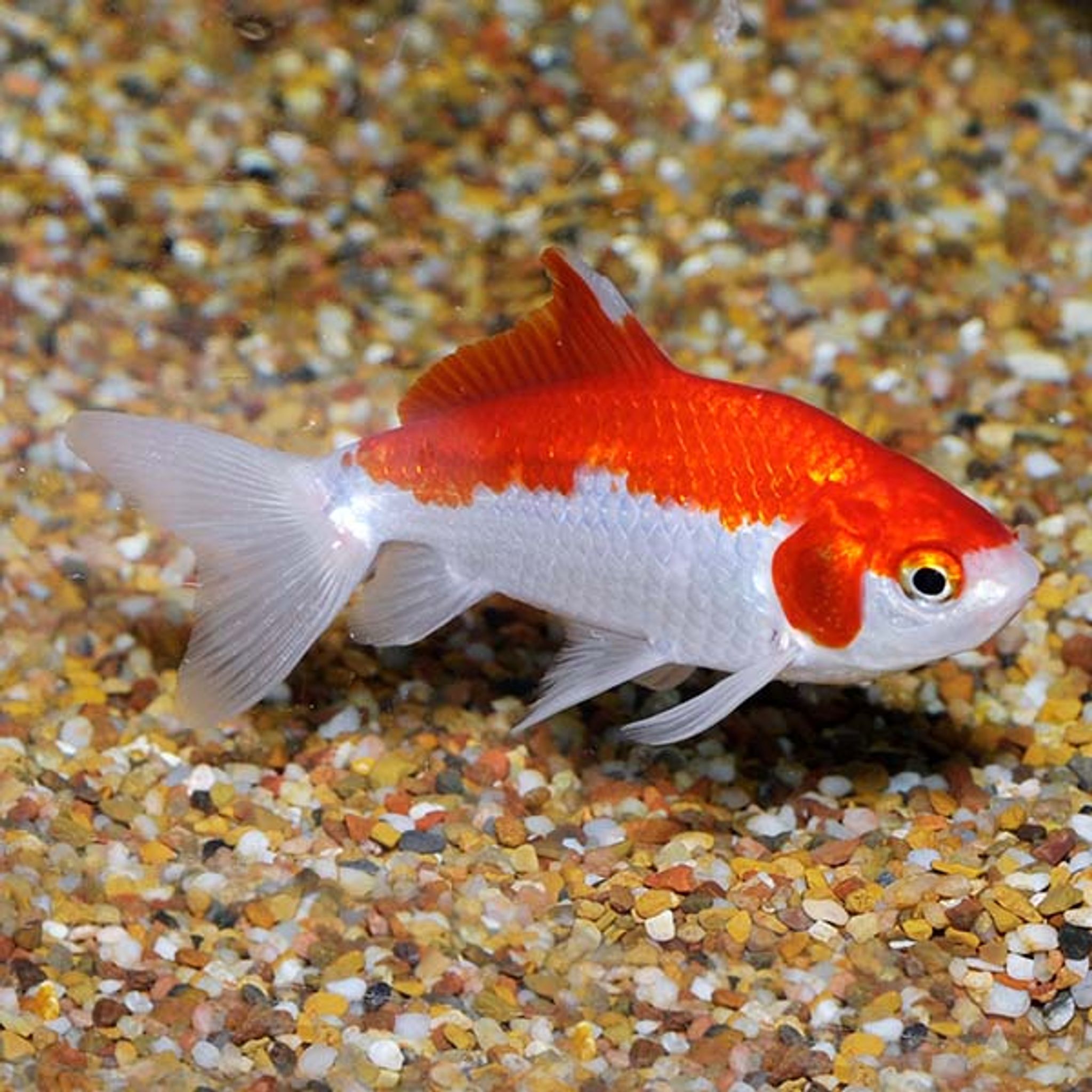

Goldfish Care Guide: Tank Size, Diet, Water Parameters and Temperament
Goldfish are not a bowl fish, a beginner "throwaway" pet, or a fish that stays small forever — they're cold-water fish that can live over a decade and need real filtration and swimming room. This guide covers exactly how big a tank you need, what to feed, which water parameters to hold, and how goldfish behave with other fish, so you can set one up correctly the first time.
Why a bowl never works
A bowl fails a goldfish on three fronts at once: minimal surface area for gas exchange, no real filtration, and almost no room to grow. Fish kept this way are commonly stunted and typically live only around 2–3 years, compared with a decade or more in a properly sized, filtered tank. Stunted growth isn't a sign the fish has "reached its natural size" — it's organ and skeletal damage from chronically poor conditions, and it shortens lifespan even if the fish looks fine for a while.
Tank size: how big is big enough
Start with a 20-gallon (76 L) minimum for a single young goldfish, and add roughly 10 gallons (38 L) per additional fish as a rule of thumb. That starting number is only a floor, not a forever number — slim-bodied types especially will outgrow it.
- Common, comet, and shubunkin goldfish can reach 10–14 inches (25–36 cm) as adults and need 30–75+ gallons (114–284+ L) long-term. Treat 30 gallons as an absolute minimum for one full-grown slim-bodied goldfish, and plan for 55–75+ gallons if you're keeping more than one or expect maximum growth.
- Fancy varieties (oranda, fantail, black moor, telescope, ranchu, bubble eye) stay smaller and rounder-bodied, so a 20-gallon tank can suit one adult fancy goldfish, with more room needed per additional fish.
- A "+10 gallons per fish" rule ignores filtration capacity, which matters just as much as raw water volume — see the bioload note below.
Bioload: why filtration capacity matters more than the gallon number
Goldfish produce far more waste than most freshwater fish of similar size, so tank volume alone understates what a stocked tank needs. As a practical approach:
- Size the filter's rated flow well above the tank's actual volume rather than matching it — many keepers aim for a filter rated for roughly double the tank size.
- Every additional goldfish adds meaningfully to ammonia production, so add filtration capacity (not just water volume) as you add fish, not only tank inches.
- Heavier stocking means more frequent gravel vacuuming and water testing, even if the gallons-per-fish math looks fine on paper.
Water parameters goldfish need
| Parameter | Target range | Notes |
|---|---|---|
| Temperature (general) | 65–75°F (18–24°C) | Fancy types do best in the lower-middle of this band |
| Temperature (fancy varieties) | 65–72°F (18–22°C) | A heater helps if room temperature drops below ~68°F (20°C) or swings often |
| Temperature (pond/slim-bodied) | Tolerates near-freezing to mid-70s°F | Goes dormant in cold water; typically no heater needed |
| pH | 6.8–8.0, aim for stable 7.0–7.6 | Stability matters more than hitting an exact number |
| Ammonia | 0 ppm | Any detectable ammonia is a problem |
| Nitrite | 0 ppm | Same as ammonia — test weekly |
| Nitrate | Under 20–40 ppm | Keep low with regular water changes |
A few operating rules that matter as much as the numbers themselves:
- Do goldfish need a heater? It depends on the variety and your room. Fancy goldfish in a house that gets cold or fluctuates a lot benefit from one set in the mid-60s to low-70s°F. Hardy pond-type goldfish generally don't need one indoors and can overwinter outdoors in water that gets very cold, as long as it doesn't freeze solid.
- Change roughly 20–25% of the water weekly to biweekly, and keep any water-change temperature or parameter shift within a couple of degrees Fahrenheit to avoid shocking the fish.
- Test ammonia and nitrite regularly during the first months in a new tank — goldfish's heavy waste output means a newly cycled tank can spike faster than expected.
What goldfish eat
Goldfish are omnivorous and should get a mix of foods rather than one flake type:
- A quality sinking or floating pellet or flake formulated for goldfish as the base diet.
- Blanched vegetables — peas (deshelled), zucchini, and leafy greens — a few times a week for fiber and roughage.
- Occasional live or frozen protein such as brine shrimp, daphnia, or bloodworms.
Feed small amounts once or twice a day, only what the fish can finish in about 2 minutes. Overfeeding is the single most common goldfish-keeping mistake, and it drives both ammonia spikes and swim bladder disorder. Before feeding, briefly soak dry pellets and thaw frozen food — this cuts down on gulped air, a common trigger for bloating and buoyancy problems.
Preventing and easing swim bladder disorder
Swim bladder issues usually show up as a fish floating nose-down, sinking, or struggling to hold a normal position in the water. To prevent it:
- Pre-soak pellets for a minute or two before feeding so they don't expand in the gut after being swallowed dry.
- Avoid overfeeding, and skip a feeding day roughly once a week to let the digestive system catch up.
- Offer deshelled, blanched peas — a traditional go-to food that helps move things through the gut when a fish looks bloated.
- If symptoms persist for more than a few days or the fish stops eating, that points to a more serious internal issue rather than simple bloat.
Temperament and tankmates
Goldfish are peaceful, social, and do best with their own kind or with other slow, cold-tolerant fish that share similar water needs. They forage constantly along the substrate and will uproot or eat soft-leaved plants, so plan hardscape and planting around that habit rather than fighting it.
Avoid pairing goldfish with:
- Fast, nippy tropical fish that outcompete them for food or nip at their fins.
- Very slow, long-finned tropical fish that goldfish can outcompete or accidentally stress.
- Any fish with substantially different temperature requirements, since goldfish are cold-water fish, not tropical.
Two persistent myths are worth correcting because they affect real decisions: goldfish do not have a three-second memory, and they do not simply "grow to the size of their tank." A small tank stunts growth through poor water quality and restricted space — it doesn't cap size safely, it damages the fish.
Common, comet, shubunkin, and fancy: what's the difference
| Type | Body shape | Hardiness | Adult size | Best housing |
|---|---|---|---|---|
| Common goldfish | Slim, single tail | Very hardy | 10–14 in (25–36 cm) | Large tank or pond |
| Comet | Slim, long forked tail, fast swimmer | Very hardy | 10–14 in (25–36 cm) | Large tank (55+ gal) or pond |
| Shubunkin | Slim, calico pattern, longer fins | Very hardy | Up to ~12 in (30 cm) | Large tank (75+ gal) or pond |
| Fancy (oranda, fantail, black moor, telescope, ranchu, bubble eye) | Rounded, ornate finnage | More delicate | Typically 6–8 in (15–20 cm) | Indoor tank only |
Comets are the most widely sold goldfish and are frequently offered cheaply as "feeder" fish. Feeder-marketed goldfish are often kept in crowded, low-oxygen conditions before sale and can carry parasites or disease, so they're not a good choice as either a pet or as feeder stock without a proper quarantine period first.
Setting up a goldfish aquarium
- Filtration: oversize it relative to the tank's rated capacity, since goldfish generate heavy bioload.
- Aeration: good surface agitation or an air stone helps maintain oxygen levels, especially in warmer months.
- Cycle first: run the tank through a full nitrogen cycle before adding fish, rather than stocking on day one.
- Substrate: smooth gravel or sand works well; avoid anything small enough for a goldfish to swallow while digging and foraging.
- Maintenance: vacuum gravel weekly to remove waste that builds up faster than in a typical community tank.
- Plants: choose hardy, cold-tolerant species like anacharis, hornwort, java fern, and anubias, which stand up better to constant nibbling and uprooting than delicate tropical plants. Floating plants also help control light and algae.
Shoppers building a first setup can browse goldfish alongside appropriately sized glass tanks and gravel and sand substrate to plan the whole setup at once.
Outdoor and pond goldfish
Hardy slim-bodied goldfish can live outdoors year-round across most of the US as long as the pond is deep enough that it won't freeze solid — a minimum depth that also gives the fish room to escape predators. As water temperature drops and stays consistently cold, stop feeding: goldfish's metabolism slows dramatically and undigested food can rot in the gut or foul the water.
Watch for signs of trouble in pond fish, especially in winter:
- Lethargy or unusual stillness beyond normal cold-weather slowdown.
- Clamped fins held tight against the body.
- Gasping at the surface, which can signal low oxygen — a particular risk under ice, where gas exchange is blocked and an air hole may need to be kept open.
Fancy varieties are not recommended for unheated outdoor ponds; their more delicate bodies and finnage handle cold and predation risk far worse than comets or shubunkins.
Breeding goldfish
Breeding is typically triggered by rising spring temperatures. A successful setup includes a spawning mat or dense plants for the female to scatter eggs onto, since goldfish don't guard nests. Move eggs — or better, set up spawning in a separate tank or pond section — because adult goldfish will readily eat both eggs and fry. Newly hatched fry need infusoria or baby brine shrimp before they're large enough to graduate to crushed flake food.
Color changes: black or white patches
Black patches or spots are most often ammonia burn — a stress response to poor water quality that frequently fades as conditions improve, though it can take weeks. Less commonly, dark patches are simply genetic coloring or, rarer still, a sign of black-spot parasite disease. Whitening or pale patches are more often linked to stress, poor diet, natural aging or fading pigment, or a fungal or bacterial issue than to ammonia specifically. Either change is worth treating as a prompt to test water quality first.
Skin peeling and slime coat problems
A goldfish shedding visible skin flecks or losing its normal sheen usually points to poor water quality, rough handling during netting or transport, or parasites damaging the protective slime coat. Correcting water quality is the first step; keep watching the fish afterward for signs of a secondary bacterial or fungal infection taking hold on the damaged area.
Buying goldfish: what to check
Whether shopping online or at a local shop, look for:
- Clear eyes and full, unclamped fins.
- Active, level swimming rather than listing to one side or resting on the bottom.
- No visible sores, ragged fin edges, or excess mucus.
Quarantine any new goldfish for about two weeks in a separate tank before introducing it to an established tank or pond, even if it looks healthy at purchase.
Common mistakes to avoid
- Housing goldfish in bowls or tanks sized for their current, not adult, size.
- Overfeeding, which drives ammonia spikes and swim bladder disorder.
- Keeping goldfish too warm long-term or housing them with fast tropical tankmates.
- Under-filtering relative to how much waste goldfish actually produce.
- Skipping quarantine on new arrivals.
- Making large, sudden water changes that shock the fish with a temperature or parameter swing.
Frequently Asked Questions
Can goldfish live in a bowl?
No. A bowl has too little surface area for gas exchange, no real filtration, and no room for a fish that can reach 10+ inches. Goldfish kept in bowls are commonly stunted and typically live only 2–3 years instead of a decade or more.
Do goldfish need a heater?
It depends on the variety and your home. Fancy goldfish generally benefit from a heater set in the mid-60s to low-70s°F if room temperature drops or swings a lot; hardy pond-type goldfish tolerate much wider temperature ranges and usually don't need one.
How long do goldfish really live?
With proper housing, water quality, and diet, 10–15 years is a realistic range, and well-kept pond goldfish regularly reach 15–20+ years. Reports of goldfish living only a few years almost always trace back to bowls, undersized tanks, or poor water quality rather than the fish's natural lifespan.
Can goldfish live with other fish?
Yes, best with their own kind or other slow-moving, cold-tolerant fish that share similar water temperature needs. Avoid fast, nippy tropical fish and very slow, long-finned tropical fish, since neither pairs well with a cold-water, foraging fish like a goldfish.
Why is my goldfish turning black or white?
Black patches are most often ammonia burn that can fade once water quality improves, with genetic darkening or black-spot parasite disease as less common causes. Whitening is more often tied to stress, diet, aging, or a fungal or bacterial issue than to ammonia specifically — either way, check water parameters first.
Can goldfish live outside in a pond year-round?
Hardy varieties like comets and shubunkins can live outdoors year-round in most US climates if the pond is deep enough to avoid freezing solid and to give them room to escape predators. Fancy varieties are more delicate and are not recommended for unheated outdoor ponds.
How often should I feed goldfish and how much?
Feed small amounts once or twice a day, offering only what the fish can eat in about 2 minutes. Overfeeding is the most common goldfish-keeping mistake and a leading cause of ammonia spikes and swim bladder disorder.
What's the difference between common, comet, shubunkin, and fancy goldfish?
Common, comet, and shubunkin goldfish are slim-bodied, very hardy, fast swimmers that can reach 10–14 inches and are suited to large tanks or ponds. Fancy varieties (oranda, fantail, black moor, telescope, ranchu, bubble eye) have rounded, ornate bodies, stay smaller, are more sensitive, and are best kept indoors.
Ready to set up or upgrade a goldfish home? Browse current goldfish available on FishyHub to find hardy comets, shubunkins, or fancy varieties suited to your tank size.