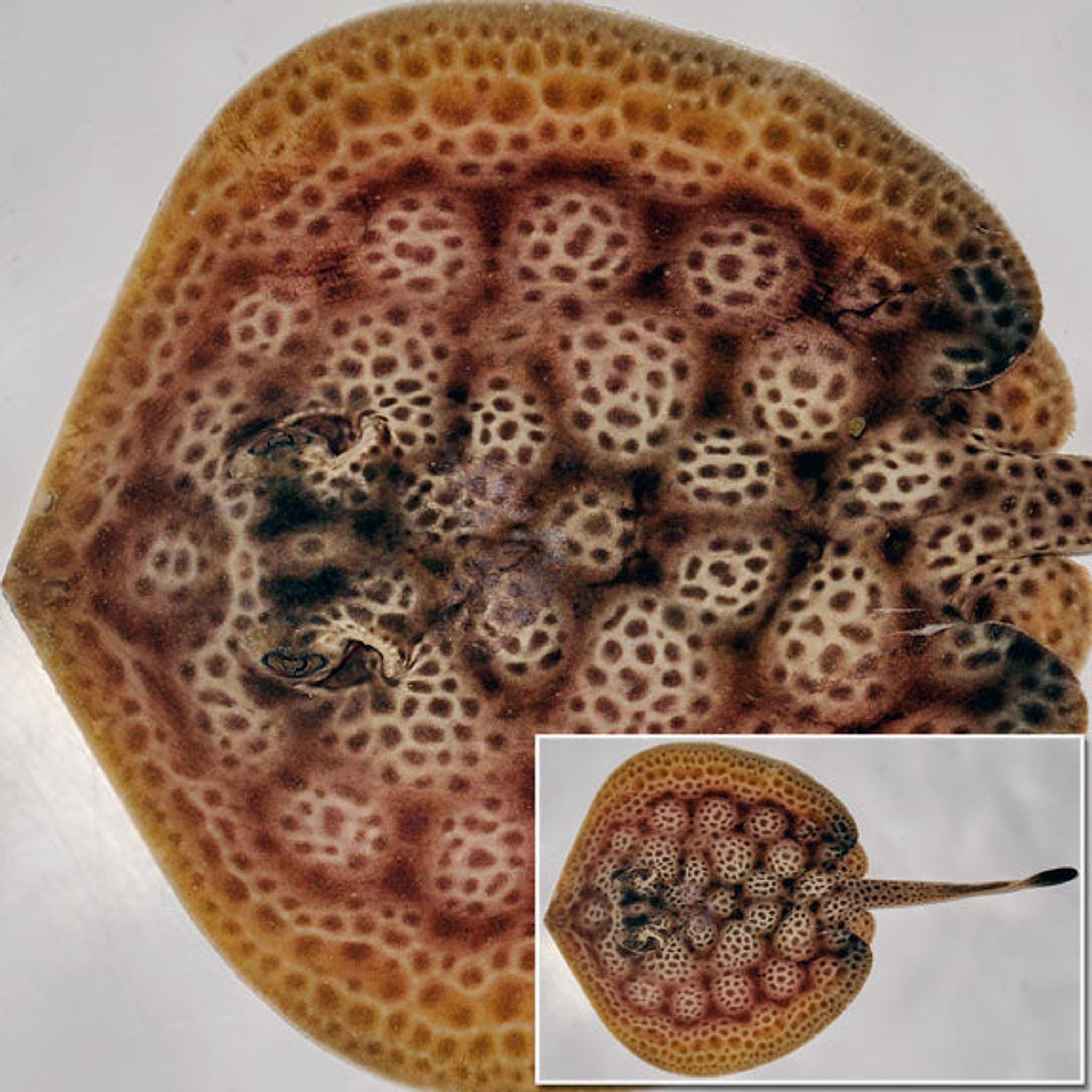

Freshwater Stingray Care Guide: Tank Size, Diet, Water Parameters and Temperament
Freshwater stingrays are not a starter fish dressed up as a novelty — they are large, venomous-barbed animals that outgrow almost every "beginner" setup within a year or two. This guide lays out the real adult tank size, water chemistry, diet, and safety practices you need before buying one, plus the differences between the common trade species so you can match a ray to the space you actually have.
What Is a Freshwater Stingray?
Freshwater stingrays sold in the US trade belong mostly to the family Potamotrygonidae, native to South American river systems including the Amazon, Orinoco, Paraná, and Xingu basins. These are true rays that evolved to live entirely in freshwater — they are not marine stingrays acclimated down to lower salinity, and the two groups cannot be swapped between setups.
Quick Facts
- Rays are cartilaginous fish, related to sharks only in that both use cartilage instead of bone — they are not sharks.
- They navigate and hunt partly through electroreception, sensing electrical fields with organs called ampullae of Lorenzini.
- Reproduction is ovoviviparous (live-bearing); gestation runs roughly 9 to 14 weeks depending on species, with litters of one to a handful of pups.
- The tail barb is a defensive tool, never used to attack or hunt.
- A ray's disc moves through water by undulating its pectoral fins rather than swimming like a typical fish.
Size and the "Juvenile Tank Creep" Problem
Most trade species reach a 12 to 24 inch (30 to 61 cm) disc diameter as adults, and some larger Motoro-type rays exceed 24 inches (61 cm). Stores commonly sell juveniles at 4 to 6 inches (10 to 15 cm) in a 55 to 75 gallon (208 to 284 L) tank, and that setup looks perfectly reasonable at the time of purchase.
The problem is what happens next. A pup that fits comfortably in a 55-gallon tank today can require a tank four to six times that size within one to two years. Buying a stingray without already owning, building, or budgeting for the adult-size tank is the single most common and most expensive mistake in the hobby. If you cannot commit to housing a 300+ gallon animal from day one, a stingray is not the right purchase.
Adult Tank Size: The Real Numbers
Sources disagree on the exact minimum, and it is worth being upfront about that rather than picking one number and pretending it's settled. The sensible framing:
- 180 gallons (681 L) is the absolute floor, and only for the smallest trade species kept alone.
- 250 to 300+ gallons (946 to 1,136+ L) is the realistic range for most single adult rays.
- 300+ gallons with a 6+ foot (1.8+ m) footprint is needed for larger species, or for keeping a pair or group.
Footprint matters more than gallon count. Rays are bottom-dwellers that glide and pivot along the substrate rather than swimming through open water, so a tank needs floor space, not height. A tall tank with the "right" volume but a small base is a poor ray tank. A frequently cited practical floor plan is at least 6 feet long by 2 feet wide (183 x 61 cm), kept relatively low — 18 to 24 inches (46 to 61 cm) of water depth is typically enough, since extra height above the ray adds volume without adding usable space.
Calculating Tank Volume
Before committing to a build, work out actual gallons from the footprint you're planning:
Length (in) × Width (in) × Height (in) ÷ 231 = US gallons
For example, a 72 x 24 x 20 inch tank (183 x 61 x 51 cm) works out to 72 × 24 × 20 ÷ 231 ≈ 150 gallons. That falls short of the realistic adult range on its own, which is exactly why many keepers building a low, wide ray tank end up closer to 72 x 30 x 24 inches (183 x 76 x 61 cm) — roughly 224 gallons — to comfortably clear the 250-gallon mark with margin for filtration equipment displacement and a full sand substrate. Run this math against your available floor space before purchasing a ray, not after.
Tank Shape and Material
Long, low, wide builds beat tall ones for the reasons above. Glass and acrylic both work; the right choice depends on budget and size rather than one material being objectively better:
| Factor | Glass | Acrylic |
|---|---|---|
| Weight | Heavier | Lighter — easier for large custom low tanks |
| Clarity over time | Can develop a slight tint | Stays clearer long-term |
| Scratch resistance | Scratch-resistant | Scratches more easily, a real concern with sand-stirring rays |
| Cost | Cheaper | More expensive |
| Custom ultra-low, wide shapes | Harder to source | More commonly used for large custom builds |
Large custom low-profile ray tanks often lean acrylic or welded glass, but a well-built glass tank at the right footprint is equally viable, especially at more moderate sizes.
Substrate and Filtration
Fine, soft sand is non-negotiable. Rays bury themselves in the substrate, and gravel can injure the sensitive ventral surface and the barb area. This is one of the few points in ray keeping with no real disagreement across sources. Aquarium-safe sand is available to browse in FishyHub's substrate selection.
Rays are messy, high-bioload eaters, so filtration needs to be oversized relative to what a typical community tank would run — canister or sump-level filtration is standard, not optional. Pair that with:
- Weekly water changes of roughly 25 to 30%, with some keepers doing smaller, more frequent changes instead.
- Zero tolerance for ammonia or nitrite.
- Nitrates kept under roughly 20 to 40 ppm.
Rays are notably less tolerant of poor water quality than most freshwater community fish, so consistency matters as much as the numbers themselves. You can compare canister and sump-capable options in FishyHub's filter category when sizing equipment for a ray-scale bioload.
Water Parameters
Exact figures vary between sources — some recommend 75 to 80°F, others 78 to 82°F; pH guidance ranges from 6.0–7.0 to 6.5–7.5. A sensible consensus range covers both:
| Parameter | Target range |
|---|---|
| Temperature | 76–82°F (24–28°C), often centered near 78–80°F (26–27°C) |
| pH | 6.5–7.5 (mildly acidic to neutral) |
| General hardness | Soft to moderate (low single-digit to low-teens dGH) |
| Ammonia / Nitrite | 0 ppm |
| Nitrate | Under ~20–40 ppm |
Stability matters more than hitting an exact number. Sudden swings in temperature, pH, or an ammonia spike are more dangerous to a ray than settling a few tenths of a degree off the "ideal." Watch for curling disc edges or a sudden refusal to eat — both are early stress signals tied to parameter instability, not just illness.
Diet and Feeding Schedule
Freshwater stingrays are carnivorous bottom feeders that do best on a varied menu:
- Earthworms — a staple many keepers rely on as a primary food.
- Prawn or shrimp, both shelled and unshelled.
- Bloodworms.
- Mussel or clam meat.
- Whitefish or tilapia fillet pieces, cut to size.
- Occasional live blackworms or feeder fish — feeders should be quarantined and gut-loaded first, never used as a primary diet.
New or young rays are often trained onto food with earthworms or live blackworms, then gradually weaned onto frozen and prepared foods. Feeding frequency changes with age:
- Juveniles: daily or every other day.
- Adults: 3 to 4 times per week.
Adjust portions to body condition, not a fixed schedule. A visibly domed, overly convex disc is a clear sign of overfeeding and should prompt an immediate cutback, both for the ray's health and to avoid fouling the tank with uneaten meaty food.
Temperament and Safety
Freshwater stingrays are generally docile and non-aggressive toward tankmates unless provoked or unless a tankmate is small enough to look like food. The real hazard isn't aggression — it's the venomous tail barb, used purely in self-defense when a ray feels stepped on or cornered. It is never used to hunt.
Basic Safety Practices
- Shuffle your feet through the sand during maintenance instead of stepping down directly — this is the single most effective way to avoid an accidental sting.
- Know where the ray is resting before reaching into the tank or moving decor.
- Never corner a ray against the glass or a piece of hardscape.
If a Sting Happens
Stings are extremely painful and warrant fast action:
- Immerse the affected area in hot water (as hot as can be safely tolerated, not scalding) — the heat helps break down the venom proteins and eases pain.
- Seek emergency medical care promptly, since barb fragments, infection risk, and allergic reaction all need professional evaluation.
- Don't wait to see if pain subsides on its own before getting medical attention.
Barb Clipping
Some keepers trim the barb as a safety measure; others avoid it, arguing it's stressful and unnecessary if tank access is managed carefully. There's no firm consensus — treat it as a personal risk-tolerance decision rather than a required step.
Tankmates
Good tankmates are calm, non-nippy, and too large to be eaten:
- Larger docile cichlids
- Silver dollars
- Larger tetras and characins
- Plecos, with some caution — plecos can occasionally irritate a ray's slime coat
Avoid fin-nippers, aggressive cichlids, and anything small enough to fit in a ray's mouth. Fish that nip at a ray's eyes or disc edges cause slow, cumulative damage even when they're not actively aggressive toward it.
Freshwater Stingray Types
Rays are best treated as a species group, not one animal, since hardiness, size, and cost vary meaningfully between trade types.
| Type | Typical adult size | Hardiness / notes |
|---|---|---|
| Motoro | Up to 24+ in (61+ cm) in larger forms | Most common, hardiest, most affordable; tolerates a slightly wider parameter range |
| Hybrid / Pearl | Variable, often 14–20 in (36–51 cm) | Bred for pattern; care needs similar to parent species |
| Black Diamond | Large, often 18–24 in (46–61 cm) | Premium pattern; standard care requirements, higher cost |
| Xingu River ray | Moderate, roughly 14–18 in (36–46 cm) | Distinct dark body with light spots; one of the more commonly available Potamotrygon species |
| Teacup varieties | ~10–14 in (25–36 cm) disc | Smaller max size, but still large-bodied — not a small-tank fish |
Motoro Stingray
The Motoro is the closest thing to a beginner ray: widely available, generally the hardiest of the trade species, and typically the most affordable entry point. It also tolerates a somewhat wider parameter range than pickier species, which matters for anyone still refining their filtration and dosing routine.
Xingu River Ray
Recognizable by a dark body covered in light spots, the Xingu ray is a moderate-sized, commonly available Potamotrygon species that fits a similar care profile to other mid-sized trade rays.
Teacup Stingray Care
"Teacup" is a marketing and trade term for selectively kept lines with a smaller maximum adult size — it is not a distinct species. A teacup ray still needs a large, low, wide tank, generally 100+ gallons (379+ L) at minimum even at its smaller adult size. It is a smaller ray, not a small-tank ray, and the footprint-over-height rule still applies.
Choosing a Species for Your Space and Budget
Rather than picking a type by pattern alone, work backward from what you can realistically house:
- 100–150 gallons, low and wide: teacup varieties only, and even then treat 100 gallons as a floor, not a comfortable long-term home.
- 180–250 gallons: a single Motoro or similarly sized species.
- 300+ gallons, 6+ foot footprint: larger Motoro-types, Black Diamond, or any plan involving a pair.
Budget follows the same logic — hardier, more common species like Motoro tend to cost less and forgive more filtration or dosing mistakes, while premium patterns and hybrids raise both purchase cost and the margin for error in water quality.
Freshwater vs. Saltwater Stingrays
These are unrelated animals from a care standpoint, and neither setup can substitute for the other.
| Freshwater stingrays (Potamotrygonidae) | Marine/true stingrays | |
|---|---|---|
| Habitat | South American river basins | Coastal and open ocean worldwide |
| Typical display size | 12–24+ in disc | Varies widely, often larger in touch-tank displays |
| Care intensity | High — soft water, oversized filtration, strict stability | High — full marine chemistry, large system needs |
| Setup type | Dedicated freshwater system only | Dedicated marine system only |
A freshwater ray cannot be kept in a marine setup, and a marine ray cannot be moved into freshwater. If you're drawn to marine ray displays but plan a freshwater tank, a Potamotrygon species is the only compatible option.
Sourcing and Legality
Check state and local regulations before buying. Some US states and localities — Texas notably — restrict or ban ownership of certain freshwater stingray species. This step is easy to skip and easy to regret; confirm legality in your area before you commit to a purchase, a tank build, or a species.
Common Mistakes to Avoid
- Buying a 4–6 inch juvenile for a 55–75 gallon tank with no plan or budget to upgrade to 200+ gallons within a year or two.
- Using gravel instead of sand, risking injury to the ray's underside and barb area.
- Overfeeding to the point of a visibly domed disc, or fouling water with uneaten meaty foods.
- Allowing sudden parameter swings that trigger disc curling or appetite loss.
- Using copper-based medications — rays, like other elasmobranchs, are copper-intolerant, so double-check any treatment or "invertebrate-safe" label before dosing.
- Reaching into the tank without sweeping feet first or checking where the ray is resting.
- Housing rays with nippy or aggressive tankmates that stress them or damage the eyes and disc edges over time.
- Underestimating bioload by running filtration sized for a standard community tank instead of a ray-scale system.
When introducing a new ray to an established tank, quarantine it separately first — rays are sensitive to many standard medications, not just copper, so a clean quarantine period reduces the risk of a bad reaction during an already stressful transition.
Frequently Asked Questions
How big of a tank does a freshwater stingray really need as an adult?
Juveniles are often sold in 55–75 gallon tanks, but that's only a starting point. Adults need a 180-gallon floor for the smallest species and a realistic 250–300+ gallon range for most, with footprint (length and width) mattering more than raw gallon count since rays need floor space to glide and turn.
Are freshwater stingrays dangerous to keep at home?
The venomous tail barb is defensive, not offensive — stings happen when a ray feels stepped on or cornered, not from unprovoked attacks. Basic safety practices like sweeping your feet through the sand during maintenance and knowing where the ray is resting before reaching in prevent the vast majority of incidents.
What do freshwater stingrays eat, and how often?
They're carnivorous bottom feeders that do best on a varied diet of earthworms, shrimp or prawn, bloodworms, mussel or clam meat, and whitefish pieces. Juveniles eat daily or every other day, while adults typically eat 3 to 4 times per week, adjusted to avoid a visibly domed, overfed disc.
Can I keep a freshwater stingray with other fish?
Yes — calm, appropriately sized tankmates like larger docile cichlids, silver dollars, and larger tetras or characins generally work well. Avoid fin-nippers, aggressive cichlids, and any fish small enough to be eaten or prone to nipping at the ray's eyes and disc.
What is a teacup stingray, and does it need a smaller tank?
"Teacup" is a trade term for lines bred toward a smaller maximum adult size, not a separate species. It still needs a large, low, wide tank — generally 100+ gallons at minimum — because it's a smaller ray, not a small-tank ray.
What's the difference between freshwater and saltwater/marine stingrays as pets?
They're entirely different animals with incompatible care requirements: freshwater rays (Potamotrygonidae) need dedicated freshwater systems, while marine stingrays need full marine setups. Neither can be kept in the other's water chemistry, so the two are never interchangeable.
Is it legal to own a stingray in my state?
Not necessarily — some US states and localities restrict or ban ownership of certain freshwater stingray species, with Texas a notable example. Check your state and local regulations before purchasing, since this varies by location and by species.
Glass or acrylic tank for a stingray setup?
Both work at the sizes a ray requires. Acrylic is lighter and often preferred for large custom low-profile builds but scratches more easily, especially with sand and ray contact, while glass is cheaper and scratch-resistant but heavier and harder to source in ultra-wide, low custom dimensions.
Ready to plan your setup? Browse ray-compatible tankmates and other large freshwater species in FishyHub's Freshwater Livestock category before you commit to a tank size and species.


