
Freshwater Pom-Pom Crab Problems: Common Causes of Stress, Death and Poor Growth
Freshwater pom-pom crabs vanish from tanks, stop moving for days, or die without warning more often than most keepers expect—and the reasons are usually predictable once you know where to look. This guide walks through the real causes of stress, death, and poor growth in these crabs and how to fix or prevent each one.
Know What You Actually Bought
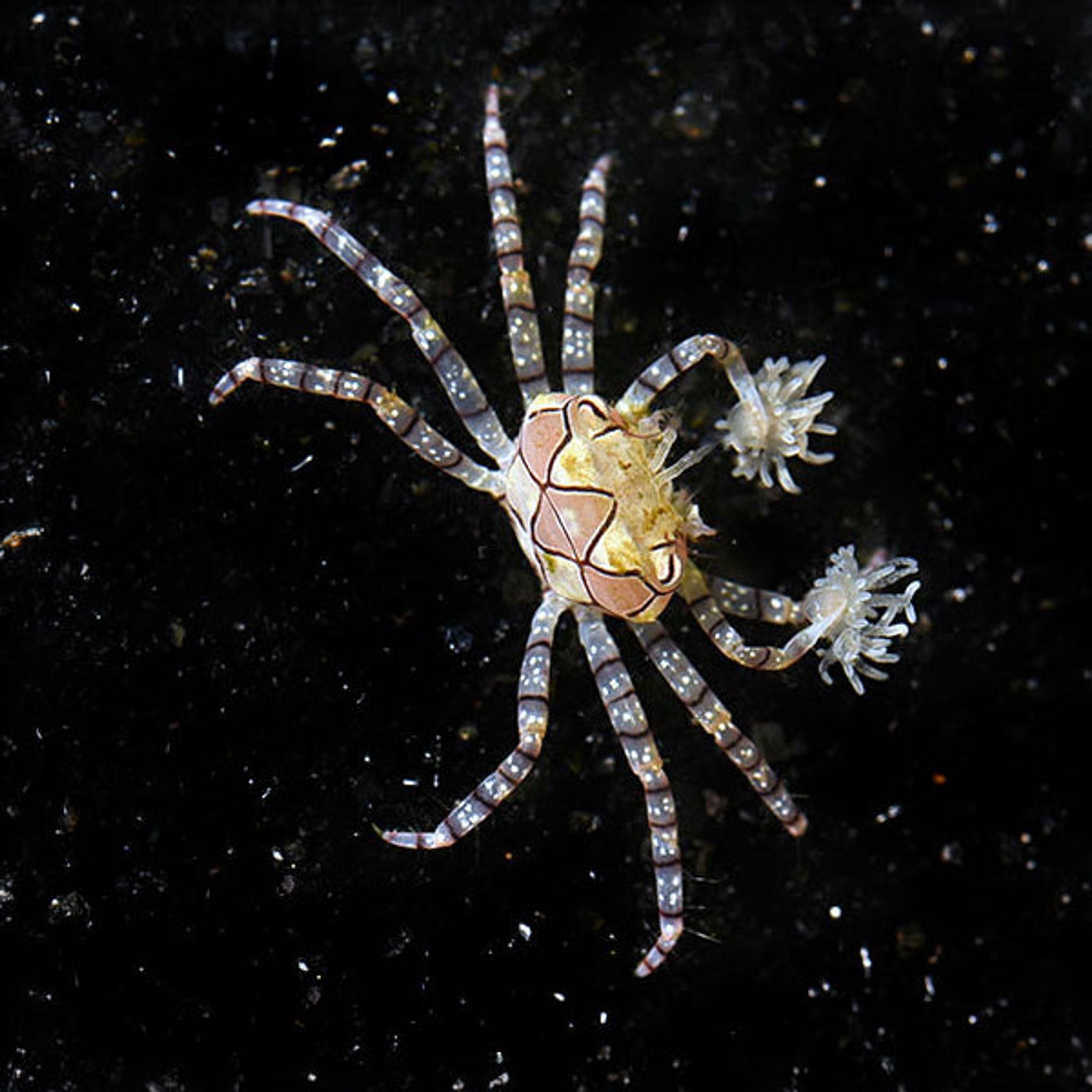
The name "freshwater pom-pom crab" gets applied loosely at fish stores, and that inconsistency is itself a leading cause of dead crabs. In the aquarium trade, it's typically a small crab sold as aquatic or semi-aquatic livestock—not the true marine Lybia pom-pom crab known for carrying anemones on its claws. Exact species identification varies by supplier, and in-store labeling is often unreliable, so it's worth treating "pom-pom crab" as a trade name rather than a confirmed scientific identity.
This matters because similar marketing language is also used for purple or "Thai devil" crabs, which are land-leaning, semi-terrestrial animals. Those crabs are not aquarium residents. They need:
- A humid terrarium or paludarium setup, not a submerged tank
- Deep diggable substrate (sand mixed with coco fiber), 4 inches (10 cm) or more
- Regular misting to maintain humidity
- Only a shallow water dish to drink from and wet their gills
- Temperatures in roughly the same 72–82°F (22–28°C) range
Putting a true land crab in a standard fish tank drowns it slowly; putting an aquatic pom-pom crab in a dry terrarium desiccates it. Confirming which type you have—by asking directly or researching the exact look and behavior before purchase—is the single most overlooked troubleshooting step, because everything downstream (setup, substrate, water level) depends on getting this right.
Baseline Water Parameters
Once you've confirmed you have an aquatic freshwater pom-pom crab, stable water quality is the next priority. Sources vary slightly on exact numbers, but the following ranges represent a sensible, stability-first middle ground:
| Parameter | Safe working range | Notes |
|---|---|---|
| Temperature | 76–80°F (24–27°C) | Some sources allow up to 82°F (28°C); stay mid-range to avoid extremes |
| pH | 6.8–7.2 | Aim for a stable neutral reading rather than chasing an exact figure |
| GH/hardness | Low to moderate | Softer water is generally preferred over very hard water |
| Ammonia | 0 ppm | No detectable level is acceptable |
| Nitrite | 0 ppm | No detectable level is acceptable |
| Nitrate | Under 20–30 ppm | Keep toward the lower end with regular water changes |
Invertebrates are more sensitive to ammonia and nitrite than most community fish. A reading that a hardy fish might shrug off can stress or kill a crab. This is why a fishless-cycled tank is strongly preferred before adding crabs at all—don't rely on the crab to "toughen up" while a new filter finishes cycling. Test regularly even once readings look stable; slow ammonia or nitrite creep from a filter that's fallen behind bioload is a common silent killer precisely because nothing looks obviously wrong day to day.
Tank Size and Setup
- Minimum tank size: 5 gallons (19 L) for a single crab, with 5–10 gallons (19–38 L) a safer working range; scale up for groups, roughly one crab per 2–3 gallons (8–11 L).
- Substrate: fine sand a few inches deep for burrowing. Coarse gravel or shallow substrate increases stress and raises the risk of injury during molting.
- Lid: a tight-fitting lid with no gaps around cords, tubing, or filter intakes is non-negotiable.
- Water level: kept a few inches below the rim, since these crabs are strong, semi-amphibious climbers.
Overcrowding a tank below the recommended ratio increases competition for food and hiding spots, which shows up as stress, reduced feeding, and claw-related aggression—covered more below.
The Top Killers, Ranked
Based on how often each cause shows up in keeper reports, here's the rough order of what actually kills freshwater pom-pom crabs:
- Escape and desiccation. An unsecured lid, a gap around a cord, or water filled too close to the rim lets a crab climb out. Once out of water and out of sight—behind equipment, under a stand, on the floor—it dries out and dies, often undetected for days. A crab that "suddenly disappeared" almost always went this route.
- Bad or fatal molts. Calcium or mineral deficiency, or a lack of a safe hiding spot to molt in, causes crabs to get stuck partway through shedding or die shortly after a failed molt. Covered in detail below.
- Incompatible tankmates. Bettas, cichlids, goldfish, crayfish, and other nippy or aggressive species will pick at claws and legs, causing injury, stress, and eventual death.
- Ammonia or nitrite spikes. Immature filtration (an uncycled tank) or an overloaded filter relative to bioload lets toxins build up faster than most keepers notice.
- Disease and parasites from unquarantined stock. Most freshwater pom-pom crabs sold in the trade are wild-collected, not captive-bred, which raises the odds of picking up a hitchhiking parasite or pathogen.
Molting: The Single Most Dangerous Life Event
Molting is when a crab outgrows its old exoskeleton and needs to shed it for a new, larger one. It's also when the animal is most vulnerable, and it's worth understanding the full cycle before it happens in your tank.
The cycle typically runs like this:
- Pre-molt hiding: the crab retreats, often burrowing into substrate, and may stop eating or moving for an extended stretch. This is normal and should not be mistaken for illness or death.
- Shedding: the crab absorbs water to help split and shed its old shell.
- Soft-shell vulnerability: for roughly one to three days afterward, the new shell is soft and the crab is essentially defenseless.
- Hardening: the shell gradually firms up, at which point normal activity resumes.
Why bad molts kill crabs:
- Calcium deficiency leaves the new shell too thin or incomplete, and the crab may die during or shortly after shedding.
- Disturbance during molting—moving decor, netting the crab, poking at it out of curiosity—can cause it to abandon the molt partway through, which is usually fatal.
- Old exoskeleton left too long in the tank can begin to rot, fouling water quality right as the crab is at its most vulnerable.
How to support a safe molt:
- Maintain a steady calcium supply year-round, not just when a molt seems imminent (see the calcium section below).
- Provide a secluded hide or burrow area so the crab can retreat undisturbed.
- Leave a hiding or motionless crab alone. Don't move decor, tap the glass, or try to check on it directly.
- Once the shell has fully hardened, the old shed can be left briefly as a calcium source the crab may re-eat, but remove it before it starts to break down and cloud the water.
Calcium: The Overlooked Fix
Calcium is what hardens a crab's new shell after each molt, and a deficiency is one of the leading causes of failed or fatal molts. Most care information stops at "provide calcium" without saying how. In practice:
- Diet: offer calcium-fortified pellets and blanched vegetables (zucchini, spinach) as a regular part of the rotation, not an occasional extra.
- In-tank supplementation: keep a piece of cuttlebone in the tank at all times so the crab can graze on it as needed.
- Food dusting: lightly dust protein foods with a calcium powder supplement before feeding, especially in the weeks leading up to an expected molt in younger, fast-growing crabs.
- Water mineral content: very soft, mineral-poor water gives the crab less calcium to draw on even with a good diet, so moderate hardness is preferable to extremely soft water.
Feeding Without Fouling the Tank
Freshwater pom-pom crabs are omnivorous scavengers that naturally graze on algae, biofilm, and detritus. In captivity:
- Offer occasional protein—bloodworms or brine shrimp—two to three times a week.
- Let algae and biofilm cover the rest of their diet between protein feedings.
- Feed only what's consumed within a couple of minutes.
Overfeeding "just in case" is a common mistake, especially because keepers assume scavengers need constant food. In reality, uneaten food breaks down, spikes ammonia, and contributes directly to the bad-smell and cloudy-water problems below.
Choosing Tankmates
Safe tankmates are small, peaceful, non-nippy fish, along with snails and shrimp of a similar size. Avoid:
- Bettas, which will flare at and nip visible movement
- Cichlids and goldfish, both large and aggressive relative to a crab's size
- Crayfish, which compete directly for the same niche and can seriously injure a crab in a claw dispute
Keeping more than one pom-pom crab together is possible in an adequately sized tank with enough hiding spots and food to reduce competition, but watch closely for claw-related aggression, particularly around feeding time or when one crab is molting and defenseless. If you're stocking a broader community setup around your crab, browsing options like small community fishes or peaceful shrimp is a safer direction than adding anything with grabbing claws or a nipping habit.
Quarantine and Disease
Because most freshwater pom-pom crabs are wild-collected rather than captive-bred, quarantining every new crab for 2–4 weeks before adding it to an established tank is essential. This window gives parasites or disease enough time to show symptoms in isolation rather than spreading to established livestock.
Watch specifically for shell or black spot disease: dark lesions appearing on the shell, usually linked to poor water quality. Address it by improving water conditions promptly and isolating any affected animal to prevent it from progressing or being picked at by tankmates.
Diagnosing Water and Odor Issues
Several cosmetic problems get mistaken for emergencies, and a few genuine warning signs get dismissed as cosmetic. Here's how to tell them apart.
Surface film on the water
A thin film across the surface can come from three different sources: protein and organic residue from waste and overfeeding, bacterial biofilm, or external oils like skin lotion or airborne cooking grease settling on the water. It's low risk cosmetically, but a thick, persistent film can block gas exchange at the surface and add low-grade stress. Fix it by skimming the surface, improving filtration or surface agitation, doing a water change, and cutting back on feeding.
Bad tank smells
A swampy or rotten odor almost always traces back to a dead or decomposing animal (including a crab that died unnoticed, or shed material left to rot), overfeeding, or an overstocked bioload. To fix it: find and remove any dead matter, gravel-vacuum the substrate, cut feeding to what's eaten in a couple of minutes, run or replace activated carbon, and do a 10–20% water change.
Brown or yellow tinted water
Usually tannins leaching from driftwood or decor, decaying plant matter, a bacterial bloom, or organic waste buildup. It's cosmetically harmless—tannins can even lower pH slightly—but worth addressing since it can coincide with declining water quality. Fix with water changes, activated carbon, and rinsing new substrate or driftwood before adding it.
Bacterial blooms (cloudy, milky water)
Typically hits new or uncycled tanks, or established tanks after a sudden bioload increase, a temperature swing, a filter media replacement, or overfeeding. It's a bacterial population spike and usually resolves on its own within days once the underlying waste or ammonia source is controlled. Resist the urge to run excessive water changes in response—that can disrupt the beneficial bacteria trying to stabilize and actually prolong the bloom.
Setting Realistic Lifespan Expectations
Even with excellent care, freshwater pom-pom crabs are typically short-lived in captivity—often under a year, sometimes a bit longer with stable parameters and a proper calcium-rich diet. This is partly a function of their wild-caught origin and biology, not always a sign of keeper error. Setting this expectation upfront helps avoid unnecessary troubleshooting spirals when a crab that was cared for correctly still doesn't live for years.
Frequently Asked Questions
Why did my pom-pom crab suddenly disappear?
It most likely escaped through an unsecured lid or a gap around a cord or filter intake and died out of water. Check the floor, behind furniture, and any nearby crevices, and secure the tank going forward with a tight-fitting lid and a lower water level.
Why is my crab not moving or hiding for days?
This is most likely pre-molt or mid-molt behavior, which can last several days and looks alarming but is normal. Leave it undisturbed unless you notice a foul smell that would suggest the animal has actually died.
How often do pom-pom crabs molt?
Juveniles molt more frequently as part of normal growth, while adults molt only occasionally to maintain or repair their shell. The exact interval varies with diet quality, calcium availability, and water conditions, so there's no fixed schedule to expect.
What tank mates are safe for a freshwater pom-pom crab?
Small, peaceful, non-nippy fish along with snails and shrimp of similar size are generally safe. Avoid bettas, cichlids, goldfish, and crayfish, since all of these will nip or grab at claws and legs.
Do freshwater pom-pom crabs need saltwater?
No, true freshwater trade specimens live entirely in freshwater. However, confirm exactly what you're buying at the store, since some "devil crab" relatives marketed similarly are actually semi-terrestrial and need a humid land-based terrarium, not an aquarium.
How long do pom-pom crabs live?
Typically under a year in captivity, even with good care, though some live somewhat longer with stable water parameters and a consistent calcium-rich diet. Short lifespan alone isn't necessarily a sign that something was done wrong.
Is a film or smell on my tank dangerous to my crab?
Usually not immediately dangerous, but it signals declining water quality that can compound stress over time. Address the underlying cause—feeding, filtration, or bioload—before it progresses into an ammonia or nitrite problem.
If you're setting up a new tank or replacing aging gear before bringing a crab home, checking your filtration is a good place to start—browse filters sized appropriately for a 5–10 gallon crab setup, and pair a fine sand layer from substrate with a stable, fully cycled tank before adding any new freshwater pom-pom crab.


