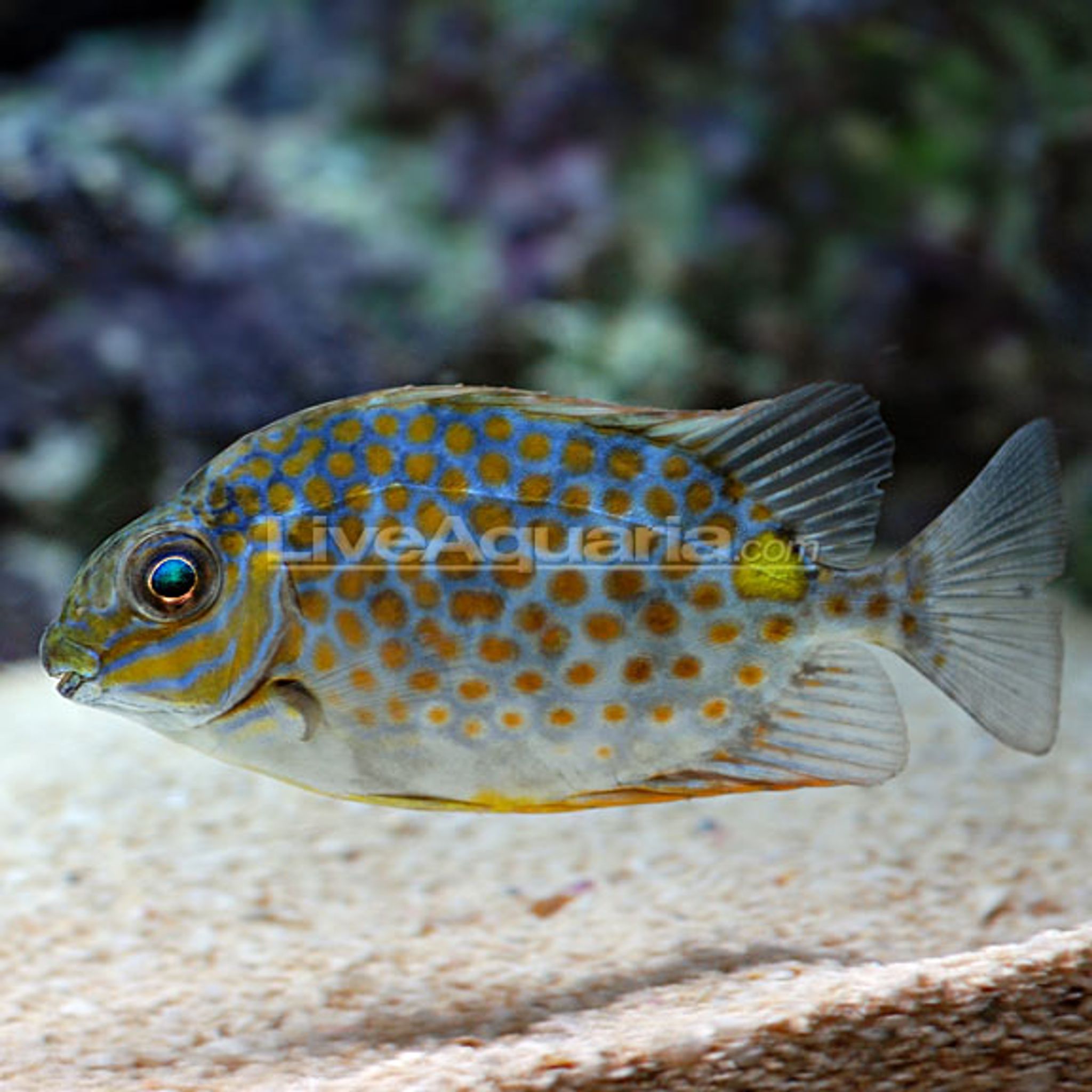
Foxface Rabbitfish Care Guide: Tank Size, Diet, Compatibility and Reef Safety
A foxface rabbitfish needs a mature tank of at least 90 gallons (120+ gallons for a full-grown adult), a near-constant supply of algae-based food, and careful hands-off handling around its venomous spines. This guide covers exact parameters, a feeding routine that actually prevents coral nipping, and the truth behind "reef safe with caution" so you can decide whether this fish belongs in your system.
What Is a Foxface Rabbitfish?
The foxface rabbitfish (Siganus vulpinus, also sold as the Foxface Lo) is a saltwater grazer named for its pointed, fox-like snout and bold yellow-and-white striped face. It belongs to genus Siganus, a group of roughly 27 species collectively known as rabbitfish or spinefoots, all native to shallow Indo-Pacific reef flats, lagoons, and seagrass beds. In the wild, that habitat means constant access to algae turf and open water for cruising — two things worth recreating in captivity.
Most Siganus species share the same blunt-nosed profile, peaceful temperament, herbivorous diet, and venomous fin spines, which is why general rabbitfish care advice transfers reasonably well across the genus, even though adult size and reef-safety risk vary by species.
Tank Size and Setup
Foxface rabbitfish are sold small — often around 3 inches — but they grow to 8–10 inches within 1–2 years. Buy for the adult fish, not the juvenile in the bag.
- Absolute minimum: 90 gallons, and only for a single specimen in an established reef.
- Realistic long-term minimum: 120–180 gallons, giving a full-grown adult genuine swimming room.
- Footprint matters more than height: aim for at least 4–6 feet of tank length so the fish can cruise rather than turn in place.
Add a foxface to a tank that has been running for several months or more, not a newly cycled system. It needs heavy live rock for grazing and hiding, open water for swimming, and moderate-to-strong flow. A brand-new tank with little biofilm or algae starves the fish's natural grazing instinct from day one and raises the odds it turns to coral instead.
Normal reef lighting is fine — there's no special low-light requirement for the fish itself. Lighting matters more indirectly, because it drives growth of the algae and macroalgae the foxface relies on for food.
Water Parameters
Foxface rabbitfish are more tolerant of imperfect water than many reef fish, but they still do best within standard reef ranges.
| Parameter | Acceptable range | Target |
|---|---|---|
| Temperature | 72–82°F (22–28°C) | 76–80°F (24–27°C) |
| pH | 8.0–8.4 | 8.1–8.3 |
| Specific gravity | 1.020–1.026 | 1.024–1.025 |
| Alkalinity | 8–12 dKH | 8–10 dKH |
| Nitrate | Keep under 20 ppm | As low as practical |
| Phosphate | Keep low | As low as practical |
Sources differ on temperature, with figures spanning the full 72–82°F range. The safer target is 76–80°F, which matches typical reef-tank conditions and avoids stressing corals sharing the system.
Diet and Feeding Schedule
Diet is the single biggest lever you control for both fish health and reef safety. Foxface rabbitfish are primarily herbivorous grazers that need to eat almost constantly, not just once a day.
Staple foods:
- Nori or dried seaweed sheets, clipped in 2–3 times per day
- Spirulina-based flakes or pellets
- Blanched vegetables: zucchini, spinach, lettuce, cucumber
Occasional additions:
- Mysis or brine shrimp, for a small meaty/zooplankton component
The single biggest driver of coral nipping is underfeeding. A practical rule: never let the algae clip sit empty overnight. Keep a nori clip, veggie clip, or algae sheet available essentially all the time rather than relying on one feeding a day — constant grazing access matters more than the size of any single meal. You can browse gel foods, freeze-dried options, and other herbivore-friendly foods to build a rotating feeding schedule.
Early warning signs of malnutrition — worth checking before nipping starts — include dull or faded coloration and unusual lethargy. Catching these early and upping the algae supply is far easier than fixing a coral-nipping habit after the fact.
A refugium stocked with macroalgae such as Gracilaria or Chaetomorpha pulls double duty: it exports nitrate and phosphate from the display, and it gives a foxface an extra, low-effort grazing source that can reduce pressure on display corals.
Reef Safety: What "Reef Safe With Caution" Actually Means
Foxface rabbitfish are widely classified as reef safe with caution, which is best understood as a spectrum shaped by how well the fish is fed, not a coin flip.
- Generally left alone: SPS corals are rarely bothered.
- Real risk: zoanthids, fleshy LPS such as acans and lobophyllia, soft corals like Xenia, and clam mantles — especially with an underfed or newly introduced fish.
A well-fed foxface with constant access to algae and nori rarely samples coral. A hungry or bored one will. If you're stocking soft corals or LPS alongside a foxface, treat a feeding routine as mandatory, not optional, and have a backup plan (more frequent feeding, a dedicated grazing station) ready if you notice any nipping.
Don't treat "reef safe" as zero risk. Stock sensitive soft corals and zoanthids with a feeding routine already in place, not as an afterthought.
Compatibility With Other Fish
Foxface rabbitfish are peaceful and get along well with:
- Tangs and other surgeonfish (different genus, so territorial overlap is minimal)
- Wrasses, clownfish, anthias, and angelfish
- Even assertive tankmates like triggerfish and lionfish, which tend to respect the venomous spines
The real compatibility issue is same-species and same-genus aggression. Keep only one foxface or rabbitfish per tank unless the system is very large — 200+ gallons with clearly separated territory. A mated pair or juvenile group introduced simultaneously can sometimes cohabit in these larger setups, but it's a risky bet for the average home aquarium and not recommended as a default plan.
Rabbitfish vs. Tangs for Algae Control
Rabbitfish and tangs both eat algae but graze differently. Tangs are primarily surface scrapers, while rabbitfish use a persistent, picking feeding style that's better suited to tougher filamentous algae and bubble algae that tangs often skip. Pairing the two fish types can cover more algae categories in one tank — but only stock both if your tank size comfortably supports each species' adult footprint.
What Foxface Rabbitfish Actually Control (and What They Don't)
Foxface rabbitfish excel at:
- Filamentous hair algae
- Bryopsis and Derbesia
- Turf algae and diatom film
- Bubble algae (a nuisance many tangs leave untouched)
They do not meaningfully touch cyanobacteria (red slime), dinoflagellates, or heavy diatom blooms — those need separate nutrient-export strategies and cleanup crew support. Treat a foxface as one component of an integrated algae-control plan (nutrient control, flow, cleanup crew), not a standalone fix.
Venomous Spines: Handling and First Aid
The dorsal, anal, and pelvic fin spines of a foxface rabbitfish carry a protein-based venom that causes intense pain and swelling. It is not typically life-threatening to humans, but it is medically significant — some individuals react more severely, and pain can linger.
Handling rules:
- Never handle a foxface bare-handed.
- Use a rigid specimen container, never a fine-mesh net — spines snag mesh, the fish panics, and the odds of a sting go up sharply.
- During any aquascaping or maintenance, know exactly where the fish is before putting your hands in the tank.
- Never grab or reach near the dorsal or anal fins.
If you get stung: immerse the wound in water as hot as you can tolerate, roughly 110–115°F, for 20–30 minutes. Heat denatures the protein-based toxin, which is why hot water — not ice — is the standard first response. Stay calm rather than yanking your hand out, since a sudden pull can worsen a puncture wound. Seek medical attention if pain, swelling, or any systemic symptoms persist or escalate.
Quarantine and Acclimation
Quarantine a new foxface for 4–6 weeks in a separate tank before adding it to your display. Watch appetite, breathing rate, and skin/slime coat condition throughout. Offer hiding spots and algae-rich food during quarantine to reduce stress-related disease risk.
Because foxface are wild-caught reef fish, shipping stress is real. A slow drip acclimation and introducing the fish with display lighting off (or dimmed) for the first few hours both help it settle in with less shock. Skipping quarantine and adding a stressed, parasite-carrying fish straight to display is a common way ich or velvet outbreaks take hold — outbreaks that are much harder to treat once corals and rockwork are involved.
Related Rabbitfish Species
Goldline Rabbitfish (Siganus lineatus)
A larger relative reaching up to about 17 inches, the goldline rabbitfish needs 125+ gallons minimum. It shares the foxface's mild venom and reef compatibility profile and is increasingly available captive-bred, making it a solid alternative for bigger systems with room to spare.
One Spot Foxface (Siganus unimaculatus)
Mottled brown and cream with a single large dark spot, the one spot foxface is generally shyer than the classic foxface but shares the same care parameters. It's sometimes mistaken for a "blotched" color morph of the standard foxface at the point of sale, so double-check the species tag before buying.
Magnificent Foxface (Siganus magnificus)
A more delicate and pricier species collected from a narrower range in the Andaman Sea. It needs an even larger tank — 150+ gallons — and is better suited to experienced keepers who can meet its specific husbandry needs.
Common Mistakes to Avoid
- Buying too small a tank for the eventual 8–10 inch adult, leading to stunted growth or aggression.
- Adding a foxface to a brand-new tank with little established algae or biofilm, which starves its grazing instinct.
- Underfeeding — the top driver of coral nipping. Fix it with a nori clip that's rarely, if ever, empty.
- Netting instead of cupping — soft mesh snags spines and stresses the fish (and you).
- Housing two rabbitfish in a modest tank expecting peaceful cohabitation — this usually ends with one fish bullying or seriously injuring the other.
- Skipping quarantine, which raises the odds of introducing disease to an established reef.
Frequently Asked Questions
Is a foxface rabbitfish reef safe?
It's reef safe with caution: low risk to SPS corals, but real risk to zoanthids, fleshy LPS, soft corals, and clam mantles if the fish is underfed. Keeping algae and nori available at all times is the main way to minimize nipping.
How big of a tank does a foxface need?
Ninety gallons is the strict floor for a single adult in a mature reef system. Given its 8–10 inch adult size and active swimming habits, 120+ gallons is the realistic recommended minimum for long-term keeping.
Are foxface rabbitfish venomous or dangerous?
Yes. The dorsal, anal, and pelvic fin spines deliver a painful, protein-based venom that is not typically life-threatening to humans but is medically significant. Handle with a rigid container, never bare hands, and use hot-water immersion first aid if stung.
What do foxface rabbitfish eat?
Mostly algae-based foods — nori, spirulina flakes or pellets, and blanched vegetables like zucchini and spinach — supplemented occasionally with meaty items such as mysis or brine shrimp. They need near-constant grazing material to stay healthy and to avoid turning to coral.
Can you keep more than one rabbitfish together?
Generally no in a typical home tank, since same-species and same-genus aggression is common. Only very large systems (200+ gallons) with distinct territories can sometimes support more than one, and even then it carries real risk.
How long do foxface rabbitfish live?
Around 5 years is commonly reported in captivity with good care, sometimes longer under excellent conditions. Captive breeding is essentially unheard of in the hobby, so all stock is wild-collected.
What's the difference between a foxface and other rabbitfish?
"Foxface" specifically refers to Siganus vulpinus and close relatives like the one spot and magnificent foxface, known for their fox-like striped faces. "Rabbitfish" is the broader umbrella term for genus Siganus, covering roughly 27 species with varying size, color, and reef-safety risk.
Do rabbitfish get along with tangs?
Yes, generally. Because they belong to different genera, territorial conflict is minimal, and pairing a rabbitfish with a tang can cover more algae types in one tank since the two graze differently.
If you've weighed the tank size, the feeding commitment, and the venomous spines and decided a foxface fits your plans, you can browse available foxface and rabbitfish stock on FishyHub to compare current options.

