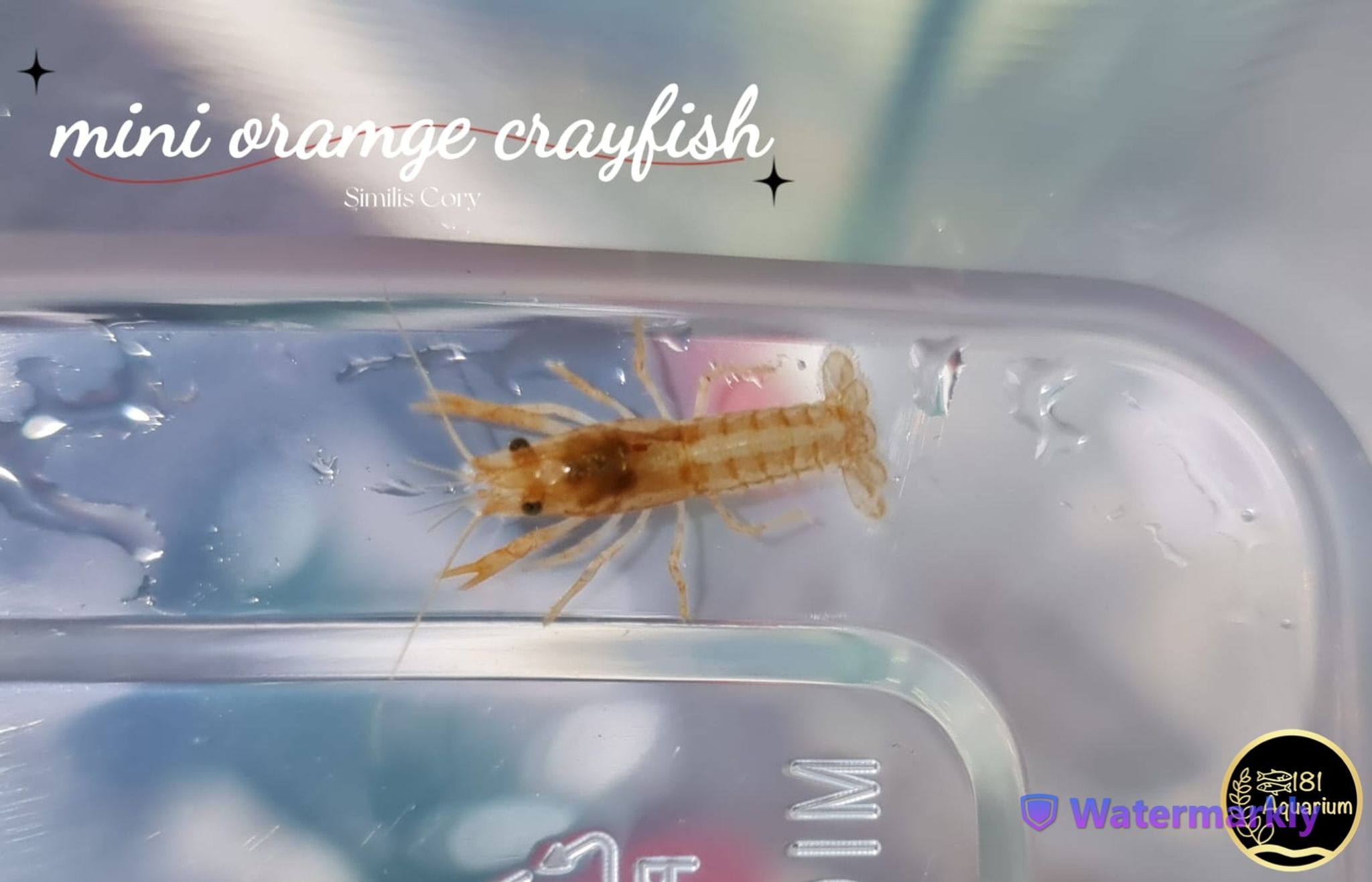

Dwarf Crayfish Problems: Common Causes of Stress, Death and Poor Growth
A dwarf crayfish that stops moving, flips onto its back, or simply vanishes overnight looks alarming, but most of these "problems" trace back to one of three causes: a normal molt, a water-quality issue, or a tankmate conflict. This guide walks through how to tell them apart, starting with the molting cycle that explains the majority of beginner scares.
Start Here: Is It Molting or Is It Dying?
Before troubleshooting anything else, rule out a molt. Dwarf crayfish (commonly CPO, the orange Cambarellus patzcuarensis, and CPP, the blue color form, along with a handful of closely related Cambarellus species) shed their exoskeleton throughout life, and the process looks dramatic even when everything is going right.
Signs it's a molt, not a death:
- The animal is lying on its side or back but the legs, antennae, and eye stalks still move when nudged or when food drops nearby.
- It has been hiding and refusing food for a day or two beforehand.
- No smell, no cloudiness in the water, no film forming on the surface.
Signs it's actually dead:
- No response at all to touch or gentle water movement.
- Claws and legs hang completely limp, and the body has weight and density to it (not hollow).
- Within a few hours, a strong ammonia or rotten-egg smell develops, sometimes with a film on the water surface — this is a late confirmation, not an early one.
If you're holding what you think is a body, pick it up and check whether it's hollow and nearly weightless with the eye stalks intact — that's an empty shed, not a corpse, and the crayfish itself is still alive and hiding nearby.
Signs of Crayfish Stress
Stress shows up before a crisis does, and catching it early prevents a death. Watch for:
- Hiding far more than usual, even outside of pre-molt periods
- Loss of appetite that doesn't resolve into a molt within a couple of days
- Color fading, darkening, or looking unusually dull
- Sitting at the surface or hovering near an airstone or filter outflow (a sign of low oxygen or poor water quality)
- Curling or constantly twitching antennae
- An unusually rigid, upright "stress posture," or sudden aggression toward tankmates
Any of these on their own can be minor, but two or more together, especially combined with a stalled molt cycle, point to a water-quality problem covered below.
The Molting Cycle, Explained
Most "why is my crayfish acting weird" questions are answered by understanding molting.
Pre-Molt
For roughly 24–48 hours before a molt, expect reduced appetite, more hiding, a duller or slightly cloudy shell color, and sometimes a visible line or separation forming at the edge of the carapace. This is normal preparation, not illness.
The Molt Itself
The crayfish lies on its side or back, arches its body, and backs out of the old shell. The actual mechanical process is fast — usually 10 to 20 minutes once it starts — but the animal stays still and hidden for hours before and after. The discarded shell is a near-perfect hollow "ghost," down to the eye stalks, which is the easiest way to distinguish it from a body.
Post-Molt
The new exoskeleton is soft and white for roughly 24–48 hours, during which the crayfish is essentially defenseless. It should be left completely alone during this window and, ideally, kept away from any tankmate that might see a soft-shelled crayfish as an easy meal.
Eating the Old Shell
Crayfish eat their own shed exoskeleton, usually within a day, to recycle calcium back into the new shell. Removing the shed shell from the tank — a very common beginner mistake — deprives the animal of that calcium and can slow the next molt's hardening.
Molt Frequency by Life Stage
Frequency depends far more on growth rate, food, temperature, and water quality than on a fixed calendar. Use this as a rough reference rather than a strict schedule:
| Life Stage | Typical Molt Interval | Notes |
|---|---|---|
| Juvenile / fast-growing | Every 1–3 weeks | Rapid growth demands frequent shell replacement |
| Subadult | Every 3–5 weeks | Slowing as the animal approaches adult size |
| Adult near max size | Every 4–8 weeks, sometimes longer | Molts continue for maintenance and minor growth even after size plateaus |
A stress molt — triggered by a sudden fright or a parameter swing rather than scheduled growth — is a separate event from this normal cycle. It often happens off-schedule and can produce a smaller or weaker resulting shell, which is one reason sudden changes are more dangerous than a stable, slightly imperfect environment.
Stuck or Failed Molts
If old shell fragments remain attached, especially on the legs, antennae, or rostrum, the crayfish has had a failed or incomplete molt. Common causes:
- Low calcium or general hardness (GH) in the water, leaving the new shell too weak to fully separate
- Disturbance during the molt — being handled, chased, or exposed to a sudden light or vibration mid-process
- Low humidity or poor conditions in the substrate area where the crayfish is hiding
A failed molt can be fatal if the animal can't free itself. Don't try to peel the old shell off by hand; it's more likely to injure the crayfish than help it.
Water Quality Checklist
Crayfish are at least as sensitive to poor water chemistry as fish, and chronic low-level problems interfere with molting even when nothing looks obviously wrong.
| Parameter | Target Range | Why It Matters |
|---|---|---|
| Temperature | 65–75°F (18–24°C); up to 78°F (25.5°C) short-term | Warmer speeds growth but shortens lifespan and stresses shells; cooler slows growth to a crawl |
| pH | 7.0–8.0 | Stability matters more than hitting an exact number |
| GH (general hardness) | Moderately hard | Low GH is a leading cause of weak shells and failed molts |
| Ammonia | 0 ppm | Even chronic "low" ammonia impairs molting and stresses the animal |
| Nitrite | 0 ppm | Same sensitivity as ammonia |
| Nitrate | Under 20–40 ppm | Higher levels contribute to chronic stress over time |
| Copper | None, ever | Lethal to crustaceans in tiny doses |
On temperature: some sources tolerate up to 78–80°F for faster growth or breeding, but that's a trade-off, not a stress-free zone. For a pet-focused, long-lived setup, aim for 68–75°F and treat the higher end as a deliberate growth push rather than an everyday target.
On copper: never use a copper-based medication in a tank housing crayfish, and check tap water conditioners, fertilizers, and any secondhand plants or decorations for copper content before adding them.
On stability: a sudden swing in temperature, pH, or hardness — even toward "better" numbers — is more likely to trigger a stress molt or death than steadily keeping the water at a slightly imperfect but stable level.
Boosting GH and Calcium
Since low hardness is one of the most common and overlooked causes of poor growth and failed molts, consider:
- Crushed coral or aragonite mixed into or placed alongside the substrate
- A cuttlebone piece left in the tank for the crayfish to graze on as needed
- A GH-boosting mineral supplement dosed according to your test kit readings, not on a fixed schedule
Retest GH periodically rather than assuming a one-time addition solved the problem permanently.
Lowering Ammonia in an Emergency
If a test shows ammonia above 0 ppm:
- Do an immediate 25–50% water change.
- Dose a dechlorinator or ammonia-neutralizing product as a stopgap while the biofilter recovers.
- Check for the cause — overfeeding, a dead snail, plant matter, or an unnoticed dead tankmate.
- Confirm the filter isn't clogged and that the biological media wasn't recently rinsed in tap water or replaced all at once.
- Retest daily until the reading holds at 0 ppm.
Preventing the Next Spike
- Don't stock a tank right after setup — fully cycle it before adding crayfish.
- Feed sparingly and remove uneaten food within an hour or two.
- Avoid replacing all filter media at once; stagger changes so beneficial bacteria always have a foothold.
- Test weekly even when nothing seems wrong.
- Keep a seasoned sponge filter or bacterial supplement on hand as backup biological capacity.
- Quarantine new livestock before adding them to an established tank.
Tankmates, Cannibalism, and Predation
A crayfish that vanishes without a trace, with no body and no shell found, has usually been eaten — this is the single most common explanation for unexplained disappearances. The freshly molted, soft-shelled window is when this happens.
With other crayfish: if keeping more than one, provide roughly one hiding spot per animal — caves, PVC sections, dense plants, or coconut huts — so a molting crayfish always has somewhere to disappear to. A 5–10 gallon (19–38 L) footprint per crayfish is a reasonable minimum for a comfortable setup.
With fish: compatibility is conditional, not a flat yes or no. Fast-moving, peaceful fish that stay in open water are generally fine. Fin-nippers and large, boisterous species cause chronic stress and will target a crayfish's antennae and legs. A species-only tank remains the safest option if you want to minimize risk entirely.
With shrimp: dwarf crayfish are opportunistic predators. Small shrimp of a similar or smaller size are at real risk, especially in an under-fed or overcrowded tank. If you're building a mixed invertebrate setup, browse freshwater shrimp options with size and temperament in mind before combining them with crayfish.
Substrate matters too: fine sand or smooth gravel is preferable. Sharp-edged substrate can injure legs and the underside of the body during the vulnerable soft-shell period. A suitable gravel and sand substrate reduces that risk.
Diet and Poor Growth
Dwarf crayfish are omnivorous scavengers. A balanced diet includes sinking pellets or wafers, blanched vegetables, occasional protein such as bloodworms or shrimp pellets, and whatever biofilm or algae develops naturally in a mature tank. Feeding only protein or only vegetables slows both growth and shell quality.
If growth has stalled for weeks or months, work through this checklist in order:
- GH and calcium — soft, low-mineral water is the single most overlooked cause of a crayfish that molts but doesn't get bigger.
- Feeding — insufficient protein or infrequent feeding limits energy for growth.
- Ammonia and nitrite — chronic low-grade exposure suppresses molting even without visible symptoms.
- Temperature — too cold stalls growth outright; too warm produces faster but weaker growth and a shorter lifespan overall.
- Overcrowding — competition for food and hiding spots slows every individual down.
A GH-boosting water conditioner or mineral additive is often the fastest fix when hardness turns out to be the bottleneck, and a rotating supplemental food source helps correct a diet that's been leaning too far toward one food group.
Handling and Quarantine
Dwarf crayfish should rarely be handled at all. If you must move one, scoop it with a small container rather than grabbing it, and never grab a leg or claw — the animal can voluntarily drop the limb as a defense (autotomy), which regenerates over the next two to four molts but costs it real energy in the meantime.
Early deaths within the first 48 hours of bringing a crayfish home are usually acclimation shock — a mismatch in temperature or pH between the bag and the tank — rather than a long-term husbandry issue. Drip acclimating slowly and matching temperature before release reduces this risk substantially.
Frequently Asked Questions
Why did my crayfish flip on its back and not move — is it dying?
This is usually pre- or mid-molt behavior, not death. Give it 24–48 hours completely undisturbed before assuming the worst, and check for any leg or antenna movement in the meantime.
How do I tell a shed exoskeleton from a dead crayfish?
A shed is hollow, translucent, very light, and still includes the eye stalks. A dead body has real weight, limbs and claws hang limp, and a strong odor develops within a few hours.
Why is my crayfish missing a claw or leg?
This is usually autotomy — a defensive limb drop caused by stress, a failed molt, or a fight with a tankmate or another crayfish. It typically regenerates over the next two to four molts as long as the animal stays otherwise healthy.
Can dwarf crayfish live with shrimp or small fish?
Generally yes with fast-moving, peaceful fish and no shrimp of a similar or smaller size, but risk rises in a small, under-fed, or under-decorated tank where the crayfish has more incentive to hunt.
Why isn't my crayfish growing?
Check GH and calcium levels first, then feeding frequency and protein content, ammonia and nitrite, and temperature. Stalled growth over several months almost always traces back to one of these four factors.
How do I know if ammonia is the problem?
A test kit reading above 0 ppm is the definitive sign, often paired with lethargy, appetite loss, an irritated-looking gill area, and reduced antennae movement. Fix the source and recheck daily until the reading returns to zero.
What's a normal lifespan, and does that affect what looks like a "problem"?
Dwarf crayfish typically live 1–2 years, occasionally reaching 2.5–3 years in very stable conditions. An older crayfish that slows down, molts less often, and eventually passes away is often just reaching the natural end of its lifespan rather than experiencing a husbandry failure.
Is it normal for a crayfish to stop eating for days?
Yes, especially in the 24–48 hours before a molt. If the appetite loss drags on for a week or more with no molt following, it's worth checking water parameters rather than waiting it out further.
Working through GH, ammonia, and tankmate compatibility resolves the large majority of dwarf crayfish problems without ever needing to guess. For setups that also include compatible fish or invertebrates, browse freshwater livestock on FishyHub to plan a tank that keeps molting crayfish safe alongside their neighbors.


