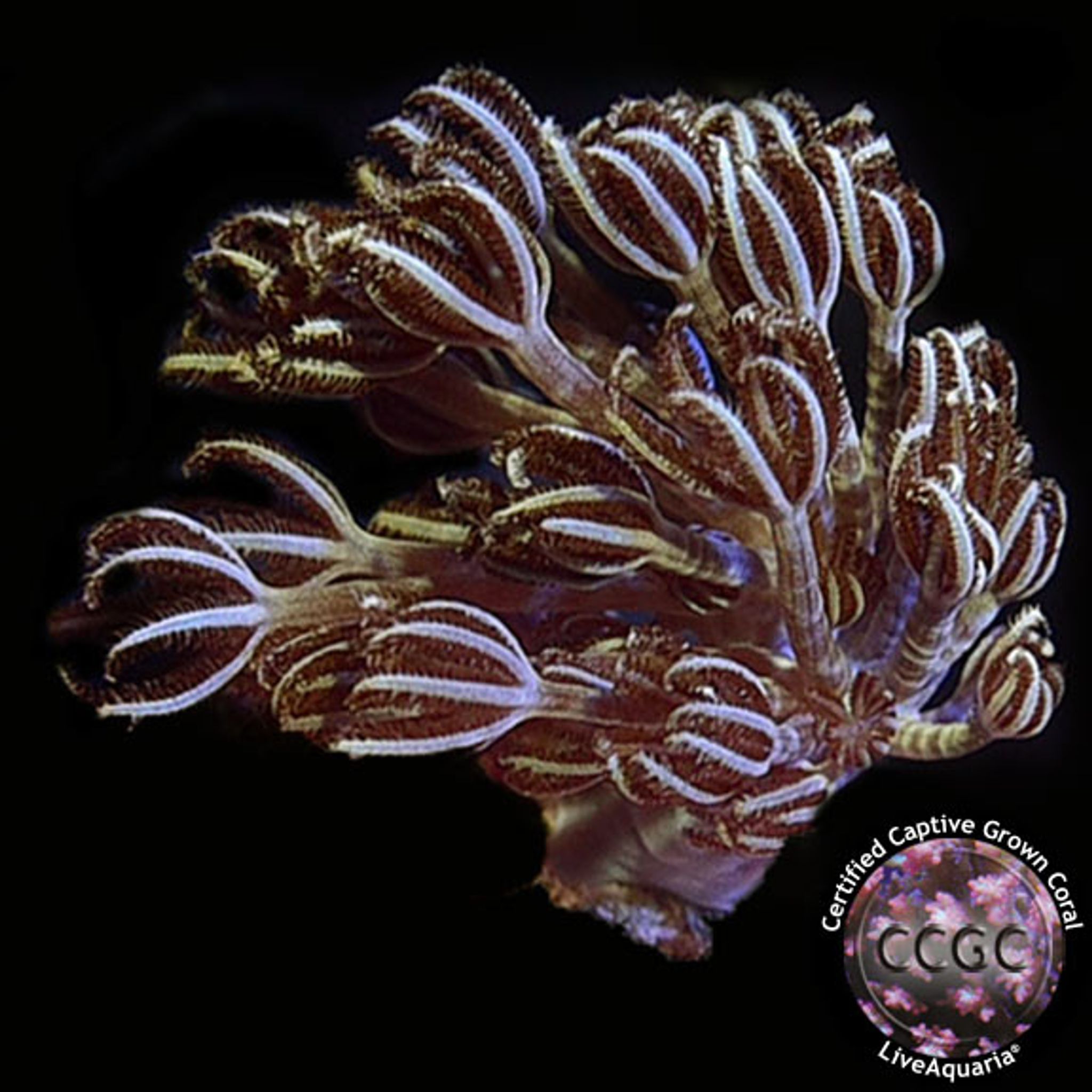

Common Xenia Problems: Tissue Loss, Fading, Pests and Recovery
Xenia is one of the fastest-growing, most beginner-friendly soft corals in the hobby, which makes it especially unsettling when a colony suddenly deflates, stops pulsing, or fades overnight. This guide walks through a plain diagnosis order, explains the notorious "xenia melt," and lays out a realistic recovery timeline so you know when to act and when to simply wait.
What Xenia Is and What Counts as Normal
Xenia (pulsing coral, pom-pom xenia, waving hand coral) is a soft coral valued for rapid growth, constant motion, and low cost. Its rhythmic pulsing is a flow-driven behavior tied to gas exchange, not a direct health readout — a colony can pulse strongly and still be under stress, and a colony can stop pulsing for hours or days without being sick.
Before troubleshooting, separate normal quirks from real problems:
- Normal: temporarily closed polyps after a water change, relocation, or lights-on transition; slower pulsing at night or under lower light; occasional single-polyp retraction.
- Worth investigating: a whole colony staying closed for more than 2-3 days, visible shrinking of the stalk, gooey or stringy tissue, or spreading discoloration.
Diagnose in This Order
Work through causes from most common to least common rather than guessing. Most xenia trouble traces back to water chemistry stability, not disease.
- Salinity — target roughly 35 ppt (1.025-1.026 specific gravity, SG).
- Alkalinity and pH stability — the single most commonly cited trigger for shrinking, closing, or melting.
- Temperature — check for heater or chiller malfunction.
- Flow — direction and strength at the colony's exact spot.
- Lighting — intensity, spectrum, and bulb age.
- Nutrients — nitrate and phosphate levels, especially in heavily skimmed or GFO-dosed systems.
- Pests — inspect the base, stalk, and polyps closely.
- Chemical contamination — new additive, medication, aerosol spray, or lotion near the tank.
Target Parameters for Xenia
| Parameter | Target range | Notes |
|---|---|---|
| Salinity | ~35 ppt (1.025-1.026 SG) | Stability matters more than exact number |
| Temperature | 76-80°F (24-27°C) | Avoid daily swings over a few degrees |
| pH | 8.0-8.3 | Track trends, not single readings |
| Alkalinity | 8-10 dKH | Swings over ~1-2 dKH/day are more damaging than the absolute value |
| Calcium | 380-450 ppm | Secondary to alkalinity stability |
| Magnesium | 1250-1350 ppm | Keeps calcium/alkalinity balanced |
| Light | ~50-150+ PAR | Xenia tolerates a wide range and isn't picky about spectrum |
| Flow | Moderate, indirect | Colony should sway, not pin closed |
"Xenia Melt": The Mystery Crash
Xenia has a well-earned reputation for crashing suddenly, sometimes called xenia melt or, when it happens in a mature tank, old tank syndrome for xenia. The colony rapidly deflates into a drooping, gooey mass that can look nearly dead within a day or two. Common triggers include:
- A parameter swing, especially alkalinity or pH.
- Shipping or handling stress after acquiring a new frag.
- Aggressive use of carbon or GFO media that strips too many dissolved organics at once.
- Sometimes, no identifiable cause at all.
Here the sources genuinely disagree. Some insist every crash has a traceable cause if you look hard enough; others describe xenia crashing occasionally in tanks with pristine, stable parameters. The honest middle ground: run the full diagnostic checklist first, but understand that a clean bill of parameters doesn't guarantee prevention — xenia's unpredictability is part of keeping it. The encouraging news is that a surviving base or holdfast often regrows a new colony even after the visible tissue looks like it has liquefied.
Fading and Color Loss
Fading is usually one of two things: a lighting issue or a symptom of the same stress that causes shrinking.
- Paling or browning: gradual dulling of color, often linked to nutrient extremes or a slow parameter drift. Not the same as true bleaching.
- Bleaching (turning white/translucent): usually caused by too much light or a sudden increase — a new fixture, a bulb moved closer, or the colony relocated higher in the tank. Photosynthetic symbionts (zooxanthellae) are expelled under the excess intensity.
If color loss appears shortly after a lighting change, move the colony lower or dim the fixture first before assuming a chemistry problem.
Flow and Light Needs
Xenia pulses partly to move water across its own tissue for gas exchange, so flow placement matters more than raw strength.
- Too strong or too direct: blasts polyps shut, and over time causes physical tissue damage or recession at the point of impact — a classic mistake is aiming a powerhead directly at the colony for "extra flow."
- Too weak: lets detritus settle on the base and stalk, leading to local irritation and bacterial issues.
- Just right: the colony sways gently and polyps stay open and pulsing most of the time.
Sources differ slightly on ideal flow — some describe xenia wanting low-to-moderate flow so it can pulse freely, while others note that certain forms, like pom-pom xenia, tolerate moderate-to-strong flow. Start with moderate, indirect flow and adjust based on whether the polyps stay open.
Lighting is forgiving across a wide PAR range and isn't picky about spectrum, but two failure modes stand out: a sudden increase causing bleaching, and old, degraded bulbs (or too little light generally) causing gradual shrinking and weak pulsing over weeks.
Nutrients: The Overlooked Cause
Xenia partly feeds on dissolved organics, so it behaves differently than nutrient-sensitive stony corals:
- Ultra-low nutrients (very low nitrate/phosphate, common in heavily skimmed or GFO-dosed SPS-focused systems) often cause shrinking and paling.
- Sudden nutrient spikes can also trigger decline.
- As a reef tank matures and becomes more efficient at nutrient export, xenia sometimes simply "stops pulsing" over months — an underexplained but commonly reported pattern tied to falling nutrient levels in an aging system, not necessarily a mistake you made.
If you run a low-nutrient system for SPS corals alongside xenia, that mismatch alone can explain a slow decline with no other symptoms.
Should You Dose Iodine?
Many hobbyists consider supplemental iodine helpful for xenia and other soft corals, supporting pulsing and growth, but this isn't universally proven necessary. Sources disagree on how essential it is. A reasonable approach:
- Treat iodine as a supplementary trace element, not a fix for an already-declining colony.
- Test before and after dosing rather than guessing.
- Dose conservatively — iodine is easy to overdose, and overdosing causes its own toxicity and stress.
Not Pulsing or Staying Closed
When a colony stays shut without visible tissue loss, run through this shorter checklist:
- Flow too strong or too weak at that specific spot in the tank.
- Alkalinity swing in the last 24-48 hours.
- Recent relocation or handling — xenia often sulks for days after being touched, fragged, or moved to a new spot, and this resolves on its own.
- Lighting change — new fixture, adjusted intensity, or bulb replacement.
Relocation stress is frequently misdiagnosed as illness. If the colony was moved or handled within the past 1-2 weeks and the tissue itself looks intact, give it time before intervening further.
Tissue Loss and Recession vs. RTN/STN
Xenia doesn't typically show the rapid tissue necrosis (RTN/STN) pattern seen in stony corals like LPS hard corals. Instead, it more often shows localized tissue loss at the stalk base or wherever it contacts something irritating — a neighboring coral, accumulated detritus, or physical injury.
Recovery Protocol
- Stabilize parameters first. Correct alkalinity and other swings gradually — small daily adjustments, not one large correction. Chasing a number with a big single dose causes more melt than the original imbalance.
- Relocate to moderate flow and light if the current spot is too strong, too weak, too bright, or too dim.
- Trim dead tissue. Use clean scissors or a scalpel to cut away dying or gooey material, stopping it from spreading to healthy tissue.
- Improve water quality. A water change and fresh carbon can help after a chemical stress event.
- Be patient. Recovery or regrowth from a surviving base or stalk fragment typically takes weeks, not days. Don't discard a shrunken, closed colony — if the base still looks fleshy and attached rather than stringy or dissolved, it's likely still alive.
Pests Specific to Xenia and Soft Coral Tanks
The most common nuisance on xenia is rust or red flatworms (planaria). They colonize the coral's surface without necessarily eating it directly, but a heavy infestation blocks light and flow to the polyps and can foul the water badly when a mass die-off occurs (from a dip or treatment). Other occasional hitchhikers include small nudibranchs or crustaceans, more commonly found on neighboring corals than on xenia itself.
Standard prevention: dip and quarantine every new coral frag before adding it to the display tank. Skipping this step is one of the most common ways flatworms and other hitchhikers spread through a soft coral collection. If you're sourcing new colonies, browsing soft corals from a vendor that documents dip practices reduces this risk from the start.
Aggression and Allelopathy
Xenia releases chemical compounds that can irritate neighboring corals, and it can also be irritated or outcompeted when a more aggressive neighbor grows into direct contact with it. Give xenia adequate space and good flow separation from stony and other soft corals to avoid chemical warfare in either direction.
When "Overgrowth" Is the Real Problem
Because xenia grows fast and spreads via runners, encrusting frag plugs, rock, and even glass, what looks like a coral health problem is sometimes actually overgrowth into another coral's space. This isn't disease — it's success. Control it through physical removal and pruning rather than treating it like a symptom to diagnose. Regular trimming also doubles as an easy way to propagate frags for other tanks.
Common Mistakes to Avoid
- Chasing alkalinity with one large correction instead of small, gradual daily adjustments.
- Aiming a powerhead directly at the colony for "more flow," which clamps polyps shut and causes recession at the impact point.
- Assuming a closed, shrunken colony is dead and throwing it out.
- Skipping dip and quarantine on new frags, introducing flatworms to the whole tank.
- Overdosing iodine or other soft-coral additives without testing first.
- Treating relocation stress (closing for days after a move) as a disease requiring treatment.
- Running nutrients too low for the sake of SPS corals while starving a nutrient-dependent xenia colony in the same system.
Frequently Asked Questions
Why did my xenia suddenly shrink and stop pulsing overnight?
Most likely a parameter swing — check alkalinity, pH, and salinity first. If those look stable, check for a recent flow or light change, physical disturbance, or a new additive introduced to the tank.
Is my xenia dead or just closed?
If the base or stalk still looks fleshy and attached rather than stringy or dissolved, it's likely alive. Give it 1-2 weeks in stable conditions before assuming it's gone.
Can xenia recover from tissue loss?
Yes, often from a surviving base or stalk fragment, as long as the underlying cause is addressed and any dead tissue is trimmed away with clean scissors or a scalpel.
Why is my xenia pale or losing color?
Usually too much light causing bleaching, or the same stress factors that cause shrinking, such as parameter swings or nutrient extremes. Adjust light placement or intensity first, then review the rest of the diagnostic checklist.
Do I need to dose iodine for xenia?
Not strictly required, but many keepers find it helps growth and pulsing. Dose conservatively and test rather than guessing, since iodine is easy to overdose.
Why did my healthy xenia colony suddenly crash for no reason?
Xenia has a reputation among reef keepers for occasional unexplained die-offs, even in well-run tanks. Run through the standard checklist regardless, but don't assume a mistake was made if nothing turns up.
What pests should I watch for on xenia?
Mainly rust or red flatworms, which colonize the surface and can block light and flow without directly eating the coral. Dip and quarantine new frags before adding them to prevent an infestation from spreading.
If your xenia has stabilized and you're ready to expand the colony or start a soft coral collection, you can browse current stock in Corals for compatible additions and healthy frags.


