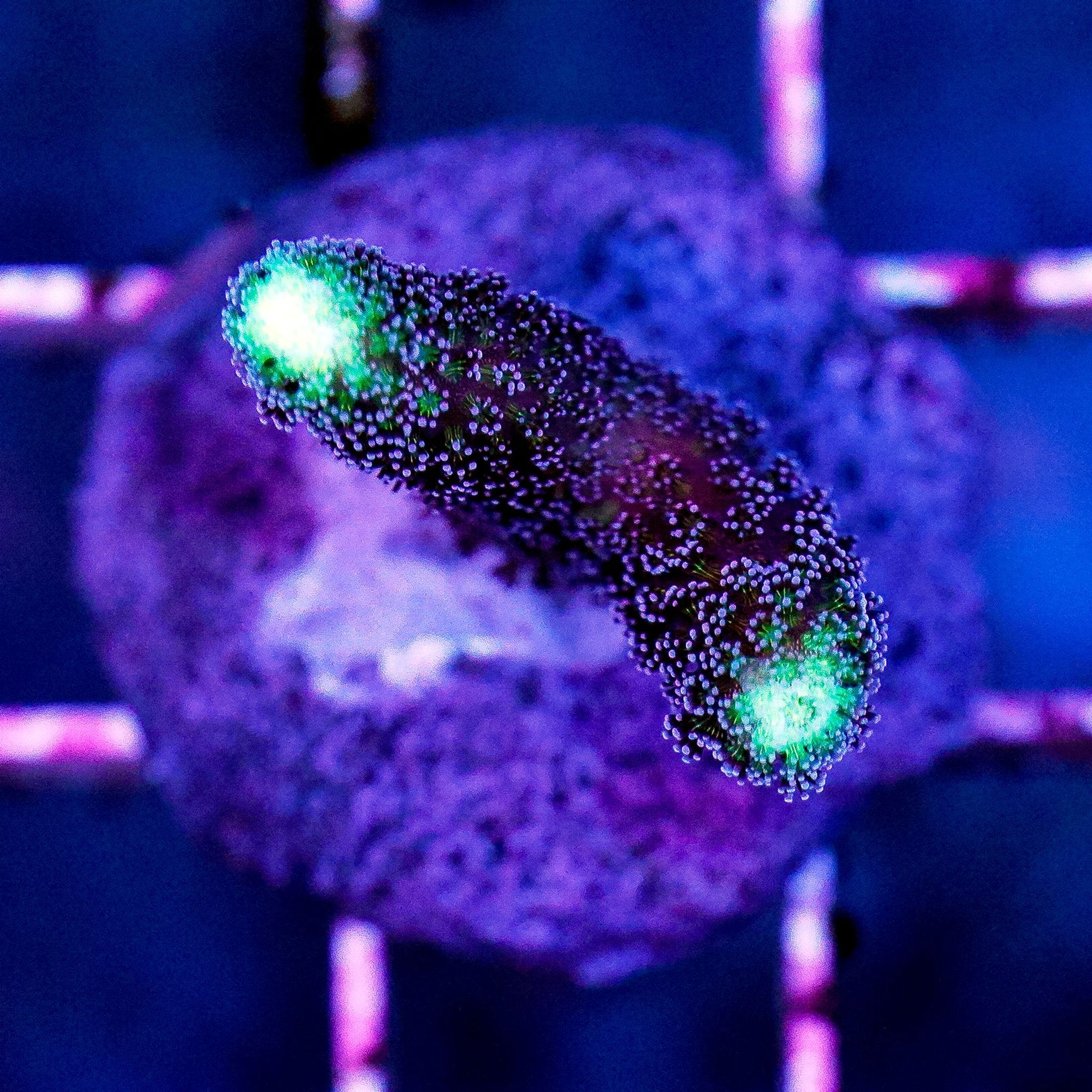

Common Stylophora Problems: Tissue Loss, Fading, Pests and Recovery
Stylophora (cauliflower or birdsnest coral) has a reputation as a forgiving "first SPS," but a colony that suddenly pales, recedes, or stops growing can still leave reef keepers guessing. This guide walks through the four most common complaints — tissue loss, fading, pests, and stalled recovery — with a symptom-based way to tell them apart and act on each.
Quick Diagnosis: What Are You Actually Looking At?
Before reaching for a dip or a test kit, identify which problem you have. The fixes for bleaching and tissue necrosis are almost opposite, so mixing them up wastes time the coral doesn't have.
| Symptom | Tissue present? | Likely cause | Urgency |
|---|---|---|---|
| Coral pale, pastel, or bone-white; polyps still extend | Yes, alive | Bleaching (light/temperature/nutrient stress) | Moderate — stabilize and feed |
| Bare white skeleton with a visible line to healthy tissue, receding slowly over days/weeks | No, tissue gone | Slow tissue necrosis (STN) | Act soon — isolate and monitor |
| Bare skeleton spreading rapidly, sometimes with brown jelly-like slough | No, tissue gone | Rapid tissue necrosis (RTN) | Urgent — frag and isolate now |
| Small patches of missing tissue at branch tips, tiny moving specks visible | Localized | Pest damage (flatworms, nudibranchs, red bugs, Asterina stars) | Moderate — inspect and dip |
| One colony shows minor recession, tankmates thriving | No, minor | Often normal, self-resolving stress | Low — watch, don't overhaul the tank |
Why Stylophora Is Still an SPS, Even When It's the "Easy" One
Stylophora grows fast and tolerates more handling than many small-polyp stony corals, which is why it's often recommended as an entry point into SPS keeping. That reputation is earned, but it doesn't make the coral immune to instability. Compared to soft corals, it still reacts quickly to swings in alkalinity, temperature, or salinity — the forgiveness is relative, not absolute.
Target Parameters
Stability across these ranges matters more than hitting any single "perfect" number:
- Temperature: 75–78°F (24–25.5°C)
- Salinity: 1.025–1.026
- Alkalinity: 7–9 dKH, held stable
- Calcium: 380–450 ppm
- Magnesium: 1,250–1,350 ppm
- pH: 7.9–8.4
- Nitrate: roughly 2–20 ppm
- Phosphate: roughly 0.03–0.15 ppm
- Lighting: medium–high PAR, roughly 150–300+ depending on depth and acclimation, with moderate-to-strong randomized flow
A stable 8 dKH beats a swinging 7–10 dKH every time. Chasing one ideal figure while ignoring day-to-day drift is one of the most common mistakes in SPS troubleshooting.
Tissue Loss: STN vs. RTN
Both slow tissue necrosis (STN) and rapid tissue necrosis (RTN) leave the same visual signature — a clear boundary between healthy, colored tissue and bare white skeleton, sometimes with a brown, jelly-like slough right at the margin. The difference is speed.
- STN recedes gradually over days to weeks. It can stall on its own if the underlying stressor is removed.
- RTN can strip a colony of all tissue in 24–48 hours. This is a true emergency.
What Triggers Necrosis
No single confirmed cause exists in the available research, even though some hobby material treats it as a specific pathogen problem. It's more accurate to treat necrosis as a multifactorial stress response with several contributing triggers:
- Sudden parameter swings, especially alkalinity spikes or crashes
- Shipping stress or physical damage from fragging or transport
- Chemical or "sweeper tentacle" stings from neighboring corals — LPS species and zoanthid mats are common offenders when Stylophora's fast branch growth reaches into their space
- Poor flow allowing detritus to accumulate inside the coral's dense branch structure
- Low-grade bacterial or ciliate involvement as a secondary factor, not necessarily the root cause
First Response to Spreading Necrosis
- Isolate the affected colony from the rest of the system.
- Restore strong, even flow around the coral.
- Run fresh activated carbon and give the protein skimmer a thorough pass.
- If tissue loss is actively spreading, frag off healthy tissue at least half an inch ahead of the dying line, and discard the affected fragment.
Don't wait days to act once necrosis is clearly spreading — that delay is what lets STN or RTN consume an entire colony. At the same time, don't overreact to isolated, minor recession on one branch while every other coral in the tank is thriving; that pattern is often self-limiting and resolves once you simply maintain stability. Reserve a full parameter overhaul for cases where necrosis is spreading fast or multiple corals are affected at once.
Fading and Bleaching: A Different Problem Entirely
Fading is not the same failure mode as tissue loss, and treating it like one — by fragging a coral that just needs feeding and stable light — wastes healthy tissue.
The Zooxanthellae Connection
Stylophora, like most reef-building corals, hosts symbiotic dinoflagellates called zooxanthellae inside its tissue. These algae supply the bulk of the coral's energy through photosynthesis and contribute much of its visible color. Different zooxanthellae types vary in heat and light tolerance, which is part of why two colonies kept in identical conditions can show different resilience.
Bleaching happens when the coral expels or loses these zooxanthellae, or when the algae's pigments (along with the coral's own fluorescent pigments) degrade under stress. The tissue itself stays intact and alive — polyps still extend, and the coral simply looks pale, pastel, or bone-white rather than missing.
Triggers Go Both Ways on Temperature
Bleaching in this species has been documented from both heat spikes and unusually cold snaps — it isn't only a "too much light or too much heat" problem. Other common triggers include:
- Light shock after moving the coral to a brighter tank without acclimation
- Very low nutrient levels, which starve the zooxanthellae of the nitrogen and phosphorus they need
- Rapid alkalinity or salinity shifts around a water change or dosing adjustment
Recovery Timeline
Partial bleaching can re-color within roughly 2–6 weeks once stability, lighting, and feeding are corrected. Bare skeleton from actual tissue loss works differently: it doesn't get "recovered" by re-covering itself. The coral has to grow new tissue outward from its living edges, which is slow and only happens once the original cause has been fixed.
Nutrients: Why Zero Isn't the Goal
A persistent myth holds that SPS corals need near-zero nitrate and phosphate for good color. In practice, chasing that target often backfires — near-zero nutrients paired with high, stable alkalinity is a common combination behind unexplained paling and bleaching, not a marker of a healthy tank.
A moderate, stable nutrient band tends to produce better growth and color:
- Nitrate: roughly 5–20 ppm
- Phosphate: roughly 0.05–0.15 ppm
If nutrients have crashed too low: cut back on GFO and carbon dosing, and consider light feeding with a fine particulate or coral-specific food.
If nutrients are excessive: increase water change frequency, and reintroduce carbon dosing or GFO gradually.
Reef keepers using carbon dosing (vinegar, vodka, or a commercial carbon source) are relying on heterotrophic bacteria that consume the dosed carbon and, in turn, get consumed or exported — part of the broader bacterioplankton food web that helps process organics and keep nutrients in a workable range. Dosing changes should be introduced gradually; a sudden jump is itself a stability shock.
Alkalinity Deserves Special Attention
Alkalinity is the main driver of calcification — the process of building new skeleton — working alongside calcium and magnesium. It's also the parameter SPS corals are most sensitive to. Swings toward the high end are typically more damaging than swings toward the low end, often showing up as tissue burn or necrosis at the growth edges rather than a slow decline.
This is why alkalinity testing deserves more frequency than the other parameters, especially in the weeks after adding a new Stylophora or after any change to dosing or water changes.
Pests to Rule Out
- Asterina-type starfish: Predatory, with some color morphs known to specifically target Pocillopora and Stylophora.
- Corallivorous flatworms and nudibranchs: These camouflage to match the coral's color, so feeding damage — stalled polyp extension, tiny bare patches at branch tips — is usually easier to spot than the animal itself. Stylophora is a less common target for the specific flatworm species that plagues Acropora, but it isn't immune.
- Red bugs: A Tegastid copepod mainly associated with Acropora, but worth ruling out in a mixed SPS system.
Pest Management
- Quarantine and dip every new SPS frag or colony before it goes into the display.
- A 5–10 minute iodine- or coral-dip-based treatment dislodges most flatworms, nudibranchs, and their eggs.
- Repeat weekly for 2–3 weeks to break the egg cycle, since a single dip won't catch eggs that hatch later.
- Manually remove visible pests with a turkey baster or fine tweezers.
- Peppermint shrimp and certain wrasses can help control populations but aren't a guaranteed fix on their own.
Don't skip quarantine just because Stylophora has a hardy reputation — pests hitchhike on tough corals just as readily as fragile ones.
Equipment: The Stability Problem You Can't See Coming
Two unglamorous pieces of equipment cause a disproportionate share of the bleaching and necrosis cases reef keepers troubleshoot days after the fact:
- Heaters: A single failing heater can spike or crash tank temperature well outside the 75–78°F range before anyone notices. A calibrated heater paired with a backup unit or a controller-driven shutoff closes that gap.
- Auto-top-off (ATO) units: A dry reservoir or a stuck pump lets evaporation drive salinity up or down gradually, then suddenly correct once refilled — a classic, overlooked trigger for both bleaching and RTN.
Why Your Controller Readings Might Be Lying to You
Probes drift, and a drifting reading can mask a real problem or manufacture a fake one:
- pH probes need two-point calibration using pH 7 and pH 10 solutions warmed to tank temperature.
- ORP and temperature probes usually ship pre-calibrated and mainly need time to stabilize after installation.
- Salinity/conductivity probes calibrate at a single reference point, typically around 35 ppt or 53,000 µS.
If a controller shows a sudden, unexplained parameter shift, check probe calibration before assuming the water actually changed.
Placement and Pruning
Stylophora's fast, dense branch growth is its own liability. Colonies placed too close to neighbors will eventually grow into them, and the resulting contact — chemical stings, sweeper tentacles from LPS neighbors, or zoanthid mats — often shows up as localized RTN right at the point of contact. Leave generous spacing when placing a colony, and prune back branches that are closing in on neighbors before contact happens rather than after.
Testing Frequency That Actually Catches Problems
- Alkalinity: ideally daily to a few times weekly in an SPS-dominant tank, and always after adding a new coral or changing dosing
- Calcium, magnesium, nitrate, phosphate: weekly, more often while actively diagnosing a problem
Infrequent testing is what lets the swings that precede visible tissue damage go unnoticed until it's too late to intervene early.
Frequently Asked Questions
Why is my Stylophora turning white but the polyps still come out?
This is more likely bleaching or paling from light, temperature, or nutrient stress than necrosis. Because the tissue is still alive and functioning, the fix is to stabilize conditions and consider light feeding rather than fragging.
Can a Stylophora recover from tissue loss, or is bare skeleton dead for good?
Exposed skeleton itself won't regrow tissue on its own. The coral can slowly grow new tissue over it from living edges once the underlying cause is fixed, but severe or fast-spreading loss often needs a frag cut made ahead of the dying line first.
What's the difference between RTN and STN?
Speed is the main distinction. RTN can strip tissue from a colony in 24–48 hours, while STN recedes gradually over days to weeks. Both show a clear boundary line between living tissue and bare skeleton.
Are red bugs or flatworms dangerous to Stylophora specifically?
Both can affect Stylophora, though it's less of a target for the Acropora-specific flatworm than true Acropora is. Watch for stalled polyp extension, receding tissue at branch tips, or tiny moving specks, and dip proactively rather than waiting for visible damage.
Do I need zero nitrate and phosphate for good Stylophora color?
No. Extremely low nutrients often cause pale, washed-out color and can contribute to bleaching. Moderate, stable nutrient levels generally produce better color and growth than an ultra-low-nutrient approach.
Why did my Stylophora suddenly bleach after a water change or dosing adjustment?
Rapid shifts in alkalinity or salinity around that event are a common trigger. Test parameters before and after any significant change, and make dosing or water-change adjustments gradually rather than all at once.
How often should I test parameters to catch problems early?
Alkalinity ideally daily to a few times weekly in an SPS tank, with calcium, magnesium, nitrate, and phosphate tested weekly. Increase frequency across the board while actively diagnosing a problem.
Is my heater or ATO really relevant to coral tissue loss?
Yes. A failing heater or a dry ATO reservoir produces exactly the kind of sudden temperature or salinity swing that triggers bleaching or necrosis, so both are worth checking early in any troubleshooting sequence.
Ready to add a new colony or replace a struggling one? Browse SPS corals on FishyHub, and pick up a coral dip or treatment to quarantine any new arrival before it joins your display.


