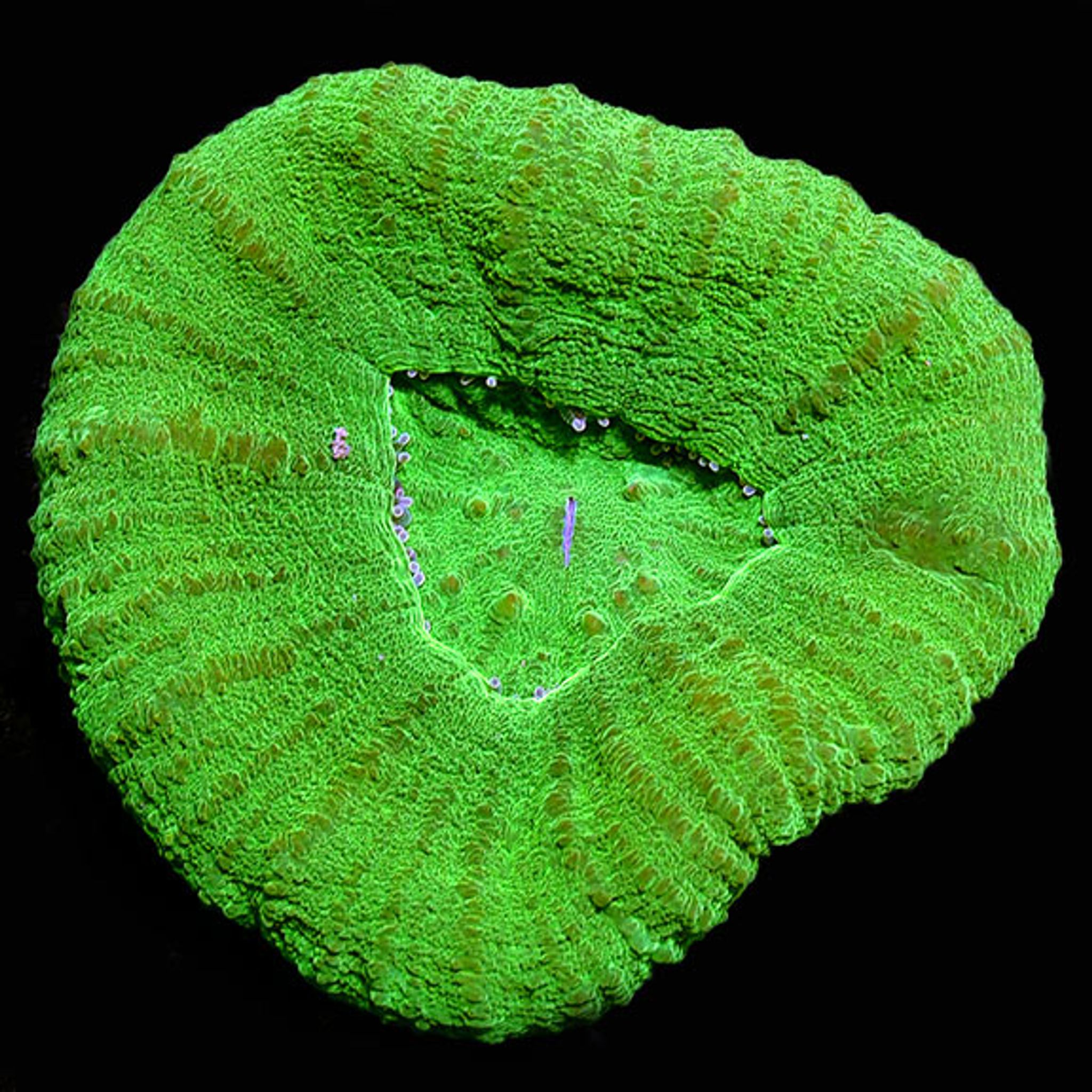

Common Scolymia Problems: Tissue Loss, Fading, Pests and Recovery
A Scolymia that looked plump and colorful last week can be pale, gaping, or visibly shrinking off its skeleton this week, and the cause is rarely obvious at a glance. This guide separates true emergencies from slow chronic decline, walks through the parameters and placement that actually matter, and gives a step-by-step response for tissue loss, brown jelly, and pests.
A Quick Naming Note
Corals sold in the US trade as "Scolymia" are now classified as either Homophyllia (Australian species) or Micromussa (Indo-Pacific, often called "doughboy" or Acan-like forms). The taxonomy split rarely gets explained clearly, which leaves buyers unsure whether care advice for one applies to the coral they actually bought. For hobby purposes it doesn't matter: care requirements are essentially identical, and "Scoly" remains the umbrella term most keepers search for and use.
Target Parameters at a Glance
Unstable water chemistry, especially swinging alkalinity, is widely considered the top cause of large-polyp stony (LPS) coral decline. Before assuming disease, confirm the tank matches these ranges:
| Parameter | Target Range |
|---|---|
| Temperature | 76–78°F (24–26°C) |
| Salinity | 1.025–1.026 SG |
| Alkalinity | 8–12 dKH |
| Calcium | 400–450 ppm |
| Magnesium | 1250–1350 ppm |
| Nitrate | Low but detectable, not zero |
| Phosphate | Low but detectable, not zero |
| Light (PAR) | Roughly 50–100 |
Chasing "zero nutrients" reef chemistry is a common mistake. Undetectable nitrate and phosphate starve the zooxanthellae that give Scolys their color, and the resulting pale, washed-out look is often mistaken for disease when it's really starvation.
Lighting: Start Low, Adjust Slowly
Scolys are frequently deep-water or wall-dwelling corals in the wild, and they bleach or brown out under intense reef lighting. Recommendations for exact PAR vary between keepers — some report success running Scolys under higher light with careful acclimation, while others insist on staying strictly low. The safer approach:
- Start at roughly 50–75 PAR for any new or recently stressed specimen.
- Hold that level for 2–4 weeks and watch coloration and tissue extension rather than chasing a fixed number.
- Increase light gradually, in small steps, only if the coral is extending well and holding color.
- Placing a Scoly under high, direct light immediately after purchase is one of the fastest ways to bleach it within days.
Water Flow and Placement
Scolys need gentle, indirect, ideally alternating flow. Direct blasts can tear tissue and prevent the coral from fully inflating, while too little flow lets detritus settle on the flesh and rot it.
Placement matters just as much as flow:
- Set the coral on a sand bed or a flat, open rock ledge, mouth facing up.
- Never wedge it into a crevice — trapped detritus against the flesh invites tissue rot.
- Leave real space between it and neighboring corals. Scolys extend long sweeper and digestive filaments that can sting nearby corals, and they can be stung in return, so isolate them from anything close by.
Feeding Technique
Scolys are photosynthetic but also predatory, and regular target feeding speeds recovery and keeps color deep.
- Feed meaty foods — mysis, brine shrimp, or chopped seafood — 2–3 times per week as a baseline; thin or recovering specimens can benefit from more frequent feeding.
- Turn off pumps and lights briefly during feeding so fish don't steal the food and the coral doesn't spit it into the surrounding rockwork.
- Always remove uneaten food with a turkey baster afterward. Overfeeding, or feeding without cleaning up leftovers, is a common cause of localized necrosis where decomposing food sits directly on the tissue.
Quarantine and Dipping Protocol
Skipping quarantine on new arrivals is the single biggest source of pest and brown jelly outbreaks reaching a display tank. Before adding any new Scoly:
- Quarantine 2–4 weeks in a separate system before introducing it to the display.
- Drip acclimate slowly — Scolys often arrive shipped compressed or contracted and are sensitive to rapid parameter swings.
- Dip on arrival and repeat every 2–3 days through the quarantine period as a standard preventive measure, not just a reaction to visible pests.
Browsing options for LPS hard corals before you buy gives you a chance to check for gaping mouths, pale patches, or visible pests up front.
Distinguishing Color Loss From Disease
Chronic fading and acute tissue-loss disease are two different problems that need two different fixes. Confusing them wastes time.
| Sign | Chronic Fading/Bleaching | Acute Tissue-Loss Disease |
|---|---|---|
| Tissue itself | Intact, just pale or washed out | Actively shrinking, sloughing, or gone |
| Timeline | Days to weeks | Hours (RTN) to days/weeks (STN) |
| Likely cause | Too much light, unstable alkalinity, zeroed nutrients, aging bulbs | Physical injury, pest damage, secondary infection |
| Response | Adjust light, stabilize dosing, allow nutrients to run slightly higher | Isolate immediately, treat as emergency |
Recognizing Tissue Loss: RTN vs. STN vs. Brown Jelly
These three problems get discussed individually elsewhere, but a beginner needs a quick way to tell them apart:
- Rapid Tissue Necrosis (RTN): Flesh sloughs off the skeleton within hours, typically starting at one point and spreading outward. This is an emergency — act the same day.
- Slow Tissue Necrosis (STN)/recession: Tissue retreats gradually over days to weeks, with bare skeleton showing at the base or edges first. Slower, but still needs a cause identified and corrected.
- Brown jelly infection: A translucent brown or tan gelatinous film sitting over already-damaged tissue. It's caused by ciliate protozoans and bacteria, usually secondary to a physical injury, pest damage, or a dying patch, and it can spread coral-to-coral through the water column within hours if left untreated.
The Early Warning Sign: A Gaping Mouth
A mouth that stays open, retracted, or gaping is often the first visible warning sign of stress — sometimes appearing before any tissue loss is visible at all. Ignoring it as a minor cosmetic issue is a common mistake. The tricky part is telling a stressed-but-otherwise-fine gaping mouth from an early necrosis warning: a stress-only gape usually closes between feedings once conditions improve within a few days, while a mouth that stays open continuously alongside dulling color or thinning flesh at the edges points toward developing necrosis. If overfeeding or poor water quality is the likely trigger, correct the environment rather than continuing to feed heavily.
Emergency Response: RTN and Brown Jelly
Because brown jelly and RTN can spread within hours, even a one-day delay risks the rest of the tank. Follow this sequence:
- Isolate immediately in a separate container or quarantine system, away from any water connection to the display.
- Siphon the jelly or necrotic tissue with a turkey baster or syringe, being careful not to touch or disturb healthy flesh.
- Dip the coral in an iodine-based or coral-specific dip.
- Observe for 24–48 hours. Do not return the coral to the display until spread has clearly stopped.
- Decide on fragmenting. For small, localized infections, siphoning and dipping first is the sensible approach. Cutting away necrotic tissue with a saw or bandsaw below the affected area is reserved for cases where necrosis is clearly advancing despite steps 1–4, since fragmenting itself adds stress to an already compromised coral.
Common Pests on Scoly and LPS Corals
- Flatworms living underneath the tissue on the skeleton — the most common Scoly-specific pest. They cause missing tissue patches and poor extension, and predispose the coral to brown jelly.
- Nudibranchs — less common on Scoly specifically but frequent on LPS generally.
- Snail predation and LPS-eating flatworm look-alikes, which occur occasionally.
Standard treatment is the same regardless of pest type: routine dips every 2–3 days for 1–2 weeks, manual removal of visible pests and eggs with a turkey baster or soft brush, and strict quarantine of every new coral for 2–4 weeks before it reaches the display. A coral-safe treatment used on this schedule handles most pest problems before they ever spread.
Recovery: Signs, Timeline, and Odds
Recovery signs to watch for:
- Gradual regrowth of tissue over the bare skeleton edge
- Return of firm, puffy flesh texture instead of thin or deflated tissue
- The mouth closing normally between feedings
- Color deepening back toward normal
Recovery can take weeks to months, and outcomes depend heavily on how much tissue was lost. A coral that has lost more than roughly 50% of its tissue has a meaningfully lower survival rate — at that point it's worth honestly weighing continued treatment against the odds, rather than assuming recovery is inevitable if the cause has been corrected.
For coral nutrition during recovery, target feeding a stressed specimen more frequently — while always removing leftovers — is one of the more effective ways to accelerate regrowth once the underlying cause is fixed.
Frequently Asked Questions
Why is my Scolymia losing tissue/flesh receding from the skeleton?
Usually chronic stress: unstable alkalinity or calcium, poor flow allowing detritus to sit against the flesh, or physical damage from a neighboring coral's sting. Check parameters and placement before assuming disease.
Why did my Scolymia lose its color / turn brown or pale?
Either bleaching from too much light or heat stress, which turns the coral white or pale, or nutrient starvation from chronically low nitrate and phosphate, which leaves tissue intact but washed-out. Adjust lighting and check nutrient levels to tell them apart.
What is brown jelly disease and is it contagious?
It's a gelatinous ciliate and bacterial infection that forms over already-damaged tissue. Yes, it can spread to nearby corals through the water column within hours, so isolate the affected coral immediately.
Can a Scolymia recover from tissue loss?
Yes, if less than roughly half the tissue is affected and the underlying cause is corrected. Expect weeks to months before regrowth becomes visible.
What pests commonly affect Scolymia and LPS corals?
Flatworms living under the tissue on the skeleton are the most common, with occasional nudibranchs. Both are managed with repeated dipping and manual removal, and largely prevented through quarantine.
Why does my Scolymia's mouth stay open all the time?
This is usually a stress response to overfeeding, poor water quality, or physical irritation. Monitor and correct the environment rather than continuing to feed heavily.
How often should I feed my Scolymia?
Two to three times weekly with meaty foods is a safe baseline; more frequent target feeding accelerates recovery in thin or stressed specimens, as long as uneaten food is removed afterward.
Is Scolymia the same as Homophyllia or Micromussa?
Yes, for hobby purposes. "Scoly" is the trade name still used for corals now scientifically classified under those genera, and their care requirements are the same.
Ready to add a Scoly to your system or find dip and treatment supplies for a new arrival? Browse the current selection of LPS hard corals on FishyHub.


